
Introduction
Outdoor surfaces accumulate dirt, algae and grime over time. Regular cleaning with a garden hose is inefficient, often requiring hours of scrubbing and wasting hundreds of gallons of water. Pressure washers solve this problem by delivering concentrated water jets that lift contaminants quickly and effectively. The Ryobi RY143011 aims to be the ultimate residential machine: it combines 3,000 PSI of pressure with a brushless electric motor, offering gas‑like power without the noise, fumes or maintenance. This review evaluates the RY143011’s specifications, unique features, assembly and operation, real‑world performance, environmental impact, pros and cons, and answers common questions. By the end you’ll know whether this mid‑to‑high‑power electric unit is the right choice for your cleaning needs.

Why Pressure Matters
Understanding a pressure washer’s metrics helps you choose the right unit. Two numbers govern performance: pounds per square inch (PSI), which measures cleaning force, and gallons per minute (GPM), which measures water flow. Multiplying PSI by GPM yields cleaning units, an overall performance indicator. According to Better Homes & Gardens, typical consumer electric washers produce 1,500–3,000 PSI and 1.5–2.5 GPM, while gas units reach 2,500–4,000 PSI and 2.5–4 GPM, offering more power but at the cost of noise and maintenancebhg.com. The RY143011 sits at the top of the electric range with 3,000 PSIpressurewasherdb.com and 1.1 GPM, delivering about 3,300 cleaning units—enough to tackle most household tasks.
Electric vs Gas: A Quick Comparison
Gas pressure washers provide high power for heavy‑duty tasks like stripping paint or cleaning large commercial surfaces. They also consume more fuel and emit exhaust. Electric units, on the other hand, are quieter, lighter and easier to maintain. Hotsy Water Blast notes that electric models operate at around 78 decibels, while gas units often exceed 100 dB, and electric washers are lighter because they lack a gasoline engine and fuel tankhotsyab.com. Electric motors also start with a button press and have lower running costs. For most homeowners who need to clean vehicles, decks and siding, an electric washer like the RY143011 offers the best balance of power and convenience.
Key Specifications and Features
The RY143011 is Ryobi’s flagship residential electric pressure washer. Its technical specifications highlight why it stands out among electric models:
Specification | Details | Evidence |
Model | RY143011 (also sold as RY143011VNM) | Product page and manual list this model number. |
Motor | 13.5‑amp brushless, water‑cooled | The product overview states that a brushless motor with water cooling improves efficiency and durability. |
Maximum pressure | 3,000 PSI | Official specs list 3,000 PSI for heavy residential cleaning. |
Flow rate | 1.1 GPM | Manual confirms a 1.1 GPM flow rate. |
Cleaning units | ~3,300 | Calculated by PSI × GPM and referenced in comparison site. |
Hose | 35‑foot non‑marring hose | Product description lists a 35‑foot hose for extended reach. |
Power cord | 35‑foot cord with GFCI | Manual details a cord with built‑in ground‑fault circuit interrupter. |
Nozzles | 5‑in‑1 change‑over nozzle and turbo nozzle | The product page lists these accessories. |
Soap system | On‑board tank with 20:1 automatic dilution | Manual explains the automatic detergent injection system. |
Frame | Hand‑truck style steel frame with 12″ flat‑free wheels | Product descriptions emphasize a durable frame and large wheels. |
Weight | ~39 lbs | Independent review lists weight around 39 pounds. |
Warranty | 3‑year limited warranty | Product pages and third‑party sites confirm a three‑year warranty. |
Brushless Motor and Water Cooling
Unlike many budget electric washers that use brushed motors, the RY143011 has a brushless motor. Brushless motors are more efficient because they eliminate the physical brushes that wear down over time. A water‑cooling system draws cool water from the pump to keep the motor at a stable temperature, enabling long runtimes without overheating. This design reduces maintenance and extends the machine’s lifespandkhardware.com.
Versatile Nozzle System
The washer comes with two nozzles: a 5‑in‑1 change‑over nozzle and a turbo nozzle. The 5‑in‑1 nozzle rotates through five spray patterns—0°, 25°, 40°, short‑range soap and long‑range soap—eliminating the need to swap individual tipspressurewasherdb.com. The turbo nozzle delivers a spinning 0° stream that cleans up to 50 % faster than standard nozzles, making it ideal for heavy mud and algae.
On‑Board Soap System
Ryobi includes a detergent tank with the RY143011. Switching the nozzle to a soap setting engages the automatic soap injector, mixing detergent at a 20:1 ratio. This built‑in tank is convenient for vehicle washing and siding but should be filled with pressure‑washer‑approved detergents only; harsh chemicals like bleach can damage sealsaconcordcarpenter.com.
Durable Frame and Mobility
A steel hand‑truck frame with 12″ flat‑free wheels makes the unit stable and easy to maneuver across lawns, gravel and stepsryobitools.com. The handle folds for storage, and on‑board holders keep the hose, power cord and nozzle organized. This thoughtful design reduces clutter and protects accessories from damage.
GFCI Protection and Safety Features
Electricity and water require caution. The RY143011’s 35‑foot power cord includes a ground‑fault circuit interrupter (GFCI) that trips if it detects an imbalance, preventing electric shock. The trigger gun has a lock‑out lever to prevent accidental activation, and the unit automatically stops pumping when you release the trigger, conserving energy and extending pump life.
Setting Up and Operating the RY143011
Assembly Overview
Assembling the RY143011 is straightforward. Out of the box, attach the wheels to the axle, slide the handle into the frame until it clicks, connect the spray wand to the gun and screw on the high‑pressure hose. A hex wrench and bolts are provided. Snap the 5‑in‑1 nozzle onto the wand and attach the turbo nozzle to its storage holster. Double‑check that all O‑rings are seated properly and fittings are hand‑tight. This entire process should take less than 10 minutesaconcordcarpenter.com.
Water and Power Connection
Before starting the machine, ensure you have an adequate water supply. The Ryobi manual warns against running the pump without water because it can damage internal seals. Uncoil a garden hose completely to prevent kinks and connect it to the washer’s water inlet. Turn on the tap and squeeze the trigger on the gun to purge air until water flows steadily. Then plug the power cord into a properly grounded 120 V outlet and press the test button on the GFCI; the power should cut off. Press reset to restore powermanuals.plus. If you need an extension cord, ensure it is 12‑gauge and under 25 ft to avoid voltage drop and tripping.
Using the Nozzles
Start with a wide spray pattern (25° or 40°) to avoid surface damage. Hold the nozzle at least 12 inches away and adjust the angle to about 45 degrees. For stubborn grime like mildew on concrete or brick, rotate to the 0° setting or attach the turbo nozzle. Always test the spray on an inconspicuous area. Use the short‑range soap setting to apply detergent to vehicles or patio furniture; allow the suds to dwell for a few minutes, then rinse with clean water. For distant surfaces like two‑story siding or fences, switch to the long‑range soap setting.
Practical Examples
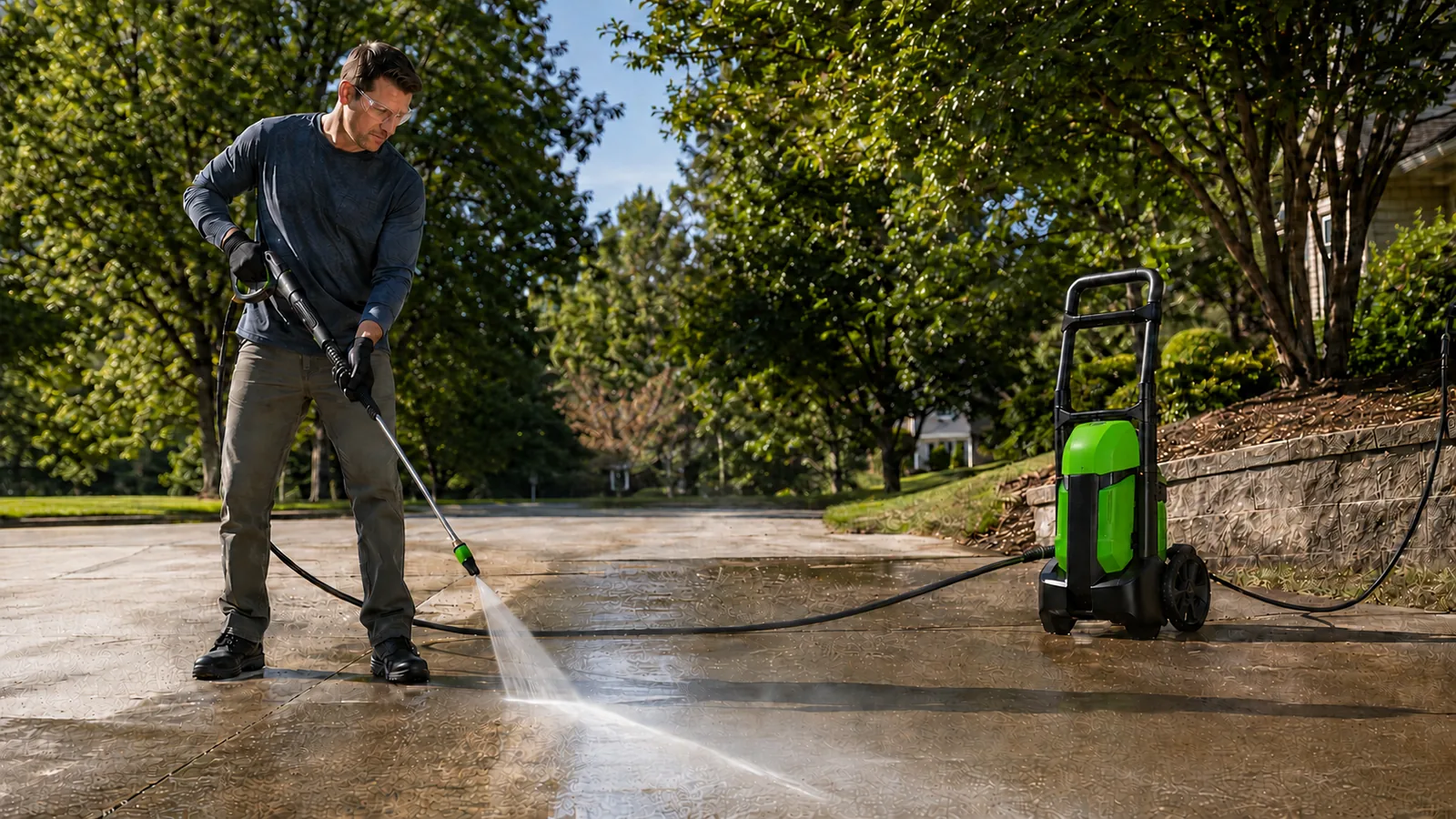
Consider a dirty driveway stained by oil and algae. Start by sweeping debris, then attach the turbo nozzle. Working in sections, keep the nozzle moving to avoid etching the concrete. Within minutes, you’ll see the original color of the driveway. For vehicles, use the 25° or 40° spray and apply automotive detergent using the soap setting. Maintain a distance of 18 inches to protect paint and plastic trim. When cleaning wood decks, choose the 25° setting, move with the grain and use a wide spray to prevent splintering. On moldy vinyl siding, apply soap from bottom up, allow dwell time, then rinse from top down.
Operating Tips
- Keep the nozzle moving; holding it too long in one spot can gouge wood or etch concrete.
- Maintain at least a 12 inch distance, especially with high‑pressure settings.
- Angle the spray rather than pointing directly to avoid forcing water behind siding.
- Wear safety goggles and closed‑toe shoes to protect against flying debris.
- Never spray animals or people; high‑pressure water can cause injection injuries that seem minor but may require medical attentionemra.org.
Real‑World Performance
Cleaning Results
Independent testers report excellent performance from the RY143011. In A Concord Carpenter’s review, the turbo nozzle blasted away years of grime from old wood and concrete, while the 25° and 40° settings were gentle enough for vehicle washing. Switching between nozzle settings on the fly made the transition from heavy cleaning to delicate rinsing seamless. The 3,300 cleaning units allowed the reviewer to strip flaking paint, remove moss from brick and clean patio furniture effectively.
Noise Levels
One of the RY143011’s biggest advantages is quiet operation. Measurements show idle noise around 64 dB, rising to 72–78 dB during cleaning, with peaks at 82–86 dB when using the turbo nozzle. These values are far below the 85–105 dB range typical for gas pressure washersaconcordcarpenter.com. While hearing protection is recommended for extended use above 85 dB, the quieter profile makes this machine more neighborhood‑friendly.
Mobility and Storage
The hand‑truck frame and 12″ wheels let users roll the washer over grass and up steps easilyryobitools.com. The tall handle reduces bending, and its folding mechanism saves storage space. On‑board holders for the wand, nozzles, hose and cord keep everything tidy. The one notable drawback is the stiff, non‑marring hose, which can kink and resist coiling. Consider investing in a flexible aftermarket hose if frequent unwinding and rewinding is an issueaconcordcarpenter.com.
Electrical Considerations
The 13.5‑amp motor demands a solid electrical supply. The built‑in GFCI may trip if the circuit is overloaded or if the outlet is faulty. Reviewers observed occasional tripping in older homes with lower amperage. To avoid interruptions, use a dedicated circuit and verify that no other heavy appliances (e.g., vacuum, AC unit) share the same line. If you must use an extension cord, ensure it’s heavy duty (12‑gauge). Test the GFCI before each use by pressing the test/reset buttonsmanuals.plus.
Environmental Impact and Operating Costs
Water Efficiency
Pressure washers are surprisingly water‑efficient. According to Contractors Supply, a typical garden hose flows around 24 GPM, whereas pressure washers use 2–4 GPM, saving up to 80 % of watercontractorssupplyllc.com. With its 1.1 GPM flow, the RY143011 maximizes conservation. This efficiency makes pressure washing an environmentally responsible choice, especially in drought‑prone areas.
Energy Use and Noise Pollution
Electricity costs are relatively low. The RY143011 draws roughly 1.56 kilowatts at full load (120 V × 13 A). At an average rate of $0.15 per kilowatt‑hour, running the washer for an hour costs about $0.23—significantly less than fueling a gas washer. The quiet motor also reduces noise pollution, allowing early‑morning or late‑afternoon cleaning without disturbing neighborsaconcordcarpenter.com/.
Sustainability Benefits
Choosing an electric pressure washer supports carbon‑reduction goals. There are no fuel emissions, oil changes or spark plugs to dispose of. Durable components like the brushless motor and steel frame extend product life, reducing waste. Using less water and energy not only saves money but also lessens environmental impact.
Maintenance and Longevity
Routine Care
Proper maintenance ensures safe operation and maximizes the washer’s lifespan. Before each session, inspect hoses, fittings and cords for wear, check O‑rings and ensure the nozzle and soap tank are cleanfreditech.com. After use, run clean water through the pump to flush detergent, drain both hoses, and relieve pressure by squeezing the trigger. Coil the hoses loosely and store the unit in a dry, frost‑free place.
Lubricate O‑rings with silicone grease monthly and clean nozzle openings with a small wire to prevent clogging. Examine the inlet filter and replace it if debris accumulates. Every season, especially before winter, drain water from the pump and hoses. Consider adding pump saver or antifreeze to protect seals from freezingultimatewasher.com. Storing the unit indoors during freezing months prevents cracked hoses and internal damage.
Troubleshooting Tips
- Low pressure or pulsing: Check for clogged nozzles, ensure the water supply meets minimum flow and purge air from the pump by holding the trigger open.
- GFCI tripping: Try a different outlet or lighten the electrical load on the circuit. Use a heavy‑duty 12‑gauge extension cord if necessary.
- Stiff hose: Unwind the hose completely before use and avoid sharp bends. Replacing it with a more flexible aftermarket hose can improve handling.
- Pump not starting: Verify that the power switch is on, the GFCI is reset and the outlet is functioning. Priming the pump (purging air) can reduce startup strain.
Safety Considerations
Pressure washers generate high force; misuse can cause injury. Always wear eye protection, gloves and closed shoes. Keep bystanders and pets at a safe distance. Do not aim the spray at yourself or others. The European Medical Research Association highlights that high‑pressure injection injuries may seem minor but can damage tissues deeplyemra.org. If an injury occurs, seek medical attention immediately. Avoid using ladders while pressure washing; the kickback may cause falls. Instead, use extension wands or telescoping poles for high areas.
Pros and Cons at a Glance
Advantages
- High cleaning power: With 3,000 PSI and 1.1 GPM, the RY143011 delivers 3,300 cleaning units, matching or exceeding some gas models while conserving water.
- Brushless, water‑cooled motor: Ensures efficiency, reduced maintenance and longer lifespan.
- Quiet operation: Noise levels remain below 80 dB during normal use, far quieter than gas units.
- Versatile nozzle selection: 5‑in‑1 nozzle and turbo nozzle accommodate tasks from delicate rinsing to heavy scrubbing.
- On‑board detergent tank: Automatic 20:1 dilution simplifies soap application.
- Sturdy mobility: Hand‑truck frame and large wheels improve maneuverability.
- Three‑year warranty and strong support: Provides peace of mind.
Disadvantages
- Low flow rate: The 1.1 GPM flow may rinse slower than higher‑GPM units, though it saves water.
- Stiff hose: The non‑marring hose kinks easily; replacing it may be necessary for frequent use.
- High amperage requirement: Older homes may experience GFCI tripping or insufficient amperage.
- Continuous motor hum: The motor runs at idle even when not spraying; although quiet, the hum may annoy some users.
- Price premium: The RY143011 costs more than entry‑level electric washers but offers advanced features and performance.
FrediTech Resources
To deepen your understanding of pressure washing, explore these FrediTech articles:
- Electric vs. Gas Pressure Washers: The Ultimate Guide for Homeowners – compares performance, maintenance and environmental impacts of electric and gas models.
- Ultimate Pressure Washer Maintenance Guide – covers pre‑use inspections, post‑use care and seasonal maintenance tasks.
- Best Pressure Washers for Home Use – to find the most reliable and efficient models.
- Ryobi Pressure Washer – discovers the ultimate guide to power, performance, and value
Frequently Asked Questions
Is 3,000 PSI safe for washing cars?
Can I add bleach or strong chemicals to the soap tank?
Does the RY143011 have adjustable pressure?
How heavy is the unit, and can one person move it?
Can I run the machine on a standard household circuit?
How long is the warranty?
Is the RY143011 suitable for commercial use?
Conclusion
The Ryobi RY143011 electric pressure washer delivers an impressive blend of power, efficiency and convenience. Its 3,000 PSI output and 1.1 GPM flow produce 3,300 cleaning units, allowing homeowners to tackle stubborn grime on concrete, siding and vehicles while conserving water. A brushless, water‑cooled motor ensures longevity and reduces maintenance, while the 5‑in‑1 nozzle and turbo nozzle adapt to various cleaning tasks. The steel hand‑truck frame, large wheels and on‑board storage make the unit easy to move and organize.
Despite minor drawbacks such as a stiff hose, continuous motor hum and high power requirements, the RY143011 shines as one of the most powerful electric pressure washers available. Its quiet operation and environmentally friendly design make it suitable for residential neighborhoods, and the three‑year warranty offers confidence in long‑term reliability. With careful assembly, proper maintenance and safe operation, this washer can transform outdoor cleaning from a tedious chore into an efficient, satisfying task.
Author: Wiredu Fred – pressure‑washer enthusiast and home‑improvement specialist with years of hands‑on experience testing electric and gas pressure washers for FrediTech. Fred aims to demystify outdoor cleaning equipment, focusing on safety, performance and sustainability.