
Introduction
Pressure washers have transformed tedious household chores—such as washing a grimy driveway or clearing years of dirt from a deck—into quick, satisfying jobs. Unlike a standard garden hose, pressure washers emit a focused jet of water capable of dislodging tough grime while using 50–80 % less water. With models ranging from compact electric units designed for patios to powerful gas units capable of blasting chewing gum from concrete, choosing the right pressure washer can feel overwhelming. The choice often boils down to whether you need electric convenience or gasoline muscle.
As the editor of FrediTech & Modern Collective’s home‑technology section, I’ve compared dozens of washers. This guide distils that research and recent industry insights into an objective, step‑by‑step comparison of electric vs. gas pressure washers. We examine performance (PSI and GPM), ease of use, maintenance, durability, environmental impact, cost and safety. You’ll learn how to pick the ideal machine for your home, discover real‑world scenarios where each type shines, and find answers to common questions.

Pressure Washer Basics: PSI, GPM and Cleaning Power
Before comparing fuel types, it helps to understand the metrics used to describe pressure washers:
- Pounds per square inch (PSI) measures the force of the water stream. Higher PSI means more ability to strip tough contaminants like paint or grease.
- Gallons per minute (GPM) measures water flow. A higher flow rate helps rinse away debris quickly.
- Cleaning Units (CU) is PSI × GPM. Although not often advertised, it provides an overall measure of cleaning power.
Consumer‑grade electric pressure washers usually produce 1 500–3 000 PSI and 1.5–2.5 GPM. Gas models deliver 2 500–4 000+ PSI with 2.5–4 GPMbhg.com. This difference in power shapes the tasks each type can tackle.
Why PSI and GPM matter
A patio covered with mildew may only require 1 800 PSI, while stripping paint from a metal fence may need 3 000 PSI or more. GPM matters too; a 2.5 GPM gas washer clears debris twice as fast as a 1.3 GPM electric model. For everyday homeowners, balanced power is critical; too little PSI leaves surfaces grimy, while excessive force can etch wood or damage vinyl siding. Manufacturers recommend using appropriate nozzles and starting from a safe distance to avoid injury or property damagebhg.com.
Electric Pressure Washers
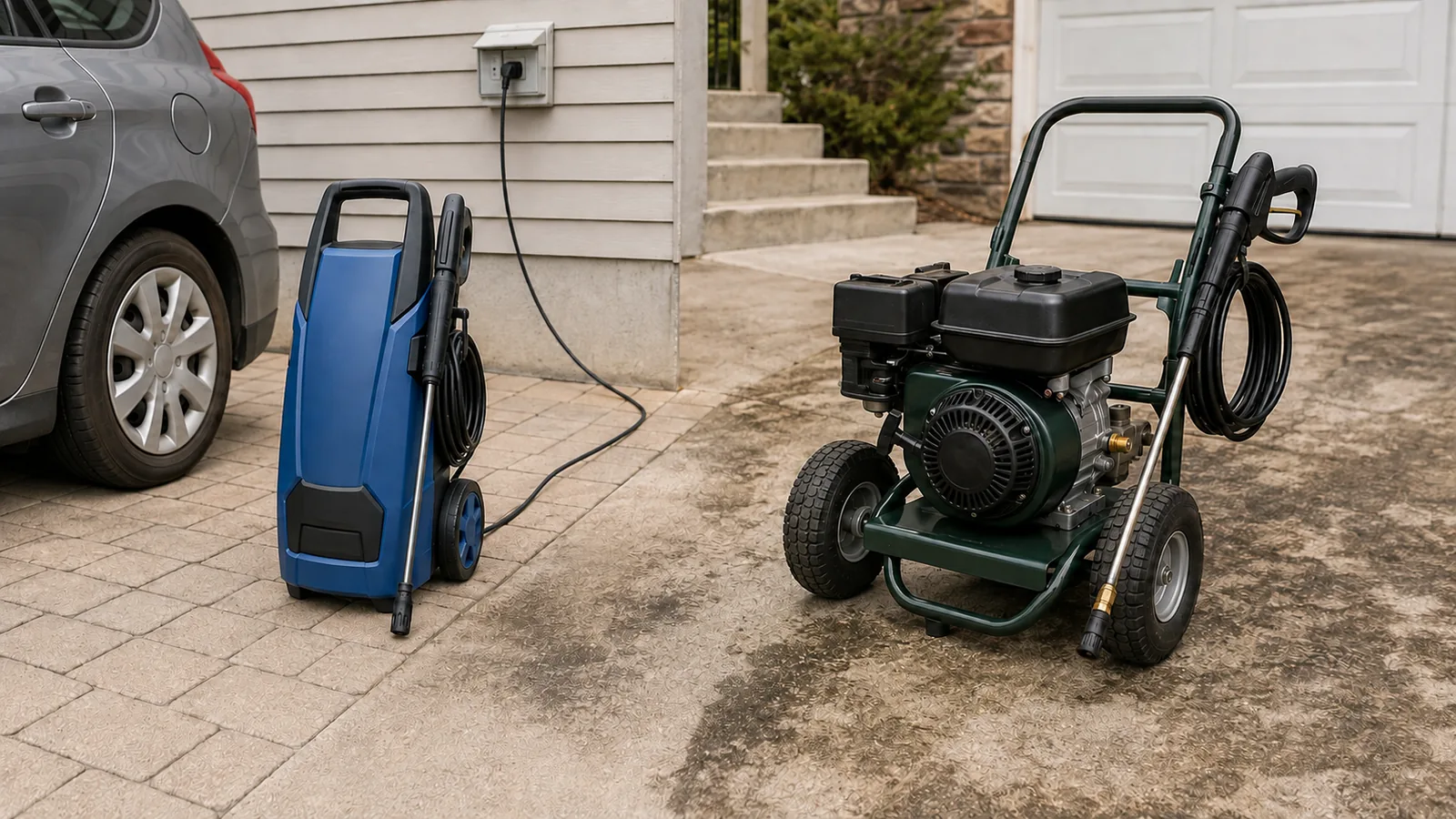
Electric pressure washers have exploded in popularity among homeowners. They plug into a standard outlet and use an electric motor to drive a pump. Let’s explore their key characteristics.
Performance and Suitable Tasks
Power output: Most electric models deliver 1 300–3 000 PSI and 1.5–2.5 GPMhydro-kleenpressurewashing.com. Entry‑level units are ideal for light‑duty tasks such as washing cars, patio furniture and small decks. Premium electric machines can reach 3 000 PSI, making them suitable for stripping loose paint or cleaning drivewayshotsyab.com. Nonetheless, electric washers generally produce less cleaning power than comparable gas models, which may extend cleaning time on heavy debris.
Examples:
- Patio & decks: Electric washers excel at rinsing algae from wooden decks, cleaning plastic patio furniture or removing dirt from flagstones. Their moderate PSI minimizes risk of gouging soft wood.
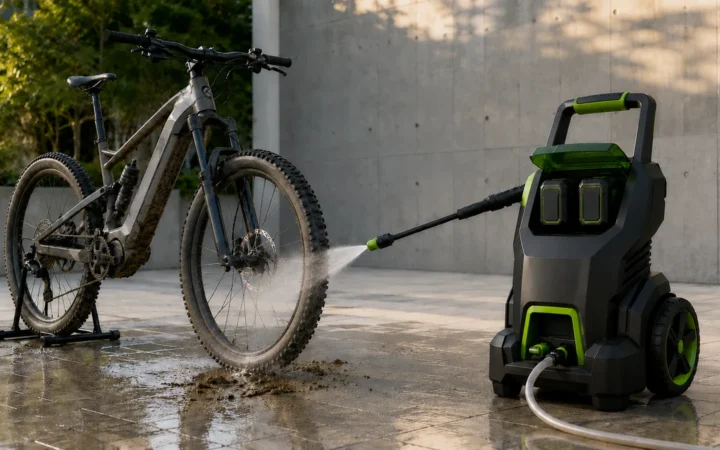
- Cars & bikes: With adjustable nozzles, an electric washer can gently wash vehicles without stripping paint. Its lower flow rate means less water wastage and reduced run‑off.
Ease of Use and Setup
A key advantage of electric pressure washers is simplicity:
- Plug-and-play setup: You simply connect the hose, attach a nozzle and plug into a grounded outlet. There’s no need to check oil or mix fuel. This convenience makes electric units friendly to novices.
- Light weight: Electric washers lack the heavy gas engine and fuel tank, so they are significantly lighter. Hotsy notes that electric units are easy to manoeuvre and can fit into tight spaceshotsyab.com.
- Quiet operation: Electric motors run quietly—about 50–78 decibels (dB), similar to a washing machine. You don’t need ear protection, and your neighbours will appreciate the low noise..
- Indoor/outdoor use: Because they produce no exhaust emissions, electric washers can safely operate in enclosed spaces such as garages and workshops.
Maintenance and Durability
Electric models require minimal maintenance. They don’t have a combustion engine, so there’s no need to change oil or spark plugs. Basic care includes:
- Inspecting hoses and electrical cords for damage.
- Cleaning the intake filter and nozzle after each use.
- Winterizing the pump with antifreeze if stored in freezing climates.
The Spruce notes that electric washers typically last 3–5 years due to lightweight componentsthespruce.com. While they may not match the lifespan of heavy‑duty gas units, proper maintenance (see our maintenance guide) can extend their life.
Safety Considerations
Even with lower PSI, electric washers can cause serious injury. Always keep the spray wand pointed away from people and pets, wear closed‑toe shoes and safety goggles, and use a ground‑fault circuit interrupter (GFCI) outlet to avoid electrical shock. Avoid using extension cords; if necessary, ensure they are rated for outdoor use.
Pros and Cons of Electric Pressure Washers
Advantage | Explanation |
Ease of use | Plug‑in power means quick start‑up and no fumes. |
Low noise | Operating noise typically ranges from 50–78 dB, roughly as loud as a household vacuum. |
Lightweight & portable | Without a heavy engine, units are easy to carry; perfect for balconies or patios. |
Low maintenance | No oil changes or spark plugs; only periodic cleaning and pump lubrication. |
Affordable | Electric models cost $100–$400 and don’t require fuel. |
Drawback | Explanation |
Limited power | Typically 1 500–3 000 PSI; may struggle with deep stains, paint removal or large surfaces. |
Dependence on power outlet | Requires an electrical outlet; may need heavy‑duty extension cords. |
Shorter lifespan | Lighter components lead to shorter service life (3–5 years). |
Lower mobility | The cord restricts movement and may trip unsuspecting users. |
Gas Pressure Washers
Gas pressure washers use small internal combustion engines to drive high‑flow pumps. They are the go‑to choice for contractors, farms and homeowners tackling heavy‑duty cleaning.
Performance and Suitable Tasks
Power output: Gas models deliver 2 500–4 000+ PSI and 2.5–4 GPMbhg.com. The Hotsy Water Blast blog highlights that gasoline units offer high PSI ratings capable of removing tough stains from concrete and heavy machineryhotsyab.com. This makes them ideal for:
- Driveways & sidewalks: Removing oil stains, chewing gum or mildew from concrete.
- Paint preparation: Stripping flaking paint from metal or wooden surfaces before repainting.
- Exterior house cleaning: Cleaning stone walls, brick facades and large decks quickly.
- Agricultural & commercial equipment: Washing tractors, trailers and construction equipment.
Ease of Use and Setup
Gas washers require more hands‑on setup:
- Fuel and oil: You must fill the tank with fresh gasoline and check oil levels. The Spruce notes that gas units demand regular fuel and oil checks and can be tricky to control because of powerful output.
- Weight & portability: Engines and heavy-duty pumps make gas washers heavier. They may come on wheeled carts but still require effort to move. Their advantage is cordless mobility; you can clean anywhere without a power outlet.
- Starting mechanism: Most models use a recoil pull‑cord, which may require several pulls. Premium units offer electric start options but add cost.
- Noise & emissions: Gas engines can exceed 100 dB, requiring hearing protection. They emit exhaust fumes, so they must only be used outdoors or in well‑ventilated spaces.
Maintenance and Durability
With more moving parts, gas pressure washers require regular maintenance:
- Oil changes: Manufacturers recommend changing engine oil after the first 5 hours and every 50 hours thereafter.
- Air and fuel filters: Inspect and replace regularly to keep fuel running clean.
- Spark plug replacement: Replace annually or per the owner’s manual to maintain efficient ignition.
- Fuel stabilizer: Add stabilizer or drain the tank before long‑term storage to prevent gum deposits.
These units are built from sturdy materials to withstand heavy use. When properly maintained, they can last 5–7 years or longerthespruce.com.
Safety Considerations
Gas pressure washers produce high‑pressure streams capable of etching concrete or cutting skin. Always wear protective gear (goggles, gloves and hearing protection). Avoid aiming the wand at people, pets or delicate surfaces. Because they emit carbon monoxide, never operate a gas washer indoors or in enclosed garages.
Pros and Cons of Gas Pressure Washers
Advantage | Explanation |
High power | PSI up to 4 000 and high flow rates tackle tough stains and large surfaces. |
Mobility | Cordless operation allows use anywhere; perfect for remote farms or large properties. |
Durable construction | Built to withstand rigorous use and heavy duty jobs. |
Longer lifespan | With proper maintenance, gas units last 5–7+ years. |
Drawback | Explanation |
Loud & polluting | Operate at 90–100+ dB and emit exhaust fumes. |
High maintenance | Require oil changes, air filters, spark plugs and fuel stabilizer. |
Heavier & more expensive | Gas models cost $300–$600 and weigh more than electric units. |
Higher risk of injury & surface damage | Powerful jets can damage wood or siding if used improperly. |
Comparing Electric vs. Gas Pressure Washers by Key Factors
Cleaning Performance: PSI, GPM and Cleaning Time
Gas pressure washers clearly have the edge in raw power. Electric units top out around 3 000 PSI, whereas gas models can reach 4 000 PSI or more. Higher flow rates also mean that gas washers rinse away loosened grime faster. If you routinely clean large driveways, farm equipment or heavily soiled concrete, gas models finish the job quicker.
However, greater power isn’t always better. High PSI can erode soft wood, strip paint you want to keep or injure the operator. Electric models are gentler and ideal for most household tasks. Using turbo nozzles and detergents can boost cleaning efficiency without raising PSI.
Ease of Use and Portability
Electric models win on setup simplicity and portability. There’s no fuel to mix or engine to maintain; you just plug in and go. Weight differences are significant too; some compact electric units weigh under 20 pounds. Gas models often weigh 60 pounds or more and may require ramps or assistance to load into a vehicle. While gas washers are cordless, the constant hum and exhaust can be fatiguing during extended sessions.
Maintenance Requirements
Electric pressure washers require little more than basic cleaning and winterizing. Gas models need oil changes, air filters, spark plugs and proper fuel storagebhg.com. Maintenance costs (oil, filters, spark plugs) add to the long‑term ownership cost of gas units. If you’re not comfortable performing routine engine maintenance, factor in service costs.
Durability and Longevity
Because gas models are built for heavy use, they often outlast electric units. Expect a quality gas washer to provide 5–7+ years of servicethespruce.com. Electric units may last 3–5 years, though some premium models claim longer service lives. When deciding, consider how often you’ll use the machine and whether you’re comfortable with periodic repairs.
Environmental Impact and Noise
Electric pressure washers are the clear winner for environmentally conscious homeowners. They emit no exhaust gases and operate below 80 dB. According to Hotsy Water Blast, gas units can reach 100 dB, which is loud enough to cause hearing damagehotsyab.com. If you live in a neighbourhood with noise restrictions or simply value quiet operation, electric washers are the more considerate choice.
Cost and Value
Upfront cost and ongoing expenses vary widely:
- Electric models: Typically $100–$400, plus electricity usage. They require little maintenance but may need replacement sooner.
- Gas models: Cost $300–$600 for consumer units. They burn fuel (petrol), require engine oil and replacement parts. However, their durability and power may justify the expense for frequent use.
Safety and Injury Risk
Both types can cause injuries. BHG warns that any pressure washer can bruise or puncture skin; cords on electric models can be tripping hazards, while motors can get hotbhg.com. Gas models’ higher PSI increases risk of property damage and bodily injury. Always follow manufacturer instructions, wear protective gear and start with the widest spray nozzle.
Step‑by‑Step Guide to Choosing the Right Pressure Washer
Choosing between electric and gas isn’t just about power; it’s about matching the machine to your needs. Follow these steps:
Step 1: List Your Cleaning Tasks
Write down the surfaces you plan to clean. Are they mostly lightweight jobs like washing bikes, garden furniture and small patios, or do you need to tackle oil‑stained driveways, algae‑covered brick walls and neglected decks? For light duty, a 1 500–2 000 PSI electric washer often suffices. For heavy-duty tasks, consider gas.
Step 2: Estimate Frequency of Use
How often will you use the machine? Occasional users may not justify the higher cost and maintenance of gas models. Contractors or homeowners regularly cleaning large properties may benefit from the durability and speed of a gas washer.
Step 3: Evaluate Access to Power
Do you have accessible outdoor electrical outlets? If not, a gas washer may be more convenient. Conversely, if you live in an apartment with a balcony, an electric model may be the only practical option due to exhaust restrictions.
Step 4: Consider Mobility Needs
If you need to move the washer around a large property or remote area, gas offers cordless mobility. For smaller yards or tasks near the house, the cord of an electric washer is less of a drawback and the lighter weight makes it easier to manoeuvre.
Step 5: Factor in Noise and Environmental Concerns
Are you sensitive to noise or do you have close neighbours? Electric washers operate much quieter and don’t emit fumes. Gas washers require hearing protection and produce carbon monoxide, limiting them to outdoor use.
Step 6: Budget for Purchase and Maintenance
When comparing price tags, include the cost of fuel, oil and maintenance for gas models. Over several years, these consumables can narrow the price difference between electric and gas washers. Electric models may need replacing sooner, but their low operating cost often balances the equation.
Step 7: Check Warranty and Support
Look for generous warranties, especially on the motor or pump. Some electric models offer 2‑year warranties, while gas units may provide 3‑year or longer coverage. Also consider the availability of parts and service centres near you.
By following these steps, you can narrow your choices to a handful of models that suit your needs. Our brand comparison article analyses specific models from RYOBI and Sun Joe to help you decide.
Real‑World Scenarios and Case Studies
To illustrate how electric and gas pressure washers perform in real life, here are a few examples:
Scenario 1: Cleaning a Small Urban Patio
Jenny, a first‑time homeowner in Accra, wanted to refresh her 5 m² balcony covered in dust and bird droppings. She chose a 1 600 PSI electric washer. The compact machine plugged into her kitchen outlet, and Jenny finished the job in 20 minutes without disturbing neighbours. She appreciated the low noise and zero fumes. Because the balcony lacked a floor drain, the washer’s modest water flow prevented flooding. For small, infrequent tasks like this, electric pressure washers offer convenience and minimal disruption.
Scenario 2: Restoring a Weathered Deck
Kwame lives in a suburban area with a large wooden deck that hadn’t been cleaned in years. He borrowed a 2 800 PSI gas pressure washer from a friend to strip algae and gray oxidation from the boards. The high PSI cut through years of buildup quickly, and the 2.7 GPM flow rinsed away sludge efficiently. Kwame wore hearing protection because the machine roared at roughly 100 dB and produced noticeable fumes. After cleaning, he applied a wood brightener and sealer. For extensive restoration, the raw power of a gas model saved hours of scrubbing.
Scenario 3: Mobile Car‑Detailing Business
Aisha runs a mobile car‑detailing service. She considered an electric washer for its low cost and quiet operation but ultimately selected a battery‑powered electric washer with 2 000 PSI. This gave her the mobility of a gas unit without exhaust emissions. She could service customers in parking garages where gas engines were prohibited. However, she purchased multiple battery packs to ensure enough runtime. This scenario highlights innovative battery‑electric models bridging the gap between corded electric and gas units.
Scenario 4: Farm Equipment Cleaning
Adu owns a small farm and regularly cleans tractors, ploughs and livestock pens. His chores involve mud, grease and caked manure. A 3 500 PSI gas washer with 3.5 GPM completes heavy jobs quickly. Adu routinely changes oil and filters but appreciates the durability and speed. For large properties with no electricity, gas remains the practical choice. He stores the washer in a shed and runs it outside to avoid carbon monoxide build‑up. This case underscores the need for high power and mobility in rural settings.
These examples demonstrate that no single type is “better” for all situations. The right choice depends on your tasks, environment and preferences.
Environmental Considerations and Water Efficiency
Water Usage
Pressure washers’ water savings are often overlooked. According to Ideal Home, pressure washers use 50–80 % less water than a typical garden hose thanks to their high‑pressure, low‑volume spray. Kärcher claims its pressure washers use up to 80 % less water than a hose. High‑efficiency nozzles concentrate water at a high velocity, removing dirt faster and reducing run‑off. If you live in a region with water restrictions, a pressure washer can be a more sustainable choice than a hose.
Emissions and Energy
Electric washers consume electricity. In Ghana, where grid electricity comes from a mix of hydroelectric and natural gas plants, carbon emissions per kilowatt‑hour are lower than burning gasoline on site. Gas washers, however, combust fossil fuel and emit carbon monoxide, nitrogen oxides and particulates. For environmentally conscious users, electric washers or battery‑powered models minimize carbon footprint and air pollutionhotsyab.com.
Noise Pollution
The difference in noise levels is striking. Electric models operate at 50–78 dB—similar to a vacuum cleaner—and may not require ear protection. Gas units can exceed 100 dB, which can damage hearing with prolonged exposure. In residential neighbourhoods or shared housing, electric washers are more considerate.
Maintenance Tips for Both Types
Proper care keeps your pressure washer safe and efficient:
- Read the manual: Always start by reading the manufacturer’s instructions and warranty details.
- Use fresh, clean water: Avoid pumping muddy or sandy water, which can damage the pump. Consider installing an inline filter.
- Select the right nozzle: Use wide spray angles (40° or 25°) for delicate surfaces and narrow angles (0° or 15°) for tough stains. Never start with a pinpoint jet.
- Avoid running dry: Water lubricates the pump. Running a pressure washer without water can destroy seals and pistons.
- Winterize: For both electric and gas units, flush the system with pump saver or RV antifreeze before storing in freezing conditions. See our ultimate maintenance guide for step‑by‑step instructions.
- Inspect hoses and connections: Check for leaks, cracks or worn fittings before each use. Replace damaged parts promptly to prevent injuries.
Frequently Asked Questions
Are electric pressure washers powerful enough for driveway cleaning?
Can I use a gas pressure washer indoors or in a garage?
Do electric pressure washers require maintenance?
How loud are pressure washers?
Which type lasts longer?
What accessories improve cleaning efficiency?
- Surface cleaners: Rotating discs that cover wide areas evenly—ideal for driveways and patios.
- Foam cannons: Inject detergent into the spray for car washing.
- Turbo nozzles: Combine the power of a narrow spray with a rotating action to clean large areas faster.
- Extension wands: Reach high eaves or second-story siding safely from the ground.
Do pressure washers damage surfaces?
Conclusion
Choosing between an electric and a gas pressure washer comes down to balancing power, convenience, maintenance and environmental impact. Electric models offer plug‑and‑play simplicity, lower noise, zero exhaust and enough power for most home tasks. They excel at cleaning cars, patios, decks and light stains. Gas models deliver the muscle to tackle heavy‑duty jobs—stripping paint, removing grease and cleaning large driveways quickly—but they demand more upkeep, cost more and produce more noise and emissions.
When making your decision, consider the surfaces you’ll clean, how often you’ll use the washer, access to power outlets, noise sensitivity and budget. Regardless of the type you choose, follow safety guidelines, select the right nozzle and practice proper maintenance. With the right pressure washer, you’ll transform chores into satisfying tasks and prolong the life and beauty of your property.
For more detailed maintenance tips and model‑specific advice, explore our Ultimate Pressure Washer Maintenance Guide and our comparison of RYOBI vs. Sun Joe pressure washers.