
Introduction
Pressure washers transform tedious chores into quick, satisfying jobs. Instead of scrubbing your driveway for hours, a powerful jet of water cleans concrete in minutes. Modern pressure washers also conserve water; they use up to 80 % less water than a standard hoseblog.hotsysystems.com, making them both efficient and eco‑friendly. With so many models—electric, gas, battery‑powered and commercial—it can be hard to choose the right one. This guide reviews the best pressure washers for home use and explains how to pick the perfect machine for your cleaning tasks.

{getToc} $title={Table of Contents} $count={Boolean} $expanded={Boolean}
Understanding Pressure Washer Specs
Before examining individual models, it helps to understand the key specifications:
PSI and GPM – what do they mean?
Two measurements determine a pressure washer’s cleaning ability:
- PSI (pounds per square inch) measures the force of the water stream. Higher PSI helps strip away tough stains or paint. Light‑duty washers start around 1 300–1 900 PSI; medium‑duty models deliver 2 000–2 800 PSI; heavy‑duty machines exceed 2 900–3 300 PSI.pbcpressurecleaning.com
- GPM (gallons per minute) measures water volume. A higher GPM rinses debris faster. Most home models range from 1–3 GPM. Hotsy notes that a 1 500‑PSI washer using 1.5 GPM consumes about 90 gallons per hour, whereas a garden hose can use 540 gallons.blog.hotsysystems.com
Cleaning effectiveness is often expressed as Cleaning Units (PSI × GPM). A 2 600‑PSI machine delivering 2.3 GPM yields 5 980 cleaning units, which TechGearLab found delivered “supreme cleaning power”techgearlab.com. However, excessive PSI can damage paint or wood. The PBC guide recommends starting at the lowest effective pressure and increasing gradually.
Pump types: axial vs triplex
Pressure washers use different pump designs. Axial cam pumps are compact and direct‑drive; they run at engine speed and are cost‑effective but less durable. Triplex pumps use a crankshaft with connecting rods, delivering smoother flow and longer life; they are found on high‑end and professional models. When comparing models, note whether the pump is axial (suitable for occasional home use) or triplex (better for frequent heavy‑duty work).
Duty ratings
Not all cleaning tasks require the same power:
- Light‑duty (1 300–1 900 PSI, 1–2 GPM) – ideal for cars, patio furniture, grills. Low PSI and wide nozzles protect paint and wood.
- Medium‑duty (2 000–2 800 PSI, 1.5–2.5 GPM) – suits deck cleaning, fences and home siding. These washers strike a balance between power and safety.
- Heavy‑duty (2 900–3 300 PSI, 2.5–4 GPM) – required for stripping paint, cleaning driveways or removing grease. The operator must take extra care to avoid surface damage.
Factors to Consider When Buying a Pressure Washer
Electric vs gas
Electric models are quieter, lighter and easier to maintain than gas units. They start instantly with a trigger, require no engine maintenance and are suitable for most household tasks. Gas washers deliver higher pressure and flow, making them better for heavy‑duty jobs or large areas. They offer portability (no power cord) but demand fuel, oil changes and winterizing.
Water and energy efficiency
Modern pressure washers drastically reduce water usage. Hotsy’s blog explains that pressure washers can use up to 80 % less water than a garden hoseblog.hotsysystems.com, and a 1 500‑PSI model using 1.5 GPM consumes only 90 gallons per hour. Choosing the right nozzle and keeping the wand moving helps optimize efficiency.
Safety
High‑pressure jets can cause injury. Safety guidelines from R+M / Suttner warn of risks like lacerations, burns, electric shock and hearing damage. They recommend wearing protective eyewear, gloves, non‑slip shoes and hearing protection. Operators should inspect equipment, maintain a stable stance, keep bystanders away and adjust pressure for the surface. A first‑aid kit and emergency plan should be on hand.rm-suttner.com
Ease of use and portability
Look for features that make operation easier:
- Weight and wheels: Light models are easier to move. Many electric units weigh 15–25 lb and have integrated handles and wheels. Gas models can exceed 60 lb but often include large pneumatic wheels.
- Hose length and storage: Longer hoses (20–30 ft) offer more reach. Onboard hose reels or clips keep the hose tidy and reduce tripping hazards.
- Detergent system: Onboard soap tanks and foam cannons simplify cleaning tasks requiring detergent. Dual tanks allow switching between cleaning agents, as seen on some Sun Joe and Ryobi models.
Top Pressure Washers for Home Use (2025–2026)
The following models were selected based on independent tests (TechGearLab, Popular Mechanics), user reviews and reliability. They cover different duty levels and price ranges, ensuring there’s a recommendation for every homeowner.
Best Overall: Westinghouse WPX3200 Gas Pressure Washer
- Power & performance: TechGearLab ranked the Westinghouse WPX3200 as the top washer in its 2025 test. The gas‑powered unit delivered 2 600 PSI and 2.3 GPM (5 980 cleaning units) and produced “supreme cleaning power”. This high output stripped oil stains and mildew quickly during testing.techgearlab.com
- Features: It features a 212‑cc four‑stroke engine, a 30‑ft hose and five quick‑connect nozzles. A large fuel tank and oversized wheels make it easy to move despite its weight (~63 lb). The pump is an axial cam design, but testers found it durable during extended use.
- Pros: Unmatched power for price; cleans large areas fast; includes all essential accessories.
- Cons: Loud and heavy; requires gas and regular maintenance. Not ideal for small patios or noise‑sensitive neighbourhoods.
- Best for: Homeowners who need serious cleaning power—driveways, mossy patios, siding and stubborn stains.
Best Bang for the Buck: Westinghouse ePX3500 Electric Pressure Washer
- Performance: TechGearLab’s tests called the ePX3500 the “Best Bang for the Buck.” It delivers about 1 800 PSI at 1.06 GPM (roughly 1 901 cleaning units), making it suitable for medium‑duty taskstechgearlab.com. Its 13‑amp motor was quieter than gas models and consumed little water.
- Portability: At 16 lb, it’s extremely lightweight and easy to carry. It comes with four nozzles and a 25‑ft hose with onboard storage. Testers noted that the small wheels may struggle on uneven ground, but the unit’s low weight compensates.
- Pros: Affordable; quiet; easy to use; compact for storage.
- Cons: Lower PSI means slower cleaning on stubborn stains; small wheels; less durable than high‑end units.
- Best for: Small patios, vehicles, patio furniture and occasional cleaning. Great for renters or those with limited storage space.
Most Powerful Electric: Greenworks GPW3002 Electric Pressure Washer
- Performance: TechGearLab labeled the Greenworks GPW3002 as the most powerful electric washer they tested. It delivers 2 700 PSI at 0.98 GPM (2 675 cleaning units), rivaling some gas modelstechgearlab.com. Despite the lower flow, the high pressure cleans effectively.
- Design: It weighs about 47.6 lb and features 10″ wheels, onboard storage for the cord and hose and a brushless induction motor. An onboard detergent tank and multiple nozzles increase versatility.
- Pros: Powerful electric performance; quieter and easier to maintain than gas; large wheels for stability.
- Cons: Heavy for an electric model; expensive; low GPM means rinsing may take longer.
- Best for: Homeowners wanting near‑gas performance without fuel or exhaust. Suitable for decks, driveways and medium‑duty tasks.
Best Gas Pro‑Grade: Simpson PS3228 PowerShot
- Performance: Popular Mechanics rated the Simpson Cleaning PS3228 PowerShot as the best overall gas washer. Powered by a Honda GX200 engine, it produces 3 300 PSI and 2.5 GPM. This yields 8 250 cleaning units—enough to strip paint and deep‑clean concrete.popularmechanics.com
- Features: Built with a durable steel frame, pneumatic wheels and a 25‑ft kink‑resistant hose. It uses a triplex pump for longevity and includes five stainless‑steel quick‑connect nozzles. Safety features include a low‑oil shutdown and thermal relief valve.
- Pros: Professional‑grade power; long‑lasting triplex pump; reliable Honda engine.
- Cons: Heavy (~84 lb); expensive; noisy; overkill for light tasks.
- Best for: Large properties, contractors or serious DIYers needing heavy‑duty performance.
Best Compact Gas: DeWalt DWPW2100
- Performance: Popular Mechanics praised DeWalt’s DWPW2100 (3000‑PSI compact pressure washer). It delivers 3 000 PSI at 1.1 GPM, combining strong pressure with a compact designpopularmechanics.com. The unit uses a brushless motor and includes a 25‑ft hose and onboard storage for the wand and nozzles.
- Pros: High pressure in a compact size; sturdy wheels and frame; near‑silent operation (for an electric).
- Cons: Lower GPM means slower rinsing; heavy (50+ lb) for an electric; pricier than 2000‑PSI models.
- Best for: Homeowners wanting heavy‑duty cleaning without gas maintenance, especially for decks and driveway sections.
Best Budget Electric: Craftsman CMEPW1900

- Performance: Popular Mechanics highlighted the Craftsman CMEPW1900 as a value pick. It produces 1 900 PSI at 1.2 GPM, adequate for light tasks like car washing or patio furniture.popularmechanics.com
- Design: This plug‑in washer weighs around 20 lb and includes a 20‑ft hose, integrated soap tank and onboard wand storage.
- Pros: Affordable; light; easy to assemble; good for small patios and vehicles.
- Cons: Plastic construction; limited power; not ideal for heavily soiled surfaces.
- Best for: Casual users with small cleaning jobs or limited budgets.
Best for Vehicles: LWQ S5 Pressure Washer
- Performance: TechGearLab’s top vehicle washer is the LWQ S5, delivering around 1 500 PSI at 1.31 GPMtechgearlab.com. It includes a foam cannon for soap application and produces about 1 962 cleaning units.
- Features: Very lightweight at 16.8 lb, it’s easy to move around vehicles. Testers appreciated the compact design and integrated storage but noted some tipping issues on uneven ground.
- Pros: Great for cars and bikes; includes foam cannon; portable and affordable.
- Cons: Limited cleaning power for hard surfaces; requires careful use to avoid tipping.
- Best for: Car owners seeking an all‑in‑one kit for washing vehicles and garden tools.
Honorable Mentions
- Greenworks Pro GPW3001 (Electric): Rated best electric by Popular Mechanics, this 3 000‑PSI unit offers 2.0 GPM at low pressure (1.1 GPM at max) and a 10‑year motor warranty. Heavy at 52 lb, it’s well‑constructed and comes with a large soap tank.
- Sun Joe Xtream SPX3000‑XT1 (Electric): This dual‑soap‑tank washer is ideal for light duty. It provides about 2 200 PSI and 1.65 GPM under maximum conditions according to its manual. The unit has onboard nozzle storage and weighs 27.6 lb. It’s suitable for homeowners who need two detergents (e.g., car soap and degreaser).
Step‑by‑Step Guide to Choosing the Right Pressure Washer
- Identify your cleaning tasks. Make a list of surfaces you’ll clean: vehicles, patio furniture, decks, fences, driveways or siding. This determines the required pressure.
- Determine your power needs. Use the PSI categories above. For cars and furniture, 1 500–2 000 PSI is sufficient; for decks and siding, 2 000–2 800 PSI; for concrete or paint stripping, 3 000+ PSI.
- Choose the power source. Electric models are quieter, lighter and require less maintenance. Gas models offer higher pressure and mobility but are noisy and need maintenance. Battery‑powered units provide portability for small tasks but offer lower PSI and short run time.
- Select pump and build quality. For occasional home use, axial pumps are adequate and affordable. If you plan heavy use or want longevity, consider a triplex‑pump model.
- Check accessories. Look for quick‑connect nozzles (0°, 15°, 25°, 40°, turbo), a soap applicator, and long hoses. A surface cleaner is valuable for large patios or driveways.
- Set your budget. Prices range from $100 for entry‑level electrics to $800 for pro‑grade gas units. Mid‑range electrics ($200–300) provide a good balance of performance and cost.
- Read reviews and warranties. Look at independent test results (like TechGearLab or Popular Mechanics) and ensure the model offers at least a one‑year warranty. Some Greenworks models offer 3–10 years on motors.
Safety and Usage Tips
- Read the manual before operating. Know how to start, stop and depressurize the washer. Avoid running the pump without water to prevent damage.
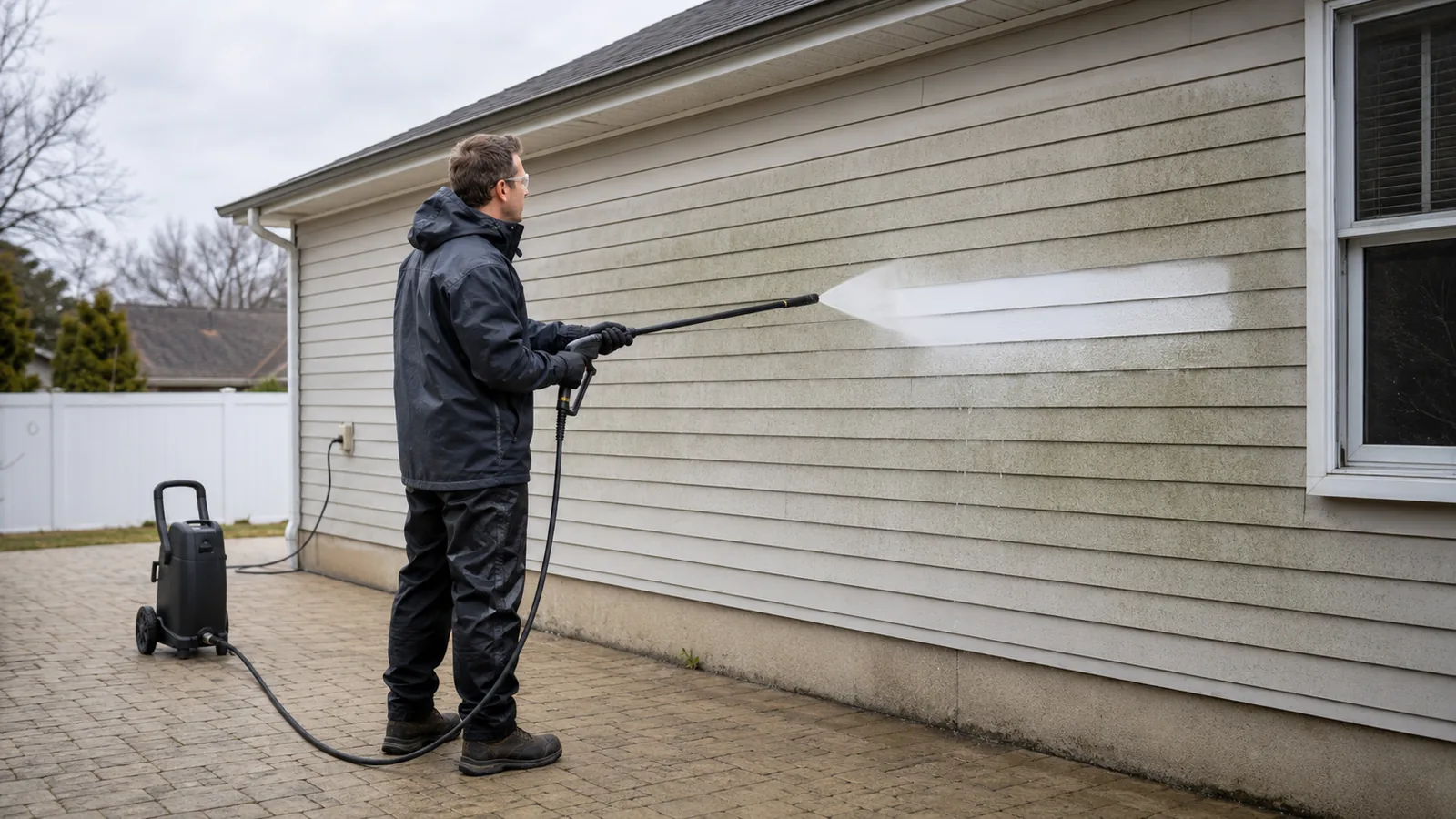
- Wear protective gear. Use safety goggles, gloves, long pants and non‑slip shoes. For gas models, wear hearing protection.
- Secure your work area. Keep children and pets away. Remove tripping hazards. Do not use a pressure washer on a ladder; the recoil can cause a fall.
- Select appropriate nozzles. Start with a wide spray (25° or 40°). Narrow (0° or 15°) tips deliver intense jets and can damage surfaces. PBC recommends starting low and increasing pressure only if needed.
- Avoid direct spray on humans or animals. High‑pressure jets can puncture skin and cause serious injuries.
- Maintain your machine. Flush detergent from the system, drain water after use and winterize the pump with antifreeze or pump protector. Inspect hoses for wear and replace if damaged.
FAQ – People Also Ask
Can pressure washers damage surfaces?
What PSI is safe for washing cars?
Do electric pressure washers use less water than gas?
Are pressure washers environmentally friendly?
How often should I maintain my pressure washer?
What’s the difference between a pressure washer and a power washer?
Conclusion
Selecting the best pressure washer for home use comes down to matching power to your cleaning needs. Light‑duty tasks like car washing require modest pressure (under 2 000 PSI). Decks and siding call for mid‑range models (~2 000–2 800 PSI). Removing oil, mold or old paint demands heavy‑duty machines (3 000+ PSI). Electric models offer convenience and low maintenance; gas units deliver more power at the cost of noise and upkeep.
Our top choice, the Westinghouse WPX3200, combines high power with value and earns rave reviews. For budget shoppers, the ePX3500 provides ample power without breaking the bank. High‑end users will appreciate the Simpson PS3228 for its professional‑grade triplex pump and Honda engine.
Pressure washers not only save time but also conserve water and energy. For more detailed buying considerations and deep dives into specific brands, explore our related articles on Pressure Washer Buying Guidefreditech.com and Ryobi Pressure Washer Guidefreditech.com.