
Pressure washers blast away dirt and grime with high-pressure water, making outdoor cleaning tasks like washing cars, decks, driveways, and siding faster and more efficient than hoses or manual scrubbingfreditech.comfreditech.com. Ryobi – a trusted name in power tools – offers a full range of pressure washers designed for homeowners and pros alike. Across their product line, Ryobi combines robust performance (up to 3300 PSI) with user-friendly features like lightweight frames, on-board storage, and easy-connect nozzlesryobitools.com. In this guide, we explain how Ryobi pressure washers work, compare key models (corded, cordless, gas), and highlight real-world performance and value. We also provide step-by-step usage tips, maintenance advice, and FAQ answers to help you get the most out of your Ryobi washer.
Key Takeaway: Ryobi pressure washers deliver professional cleaning power with homeowner-friendly designs. They offer good water efficiency (often using ~80% less water than a garden hosefreditech.com) and come with warranties up to 3 yearsprotoolreviews.com. Whether you need a compact 1800 PSI electric washer or a heavy-duty 3300 PSI gas unit, Ryobi’s lineup covers it.

Why Choose a Ryobi Pressure Washer?
Ryobi pressure washers stand out for powerful performance and user-friendly design across their product range. In recent years, pressure washing has become a $3+ billion industry (globally)freditech.com, driven by the demand for efficient home cleaning. Ryobi taps into this by offering models for light, medium, and heavy-duty tasks:
- Broad Performance Range: Ryobi’s electric/corded models start around 1800–2100 PSI (pounds per square inch) at 1.2–1.3 GPM (gallons per minute) for general home useprotoolreviews.com. Their high-performance 40V brushless electrics reach 2500–3000 PSIryobitools.com, while gas-powered units deliver up to 3300 PSIryobitools.com. This covers most needs from washing cars and patios to cleaning concrete driveways.
- Water & Time Savings: Pressure washers in general use a concentrated jet to clean surfaces faster and with less water. Ryobi models typically require ~80% less water than a garden hose for the same jobfreditech.com. Less water and quicker cleaning translate to time savings and lower water bills.
- Convenience and Safety: Many Ryobi washers feature lightweight frames (some models under 15 lb) and built-in wheels and handles, making them easy to move and storeprotoolreviews.com. They also include safety features like GFCI-protected cords and safety locks to prevent accidental spraying. On-board storage keeps nozzles, cords, and hoses tidy. These design choices mean you get commercial cleaning power in a homeowner-friendly package.
Compare with a garden hose: For example, a 2000 PSI Ryobi washer can rinse a dirty car in minutes, whereas a regular hose would take much longer and use far more water. Manufacturers note that pressure washers save up to 80% water over hosesfreditech.com. In short, investing in a Ryobi washer means faster, deeper cleaning with less effort – a smart value for home maintenance.
Understanding Pressure (PSI), Flow (GPM), and Cleaning Power
A pressure washer’s performance is defined by PSI (pressure) and GPM (flow). Higher PSI means a stronger spray that can strip away stubborn dirt; higher GPM means more water volume to rinse debris quicklyfreditech.com.
- PSI (Pounds per Square Inch): Measures the force of the water. Electric models (like many Ryobi washers) typically range from about 1,300 to 2,700 PSIfreditech.com. Gas models deliver higher pressure (2,500–4,000+ PSI)freditech.com. For context, Ryobi’s corded electric models cap around 2100–3000 PSI (for example, the RY142012 at 2100 PSIprotoolreviews.com) while their gas unit reaches 3300 PSIryobitools.com.
- GPM (Gallons per Minute): Measures water flow. Higher flow covers surfaces faster. Many Ryobi electric washers are around 1.2–1.5 GPM, which is adequate for typical tasks. The gas RY80589 hits 2.4 GPM for heavier jobs.
- Cleaning Units (CU): Sometimes advertised as PSI×GPM. For example, a 2000 PSI × 2.5 GPM washer has 5,000 CU. (Popular Mechanics notes that sometimes higher flow can clean faster than just higher PSIfreditech.com.) In practice, match the washer to the task: use wide-angle nozzles for gentle rinsing or narrow nozzles for stubborn grimefreditech.com.
Ryobi’s user manuals and labels often report both PSI and GPM. When comparing models, consider both: for instance, the 1800 PSI/1.2 GPM Ryobi RY141803 (about 2,160 CU) is fine for light tasks like washing a car, while the 2100 PSI/1.2 GPM RY142012 (2,520 CU) gives more power for bigger jobsprotoolreviews.com. Always start with a lower-pressure (wider spray) nozzle and work up to avoid surface damagefreditech.com.
Ryobi Pressure Washer Models: Power and Features
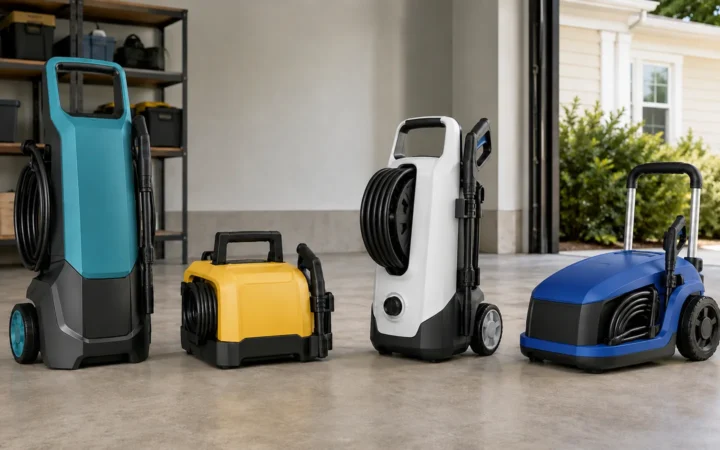
Ryobi offers a full lineup of washers. Below we break down the main categories and representative models:
Electric (Corded) Models
Ryobi’s corded electric pressure washers are popular for their simplicity and affordability. Key models include:
- Ryobi RY141803 (1800 PSI, 1.2 GPM): The smallest new model, delivering 1800 PSI at 1.2 GPM. It weighs only 14.4 lb for portability. It comes with two quick-connect nozzles (15° and turbo) and a soap applicatorprotoolreviews.com. A built-in handle, 35′ power cord and 20′ high-pressure hose all wrap neatly on the unit. Retail is about $109, making it a budget-friendly choice for light to medium tasks (like spraying furniture or cars).
- Ryobi RY142012 (2100 PSI, 1.2 GPM): A step up for more power. This 2100 PSI washer still runs on 110V power and 1.2 GPM but handles tougher jobs (sidewalks, home siding) better. It’s heavier (around 22 lb) but has wheels and a telescoping handle for easy movement. On-board storage for nozzles (including a built-in slot for the detergent nozzle) is a nice design touch. Priced around $199, it’s considered a great value with more capability. This 2100 PSI model hits a sweet spot of power vs. price.
- Ryobi RY142022 (2000 PSI, 1.2 GPM): Another 2000+ PSI model, very similar specs to the RY142012, often priced in the same mid-range tier.
- Higher-end Corded Models (2500–3000 PSI): Ryobi’s top corded washers reach 2500–3000 PSI. For example, the RY142500 and RY143011 are brushless-motor washers (2500 and 3000 PSI respectively) with up to 2.5 GPMryobitools.com. These cost several hundred dollars and compete with gas performance. They often include a 12″ surface cleaner for decks/driveways. Use these for heavy stains or large surfaces.
Value note: The new 1800 PSI model is very lightweight and compact, but if you need more cleaning muscle (at only a bit more cost), stepping up to a 2000–2100 PSI model is wise. Ryobi’s corded range offers something in every price bracket from ~$100 to ~$400, with higher PSI models naturally costing more.
Battery-Powered (Cordless) Models
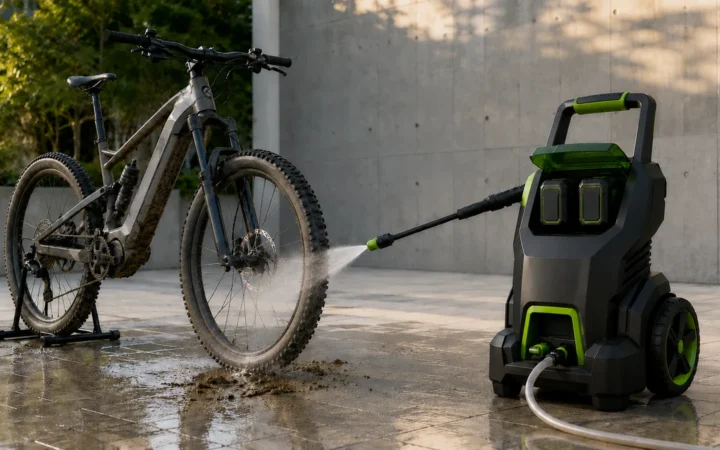
For ultimate portability, Ryobi offers 18V One+ and 40V battery pressure washers (often called “Power Cleaners” or “EZ Clean”). These use rechargeable battery packs from Ryobi’s system:
- Ryobi 18V ONE+ Cordless Power Washer (22 bar/320 PSI): This compact unit is aimed at cleaning bikes, small boats, and other gear on the go. It uses a big One+ battery (4.0Ah) and can pull water from a bucket or bottle. Reviewers praise it as “well made” with good cleaning power for its sizembr.co.uk. It delivers about 182 liters/hour at 22 bar (approximately 320 PSI). This is not as powerful as corded models, but the portability is a major advantage. Typical run time is ~30 minutes per charge (enough to wash several bikes).
- Ryobi 18V & 40V EZ Clean and Brushless Models: Ryobi’s battery lineup also includes larger washers. The 18V ONE+ EZ Clean kits (e.g. RY12035 series) deliver around 1200–1400 PSI on battery, suitable for patio furniture and tools. The 40V high-performance brushless models (e.g. RY40306BTL, RY40PW15) reach 1500–2000 PSIryobitools.com. For example, the RY40HPPW12B is a 1200 PSI 40V brushless unit. These cordless models trade off some pressure for freedom from cords, and they are great for light deck or vehicle cleaning when an outlet isn’t handy. Reviewers note their ease of use (just pull the trigger) and good water flow, though they usually lack the high pressure of plugged-in models.
- Example: The Ryobi 18V ONE+ 22-bar (320 PSI) kit was rated 9/10 by MBR, praised for build quality and battery lifembr.co.ukmbr.co.uk. It weighs ~2.5 kg with battery and includes multiple nozzle settings for different spray patterns. Its main cons are the weight and the limited run time, but for many users the convenience outweighs that.
Tip: If your cleaning needs are light and portability is key (e.g. farm, campsite, boats), a Ryobi cordless washer can be ideal. But for regular driveway/siding cleaning, a corded or gas model with higher PSI/GPM will finish jobs faster.
Gas-Powered Models
Ryobi’s gas pressure washers use engines (usually Honda clones) for maximum power and full mobility (no cords needed). The flagship gas model is:
- Ryobi RY80589 (3300 PSI, 2.4 GPM): This 212cc gas washer delivers 3300 PSI at 2.4 GPMryobitools.com. It’s built for heavy-duty work like large patios and commercial use. It features a robust wheeled steel frame, 5-in-1 quick-connect nozzles, a pump protector, and comes with a surface cleaner attachment. Retail price is around $399. This model rivals professional units and is the most powerful in Ryobi’s line.
- Other Gas Options: While RY80589 is the main new model, older gas models (e.g. 2900 PSI/270cc) exist in Home Depot’s selection. In general, Ryobi gas washers are comparable to other DIY-focused brands (like Westinghouse or Generac), offering durable pumps and Honda-type engines for longevity.
Ryobi also offers a gas/diesel commercial line through other channels, but for homeowners the 3300 PSI gas model is the cap. It’s best for large areas, farms, and construction clean-ups. If you have only light tasks, a smaller electric model or a cordless unit may be more convenient and economical.
Key Features of Ryobi Pressure Washers
All Ryobi washers share several useful design features that add to performance and ease of use:
- Compact, Portable Design: Many Ryobi washers are surprisingly lightweight (e.g. ~14–22 lb) for their powerprotoolreviews.com. They have built-in carrying handles and/or wheels. The new 1800 PSI model is one of the smallest in its class at just 14.4 lb. A large 35-foot power cord and long high-pressure hose (20–25 ft) provide reach without add-on extension cords. Cord wrap hooks and hose reels keep cables neat.
- On-Board Storage: A common complaint with pressure washers is losing attachments – Ryobi solves this by giving onboard mounts. The storage compartments or clips hold the included nozzles (15°, 25°, turbo) and even the detergent wand in one model. This keeps accessories at hand and prevents damage. Even the soap bottle has a holder. It’s a small detail that adds convenience when moving between tasks.
- Detergent/Soap System: Every Ryobi washer includes a built-in soap applicator or foam nozzle. For example, the RY141802/RY141803 models have an easy soap applicator to inject detergentryobitools.com. This allows deep cleaning with chemical cleaners (car shampoo, degreasers) when needed. Simply pour detergent into the onboard tank or clip on a foam cannon. (For chemical cleaning, Ryobi recommends using biodegradable soap and flushing the system with clean water afterward.)
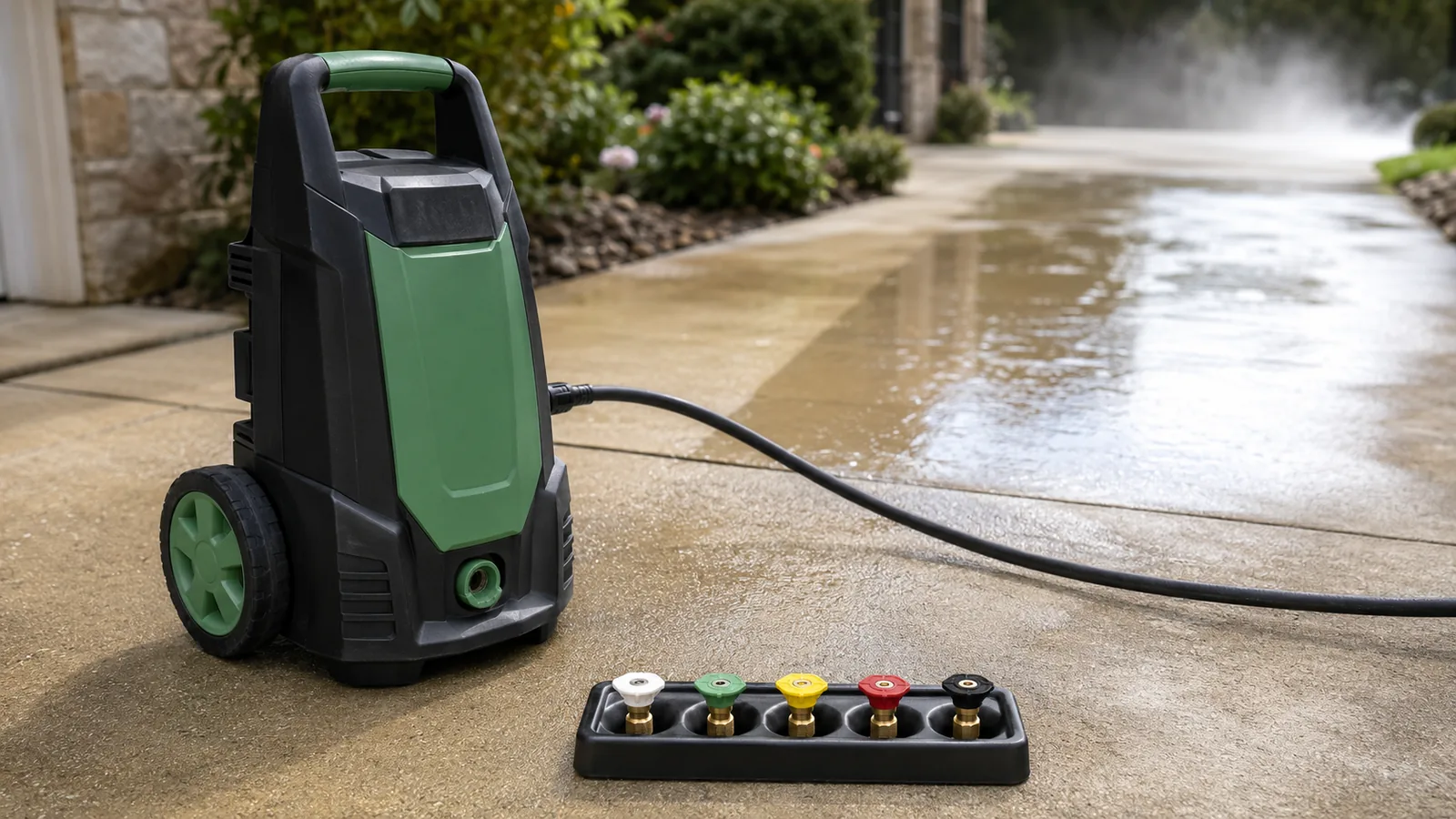
- Nozzle & Accessory Options: Ryobi washers use a standard ¼″ quick-connect system. Models include 0° (red), 15° (yellow), 25° (green), 40° (white) spray tips, plus a turbo (rotating) tip on higher models. These let you concentrate force for tough spots or use a wide fan for gentle rinsingfreditech.com. Ryobi also sells specialty nozzles and surface cleaners. Some newer models come with a 15° and turbo nozzle, while most higher-pressure units add a 25° (useful for wider cleaning). Attachments like rotary scrub brushes, gutter cleaners, and extension wands are available to tackle specific tasks.
- Durable Pump: Ryobi uses either axial or triplex pumps depending on model. Higher-end models tend to have brass-head triplex pumps for heavy use (lasting thousands of hours), whereas entry models use simpler axial pumps. The pump is the heart of a washer – Ryobi’s triplex pumps (found on their gas units and top electrics) help these washers handle continuous dutyfreditech.com.
- Safety Features: Ryobi incorporates safety into design. Electric units have GFCI (ground-fault) cords to prevent shocks. All models have trigger locks so you can’t accidentally spray. Quick-connect fittings ensure a secure hose attachment. Many models also include a pump protector (valve that prevents overheating). For example, CDC and safety agencies recommend never pointing the wand at people and always using PPEfreditech.com – Ryobi provides clear instructions and lock-off triggers to enforce that.
Overall, Ryobi’s features focus on ease of use: bright color-coded nozzles, onboard storage, and simple controls. For instance, in the Ryobi RY142012 design, the soap nozzle is cleverly stored behind a front panel, addressing the “where do I keep this?” issue that many other brands overlookprotoolreviews.com.
Using a Ryobi Pressure Washer: Step-by-Step Guide
Using a pressure washer safely and effectively involves preparation, proper technique, and careful shutdown. Here’s a step-by-step outline:
- Prepare Safety Gear and Area: Wear protective gear – at minimum, eye protection (goggles), sturdy closed-toe shoes, and glovesfreditech.com. (Ryobi and safety experts recommend gloves and hearing protection, especially with gas washers.) Remove tripping hazards (toys, furniture) from the work area. Cover plants or electrical outlets if needed.
- Set Up Equipment: Place the washer on a flat surface. Attach a garden hose to the washer’s water inlet and turn on the water supply. Release the trigger on the spray gun to prime the pump (this expels air from the system)freditech.com. If your model has a detergent tank, pour in biodegradable soap and attach the soap nozzle or injector as instructedryobitools.com. Plug in (or install battery) and ensure the power switch is off before proceeding.
- Select a Nozzle: Start with a low-pressure nozzle (green 25° or white 40°). This covers a wider area and reduces the risk of damage. Ryobi washers often include color-coded tips – green (25°) is a safe general-use tip, yellow (15°) provides more force, and red (0°) is a pinpoint jet (use with extreme caution). The turbo tip creates a rotating narrow jet for extra power on stubborn spots. Attach your chosen nozzle to the spray wandfreditech.com.
- Start the Washer: Turn on the power (or engine). Stand a safe distance (at least 6–12 inches) from the surface. Squeeze the trigger to spray water. Sweep the wand side to side in even strokes, gradually moving closer or farther to control pressurefreditech.com. Keep the wand moving – never hold the jet in one spot too long, or you may gouge the surface. Never point the spray at people, pets, or unprotected skin; the force can cause injuryfreditech.com.
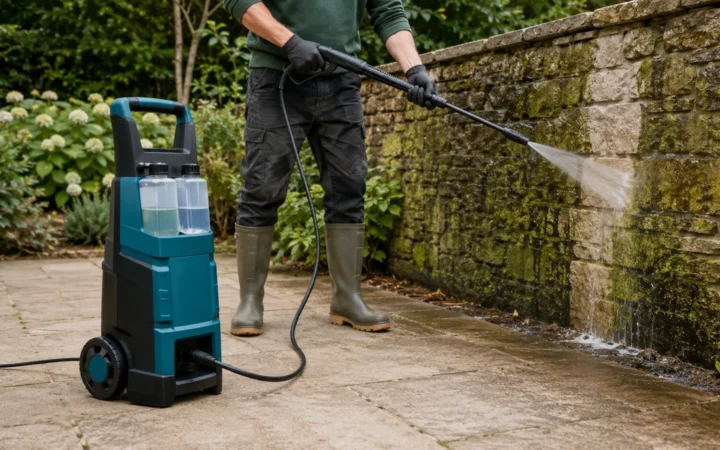
- Cleaning Technique: Work from top to bottom on vertical surfaces (so dirty water flows downward). For washing cars or decks, use smooth, overlapping passes. If using detergent, spray the foam or soap over the area first, let it dwell per instructions, then rinse thoroughly with clean water. Ryobi’s foam cannons make car cleaning easy – you’ll see thick foam lifting dirt.
- Rinse & Shutdown: After washing, switch to the widest nozzle (white 40°) and rinse away soap and debris. Turn off the washer at the switch/engine. Release pressure by squeezing the trigger before disconnecting hosesfreditech.com. Drain any water from the pump and hoses (important before storage or winter to prevent freeze damage). Store the washer indoors or under cover. Perform quick maintenance: wipe down the unit, coil the hose and cord, and store accessories.
Maintenance and Care
To extend the life of your Ryobi pressure washer and ensure safety:
- Routine Checks: After each use, inspect hoses and nozzles for clogs or wear. Clear any debris. Check that all fittings (hose, gun, nozzle) are tight. Ryobi’s manual also recommends changing the pump oil annually or after 100 hours (on triplex pumps).
- Flushing: Run clean water through the system to flush out detergent. This prevents chemical damage to seals. For gas models, follow the manual: usually run the engine with fresh water for a minute, then stop.
- Winterizing: If storing in freezing temperatures, drain all water from the pump and hoses. Ryobi suggests using antifreeze solution in the pump (following the manual) or blow out lines with air. This prevents ice from cracking the pump head.
- Storage: Keep the pressure washer in a dry place. Coil hoses and cords neatly. For battery washers, remove the battery to prevent discharge.
Remember the basics of care: store indoors when not in use, and always depressurize before transport. These simple steps protect your Ryobi unit and keep it ready for the next job.
Value and Pricing
Ryobi pressure washers are generally priced to offer strong value. Entry-level corded models start around $100–$150, mid-range electrics $200–$300, and the top electric or gas models $400 and up. For example, the 1800 PSI RY141803 launched around $99, while the 2100 PSI RY142012 is about $199protoolreviews.com. The heavy-duty 3300 PSI gas RY80589 runs about $399.
Compared to competitors, Ryobi often undercuts premium brands. A 1800–2000 PSI electric washer from some brands can cost $150–$250, whereas Ryobi’s version offers similar specs at $100–$200. The 2100 PSI model is noted as a very good value in reviews. Higher-end Ryobi electrics include features like brushless motors and come with long warranties (typically 3 years for residential use), which adds peace of mind.
In short, Ryobi aims to give pro-level cleaning power at DIY-friendly prices. Even their premium 40V brushless washers ($500–$600ryobitools.com) are priced below some professional units, making them attractive for serious hobbyists or small contractors. Always consider total package: warranty, accessories included, and performance. Ryobi’s combos often include soap guns or surface cleaners, adding extra value.
Frequently Asked Questions
What PSI and GPM do Ryobi pressure washers offer?
Are Ryobi pressure washers cordless?
Can I use detergent or soap with a Ryobi pressure washer?
Does Ryobi make a gas pressure washer?
How do I maintain a Ryobi pressure washer?
What warranty comes with Ryobi pressure washers?
Where can I buy Ryobi pressure washers?
Conclusion
Ryobi pressure washers deliver a compelling blend of power, performance, and value. Their machines make tough cleaning tasks quick and efficient, often saving time and water compared to hosesfreditech.com. Across the Ryobi lineup – from a lightweight 1800 PSI electric to a heavy-duty 3300 PSI gas model – you’ll find durable pumps, useful features (like onboard storage and soap tanks), and generally excellent warranties. For the homeowner or serious DIYer, Ryobi offers enough variety to match almost any project. Whether you’re sprucing up your patio or prepping a home for sale, a Ryobi washer is a powerful tool for the job.
Further Reading: Check Freditech’s
- Pressure Washer Buying Guidefreditech.com
- Guide on Pressure Washer Technologyfreditech.com for more on choosing and using pressure washers.
- Steam Cleaner guidefreditech.com if you’re exploring other deep-cleaning tools.