
Introduction
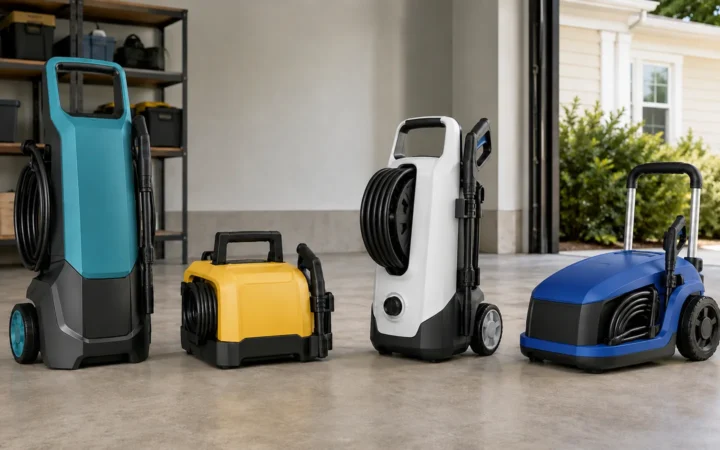
Pressure washers have become indispensable tools for homeowners and professionals who want to remove stubborn dirt, mold, old paint and grease quickly. These machines blast a focused stream of water at pressures ranging from a few hundred to tens of thousands of pounds per square inch (PSI), making them far more effective than a garden hose. The global pressure‑washer market reflects growing interest in efficient cleaning: Precedence Research notes that the market was valued at USD 2.10 billion in 2024 and is expected to exceed USD 3 billion by 2034, growing at about 3.63% annuallyprecedenceresearch.com. Electric models accounted for 54% of market share in 2024, while North America represented the largest regional share. Another study by Straits Research found similar growth, estimating the 2024 market at USD 3.28 billion and projecting it to reach USD 4.73 billion by 2033straitsresearch.com. These figures underline an expanding industry driven by increased awareness of cleanliness, growth in car‑washing businesses, and technological innovations.
This comprehensive guide compares pressure‑washer types, explains the technical specifications that matter, and offers step‑by‑step advice on choosing, operating and maintaining a machine. It draws upon expert articles from Popular Mechanics, Angi, United Rentals, public health agencies and academic sources to ensure accuracy and authority. You will learn how PSI and gallons per minute (GPM) interact, the differences between electric and gas models, how to match cleaning power to specific tasks, and how to protect yourself and the environment. Throughout the article, links direct you to related resources on FrediTech, such as our Best Steam Cleaner for Home and Maximize Smart Home Efficiency guides.

{getToc} $title={Table of Contents} $count={Boolean} $expanded={Boolean}
Market Overview and Importance of Pressure Washing
Growing demand and market trends
The rising popularity of pressure washers stems from multiple factors:
- Increasing focus on hygiene and efficiency. Precedence Research reports that demand from residential, commercial and industrial sectors is driving the market because pressure washers deliver cleaning with lower maintenance costs and less time.
- Regional and product trends. North America dominated the market in 2024 with a 43 % share, while Asia‑Pacific is predicted to be the fastest‑growing region due to rising disposable incomes and adoption of advanced consumer electronicsprecedenceresearch.com. Electric‑based washers held 54 % of the product share, indicating strong consumer interest in quieter, low‑maintenance machines. Gas‑powered units are still expected to grow significantly thanks to their heavy‑duty capabilities.
- Industrial and professional use. The U.S. pressure‑washer market alone was valued at USD 390 million in 2024 and is expected to reach USD 570 million by 2034precedenceresearch.com. Growth is linked to the booming car‑wash industry, which in 2023 recorded 58,938 car‑wash and auto‑detailing businesses in the U.S., up 4.8 % from the previous year. Pressure washers are also widely used in construction, agriculture and manufacturing to clean equipment and maintain infrastructure.
- Innovation and AI integration. New models incorporate artificial intelligence for automation and optimized water pressure. Precedence Research explains that AI helps analyze the surface being cleaned, adjust pressure patterns and provide real‑time monitoringprecedenceresearch.com. This trend signals a future of smarter, more efficient power‑washing equipment.
Why pressure washing matters
Pressure washers save time and water compared with scrubbing by hand. They dislodge dirt, mildew and old coatings using high‑pressure water, and hot‑water or detergent systems break down grease and grime. Regular pressure washing prevents decay on siding, decks, driveways and vehicles, improving curb appeal and extending the life of surfaces. Professional contractors rely on heavy‑duty machines for graffiti removal, paint stripping, construction clean‑up and equipment maintenance. Whether you own a home or manage a business, choosing the right pressure washer helps you complete tasks efficiently and safely.
Understanding Pressure‑Washer Specifications
When shopping for a pressure washer, the technical specifications can be confusing. The most important metrics are PSI (pounds per square inch), GPM (gallons per minute) and cleaning units (CU). Understanding how these work together will help you match a machine to your cleaning needs.
PSI and GPM: The basics
- PSI measures water pressure. According to Popular Mechanics, PSI indicates how hard the water hits the surface. Higher PSI increases your ability to blast through stubborn grime, remove paint and dislodge debris. Electric pressure washers generally deliver 1,300–2,700 PSI, making them suitable for cars, patio furniture and light concrete cleaning. Gas models deliver 2,500–4,000+ PSIpopularmechanics.com, which is ideal for stripping paint or cleaning large concrete areas.
- GPM measures water flow volume. GPM tells you how much water the machine expels per minute. Higher GPM means faster coverage and more thorough rinsingpopularmechanics.com. For example, a machine with lower PSI but higher GPM may clean faster because it rinses away debris more quickly.
- Cleaning units (CU) combine PSI and GPM. Popular Mechanics notes that multiplying PSI by GPM gives you a measure of overall cleaning powerpopularmechanics.com. A machine with 2,000 PSI and 2 GPM produces 4,000 CU, while another with 1,500 PSI and 3 GPM yields 4,500 CU. The second machine cleans faster despite its lower pressure.
What do CU numbers mean?
United Rentals explains that cleaning units—also called effective cleaning units (ECU)—provide a useful way to compare machinesunitedrentals.com. A higher CU indicates the machine will clean surfaces more quickly. However, you still need to ensure the PSI and GPM fit your specific job; extremely high pressure can damage wood and other soft materials, while too low a flow may not rinse away loosened grime.
Choosing the right PSI and GPM for tasks
United Rentals offers practical guidelines for matching PSI and GPM to common tasksunitedrentals.com:
Task | Recommended PSI range | Recommended GPM range |
Light‑duty jobs (cars, outdoor furniture, grills) | 1,000 – 1,750 PSI | 1.4 – 1.6 GPM |
Medium‑duty jobs (concrete cleaning, siding, asphalt driveways) | 2,000 – 2,800 PSI | 2 – 3 GPM |
Heavy‑duty jobs (paint stripping, graffiti removal) | 2,800 PSI or higher | 3 – 4 GPM |
Professional/commercial applications | 3,100 PSI and above | Varies by task; often 3 – 5 GPM |
For extremely heavy jobs like industrial cleaning or bridge maintenance, contractors use ultra‑high‑pressure systems (7,000–50,000 PSI)ultimatewasher.com, but these are beyond the scope of typical consumer use.
Gas vs. electric vs. battery‑powered machines
Choosing between electric and gas pressure washers is a major decision. Each type has advantages and trade‑offs.
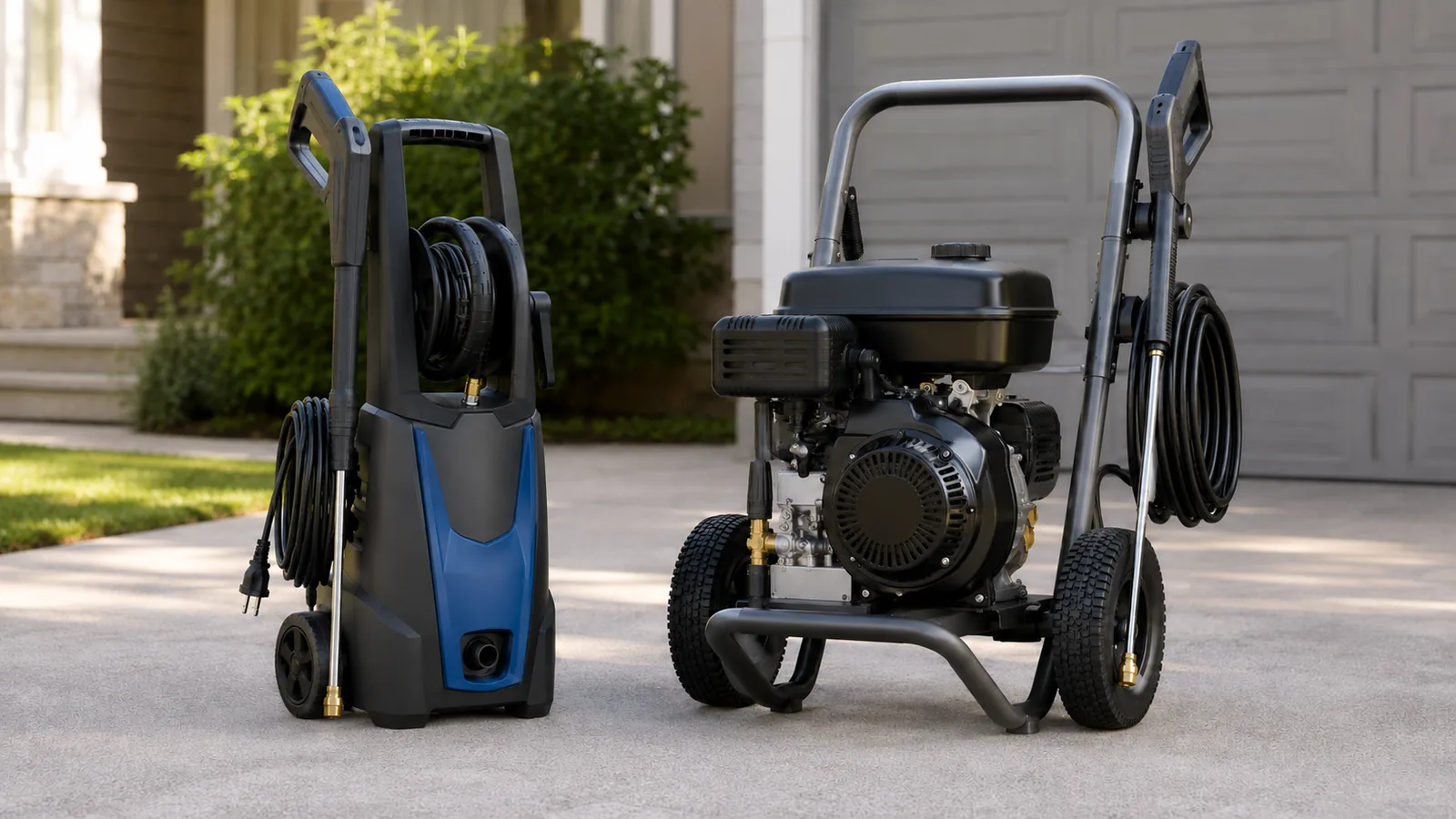
- Electric pressure washers are lighter, quieter and virtually maintenance‑free. Angi’s buying guide notes that most electric units have a PSI between 1,400 and 2,000 and a GPM between 1.1 and 1.75angi.com. They are ideal for washing vehicles, outdoor furniture or small decks and patios. However, they require access to an outlet and are limited by cord length. Some models cannot be used with extension cords, so check the manufacturer’s recommendationsunitedrentals.com.
- Gas pressure washers deliver higher pressures and flow rates (often 2,000–4,000+ PSI and 2–4 GPM)popularmechanics.com. Angi notes that medium‑duty gas washers typically provide 2,100–2,900 PSI and 1.8–2.6 GPM, suitable for heavily soiled vehicles, patios, decks and fencesangi.com. Heavy‑duty gas units deliver 3,000–3,300 PSI at 2.3–2.8 GPM, while extra‑heavy‑duty machines exceed 3,400 PSI and 4.0 GPM, often used by professionals. Gas units are portable because they don’t need an outlet, but they emit exhaust fumes, require regular maintenance (oil changes, spark‑plug checks) and can be noisyabsolutelycleanservices.com.
- Battery‑powered/cordless pressure washers have emerged recently. They offer convenience and portability but deliver lower PSI (often 350–1,000) and shorter run times. They are best for very light tasks like rinsing bikes or camping gear and may not replace plug‑in models for most users.
Hot‑water vs. cold‑water washers
Cold‑water pressure washers rely solely on water pressure to remove dirt. They are affordable and lightweight, making them ideal for mud, dirt and sand removalunitedrentals.com. Hot‑water pressure washers heat water to cut through oil, grease and tough grime. United Rentals notes that hot‑water machines clean faster and use less detergent but are more expensive, bulkier and often have lower PSIunitedrentals.com. Most residential users choose cold‑water models, while hot‑water units are common in automotive shops and restaurants.
Duty ratings: light, medium and heavy
The Ultimate Washer learning center classifies machines based on PSI rangesultimatewasher.com:
- Light‑duty (1,000–1,900 PSI): Suitable for small household and automotive tasks; typically electric and hand‑carry.
- Medium‑duty (2,000–2,900 PSI): Used for heavier residential chores like decks or driveways; available in both electric and gas models.
- High‑pressure (3,000–6,900 PSI): Professional models used by contractors for commercial or industrial cleaning.
- Ultra‑high pressure (7,000–50,000 PSI): Specialised water blasters for industrial applications such as bridge maintenance.
By understanding these categories, you can choose the right machine without overpaying or risking damage.
Key Components and Features
A pressure washer’s performance and usability depend on its design and accessories. Consider these features when comparing models.
Engine or motor
- Gas engines typically range from 160–420 cc and produce higher horsepower, enabling greater PSI and GPM. They require fuel, oil changes and seasonal maintenance. Always use machines outdoors to prevent carbon monoxide poisoningcdc.gov.
- Electric motors are measured in amps; common ratings are 10–15 amps for residential models and 15–20 amps for higher‑end units. They start instantly, generate no exhaust and require little maintenance but may trip circuit breakers if overloaded. Always use a grounded outlet and test the GFCI before operatingcdc.gov.
Hose and wand
The high‑pressure hose must withstand the machine’s PSI rating. Lengths range from 20 to 50 feet; longer hoses improve reach but reduce pressure due to friction. Some models have hose reels for easy storage. The spray wand or gun connects to interchangeable nozzles; comfortable grips and trigger locks improve control and reduce fatigue. For gas units with high recoil, hold the wand with both hands to maintain controlohs.uky.edu.
Nozzles and spray tips
Different spray patterns are suited to specific tasks. United Rentals describes a universal color‑coding systemunitedrentals.com:
- Black (65°): Low‑pressure nozzle used for applying detergent.
- White (40°): Gentle fan for delicate surfaces (windows, fragile wood).
- Green (25°): Versatile for most household cleaning—decks, siding, patios, vehicles.
- Yellow (15°): Concentrated spray for removing mildew, paint or stains from hard surfaces.
- Red (0°): Powerful pinpoint jet used on durable surfaces like concrete and metal. Use carefully to avoid gouging softer materials.
Some machines come with rotating/turbo nozzles that spin the stream to improve cleaning speed, and adjustable wands that let you alter spray width without switching tipsunitedrentals.com.
Detergent tanks and injection systems
Built‑in detergent tanks simplify adding soap for cleaning oily or greasy surfaces. Some gas machines have injection systems that mix detergent downstream of the pump to avoid corrosion. Always use cleaning solutions formulated for pressure washers and follow local environmental regulations when rinsing chemicals.
Portability and storage
Consider wheel size, frame design and weight. Gas models often weigh 50–90 pounds, while electric units can be 20–40 pounds. Cordless models are lighter but have limited battery life. Foldable handles, wheels and compact frames make storage easier. For apartments or small garages, look for vertical storage designs.
Safety features
- Ground‑fault circuit interrupter (GFCI): Electric pressure washers should have a GFCI plug to reduce electric‑shock risk. Test the outlet and plug before usecdc.gov.
- Thermal relief valve: Prevents the pump from overheating if the trigger is released for long periods.
- Automatic shut‑off: Some models stop the motor when the trigger is released, reducing wear and saving energy.
- Safety lock: Prevents accidental trigger pulls, especially important in households with children.
Step‑by‑Step Guide to Choosing a Pressure Washer
Choosing the right pressure washer requires evaluating your needs, comparing specifications and considering practical factors. Follow these steps to make an informed decision.
Step 1: Identify your primary tasks
List the surfaces and materials you plan to clean: vehicles, decks, fences, driveways, siding, outdoor furniture, machinery or boats. Consider how often you will use the machine and whether tasks require gentle rinsing or aggressive cleaning. For example, cleaning delicate surfaces like wooden decks needs moderate PSI to avoid damage, while removing peeling paint may need high pressurepopularmechanics.com.
Step 2: Determine the required PSI, GPM and duty rating
Use the task table above to select the right PSI and GPM range. If your jobs fall into multiple categories, choose a machine with adjustable pressure or a medium‑duty gas unit that can handle a wider range. Remember that higher cleaning units (PSI × GPM) improve efficiency, but more power isn’t always better; an overly powerful machine can etch wood, chip stone and force water into seals on vehiclespopularmechanics.com.
Step 3: Select electric, gas or battery power
- Electric for light to medium chores near an outlet. Quiet and low maintenance; ideal for homeowners and occasional useangi.com.
- Gas for medium to heavy tasks or jobs away from power sources. Greater mobility and cleaning power but higher maintenance and emissionsangi.com.
- Battery‑powered only for very light tasks or when portability is paramount.
Step 4: Choose cold‑water or hot‑water capability
Most residential users will select cold‑water models because they handle dirt and mud well and are cheaper and lighter. If you plan to clean oily or greasy surfaces regularly (e.g., garage floors, machinery), consider a hot‑water machine despite its higher cost and lower PSIunitedrentals.com.
Step 5: Consider features and accessories
Evaluate features that enhance usability and safety:
- Detergent tank for applying soap.
- Variable nozzles or quick‑connect tips for adapting the spray pattern.
- Hose length and quality; braided steel hoses are more durable.
- Wheels and handles for portability.
- Storage: built‑in hose reels or onboard storage for tips.
- Warranty and service: gas machines may need local service; check availability in your area.
Step 6: Check noise levels and emissions
Gas engines are loud and release exhaust fumes. If you live in a neighborhood with noise restrictions or want to reduce carbon footprint, choose an electric unit. The Centers for Disease Control and Prevention (CDC) warns that using gas engines indoors can cause carbon monoxide poisoningcdc.gov; always use them outdoors at least 20 feet from windows and doorscdc.gov.
Step 7: Read reviews and compare prices
Look for professional reviews (e.g., Popular Mechanics’ tested models) and user feedback on e‑commerce sites. Compare warranties, customer service and availability of replacement parts. Avoid underpowered bargain units that may burn out quickly.
Step 8: Factor in storage and maintenance
Ensure you have space to store the machine and hose. Electric models are easier to store; gas units require winterization and fuel stabilizer. Check that you can easily access spark plugs, oil filters and pumps for maintenance.
Step‑by‑Step Guide to Using a Pressure Washer Safely
A pressure washer can cause serious injuries if misused. Water streams at high pressure cut through skin and can embed debris; electric shocks and carbon monoxide are additional hazards. Government agencies provide clear safety guidelines.
1. Prepare the area
- Clear obstacles: Remove furniture, planters and toys from the work area. Cover electrical outlets, vents and delicate plants with plastic.
- Check electrical supply: For electric machines, plug into a grounded outlet. CDC guidance recommends testing the ground‑fault circuit interrupter (GFCI) before use and keeping cords away from watercdc.gov.
2. Wear protective gear
- Footwear: Popular Mechanics advises wearing closed‑toe shoes or boots, and for heavy duty tasks even steel‑toe bootspopularmechanics.com. University of Kentucky’s safety guide emphasises good footwear and long pantsohs.uky.edu.
- Eye protection: Safety goggles shield your eyes from flying debris.
- Gloves and hearing protection: Gloves improve grip and protect hands; gas units may require ear protection.
- Respirator: Use a respirator mask if working in dusty conditions or using chemicals.
3. Set up the equipment
- Connect the hose: Attach the garden hose to the machine’s water inlet and ensure it is rated for the pressure. Check for leaks.
- Prime the pump: Release the spray trigger to remove air before starting the motor.
- Select a nozzle: Start with a wider nozzle (green or white) to reduce risk of damage, and switch to narrower tips for tougher spotsunitedrentals.com.
4. Operate safely
- Keep the wand moving: Spray in smooth, overlapping strokes to avoid gouging surfaces. Maintain a distance of 6–12 inches from the surface and adjust as needed.
- Avoid pointing at people: The CDC warns never to point a pressure washer at yourself or otherscdc.gov, and the University of Kentucky emphasises keeping hands, feet and body away from the streamohs.uky.edu.
- Hold securely: Use both hands on the wand to manage recoilohs.uky.edu.
- Take breaks: Avoid running the machine for extended periods with the trigger off to prevent pump overheating; a thermal relief valve can help.
5. Finish and maintain
- Rinse surfaces: After cleaning, use a lower pressure or wide‑angle nozzle to rinse away soap and debris.
- Turn off properly: Release pressure before disconnecting hoses. For gas units, switch off the engine and turn off the fuel valve. Store with drained water to prevent freezing.
- Inspect and clean: Check hoses and nozzles for debris. Follow the manufacturer’s manual for pump‑oil changes, lubrication and winterizing.
6. Mind the environment
- Use biodegradable detergents to reduce environmental impact. Avoid harsh chemicals that can harm plants and aquatic life.
- Control runoff: Direct water away from storm drains and natural waterways. Collect debris for proper disposal.
- Conserve water: Use the right nozzle and pressure to minimize water consumption while ensuring effective cleaning.
Real‑World Examples and Use Cases
Residential tasks
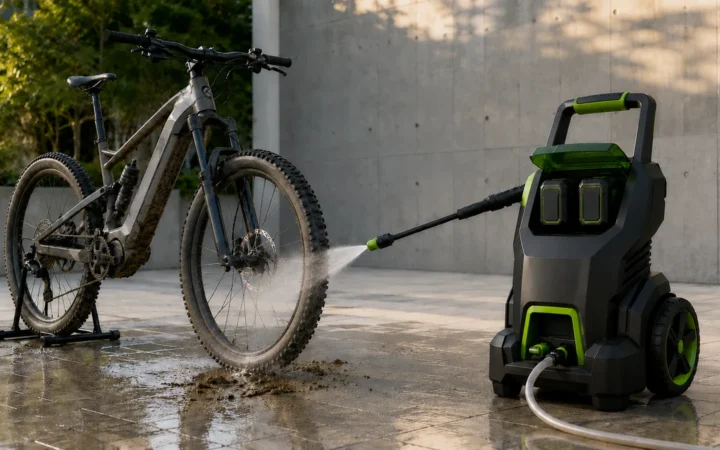
- Car and bicycle washing: Use a light‑duty electric washer (1,000–1,700 PSI) with a 40° white nozzle for a gentle rinseunitedrentals.com. Stand back to avoid damaging paint or forcing water into seals.
- Deck and patio cleaning: Medium‑duty units (1,500–2,500 PSI) with a 25° green nozzle effectively remove dirt and algae. Move the wand along the grain of wood to prevent splintering. Use deck cleaners or oxygen bleach for better results.
- Driveways and concrete: Heavy‑duty machines (2,500–3,000+ PSI) with a 15° yellow nozzle remove oil stains and mildewpopularmechanics.com. For large areas, consider a surface cleaner attachment that covers a wider swath evenly.
- House siding and gutters: Use a medium‑duty unit with a 25° or 40° nozzle, keeping the stream angled downward to avoid pushing water under siding. Avoid the red nozzle on siding to prevent damage.
Commercial and industrial applications
- Construction sites: Contractors rely on 3,000–6,900 PSI high‑pressure units to remove concrete splatter, graffiti and paint. Diesel or gas engines deliver the necessary powerultimatewasher.com. Always follow OSHA safety protocols and local regulations.
- Automotive and heavy equipment maintenance: In garages and farms, pressure washers clean grease and mud off machinery. Hot‑water units are preferred because they break down oil and lubricants fasterunitedrentals.com.
- Public spaces and infrastructure: Municipalities use ultra‑high‑pressure water blasters to maintain bridges and remove road paint. Only trained professionals should operate these machines because they exceed 7,000 PSI.
- Home cleaning services: Service businesses often choose gas pressure washers that balance high cleaning power with portability. According to GetJobber’s industry trends summary, the U.S. industry includes around 41,799 technicians and 32,193 pressure‑washing businesses, highlighting strong demandgetjobber.com.
Smart innovations
Advanced models may include AI‑based sensors that adjust pressure based on surface typeprecedenceresearch.com. Others have app control, allowing you to monitor usage and maintenance. While still emerging, these features promise greater efficiency and user‑friendliness.
Environmental Considerations and Best Practices
- Choose energy‑efficient models: Electric washers with high CU and moderate PSI often deliver comparable cleaning performance to gas units while consuming less energy and producing no emissions. For example, a 1,500 PSI washer with 3 GPM (4,500 CU) can clean faster than a 2,000 PSI model with 2 GPM (4,000 CU)popularmechanics.com.
- Use water responsibly: Avoid excessive pressure, which wastes water and risks damage. Sweep surfaces first to remove loose debris and reduce the amount of rinsing needed.
- Select eco‑friendly detergents: Many biodegradable cleaners are formulated for pressure washers. They break down quickly and minimize environmental impact.
- Dispose of waste properly: Contain runoff when cleaning surfaces coated with chemicals, paint or oils. Contact your local waste management agency for disposal guidelines.
- Maintain your machine: Regular maintenance prolongs equipment life and improves efficiency. Replace worn hoses, check seals for leaks and change oil at manufacturer‑recommended intervals.
Conclusion
Pressure washers are versatile tools that make quick work of cleaning tasks around the home and in professional settings. The right machine balances PSI, GPM and cleaning units to deliver the power you need without overkill. Electric models suit light‑to‑medium jobs, while gas units tackle tougher tasks and offer mobility. Cold‑water washers suffice for most homeowners, whereas hot‑water units excel at cutting through grease. Understanding nozzle types, safety features and duty ratings helps you select and operate equipment safely and efficiently.
Remember to wear protective gear, test electrical connections and never point the wand at yourself or otherscdc.gov. Follow step‑by‑step guides for choosing and using your pressure washer, and consider the environment when applying detergents and managing runoff. For more cleaning tips, check out our Best Steam Cleaner for Home article, which explores chemical‑free sanitation methods. To optimize your smart home and save energy, read Maximize Smart Home Efficiency: Energy‑Saving Tips & Smart Devices Guide for practical advice on connected devices.
With the right pressure washer and knowledge, you can keep your property sparkling while saving time and water. Whether you’re a first‑time buyer or a professional contractor, use this guide to compare models, understand specifications and operate safely. Happy cleaning!