

{getToc} $title={Table of Contents} $count={Boolean} $expanded={Boolean}
Introduction
Pressure washers have evolved from simple cleaning machines into sophisticated systems that deliver industrial‑grade cleaning power while conserving water and energy. Whether you’re a homeowner restoring a patio or an industrial operator removing heavy grime from machinery, understanding how pressure washers work and how to choose the right configuration is essential. The global high‑pressure washer market was valued at USD 3.62 billion in 2024 and is projected to reach USD 5.29 billion by 2033 with a CAGR of around 4.10 %imarcgroup.com. Consumers are drawn not only by cleaning performance but by improved efficiency and sustainability. Modern machines can reduce water use by 20 – 66 % and energy consumption by 20 – 50 % compared with traditional washing methodsimarcgroup.com. This guide explains the key technologies behind pressure washers, compares pump and power‑source options, unpacks nozzle spray patterns, and offers safety and maintenance tips. Links to Freditech’s Ultimate Pressure Washer Comparison Guide provide additional internal resources.
{getToc} $title={Table of Contents} $count={Boolean} $expanded={Boolean}
{getToc} $title={Table of Contents} $count={Boolean} $expanded={Boolean}
Understanding Pressure Washer Basics
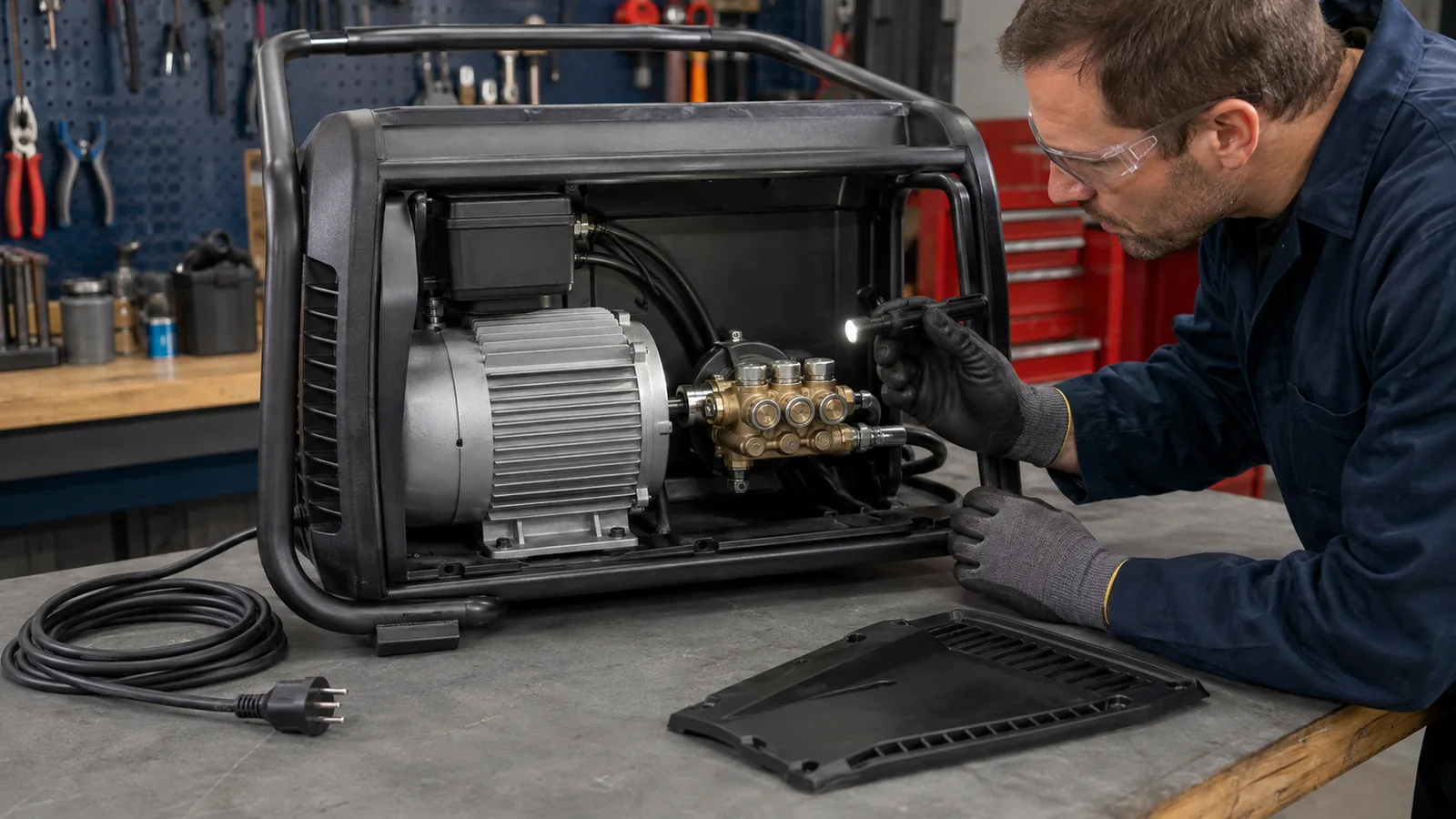
A pressure washer converts ordinary tap water into a high‑energy cleaning jet. The main components are a power source (electric motor, gasoline or diesel engine), a high‑pressure pump, a high‑pressure hose, and a spray gun/wandblog.hotsysystems.com. Water flows into the pump at low pressure and is forced through pistons or plungers to increase pressure dramatically. The pressurized water travels through the hose to the spray gun, where the operator selects a nozzle to control spray pattern and intensityblog.hotsysystems.com.
Two specifications determine a washer’s performance:
- PSI (pounds per square inch): measures the pressure of the water stream. Higher PSI provides stripping power for stubborn grime.
- GPM (gallons per minute): measures water flow. Higher GPM rinses away loosened dirt more quickly.
Manufacturers often advertise the product of these values—Cleaning Units (CU) = PSI × GPM—to indicate overall cleaning power. However, PSI and GPM serve different purposes. A professional may prefer higher GPM for fast rinsing when using detergent, whereas higher PSI helps remove tough stains. For example, a 2,000 PSI washer delivering 2.5 GPM (5,000 CU) may remove dirt faster than a 3,000 PSI unit at 1.5 GPM (4,500 CU) because the larger water volume lifts debris more efficiently.
Duty categories
Pressure washers are categorized by PSI for different tasksblog.hotsysystems.com:
| Duty | PSI range | Typical applications |
|---|---|---|
| Light‑duty | 1,300 – 1,700 PSI | Cleaning bicycles, outdoor furniture, small decks |
| Medium‑duty | 1,800 – 2,000 PSI | Siding, fences, larger decks, vehicles |
| Heavy‑duty | 2,100 PSI and above | Industrial equipment, paint stripping, graffiti removal |
Selecting the right PSI and GPM ensures effective cleaning without damaging surfaces. Always consult the manufacturer’s recommendations and test on a small area first.
Pump Types: Axial vs Triplex
The pump is the heart of a pressure washer. Two common designs dominate consumer and professional models:
Axial (direct‑drive) pumps
Axial pumps attach directly to the engine or motor via a simple shaft. When the drive shaft rotates, a cylinder block with pistons draws water on the upstroke and expels it on the downstroke. The primary benefits are simplicity and compactness; axial pumps make washers lighter and easier to handle. Because they run at engine speed, however, the flow rate is fixed, and seals can wear more quicklybisonclean.com. These pumps are ideal for DIY and homeowner models where cost and weight are major considerations.bisonclean.com
Triplex (crankshaft) pumps
In triplex pumps, pistons are driven by a crankshaft and connecting rods rather than being attached directly to the engine output. This design produces smoother flow and reduced pulsation, which lowers mechanical stress and increases efficiency. Triplex pumps have a higher initial cost and are heavier, but they deliver longer service life, higher pressure, and lower operating costsbisonclean.com. They also handle viscous liquids and continuous duty better than axial pumps. Consequently, triplex pumps are common in commercial and industrial washers for car washes, construction sites, and agriculturebisonclean.com.
When choosing a washer, weigh the frequency and intensity of your cleaning tasks. Occasional home use may not justify a triplex pump’s cost, whereas professional operators benefit from its durability and smoother performance.
Power Source Options: Electric, Gasoline & Diesel
Electric pressure washers
Electric models are praised for being quiet, lightweight and easy to usehotsyab.com. They are ideal for light‑ to medium‑duty tasks such as cleaning vehicles, patios or indoor facilities. Advantages include portability, minimal maintenance and zero emissions during operation. The main limitation is reliance on a nearby power supply, making them less suitable for remote sites.
Gasoline pressure washers
Gasoline‑powered washers offer higher PSI than electric models and are favored for medium‑ to heavy‑duty tasks such as cleaning large machinery or concrete surfaces. Benefits include mobility without cords and durable construction. Drawbacks are heavier weight, louder operation and the need for fuel and oil maintenance, as well as exhaust emissionshotsyab.com.
Diesel pressure washers
For demanding industrial applications, diesel pressure washers deliver superior power output, fuel efficiency and long run timeshotsyab.com. Diesel engines provide higher torque than gasoline engines, making them suitable for continuous use in sectors like oil and gas. These units are more expensive up front and require specialized maintenance but offer unmatched longevity for heavy‑duty cleaning.
Nozzle Types & Spray Patterns
Selecting the correct nozzle is vital for balancing cleaning power and surface safety. Nozzles are universally color‑coded to indicate spray angle and pressure. The Mi‑T‑M guide explains the practical uses of each tipmitm.com:
Color & angle | Use case |
Red (0°) | Produces a small, concentrated stream; removes stubborn stains from concrete or metal. Too aggressive for soft materials like wood or siding. |
Yellow (15°) | Ideal for surface preparation, removing dirt, mold, mildew and paint. Suitable for siding and hard surfaces. |
Green (25°) | Versatile general‑purpose tip; sweeps away dirt or mud and clears leaves from driveways, sidewalks and decks. |
White (40°) | Gentle spray for rinsing, washing vehicles, windows and outdoor furniture; covers a wide area to prevent damage. |
Black (Soap) | Low‑pressure nozzle used to apply detergent before rinsing. |
Rotating / long‑range / multi‑function nozzles | Specialty nozzles create circular or adjustable patterns for faster cleaning or reaching high areas. |
Tip: Start with a wider angle (e.g., 40°) and move closer to the surface. Switch to narrower angles only when more power is required.
Hot vs Cold Water Pressure Washers
Pressure washers can deliver cold or hot water. The choice depends on the type of dirt and the cleaning environment.
Cold water washers
Cold water units are cost‑effective, lighter and mechanically simpler. They efficiently remove dirt, scale and mud while being gentle on surfaces such as wood decks, plastic siding and vehiclessmcwashers.com. For extra cleaning power, most models let you inject detergent through a chemical injector system. Cold water machines are the default choice for residential cleaning and general maintenance.
Hot water washers
Hot water washers incorporate a heater to raise water temperature. The heat melts grease and oils, making these units indispensable for garages, food processing and industrial sites. Hot water machines can sanitize surfaces, killing bacteria and viruses—an advantage for food service and healthcare facilities. Some models double as steam cleaners, producing vapor for deep cleaning. They are heavier, more complex and more costly but excel when dealing with oily residues or working in cold climates where water lines might freezesmcwashers.com.
Safety consideration: Hot water increases the risk of burns and requires temperature‑resistant hoses and PPE. Only trained operators should use hot water unitswindowhero.com.
Environmental Impact & Market Trends
Modern pressure washers are surprisingly eco‑friendly. Studies cited by Hotsy Cleaning Systems show that pressure washers can use up to 80 % less water than a standard garden hose without an automatic shutoffblog.hotsysystems.com. The IMARC Group notes that high‑efficiency household washers reduce water use by 20 – 66 % and energy consumption by 20 – 50 % compared with older modelsimarcgroup.com.
Adoption is growing across residential, commercial and industrial sectors. The high‑pressure washer market—valued at USD 3.62 billion in 2024—is forecast to reach USD 5.29 billion by 2033, with North America holding 36.7 % market share in 2024imarcgroup.com. Rising urbanization, higher hygiene standards and technological innovations such as cordless models and adjustable pressure settings are fueling growth.
As sustainability becomes a selling point, manufacturers offer eco‑mode settings, variable speed pumps and detergent injection systems that minimize water and chemical usage. Electric models with zero onsite emissions and quieter operation appeal to environmentally conscious consumers and regulators.
Safety Guidelines & Personal Protective Equipment
High‑pressure jets can cut skin, cause serious injuries or even electrical shock. Employers and DIY users must prioritize safety through risk assessment, PPE and proper operating procedures. The R+M / Suttner guide provides comprehensive recommendations:
- Risk assessment: Evaluate environmental conditions (temperature, wind, airborne particles) and identify slipping or tripping hazards before startingrm-suttner.com.
- Eye and face protection: Safety goggles or a face shield protect against splashes and flying debris.
- Body protection: Wear water‑repellent, durable clothing or a high‑pressure apron to shield skin.
- Hand, hearing, respiratory and foot protection: Use chemical‑resistant gloves; wear hearing protection because many pressure washers exceed 85 dB, risking hearing loss; use respirators when working with steam or chemicals; and wear slip‑resistant safety shoes. (For reference, everyday noise sources like power lawn mowers operate at 90 dBA, and factory machinery reaches 100 dBAnoiseawareness.org.)
- Inspect equipment: Check hoses, nozzles, connections and emergency stop devices before each use.
- Maintain a stable stance: Avoid ladders or overreaching; ensure stable footing.
- Control distance and pressure: Maintain safe distances from people and property; adjust pressure to match material strength; use only approved cleaning agents.
- Maintenance and servicing: Follow manufacturer service intervals. Regularly check oil levels, seals, nozzles and filters.
The Suttner guide also provides emergency procedures and emphasizes training: keep a first‑aid kit nearby, know emergency numbers and ensure operators are trained in equipment use and hazard controlrm-suttner.com.
Maintenance & Longevity
Routine maintenance ensures safe operation and prolongs the life of your pressure washer. Hotsy Water Blast recommends the following checklisthotsyab.com:
- Daily inspection: Check hoses, nozzles and connections for damage; inspect the trigger gun for wear; verify engine oil and fuel levels.
- Water supply check: Ensure a clean and sufficient water supply; clean or replace inlet filters; inspect hoses for kinks or blockages.
- Nozzle maintenance: Clean nozzles regularly to prevent clogs; replace worn tips; select the appropriate nozzle for the task.
- Pump inspection: Check pump oil levels and replace oil according to manufacturer guidelines; look for leaks and tighten fittings.
- Engine care: Monitor performance; replace air filters and spark plugs as needed.
- Belt and pulley examination: Inspect belts for tension and wear; examine pulleys for damage or misalignment.
- Pressure gauge calibration: Calibrate gauges regularly; replace faulty gauges to ensure accurate readings.
- Unloader valve inspection: Lubricate and clear debris from the unloader valve; ensure proper function.
- General cleaning: Keep the exterior clean; wipe control panels to prevent dust from entering internal components.
- Seasonal and scheduled maintenance: Conduct thorough inspections at the start and end of each season; consider a professional service plan that includes oil changes, belt tightening and nozzle replacement.
Proper storage is equally important. After each use, relieve pressure by squeezing the trigger, disconnect hoses, drain remaining water to prevent freezing and store the unit in a dry location.
Step‑by‑Step Guide: Using a Pressure Washer Safely and Effectively
- Choose the right machine: Determine your cleaning task and select a washer with appropriate PSI, GPM, pump type and power source. Consult a comparison chart like Freditech’s Ultimate Pressure Washer Comparison Guide for detailed product recommendations.
- Gather PPE: Put on safety glasses or a face shield, gloves, hearing protection and sturdy footwear. For hot water units or chemical detergents, wear a protective apron and respiratorrm-suttner.com.
- Connect the water supply: Attach a garden hose to the inlet and open the water supply fully. Check for leaks and ensure the inlet filter is cleanhotsyab.com. Turn on the machine with the trigger gun unlocked to purge air from the system.
- Select and attach a nozzle: Start with a wide‑angle nozzle (white 40°) and lock it into the quick‑connect coupler. Consult the nozzle chart above to match spray angle to the surfacemitm.com.
- Power up: For electric washers, plug into a grounded outlet and switch on. For gas/diesel models, fill the fuel tank, check oil, and use the choke and pull starter. Allow the engine to warm up.
- Test the spray: Stand 3 – 4 feet from the surface and pull the trigger. Adjust your distance and spray angle for effective cleaning without damage.
- Clean systematically: Move the spray wand in overlapping strokes. Apply detergent with the black soap nozzle when needed, let it dwell, then rinse with a higher‑pressure tip. For vertical surfaces, work from the bottom up to avoid streaks, then rinse from top down.
- Monitor and adjust: Watch for signs of overheating, leaks or unusual vibrations. Switch to narrower nozzles (green or yellow) only when necessary and for short periods. Never use the red 0° nozzle on wood or sidingmitm.com.
- Turn off and relieve pressure: When finished, shut off the engine or motor. Turn off the water supply, pull the trigger to release residual pressure and disconnect hoses and nozzles.
- Flush and store: Run clean water through the pump briefly to remove detergent. Drain hoses and keep the machine in a dry place. For winter storage, pump antifreeze through the system or use a pump saver product.
Real‑world example: Cleaning a 100 m² (1,076 ft²) concrete driveway with a medium‑duty 2,000 PSI, 2 GPM electric washer takes roughly 50–60 minutes. The washer uses about 120 liters (32 gallons) of water—significantly less than a garden hose delivering 10 GPM, which would consume 600 liters (160 gallons) in the same time. If the job involves greasy oil stains, switching to a hot water unit or using a detergent with a yellow 15° nozzle will speed up cleaning.
Conclusion
Pressure washer technology offers an impressive blend of power, efficiency and versatility. Understanding PSI, GPM, pump types and power sources helps you choose the right machine for your tasks. Axial pumps suit homeowners who need lightweight, budget‑friendly tools, while triplex pumps deliver commercial‑grade durability. Electric models provide quiet, emissions‑free operation for smaller jobs, whereas gas and diesel units handle heavy‑duty tasks with unmatched mobility and power. Selecting the correct nozzle and following safety protocols ensures effective cleaning without injuring the operator or damaging surfaces. Regular maintenance and proper storage will extend your washer’s life and protect your investment. As the market grows and innovations like eco‑mode settings and cordless designs emerge, pressure washers are becoming greener and more accessible than ever.
Frequently Asked Questions (FAQs)
What’s the difference between PSI and GPM?
Can I convert a cold water washer into a hot water unit?
Which pump type lasts longer?
Do electric pressure washers have enough power for heavy-duty cleaning?
How often should I service my pressure washer?
What safety gear is essential when pressure washing?
Is it safe to pressure-wash wood decks?
For detailed product comparisons and buying tips, check Freditech’s
- Ultimate Pressure Washer Comparison Guide, which covers electric vs. gas models, PSI and GPM, and user‑friendly features.
Author credentials: Wiredu Fred is a founder of Freditech. With over a decade of experience designing power tools and publishing technical guides, he provides practical insights into how modern machinery can simplify everyday tasks. Fred’s work emphasizes safety, efficiency and sustainable technology.