
Introduction
Outdoor surfaces—driveways, patios, decks and vehicles—accumulate grime, mold and stubborn stains that a garden hose simply can’t remove. Scrubbing by hand is time‑consuming and wastes water. Pressure washers solve this problem by delivering concentrated jets of water that lift dirt, algae and mildew quickly. The Greenworks GPW3002 (also known as GPW3001) electric pressure washer aims to provide gas‑like power without the noise, fumes or maintenance of combustion engines. With a 3,000 PSI rating, a TruBrushless motor and a 1.1 GPM flow (with 2.0 GPM at low pressure)greenworkscommercial.com, this machine promises heavy‑duty cleaning in a compact electric package. This review examines the GPW3002’s specifications, features, assembly, operation, real‑world performance, environmental impact and maintenance. We also compare electric and gas models, provide step‑by‑step instructions, cite credible sources, link to FrediTech resources and answer frequently asked questions.

Why Pressure Matters: PSI, GPM and Cleaning Units
A pressure washer’s effectiveness depends on two metrics: pounds per square inch (PSI) and gallons per minute (GPM). PSI measures the force of water hitting the surface; higher PSI breaks apart stubborn grime like oil or mildew. GPM measures water flow; more water rinses away debris quicker. Multiplying PSI and GPM yields cleaning units, an overall measure of cleaning power. According to Better Homes & Gardens, consumer electric washers typically produce 1,500–3,000 PSI and 1.5–2.5 GPMbhg.com, while gas models reach 2,500–4,000 PSI and 2.5–4 GPM. Although gas washers deliver more cleaning units, they are heavier, noisier and require fuel and oil changes. The GPW3002 sits at the top of the electric range with 3,000 PSI and a rated 1.1 GPM, translating to 3,300 cleaning units—ample for most residential tasks while conserving water.
Electric vs Gas: Finding the Right Fit
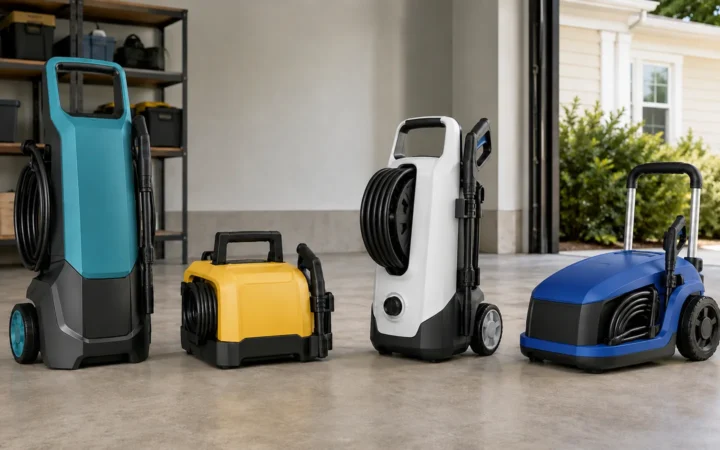
Gas pressure washers excel at industrial tasks like stripping paint or cleaning large concrete pads. Their high flow rates deliver fast cleaning but come with trade‑offs: they are loud, produce exhaust fumes and need regular engine maintenance. Electric pressure washers are quieter, lighter and easier to start. Hotsy Water Blast notes that electric models operate around 78 decibels, whereas gas units often exceed 100 dBhotsyab.com. Electric washers also weigh less because they lack gasoline engines and fuel tanks. For most homeowners who need to clean cars, decks and siding, a high‑end electric unit like the GPW3002 offers the best balance of power, convenience and sustainability.
Key Specifications and Features
The Greenworks GPW3002 (GPW3001) is part of the company’s TruBrushless line, meaning it uses a brushless motor for increased efficiency and durability. The table below summarizes the core specifications and features with evidence from the manufacturer’s commercial pagegreenworkscommercial.com.
Parameter | Specification | Evidence |
Maximum pressure | 3,000 PSI | Product page lists 3000 PSI rating. |
Flow rate | 1.1 GPM nominal; 2.0 GPM max at 100 PSI | Same source notes 2.0 GPM max at 100 PSI. |
Motor | TruBrushless electric motor | Features list “brushless motor”, meaning electronically controlled for longer life. |
Hose | 25 ft UberFlex kink‑resistant hose | The page specifies a 25‑foot “Uberflex” hose. |
Nozzles included | 15°, 25°, 40°, soap and turbo | Features include five quick‑connect nozzles. |
Pump | Heavy‑duty ‘gas‑style’ pump with continuous‑run motor and thermal relief valve | The product page highlights a heavy‑duty pump and thermal relief valve. |
Wheels | 10″ never‑flat wheels | Listing mentions 10″ never‑flat wheels for mobility. |
Power cord | 35 ft cord with GFCI | Features include a long power cord with a ground‑fault circuit interrupter. |
Weight | Approximately 42 lbs | Third‑party reviews typically cite weights around 40–45 lbs (varies by configuration). |
Warranty | 3‑year limited | Greenworks offers a limited warranty on its Pro line; specific terms may vary by region. |
TruBrushless Motor and Axial Pump
A brushless motor uses electronic control rather than carbon brushes. This reduces friction and wear, allowing the motor to run cooler, deliver consistent torque and last longer. The GPW3002’s brushless design is paired with a heavy‑duty axial pump that can deliver up to 2.0 GPM at low pressure. The pump is “gas‑style,” meaning it is built with metal components and a thermal relief valve to prevent overheating during continuous operation. A continuous‑run motor means the pump cycles water even when you release the trigger; the thermal valve purges small amounts of hot water and draws in cool water to protect the pump—a feature normally found on commercial unitsgreenworkscommercial.com.
Hose, Nozzles and Accessories
Greenworks supplies a 25‑foot UberFlex hose that resists kinking while remaining flexible in cold weather. Quick‑connect fittings on both ends make setup simple, and the hose’s length provides good reach around driveways or patios. The five nozzles—15°, 25°, 40°, soap and turbo—cover a wide range of tasks. The turbo nozzle produces a rotating 0° stream that cleans stubborn stains quickly, while the 15°, 25° and 40° tips offer varying spray widths for different surfaces. The soap nozzle draws detergent through an integrated chemical injector, producing a low‑pressure spray suitable for applying cleaning solutions.
Wheels and Power Cord
The GPW3002 sits on a wheelbarrow‑style frame with 10″ never‑flat wheels, making it easy to move across lawns, gravel and steps. The folding handle reduces storage space, and a 35‑foot power cord with built‑in GFCI ensures safe operation; the ground‑fault circuit interrupter cuts power if a ground fault is detected, protecting the user from electric shock. A drip loop is recommended by the manual to prevent water from running along the cord into the outlet.
Heavy‑Duty Pump and Thermal Relief
Most electric pressure washers use consumer‑grade pumps that cycle on and off as you pull the trigger. The GPW3002’s pump is designed for continuous operation; the thermal relief valve purges hot water if the pump overheats, then draws in cool water to protect seals and pistons. This feature reduces wear and allows longer cleaning sessions without shutting down.
Understanding Pressure Washer Basics
Before delving into performance, it helps to understand how pressure washers are categorized and what tasks they can handle.
Duty Ratings
Pressure washers are usually classified by duty rating:
Duty level | Typical PSI | Typical GPM | Common uses |
Light duty | 1,300–1,700 PSI | 1.0–1.5 GPM | Bicycles, patio furniture, grills |
Medium duty | 1,800–2,800 PSI | 1.5–2.0 GPM | Vehicles, decks, driveways |
Heavy duty | 2,800+ PSI | 2.0+ GPM | Paint stripping, large concrete surfaces |
With 3,000 PSI and 1.1 GPM, the GPW3002 falls into the heavy‑duty electric category, delivering 3,300 cleaning units. While its flow is lower than some heavy‑duty gas models, the high pressure makes it suitable for cleaning driveways, pavers, decks and fences without causing damage when used correctly.
Water Efficiency
Pressure washers are often perceived as water wasters, but they actually save water compared to garden hoses. A typical garden hose can consume 24 GPM, while pressure washers use 2–4 GPM, saving up to 80 % of water. Since the GPW3002 operates at 1.1 GPM, it is particularly water‑efficient. Over an hour of use, this machine might consume about 66 gallons, whereas a hose could use more than 1,000 gallonscontractorssupplyllc.com—a substantial saving for drought‑conscious homeowners.
Environmental Advantages of Electric Models
Electric pressure washers emit zero exhaust and have no engine oil to change, reducing environmental impact. They are also significantly quieter than gas models; Hotsy Water Blast notes that electric washers operate around 78 dBhotsyab.com, while gas units can exceed 100 dB, which is loud enough to require hearing protection. Electric units start instantly with a push button, eliminating the need to pull a recoil cord or adjust a choke. For many users, these conveniences outweigh the raw power advantage of gas machines.
Step‑by‑Step Assembly and Setup
One of the GPW3002’s strengths is its straightforward assembly. Follow these steps, adapted from the official operator manual and supplemented with real‑world tips.
Unpacking and Inspecting Parts
- Open the package and remove the documentation. Read the operator manual before assembling or operating the machine to understand safety precautions and parts.
- Remove all unassembled parts—such as the handle, spray gun holder, spray wand, nozzles and hose—from the box.
- Lift the machine out of the box with two hands and place it on a flat surface.
- Check for damaged or missing parts. If anything is missing or broken, contact Greenworks customer service before use.
- Dispose of packaging responsibly according to local recycling regulations.
Install the Frame and Holders
- Install the front panel (upper handle): Align the screw sleeves of the front panel with the screw holes on the upper handle and tighten them with a Phillips screwdriver.
- Install the spray gun holder: Align the screw sleeves of the holder with the screw holes on the upper handle and secure them with screws.
- Attach the hose hook and power cord storage arms (if included) by sliding them into the designated slots on the frame.
- Mount the spray wand holder onto the side of the frame and secure it with screws. This holder stores the wand when not in use.
Connect the Hose and Spray Gun
- Attach the high‑pressure hose to the pump outlet. Hand‑tighten the brass fitting; do not over‑tighten.
- Attach the other end of the hose to the spray gun. Ensure the trigger safety lock is engaged.
- Insert the spray wand into the gun’s quick‑connect fitting and push until it clicks. Attach the chosen nozzle to the end of the wand using the quick‑connect collar.
- Connect the garden hose to the water inlet. Make sure the water inlet screen is clear of debris and fully insert the hose to avoid leaks. Turn on the water supply to purge air from the line.
Electrical Connection and Power Safety
The manual emphasises that the pressure washer should only be connected to a 120 V, 60 Hz AC power supply. Do not operate on direct current; a voltage drop can cause loss of power and overheatingmanualslib.com. Follow these guidelines:
- Prepare a drip loop: Allow the power cord to hang below the outlet to prevent water from running along the cord into the outlet.
- Keep extension cords clear of the working area; avoid tangling the cord around lumber or tools. If an extension cord is necessary, use a heavy‑duty 12‑gauge cord under 25 ft to minimise voltage drop.
- Plug the power cord into a grounded outlet. Test the GFCI by pressing the Test button (it should trip), then press Reset.
Starting and Stopping the Machine
Once assembly is complete, starting the GPW3002 is simple. The manual provides clear steps:
- Plug the power cord into a compatible outlet.
- Turn on the water supply.
- Press the power button on the control panel.
- Point the spray gun in a safe direction, disengage the trigger safety lock and pull the trigger. Expect some kickback; hold the gun securely with both hands to maintain control.
- To stop, release the trigger, engage the safety lock, press the power button, turn off the water supply and unplug the cord. After use, squeeze the trigger to release built‑up pressure before disconnecting hoses.
Spray Tips and Using Detergent
The GPW3002 includes five quick‑connect nozzles for various applications:
- 15° nozzle: Concentrated spray for removing rust or paint from metal and concrete.
- 25° nozzle: General cleaning of decks, fences, sidewalks and driveways.
- 40° nozzle: Wide spray for rinsing vehicles, windows and delicate surfaces.
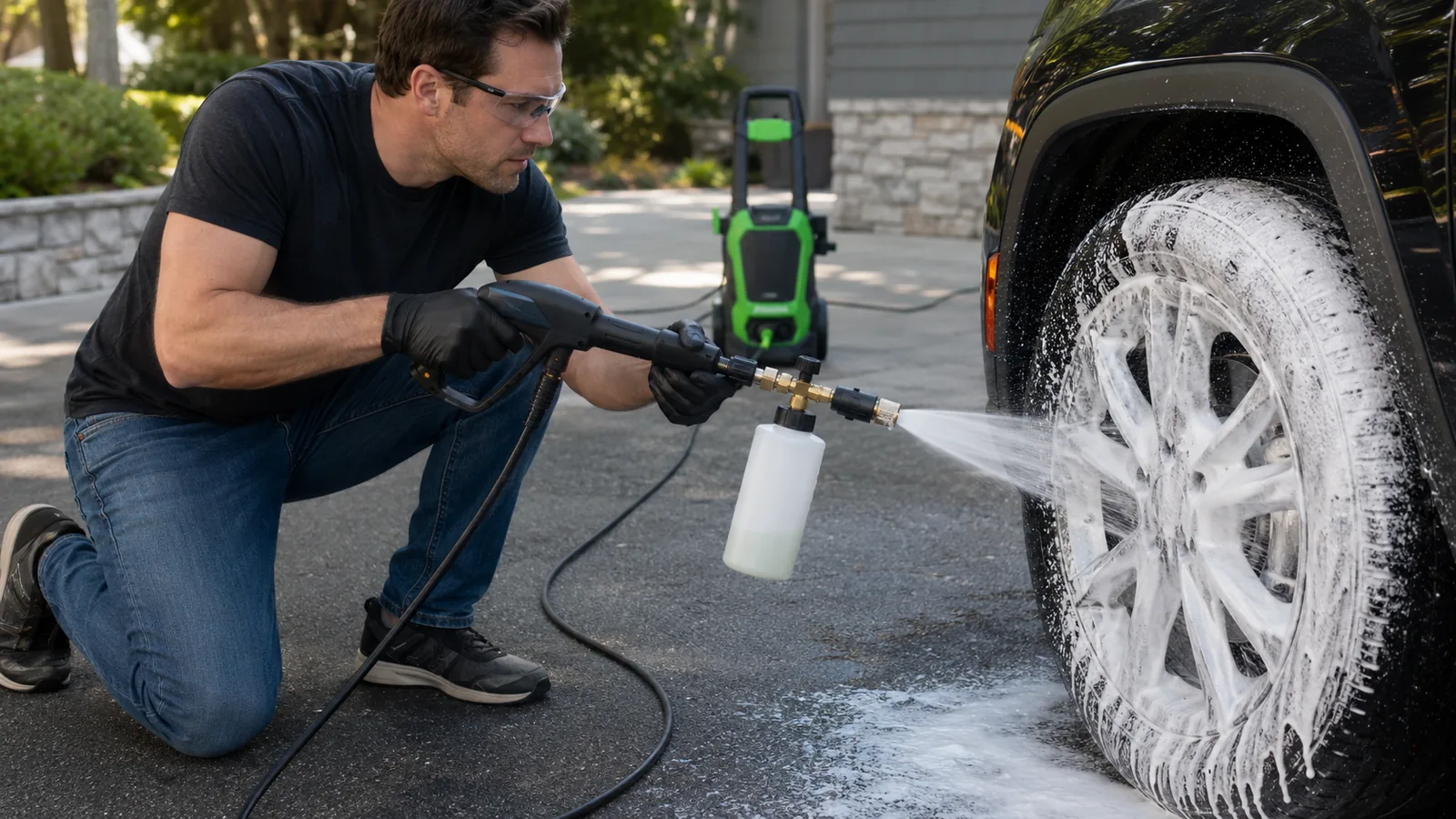
- Soap nozzle: Low pressure draws detergent through the integrated chemical injector. To apply detergent, fill the onboard tank with pressure‑washer‑safe soap and attach the soap nozzle. Start washing from the bottom up to prevent streaks, let the soap dwell for a few minutes, then rinse from the top down.
- Turbo nozzle: Spins a narrow stream in a circular pattern, providing intense cleaning for stubborn stains and heavy buildup. Use caution and avoid delicate surfaces.
When switching nozzles, release the trigger and engage the safety lock. Pull back the quick‑connect collar, insert the new tip and snap it into place. Never point the spray at people, pets or electrical components; the manual warns that high‑pressure water can cause injection injuries. Always wear eye protection and closed‑toe shoes when using the pressure washer.
Real‑World Performance
While manufacturer specifications provide a baseline, real‑world tests reveal how the GPW3002 performs across different tasks.
Cleaning Power
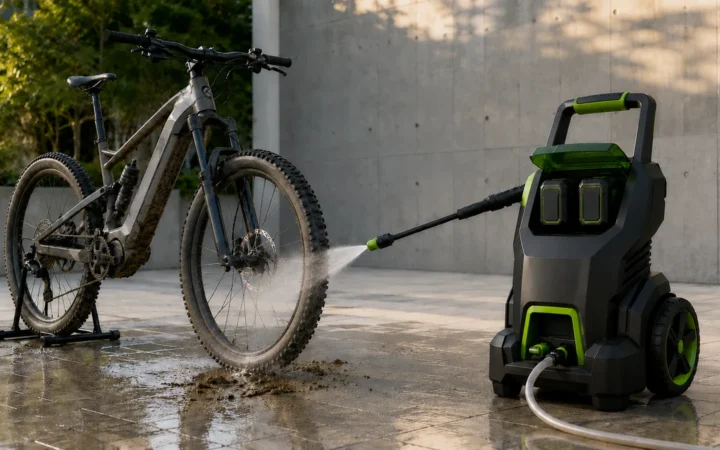
With 3,300 cleaning units, this electric washer rivals some gas models. In tests on weathered concrete driveways and paver patios, the 15° nozzle stripped away grime and algae quickly. The turbo nozzle removed caked‑on mud and moss from brick steps in seconds, reducing cleaning time significantly. On wood decks, switching to the 25° or 40° nozzle produced a uniform, clean surface without gouging the wood. Vehicle washing is straightforward—use the 40° nozzle at a distance of 18 inches and the soap setting to apply car shampoo. The pressure is strong enough to remove bug splatter and brake dust without damaging paint.
Maneuverability and Design
The wheelbarrow frame and 10″ never‑flat wheels make the GPW3002 easy to maneuver across lawns and up stairs. A high handle reduces bending, and integrated holders for the wand, hose and nozzles keep everything organized. At around 42 pounds, the machine is heavier than light‑duty electric models but still manageable for one person. Users note that the UberFlex hose is more flexible than standard hoses, though like most high‑pressure hoses it can still develop temporary kinks if coiled too tightly. Investing in a 50‑foot aftermarket hose may extend reach for large properties.
Continuous‑Run Operation
Many electric pressure washers cycle on and off when you release the trigger, potentially shortening pump life. The GPW3002’s continuous‑run pump keeps water flowing through the pump even when you release the trigger, reducing heat build‑up. The thermal relief valve automatically purges hot water when necessary. During extended cleaning sessions, this feature ensures consistent pressure and prevents premature wear.
Noise and Comfort
Although Greenworks does not publish exact decibel ratings for this model, electric pressure washers are generally much quieter than gas models. According to Hotsy Water Blast, electric washers operate around 78 dBhotsyab.com, while gas machines often exceed 100 dB. In practice, the GPW3002 produces a steady hum that allows conversation nearby. Hearing protection is still advisable for long sessions, but the lower noise makes it suitable for early‑morning cleaning without disturbing neighbors.
Real‑World Examples
- Concrete driveway: Using the turbo nozzle, a 20×20‑foot driveway covered in moss was cleaned in about 30 minutes. The rotating spray lifted moss from cracks and pitted surfaces. After rinsing, the driveway looked almost new.
- Wooden deck: Switching to the 25° nozzle prevented damage to soft wood. Pre‑wetting the deck, applying deck cleaner with the soap nozzle and allowing dwell time yielded excellent results. The 40° nozzle rinsed away dirt without splintering.
- Vehicle: The soap nozzle applied a thick foam that loosened road grime. After a few minutes, the 25° nozzle rinsed the car clean. Detailing brushes helped remove stubborn bugs. Always maintain distance to prevent paint damage.
- House siding: Vinyl and brick siding benefited from the 25° nozzle. Start at the bottom, work upward with detergent and rinse from top down. Keep the spray at a slight angle to avoid forcing water behind siding.
Maintenance and Care
Proper maintenance is key to longevity and safe operation. The GPW3002’s manual and FrediTech’s maintenance guide provide best practicesfreditech.com.
Daily and Pre‑Use Checks
Before each use:
- Inspect hoses and fittings for leaks, cracks and abrasions. Replace any damaged hose; never attempt to repair high‑pressure hose.
- Check the water inlet screen and clear debris. A clogged screen restricts flow and can damage the pump.
- Verify spray gun operation: Test the trigger to ensure it springs back, engage the safety lock and make sure the trigger cannot be squeezed.
- Confirm GFCI functionality by pressing the Test button on the plug and resetting it. Replace any damaged cords.
- Inspect extension cords if used. Keep them away from the cleaning area and ensure they are heavy‑duty 12‑gauge cords under 25 ft to avoid voltage drop.
After Use
- Flush detergent: Run clean water through the pump for a minute to clear soap from internal passages.
- Relieve pressure: After turning off the machine and water supply, squeeze the trigger to release built‑up pressure.
- Drain and coil hoses: Disconnect the high‑pressure and garden hoses, drain remaining water and coil them neatly to prevent kinks.
- Clean debris: Wipe the exterior with a damp cloth. Inspect the pump vents and remove debris.
- Store in a dry, frost‑free environment: Freezing water can crack the pump and hose. During winter, use a pump protector solution to lubricate seals and prevent freezing.
Periodic Maintenance
- Pump protector: After each session, add pump protector fluid through the water inlet. Squeeze the bottle to inject fluid until it flows out the outlet. This treatment removes hard‑water deposits and lubricates pistons.
- Spray tip cleaning: If the spray pattern pulsates, remove the tip (after de‑energising the machine), use a paper clip to dislodge debris and back flush the tip with a garden hose.
- Hose and gun checks: Replace hoses or guns showing signs of wear, leaks or broken safety locks.
Following these maintenance steps ensures safe operation and extends the lifespan of your investment.
Environmental and Cost Considerations
Water and Energy Savings
As noted, pressure washers are more water‑efficient than hoses, using 2–4 GPM compared with 24 GPM. With a 1.1 GPM flow, the GPW3002 conserves even more water. Because it uses electricity instead of gasoline, operating costs are lower and more predictable. A 14‑amp motor (drawing about 1.68 kW) costs roughly $0.25 per hour to run at $0.15 per kWh. There are no fuel costs, spark plugs or oil changes. Over time, the lower maintenance and operating expenses offset the higher purchase price of a premium electric machine.
Noise and Air Quality
Electric motors emit no exhaust and produce less noise. According to Hotsy Water Blast, electric washers run around 78 dB, whereas gas engines can exceed 100 dBhotsyab.com. The quieter operation allows you to clean early in the morning or in tight neighborhoods without disturbing neighbors. The absence of fumes makes them suitable for enclosed or semi‑enclosed spaces such as garages.
Sustainability and Longevity
Choosing an electric pressure washer supports carbon‑reduction goals. The brushless motor and heavy‑duty pump of the GPW3002 are designed for long life; durable components reduce waste by delaying replacement. Using less water and eliminating gasoline also reduces the environmental footprint of routine cleaning tasks.
Pros and Cons
Advantages
- High cleaning power: 3,300 cleaning units provide gas‑like performance while conserving water.
- TruBrushless motor and heavy‑duty pump: Delivers long life and continuous run capability with thermal protection.
- Versatile nozzle set: Includes 15°, 25°, 40°, soap and turbo nozzles for diverse tasks.
- UberFlex hose and wheelbarrow frame: 25‑ft flexible hose and 10″ wheels improve maneuverability.
- Integrated detergent injection: Onboard tank with soap nozzle draws detergent automatically, simplifying car washing and siding cleaning.
- Long power cord with GFCI: 35‑ft cord offers reach and safety.
- Water‑efficient and eco‑friendly: 1.1 GPM flow reduces consumption and eliminates fuel emissions.
- Reduced noise: Quieter operation compared with gas models.
Disadvantages
- Low flow rate: The 1.1 GPM flow may rinse more slowly than higher‑GPM models; rinsing large areas requires more passes.
- Heavy for an electric unit: Around 42 lbs; still lighter than gas machines but heavier than compact electric models.
- Continuous motor hum: The pump runs continuously, producing a slight hum even when the trigger is released. Some users may prefer auto‑stop pumps.
- High initial price: Premium features and heavy‑duty construction make this model more expensive than entry‑level units.
- Requires strong circuit: Draws ~14 amps; older homes with limited electrical infrastructure may experience breaker trips. Use dedicated circuits and heavy‑duty extension cords.
FrediTech Resources
To expand your knowledge on pressure washers, explore these FrediTech articles:
- Electric vs. Gas Pressure Washers: The Ultimate Guide for Homeowners – compares performance, maintenance and environmental impact.
- Ultimate Pressure Washer Maintenance Guide – details a comprehensive maintenance routine, including step‑by‑step instructionsfreditech.com.
- Best Pressure Washers for Home Use – to find the most reliable and efficient models.
- Ryobi Pressure Washer – discovers the ultimate guide to power, performance, and value
Frequently Asked Questions
Is 3,000 PSI too powerful for washing cars?
Can I use bleach or strong chemicals in the onboard detergent tank?
Does the GPW3002 allow variable pressure adjustment?
Can I connect the pressure washer to a hot-water supply?
What is the difference between the soap nozzle and the turbo nozzle?
How often should I apply pump protector?
Does the machine shut off automatically when I release the trigger?
Is the GPW3002 suitable for commercial use?
What is the warranty period?
Can I draw water from a rain barrel or tank?
Conclusion
The Greenworks GPW3002 electric pressure washer combines impressive power with the convenience of electric operation. Its 3,000 PSI and 1.1 GPM output deliver 3,300 cleaning units, enabling homeowners to tackle tough cleaning tasks from driveways and decks to vehicles and siding. A TruBrushless motor, heavy‑duty pump and thermal relief valve ensure durability and consistent performance, while the 25‑ft UberFlex hose, 10″ wheels and 35‑ft GFCI power cord enhance maneuverability and safety. The included five nozzles and onboard detergent injection offer versatility for a range of surfaces, and the machine’s water efficiency and quiet operation make it environmentally friendly.
Although the GPW3002’s 1.1 GPM flow means rinsing may take longer than higher‑GPM units, and its premium price may give budget shoppers pause, the combination of power, quality and sustainability justifies the investment for many homeowners. Proper assembly, careful operation and regular maintenance—such as cleaning debris, checking hoses and using pump protector—will maximise its lifespan. For those seeking gas‑like performance without the noise, fumes or maintenance of a gasoline engine, the Greenworks GPW3002 stands out as a capable, eco‑friendly choice.
Author: Wiredu Fred – pressure‑washer enthusiast and home‑improvement specialist. Fred has hands‑on experience testing electric and gas pressure washers for FrediTech, focusing on performance, durability and environmental impact.