
Introduction
The Volkswagen ID.4 is a critical part of the German brand’s transition to electric vehicles. Marketed as a high-volume, mass-market EV rather than a niche luxury product, the ID.4 aims to bring zero-emission driving to the mainstream. First launched in 2020 and updated for the 2024 model year with a more efficient APP 550 electric motor, the ID.4 continues to evolve. The 2026 lineup offers rear-wheel-drive (RWD) and all-wheel-drive (AWD) configurations with single and dual motors producing between 282 hp and 335 hp and EPA-estimated ranges from 263 to 291 miles. Coupled with a spacious interior, advanced driver-assist features and attractive pricing, the ID.4 competes directly with the Hyundai Ioniq 5, Kia EV6, Ford Mustang Mach-E and Tesla Model Y.
This long-form review takes a step-by-step look at the Volkswagen ID.4: from specs and performance to charging, interior amenities, pricing, safety and real-world range. We include facts, statistics and real-world examples from reputable sources such as Car and Driver, Volkswagen’s official site, Edmunds, EV Database and Wikipedia. Our goal is to help potential buyers and EV enthusiasts understand how the ID.4 fits into the rapidly growing compact EV SUV segment.
Overview of the Volkswagen ID.4
What Is the ID.4?
The ID.4 is a compact electric SUV built on Volkswagen’s modular electric drive (MEB) platform. It represents VW’s first fully electric SUV and is designed for global markets, including the United States, Europe and China. Volkswagen positions the ID.4 as an EV for the masses—a car for “the millions, not the millionaires”. It offers the spaciousness of a small crossover, the driving dynamics of a hatchback and the purposefulness of an everyday family vehicle.
Trims and Powertrains
For the 2026 model year, U.S. buyers can choose from the RWD Pro and Pro S trims or AWD Pro, Pro S and Pro S Plus. European markets additionally offer Pure (smaller battery) and performance-oriented GTX trims. Key powertrain options include:
- Single-motor RWD: A rear-mounted permanent-magnet electric motor producing 282 hp and approximately 402 lb-ft of torque (compared with early models’ 201 hp). This configuration prioritises range and affordability.
- Dual-motor AWD: Adds a front induction motor to create 335 hp combined and delivers more confident acceleration and traction.
- Battery packs: The primary pack is a 77 kWh usable (82 kWh total) lithium-ion battery with improved energy density. European markets also offer a 52 kWh pack on the Pure trim. EPA-rated range is 291 miles for the Pro RWD and 263 miles for the AWD trims. Earlier models with 55-62 kWh packs achieve 206-209 miles EPA range.
Exterior Design and Dimensions
The ID.4 blends modern aerodynamics with familiar SUV proportions. Key dimensions include a 108.8 inch wheelbase, 180.5 inch length and 72.9 inch width. Height is about 65 inches, giving the ID.4 a commanding view without the bulk of a midsize SUV. Standard 18-20 inch wheels and short overhangs create a sleek stance, while optional Matrix LED headlights and a lightbar across the tailgate lend futuristic flair. Volkswagen assembles the ID.4 for the U.S. market in Chattanooga, Tennessee, supporting local manufacturing.
Styling Updates for 2026
Volkswagen has gradually refined the ID.4’s styling. The 2026 model offers:
- Available Black Package with contrasting roof and gloss-black trim to accentuate the roofline and pillars.
- New paint colours such as Opal White Pearl and Arctic Blue Metallic (2025 specs).
- An available Black Package with 21-inch wheels and black exterior accents, unique to higher trims.
- Improved aerodynamics from subtly revised bumpers and underbody panels, boosting efficiency.

.freditech-storefront-ad-small { position: relative; width: 100%; max-width: 420px; margin: 20px auto; overflow: hidden; border-radius: 14px; background: #000; box-shadow: 0 6px 20px rgba(0, 0, 0, 0.16); font-family: Arial, sans-serif; } .amazon-disclosure-small { margin: 0; padding: 7px 10px; background: #f7f7f7; color: #444; font-size: 11px; line-height: 1.4; text-align: center; } .freditech-storefront-ad-small a { display: block; position: relative; color: #fff; text-decoration: none; } .freditech-storefront-ad-small img { display: block; width: 100%; height: auto; transition: transform 0.35s ease; } .freditech-storefront-ad-small:hover img { transform: scale(1.025); } .storefront-overlay-small { position: absolute; inset: 0; display: flex; flex-direction: column; justify-content: flex-end; padding: 18px; background: linear-gradient( to top, rgba(0, 0, 0, 0.86) 0%, rgba(0, 0, 0, 0.42) 55%, rgba(0, 0, 0, 0.06) 100% ); } .storefront-badge-small { display: inline-block; width: max-content; margin-bottom: 8px; padding: 5px 10px; border-radius: 30px; background: #ff9900; color: #111; font-size: 10px; font-weight: 800; } .storefront-overlay-small h2 { max-width: 360px; margin: 0 0 7px; color: #fff; font-size: 22px; line-height: 1.15; font-weight: 800; } .storefront-overlay-small p { max-width: 360px; margin: 0 0 12px; color: #f3f3f3; font-size: 13px; line-height: 1.4; } .storefront-cta-small { display: inline-flex; align-items: center; justify-content: center; width: max-content; padding: 9px 15px; border-radius: 8px; background: #ff9900; color: #111; font-size: 12px; font-weight: 800; transition: all 0.3s ease; } .freditech-storefront-ad-small:hover .storefront-cta-small { background: #ffb84d; transform: translateY(-2px); } @media (max-width: 520px) { .freditech-storefront-ad-small { max-width: 92%; border-radius: 13px; } .storefront-overlay-small { padding: 16px; } .storefront-overlay-small h2 { font-size: 20px; } .storefront-overlay-small p { font-size: 12px; margin-bottom: 10px; } .storefront-cta-small { width: 100%; padding: 10px 14px; font-size: 12px; } }
Performance and Driving Impressions
Power and Acceleration
The ID.4’s performance varies by drivetrain. According to Car and Driver testing, the single-motor ID.4 accelerates to 60 mph in about 7.3 seconds, while the dual-motor AWD models do it in 4.8 seconds. Although that doesn’t match the Tesla Model Y or Kia EV6, it offers brisk acceleration for everyday driving. Regenerative braking recovers energy during deceleration, but Car and Driver notes that the ID.4 lacks true one-pedal driving, even in its most aggressive regen mode. The acceleration is smooth and refined, if not gut-punching.
Handling and Ride Quality
VW engineers tuned the ID.4 for comfort. With its near-perfect weight distribution and low centre of gravity (the battery sits beneath the cabin), the ID.4 delivers a smooth and composed ride. Car and Driver remarks that handling is less sharp than some rivals, but the payoff is quiet cruising and good road isolation. The steering feels light and accurate, and the AWD models add more grip in slippery conditions.
Battery and Range in the Real World
While the EPA provides an estimated 291 miles for the RWD Pro and 263 miles for the AWD Pro, real-world results can differ. In a 75-mph highway test, Car and Driver measured 240 miles in an AWD Pro S model, 23 miles short of its EPA figure. Without major changes to the battery or motor technology, the 2026 models are expected to deliver similar results. European EV Database figures show the RWD Pro (77 kWh) achieving a real-world range of roughly 320–515 km (200-320 mi) under moderate driving, with a 0–100 km/h time of 6.7 seconds. The Pro 4Motion AWD variant (MY27) offers 270 mi of estimated real range, with a 0–62 mph time of 6.1 seconds and 295 hp.
Towing and Payload Capacity
Towing isn’t the ID.4’s strong suit, yet it still manages a respectable 2,700 lb maximum when properly equipped. European RWD models are rated at 2,200 lb. Payload is around 900 lb. If you regularly tow heavy trailers, consider alternatives like the Ford F-150 Lightning, which we reviewed separately.
Charging and Running Costs
AC and DC Charging Rates
Charging is critical for EV ownership. The ID.4 supports 11 kW AC charging, allowing a full recharge on a 240-V home charger in roughly 8 hours. DC fast charging capabilities depend on the battery version:
- 77 kWh battery: Capable of up to 175 kW DC fast-charging, enabling a 10–80 % recharge in ~30 minutes.
- Pure (52 kWh) battery: Maxes at 145 kW DC, with a full charge from 10–80 % in about 26 minutes.
Volkswagen provides a 2-year Electrify America Pass+ membership with free fast-charging sessions for new owners. A standard NACS (Tesla) adapter is included starting in 2026, giving access to Tesla Supercharger sites. On average, charging at home costs far less per mile than gasoline; an 82 kWh battery uses about 33 kWh/100 mi, so charging a full battery at $0.15/kWh costs around $12, delivering ~260 miles of range.
Charging at Home: Step-by-Step
- Assess Electrical Service: Ensure your home electrical panel can support a 40–50 amp circuit for a 40 amp charger. Many homes have 200 amp service, but even 100 amp panels can often accommodate a Level 2 charger with load-shedding devices (see our Home EV Charger Installation Guide for details).
- Choose a Level 2 Charger: Select a 40 amp or 48 amp unit with Wi-Fi connectivity and a NEMA 14-50 plug or hardwired installation. Many units qualify for federal tax credits.
- Hire a Licensed Electrician: Permits may be required. Professional installation ensures safety and code compliance.
- Install and Test: Mount the charger near your parking spot, run a dedicated circuit, and test with your ID.4. The vehicle supports scheduled charging and can precondition the battery to optimise efficiency.
Interior, Comfort and Technology
Cabin Design and Space
Volkswagen aimed for a minimalist yet playful interior. Standard cloth seats with heating for the front occupants can be upgraded to faux-leather upholstery with 12-way power adjustment on the Pro S trim. The cabin feels airy thanks to a flat floor and panoramic roof (on higher trims). Second-row passengers enjoy generous head and leg room. Cargo space is excellent for the class: Car and Driver fit eight carry-on suitcases behind the rear seats and 26 with seats folded. The boot measures 30.3 cubic feet behind the second row and 64.2 cubic feet with the seats down. Note that the ID.4 lacks a front trunk (frunk), unlike some rivals.
Infotainment and Connectivity
Volkswagen equips the ID.4 with a 12.9 inch touchscreen running its latest infotainment software. Wireless Apple CarPlay and Android Auto are standard. A 5.3 inch digital gauge display sits in front of the driver, and voice-recognition with natural language processing allows hands-free control. Higher trims upgrade the audio to a nine-speaker Harman Kardon system. Volkswagen also offers Premium Navigation EV & Premium Speech AI services, providing route planning and voice-controlled assistance for three years. The ID. Light strip below the windshield uses coloured LEDs to cue turn-by-turn directions, charging status and driver alerts.
Interior Options and Customisation
Buyers can choose from several exterior colours (Silver Mist, Arctic Blue, Aurora Red, Pure Gray and more) and interior colour schemes (Galaxy black or Cosmic black leatherette). Available packages include:
- Convenience Package (Pro): power liftgate, keyless access, heated windshield washer nozzles.
- Black Package (Pro S): black roof and wheels, premium trim, ventilated seats.
- GTX or R-Line (Europe): sport styling, adaptive dampers, sporty seats.
Safety and Driver Assistance
Standard Features
The ID.4 excels in safety thanks to Volkswagen’s IQ.DRIVE suite, which includes:
- Automated emergency braking with pedestrian detection.
- Lane-departure warning with lane-keeping assist.
- Adaptive cruise control that works in stop-and-go traffic.
- Blind-spot monitoring, rear cross-traffic alert and traffic sign recognition (some features vary by trim).
The National Highway Traffic Safety Administration (NHTSA) awards the ID.4 a five-star overall safety rating, and the Insurance Institute for Highway Safety (IIHS) named it a Top Safety Pick+ (for earlier model years), giving buyers confidence in crash protection.
Warranty and Maintenance
Volkswagen’s warranty package is competitive: a 4-year/50,000-mile bumper-to-bumper warranty, 4-year/50,000-mile powertrain warranty, and 8-year/100,000-mile battery warranty. VW also includes 2 years or 20,000 miles of complimentary scheduled maintenance and two years of Electrify America Pass+ membership for convenient charging.
Pricing, Incentives and Ownership Costs
MSRP and Trim Pricing
Pricing varies by trim and market. Car and Driver lists the 2026 ID.4 range at $46,570–$59,130. Volkswagen’s U.S. site lists a starting MSRP of $45,095 for the Pro trim. The AWD models add roughly $3,000. European prices begin around £46,690 for the Pro 4Motion (UK). Tax incentives can lower costs: U.S. buyers may qualify for up to $7,500 Federal EV tax credit plus state rebates. Always consult a tax advisor for eligibility.
Fueling and Maintenance Costs
Electricity is cheaper than petrol. With an average energy use of 33 kWh/100 mi, driving 15,000 miles annually would consume about 4,950 kWh. At $0.15/kWh, that equates to $742 per year—roughly half the cost of fueling a gasoline SUV. Maintenance is low, thanks to fewer moving parts. Regular tasks include tire rotations, brake fluid replacement and cabin air filter changes. The two-year complimentary maintenance plan reduces early ownership costs.
Resale Value and Battery Longevity
Early ID.4 models hold their value well because of demand for affordable EVs. The battery warranty covers 8 years/100,000 miles. Real-world data suggests the 77 kWh pack retains over 80 % capacity after 100,000 miles, though extreme heat or frequent fast charging can accelerate degradation. Unlike some competitors, the ID.4 lacks battery preconditioning for DC charging in earlier models, but 2026 versions add automatic battery preconditioning to reduce charging times.
How the ID.4 Compares to Competitors
Hyundai Ioniq 5
The Hyundai Ioniq 5 offers quicker acceleration and more responsive handling. It also charges faster, reaching up to 350 kW DC, which can add 200 miles in 18 minutes. However, the ID.4 beats the Ioniq 5 on price and includes complimentary charging and maintenance. Our detailed Hyundai Ioniq 5 review provides more information.
{getCard} $type={post} $title={EV Models & Vehicle Features}
Kia EV6
Kia’s EV6 shares the same platform as the Ioniq 5 and boasts sporty styling and class-leading fast-charging speeds. The ID.4 offers a more conservative design, smoother ride and often better incentives. Range is comparable (up to ~310 miles for EV6). Buyers seeking a sportier drive may prefer the EV6; those prioritising comfort and value may gravitate toward the ID.4.
Ford Mustang Mach-E
The Mach-E offers performance-oriented variants like the GT, delivering 0–60 mph in 3.5 seconds. Yet the ID.4 undercuts the Mach-E on price and includes longer complimentary charging. The Mach-E’s interior feels sportier, but the ID.4’s minimalist cabin appeals to families. See our post for a deep dive into Ford’s electric lineup.
{getCard} $type={post} $title={EV Models & Vehicle Features}
Toyota bZ4X
Toyota’s bZ4X has improved for 2026 with a larger 74.7 kWh battery and up to 338 hp, yet charging speeds remain slower (150 kW DC max). The ID.4 offers a better infotainment system and a roomier cargo area. Read our full 2026 Toyota bZ4X review.
{getCard} $type={post} $title={EV Models & Vehicle Features}
Real-World Examples and Ownership Tips
Road-Trip Test
A reader from Colorado drove her 2024 ID.4 Pro S AWD on a 500-mile road trip from Denver to Moab. She planned charging stops at Electrify America stations roughly every 150 miles. After starting with a full battery, she drove 225 miles to Grand Junction and arrived with 15 % charge. A 30-minute fast charge to 80 % allowed her to complete the trip. Average consumption: 3.1 mi/kWh. Temperatures ranged from 40–70 °F, and the car’s heat pump efficiently maintained cabin comfort. Her experience illustrates that careful route planning makes the ID.4 a capable road-trip vehicle, though its highway range is shorter than some competitors.
Daily Driving
ID.4 owners often appreciate the smooth ride, quiet cabin and practical cargo area. Commuters can drive 30 miles daily and charge every few days at home. The optional heat pump improves efficiency in cold climates by warming the cabin more efficiently than a resistance heater.
Charging Etiquette
When using public DC fast chargers:
- Precondition the battery (if available) using the car’s navigation to reduce charging time.
- Charge to 80 %, because the last 20 % is slower and blocks others.
- Park responsibly and move after charging; EV etiquette helps maintain good community relations.
Conclusion: Should You Buy the Volkswagen ID.4?
The Volkswagen ID.4 remains a well-rounded electric SUV. It may not be the quickest or most luxurious EV in its class, but it offers an affordable price, spacious and versatile interior, good range, complimentary charging and maintenance, and a smooth, quiet ride. The 2026 updates improve power and add features such as battery preconditioning and NACS adapter support. For drivers seeking a practical, family-friendly EV that can handle daily commuting and occasional road trips, the ID.4 is a compelling choice.
Those prioritising performance may prefer the Hyundai Ioniq 5 or Kia EV6, while buyers wanting maximum range might lean toward the Tesla Model Y. However, if value, comfort and ease of ownership are top priorities, the ID.4 stands out. Its combination of EPA-estimated 291-mile range, robust safety features, comprehensive warranty and two years of complimentary charging make it one of the most approachable EVs on the market.
Frequently Asked Questions
.FAQ-container { margin: 1.7em 0; font-size: 18px; font-family: system-ui, Arial, sans-serif; line-height: 1.7; color: #111; } .FAQ-container details.FAQ-Question { padding: 16px 0; border-bottom: 1px solid #222; } .FAQ-container details.FAQ-Question:first-child { border-top: 1px solid #222; } .FAQ-container details.FAQ-Question summary { font-weight: 700; cursor: pointer; display: flex; align-items: baseline; list-style: none; } .FAQ-container details.FAQ-Question summary::-webkit-details-marker { display: none; } .FAQ-container details.FAQ-Question summary:hover { color: #dd277b; } .FAQ-container details.FAQ-Question summary::before { content: “203A”; flex: 0 0 25px; display: flex; align-items: center; justify-content: flex-start; padding: 0 5px; font-weight: 400; font-size: 1.35rem; color: inherit; transition: transform 0.25s ease; } .FAQ-container details.FAQ-Question[open] summary { color: #dd277b; } .FAQ-container details.FAQ-Question[open] summary::before { transform: rotate(90deg); } .FAQ-container details.FAQ-Question .FAQ-Answer { margin: 10px 0 0 35px; font-size: 16px; line-height: 1.7; } @media (max-width: 600px) { .FAQ-container { font-size: 16px; } .FAQ-container details.FAQ-Question .FAQ-Answer { margin-left: 30px; } }
What is the range of the 2026 Volkswagen ID.4?
How long does it take to charge the Volkswagen ID.4?
What is the ID.4’s towing capacity?
How much horsepower does the Volkswagen ID.4 produce?
Does the Volkswagen ID.4 qualify for tax credits?
What driver-assistance features come standard on the ID.4?
How does the ID.4 compare to the Tesla Model Y?
Is the Volkswagen ID.4 reliable?
{ “@context”: “https://schema.org”, “@type”: “FAQPage”, “mainEntity”: [ { “@type”: “Question”, “name”: “What is the range of the 2026 Volkswagen ID.4?”, “acceptedAnswer”: { “@type”: “Answer”, “text”: “The 2026 Volkswagen ID.4 Pro with rear-wheel drive has an EPA-estimated range of up to 291 miles, while all-wheel-drive versions are rated at approximately 263 miles. Real-world highway testing often shows around 240 miles for AWD models depending on speed, weather and driving conditions.” } }, { “@type”: “Question”, “name”: “How long does it take to charge the Volkswagen ID.4?”, “acceptedAnswer”: { “@type”: “Answer”, “text”: “Using a Level 2 home charger with a 240-volt connection, the Volkswagen ID.4 can typically recharge fully in around 8 hours. On compatible DC fast chargers with speeds up to 175 kW, the battery can charge from roughly 5% to 80% in approximately 30 minutes.” } }, { “@type”: “Question”, “name”: “What is the ID.4’s towing capacity?”, “acceptedAnswer”: { “@type”: “Answer”, “text”: “Properly equipped Volkswagen ID.4 models can tow up to 2,700 pounds in North America. Certain European rear-wheel-drive versions are limited to approximately 2,200 pounds depending on local specifications and regulations.” } }, { “@type”: “Question”, “name”: “How much horsepower does the Volkswagen ID.4 produce?”, “acceptedAnswer”: { “@type”: “Answer”, “text”: “Single-motor rear-wheel-drive ID.4 models generate approximately 282 horsepower, while dual-motor all-wheel-drive versions deliver up to 335 horsepower. Some European 2026 Pro 4Motion models produce around 295 horsepower.” } }, { “@type”: “Question”, “name”: “Does the Volkswagen ID.4 qualify for tax credits?”, “acceptedAnswer”: { “@type”: “Answer”, “text”: “Yes. Many Volkswagen ID.4 models qualify for the U.S. federal EV tax credit of up to $7,500, depending on income eligibility and battery sourcing requirements. Additional state and local incentives may also apply. In some regions like the UK, zero-emission vehicles may receive road tax benefits or exemptions.” } }, { “@type”: “Question”, “name”: “What driver-assistance features come standard on the ID.4?”, “acceptedAnswer”: { “@type”: “Answer”, “text”: “The Volkswagen ID.4 includes standard safety and driver-assistance technologies such as automatic emergency braking, adaptive cruise control and lane-keeping assist. Higher trims add features like blind-spot monitoring, rear cross-traffic alert and traffic sign recognition.” } }, { “@type”: “Question”, “name”: “How does the ID.4 compare to the Tesla Model Y?”, “acceptedAnswer”: { “@type”: “Answer”, “text”: “The Tesla Model Y offers quicker acceleration and access to Tesla’s extensive Supercharger network, especially in Performance trims. However, the Volkswagen ID.4 generally starts at a lower price point and includes benefits such as complimentary charging and scheduled maintenance, making it an attractive value-focused electric SUV.” } }, { “@type”: “Question”, “name”: “Is the Volkswagen ID.4 reliable?”, “acceptedAnswer”: { “@type”: “Answer”, “text”: “Volkswagen has improved the ID.4’s reliability through multiple software updates and hardware improvements. Earlier models experienced infotainment and software glitches, but newer versions feature more stable software and faster processors. The ID.4 also includes an 8-year/100,000-mile battery warranty and complimentary maintenance coverage for additional peace of mind.” } } ] }
Author: Wiredu Fred is an automotive and technology writer at FrediTech. He specialises in electric vehicles, renewable energy and consumer technology, blending technical insights with real-world experiences to help readers make informed decisions. His work has appeared in several tech blogs and he regularly tests new EVs for long-form reviews.
As an Amazon Associate, I earn from qualifying purchases.


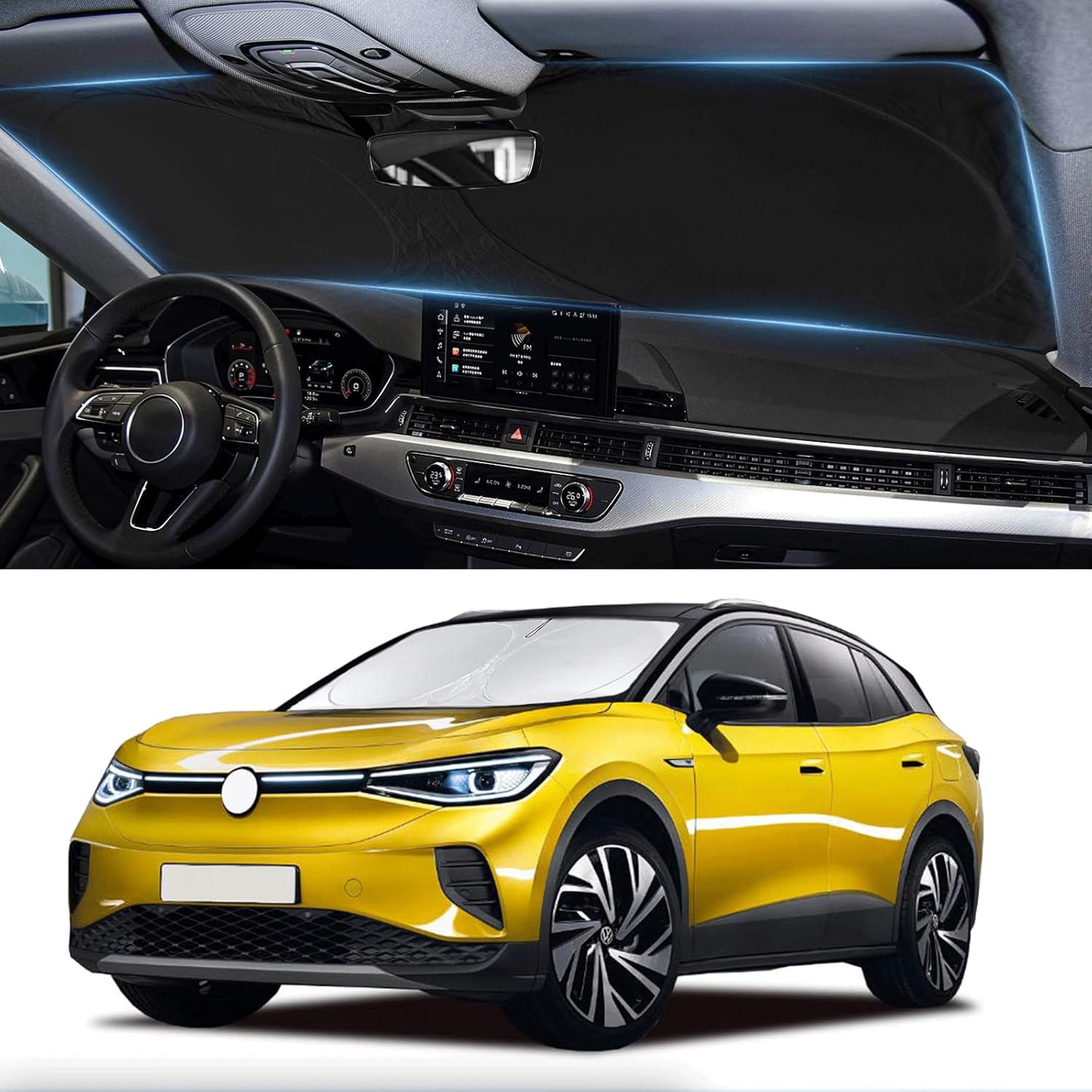


#vw-id4-accessories-ad { max-width: 1150px; margin: 35px auto; padding: 12px; font-family: Arial, sans-serif; clear: both; } #vw-id4-accessories-ad .vw-id4-ad-title { margin: 0 0 8px; font-size: 20px; line-height: 1.4; color: #111; text-align: left; } #vw-id4-accessories-ad .vw-id4-disclosure { margin: 0 0 22px; font-size: 13px; color: #555; text-align: left; } #vw-id4-accessories-ad .vw-id4-grid { display: grid; grid-template-columns: repeat(3, 1fr); gap: 22px; } #vw-id4-accessories-ad .vw-id4-card { background: #fff; border: 1px solid #e5e5e5; border-radius: 16px; overflow: hidden; box-shadow: 0 6px 20px rgba(0,0,0,0.09); transition: transform 0.3s ease, box-shadow 0.3s ease; } #vw-id4-accessories-ad .vw-id4-card:hover { transform: translateY(-5px); box-shadow: 0 10px 28px rgba(0,0,0,0.15); } #vw-id4-accessories-ad .vw-id4-card a { display: block; padding: 18px; text-align: center; text-decoration: none; color: #111; } #vw-id4-accessories-ad .vw-id4-card img { width: 100%; height: 260px; object-fit: contain; display: block; margin: 0 auto 16px; background: #fafafa; border-radius: 12px; } #vw-id4-accessories-ad .vw-id4-product-name { display: block; min-height: 48px; font-size: 18px; line-height: 1.35; font-weight: 700; color: #111; margin: 10px 0; } #vw-id4-accessories-ad .vw-id4-price { display: block; font-size: 14px; color: #444; margin: 8px 0 14px; } #vw-id4-accessories-ad .vw-id4-button { display: inline-block; background: #ff9900; color: #111; font-size: 14px; font-weight: 700; padding: 11px 18px; border-radius: 9px; } #vw-id4-accessories-ad .vw-id4-card:hover .vw-id4-button { background: #ffb84d; } @media (max-width: 900px) { #vw-id4-accessories-ad .vw-id4-grid { grid-template-columns: repeat(2, 1fr); } #vw-id4-accessories-ad .vw-id4-card img { height: 240px; } } @media (max-width: 520px) { #vw-id4-accessories-ad { padding: 8px; } #vw-id4-accessories-ad .vw-id4-grid { grid-template-columns: 1fr; } #vw-id4-accessories-ad .vw-id4-card img { height: 280px; } #vw-id4-accessories-ad .vw-id4-ad-title { font-size: 19px; } }