
Apple MacBook Air M4 Laptop Review
In March 2025, Apple refreshed the MacBook Air with the M4 chip, added a Sky Blue colour option, upgraded the webcam to 12MP with Center Stage, and (finally) enabled two external displays alongside the built-in screen — while also lowering the starting price to $999 in the US.
Fast-forward to March 2026: the MacBook Air M4 sits in an interesting spot. It’s no longer “the newest headline” everywhere (some regions now emphasise M5 on Apple’s main MacBook Air page), but it remains one of the strongest thin-and-light productivity laptops you can buy — especially when you find it discountedapple.com.
This review is deliberately research-led and citation-heavy (EEAT-friendly): it combines Apple’s official specifications and launch claims with independent lab-style testing and long-form reviews from reputable outlets.apple.com.
Quick verdict
The MacBook Air M4 is still an excellent choice if you want a silent, fanless, lightweight laptop with strong everyday performance, dependable battery life, and a much-improved camera — but you must accept two core compromises: a 60Hz LCD display and limited ports (two Thunderbolt/USB‑C + MagSafe).Best for: students, knowledge work, writing, browsing, office tasks, travel, meetings, light creative work.
Not ideal for: heavy, sustained rendering/export work (fanless throttling), users who need lots of built-in ports, buyers who want 120Hz.
Specs, configurations and what changed with the M4 generation
Apple announced the MacBook Air M4 on 5 March 2025, with availability beginning 12 March 2025, and highlighted three upgrades that matter for most buyers: M4 performance, a 12MP Center Stage camera, and expanded external display support, alongside a lower starting price in the US.
Core specs that matter most for buyers
Chip and performance basics:
Apple describes M4 in MacBook Air as a 10-core CPU design with up to a 10-core GPU, supporting up to 32GB unified memory.
Memory and storage configs (what you can actually order):
- Base unified memory starts at 16GB, configurable to 24GB or 32GB.
- Base storage starts at 256GB SSD, configurable up to 2TB.
Display support upgrade (a major quality-of-life win):
Both 13-inch and 15-inch M4 models can drive up to two external displays up to 6K at 60Hz, in addition to the built-in display/support.apple.com.
That last point is more important than it sounds. Before this generation, “MacBook Air + two external monitors” often required compromises or specific configurations; Apple explicitly positioned M4 MacBook Air as the moment this becomes straightforward for mainstream users.
Two sizes, two usage styles
Apple sells this generation in 13-inch and 15-inch sizes.
A simple way to choose:
- Choose 13-inch if you travel constantly, work in cafés, commute daily, or value maximum portability (2.7 lb / 1.24 kg).
- Choose 15-inch if you multitask side-by-side often (docs + browser + chat/video), or prefer a bigger canvas without jumping to a “Pro” laptop (3.3 lb / 1.51 kg)support.apple.com.
Price context (and why it matters in 2026)
Apple’s US press release framed the 2025 M4 refresh as a value moment: $999 starting price and $899 education price in the US, plus 16GB starting unified memory.
Independent reviews at launch also noted the new pricing structure: Tom’s Hardware reported the 13-inch starts at $999 and the 15-inch starts at $1,199 (US launch period).
In March 2026 specifically, it’s also worth recognising that Apple’s current MacBook Air marketing in some regions now centres on newer chips (for example, Apple’s main MacBook Air page highlights M5). That typically pushes M4 stock into discount territory at retailers, which can make the M4 model a smarter value buy than chasing the newest generationapple.com.
 MacBook Air 13 M4, 24GB, 256GB
$1,042.00
MacBook Air 13 M4, 24GB, 256GB
$1,042.00
 MacBook Air 15.3 M4, 16GB, 1TB
$1,599.00
MacBook Air 15.3 M4, 16GB, 1TB
$1,599.00
 MacBook Air 13 M5, 16GB, 512GB
$1,049.00
MacBook Air 13 M5, 16GB, 512GB
$1,049.00
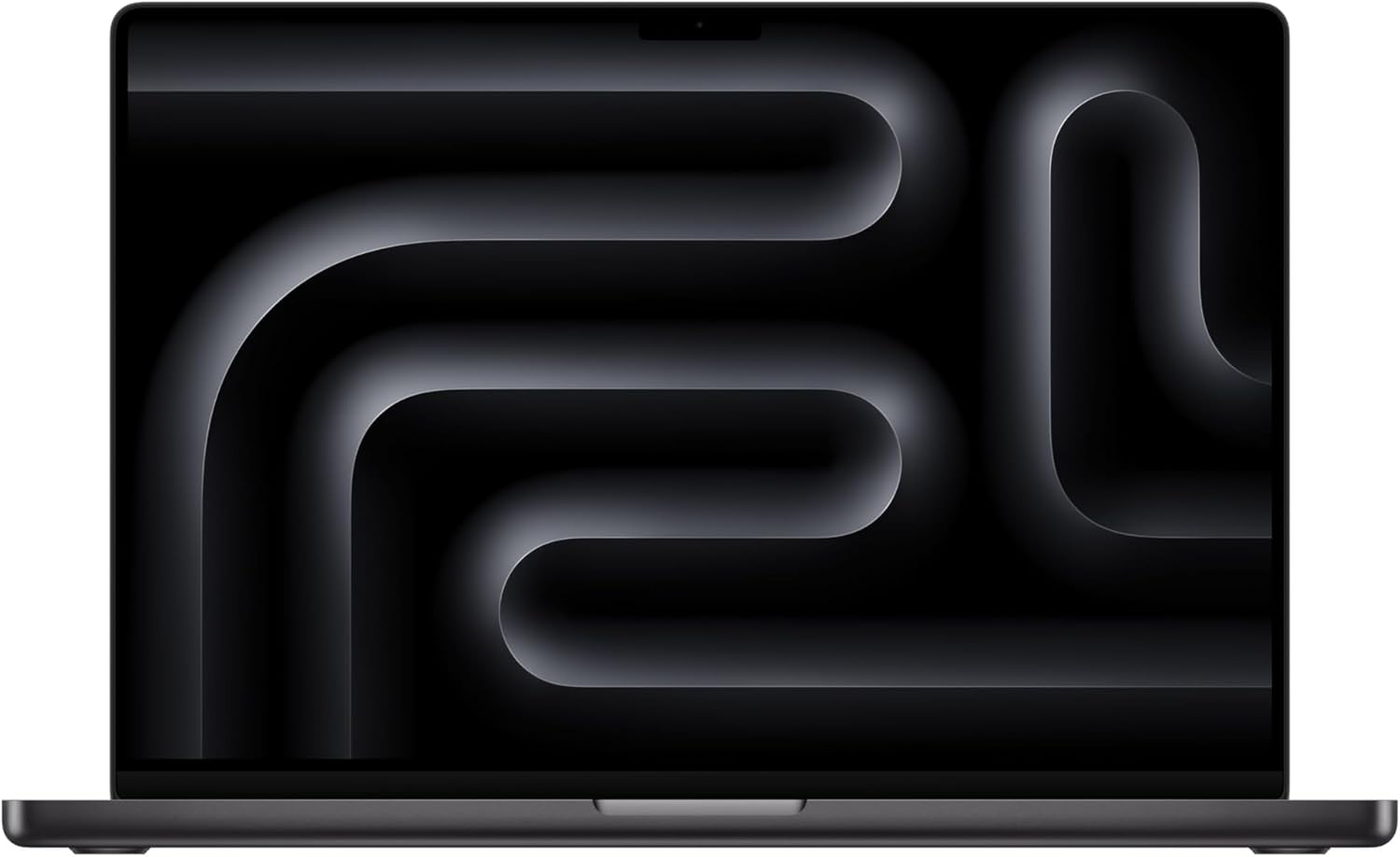 MacBook Pro 16 M5 Pro, 24GB, 1TB
$2,649.00
MacBook Pro 16 M5 Pro, 24GB, 1TB
$2,649.00
 MacBook Air 15 M3, 24GB, 512GB
$1,599.00
MacBook Air 15 M3, 24GB, 512GB
$1,599.00
 MacBook Air M1 Renewed, 8GB, 128GB
$369.99
MacBook Air M1 Renewed, 8GB, 128GB
$369.99
 MacBook Pro 14 M1 Pro Renewed
$715.00
MacBook Pro 14 M1 Pro Renewed
$715.00
 MacBook Air 13 M3, 8GB, 256GB
$1,099.00
MacBook Air 13 M3, 8GB, 256GB
$1,099.00
 MacBook Air 15 M2, 16GB, 256GB
$1,499.00
MacBook Air 15 M2, 16GB, 256GB
$1,499.00
 MacBook Pro 14 M4, 16GB, 512GB
$1,471.08
MacBook Pro 14 M4, 16GB, 512GB
$1,471.08
 Sponsored Ad – Amazon.com
Design, display and everyday usability
The MacBook Air M4 keeps Apple’s modern “thin slab” Air design language: light, rigid, and easy to carry. Apple’s own spec sheet lists it at 0.44 in / 1.13 cm thick for the 13-inch and 0.45 in / 1.15 cm for the 15-inch.
Independent testing backs up the build quality story. RTINGS.com describes the 13-inch MacBook Air M4 as having outstanding build quality with a sturdy aluminium chassis and minimal lid/deck flexrtings.com.
Display: excellent for work, limited for “wow”
Both models use a Liquid Retina IPS display with 500 nits brightness, P3 wide colour, True Tone, and support for 1 billion colours.
The trade-off: this is still a 60Hz panel, and Apple does not position it as a high-refresh or HDR-first display.
Independent measurements show what that means in practice:
- RTINGS measured the 13-inch M4 display at ~445 cd/m² max brightness and noted it’s bright enough for most settings, but direct sunlight can still be challenging.
- RTINGS also measured an IPS-typical contrast ratio (~1,494:1) and explicitly notes blacks can look grey in dim viewing conditions — a known LCD limitation compared with OLED/mini‑LED.
Real-world example: If you’re a student taking notes in lectures, then editing documents at home, this display is more than good enough: it’s sharp, colour-accurate out of the box, and sized well for productivity (16:10). But if you’re coming from a 120Hz laptop, you will notice the visual “snap” difference when scrolling.
Keyboard, trackpad, and the “daily comfort” details
Apple includes a backlit Magic Keyboard with Touch ID and a Force Touch trackpad (haptic click).
RTINGS describes the keyboard as “great” overall, with a spacious layout and good tactility, while also calling out the common MacBook Air complaint: short key travel can feel a bit firm over long sessions.
The trackpad remains a standout. RTINGS calls it “outstanding,” highlighting that the haptic mechanism lets you click anywhere consistently (useful for precise work and gestures)rtings.com.
Webcam and audio: a surprisingly meaningful upgrade
Apple lists a 12MP Center Stage camera with Desk View support, plus 1080p recording and computational video processing.
RTINGS calls the 13-inch M4 webcam “excellent,” pointing to sharp detail and the practical benefit of Center Stage keeping you framed on calls.
On sound: Apple specifies a four-speaker system on the 13-inch and a six-speaker system with force-cancelling woofers on the 15-inch, plus Spatial Audio/Dolby Atmos support on built-in speakers.
Ports: simple, modern—still not generous
Apple’s port layout is consistent across the M4 Air line:
- MagSafe 3 (charging)
- Two Thunderbolt 4 (USB‑C) ports supporting charging, DisplayPort, Thunderbolt 4 (up to 40Gb/s), and USB4 (up to 40Gb/s)
- 3.5mm headphone jack
This is a “dongle-friendly” laptop, not a port-heavy one. RTINGS calls the port selection “very limited,” and reviewers commonly frame this as the MacBook Air’s biggest usability compromise if you connect lots of devices.
Performance, thermals and real-world workloads
The MacBook Air M4’s performance story is best understood in three layers:
- Fast for everyday work
- Surprisingly capable for short creative bursts
- Fanless limits sustained heavy work
What M4 improves (beyond “it’s newer”)
The M4 is a straightforward upgrade from M3: it adds two more efficiency cores and increases memory bandwidth from 100GB/s to 120GB/s, while keeping modern media capabilities like an AV1 decode path and hardware-accelerated ray tracing support.
Apple’s launch messaging also emphasised a stronger Neural Engine and positioned the device as “built for Apple Intelligence,” framing AI-assisted tasks and creative workflows as key use cases.
Benchmarks (how fast is it, really?)
A single benchmark never tells the whole truth, so here are reputable, concrete data points:
Geekbench (CPU burst performance):
Tom’s Hardware measured Geekbench 6 at 3,780 single-core and 14,924 multi-core for its MacBook Air M4 test system, noting it trails the MacBook Pro with the same chip likely due to cooling differencesrtings.com.
RTINGS’ broader testing also frames M4’s gains as meaningful year-over-year: in its 15-inch M4 review, RTINGS reports single-thread and multi-thread uplifts vs M3 (with multi-thread benefitting more due to extra efficiency cores)rtings.com.
Sustained workloads and throttling (the fanless reality):
Tom’s Hardware stress-tested the system with repeated Cinebench runs and observed performance drops over time (classic fanless throttling behaviour), concluding the Air is best for “quick, bursty workloads,” while sustained work is better suited to a fan-cooled laptop like a MacBook Pro.
Notebookcheck’s Pros/Cons summary lines up with that overall reality: it praises the laptop’s always-silent operation and strong performance, but lists “only 2x USB‑C,” “no 120Hz,” and the usual limitations around upgrades and portsnotebookcheck.net.
What you can comfortably do on a MacBook Air M4
Productivity and school: text work, presentations, spreadsheets, research, and multitasking are exactly what the Air is designed for — and independent reviews repeatedly call it great/excellent for these cases.
Light creative work: photo editing and “light video editing” are realistic expectations. RTINGS explicitly says you can do photo and light video editing, and Apple’s own launch release highlights editing and creative use cases.
Coding and dev work: the CPU burst performance and fast SSD behaviour make development tasks very comfortable, but extreme sustained builds or long-running compile/render loops will still run into fanless thermal ceilings over time.
MacBook Air 13 M4, 24GB, 256GB
$1,042.00
MacBook Air 15.3 M4, 16GB, 1TB
$1,599.00
MacBook Air 13 M5, 16GB, 512GB
$1,049.00
MacBook Pro 16 M5 Pro, 24GB, 1TB
$2,649.00
MacBook Air 15 M3, 24GB, 512GB
$1,599.00
MacBook Air M1 Renewed, 8GB, 128GB
$369.99
MacBook Pro 14 M1 Pro Renewed
$715.00
MacBook Air 13 M3, 8GB, 256GB
$1,099.00
MacBook Air 15 M2, 16GB, 256GB
$1,499.00
MacBook Pro 14 M4, 16GB, 512GB
$1,471.08
Sponsored Ad – Amazon.com
Step-by-step: choosing the best MacBook Air M4 configuration
Because memory and storage are not user-upgradable for most buyers, the decision you make at checkout matters.
Step one: pick a size based on your physical workflow
- If you use your laptop in tight spaces, travel often, or value “one-hand carry,” the 13-inch weight and footprint win.
- If you routinely split-screen, edit, or keep multiple windows open, the 15-inch screen reduces strain and improves multitasking comfort.
Step two: don’t underbuy storage if you work with large files
Apple’s tech specs confirm the base is 256GB, with configurable options available.
In real life, 256GB can feel tight once you add creative libraries, offline folders, and large apps. This is one of the most common “buyers regret” points on modern ultrabooks, and reviewers have repeatedly called out base-storage constraints in the broader MacBook Air line.
Step three: choose memory based on your “peak day,” not your average day
Apple offers 16GB / 24GB / 32GB unified memory options.
A pragmatic rule:
- 16GB: general productivity, study, light editing.
- 24GB: heavy multitasking, more serious creative work, larger photo/video libraries. (Fits Apple’s configurable options and typical pro-lite usage patterns.)
- 32GB: specialised workflows (big datasets, heavier creative work), or buyers who keep laptops for many years and want headroom.
Battery life, charging and connectivity
Apple rates both sizes of the MacBook Air M4 at:
- Up to 18 hours video streaming
- Up to 15 hours wireless web
Those are Apple’s controlled test results, but independent testing gives a more “real-world feel” across mixed workloads.
What independent battery tests show
RTINGS measured (standardised approach within their framework):
- 13-inch M4: 12.3 hours web browsing, 11.9 hours video playback (54Wh measured capacity in their reporting)
- 15-inch M4: 11.6 hours web browsing, 12.9 hours video playback (67Wh measured capacity in their reporting)
Tom’s Hardware tested the 15-inch MacBook Air M4 at 15 hours 14 minutes on its battery test (web browsing, streaming, simple OpenGL tasks at 150 nits, Wi‑Fi on), and confirms the 15-inch battery is 66.5WHr.
Why the numbers differ: review outlets use different brightness settings, mix of tasks, and test loops. What remains consistent across reputable sources is the practical headline: the MacBook Air M4 easily lasts a workday for typical productivity use, and remains class-leading for a thin, fanless laptop.
Charging and power adapters
Apple lists:
- 13-inch battery: 53.8Wh
- 15-inch battery: 66.5Wh
Apple also specifies that the 13-inch model includes different adapters depending on GPU configuration (30W for the 8‑core GPU model; 35W dual USB‑C for the 10‑core GPU model), and supports fast charging with a 70W USB‑C power adapter.
Wireless connectivity: good, not bleeding edge
Apple lists Wi‑Fi 6E and Bluetooth 5.3 on both sizes.
Notebookcheck’s summary explicitly calls out “no Wi‑Fi 7,” which is helpful context if you’re upgrading your home network and want the newest wireless standard.
Step-by-step: getting better real-world battery life
If you want your MacBook Air M4 to feel closer to “all-day,” treat battery as a workflow, not a spec sheet:
- Run brightness intentionally: independent testing shows brightness can meaningfully affect runtime, and Apple’s own tests are performed under controlled conditions.
- Keep heavier tasks “plugged-in” when possible: long exports/builds are exactly where fanless MacBooks run hotter and consume more power.
- Optimise your Mac workflow: for practical macOS performance + battery habits (updates, storage housekeeping, Low Power Mode, and daily productivity shortcuts), see FrediTech’s internal guide: Ultimate Mac Productivity Guide 2025.
Buying advice, alternatives and FAQ
Is the MacBook Air M4 worth buying in 2026?
If you’re shopping in 2026, the smartest way to view this laptop is:
- As a top-tier everyday ultraportable that remains excellent even if it’s not the newest chip everywhere.
- As a value opportunity when discounted, because Apple’s current MacBook Air marketing in some regions now prioritises newer chips (for example, M5 on Apple’s main MacBook Air page).
- As the “right default” if you primarily want reliability, battery longevity, and great daily usability, and you don’t require a high-refresh display or lots of built-in ports.
Related internal links on FrediTech
- MacBook Air vs MacBook Pro: Which Apple Laptop Should You Choose? (useful if you’re debating the Air’s fanless design vs Pro’s sustained performance and better ports)freditech.com.
- Best Ultrabooks of 2026 (for cross-platform alternatives and broader ultrabook picks)freditech.com.
- Ultimate Mac Productivity Guide 2025 (macOS optimisation, battery habits, and workflow shortcuts)freditech.com.
When you should consider an alternative instead
Consider a different laptop if one of these is true:
- You need sustained, heavy performance (renders, long exports, constant high CPU/GPU loads). Fan-cooled laptops maintain performance better under stress.
- You must have more built-in ports (HDMI, SD card) without a dock. The Air stays minimal: two Thunderbolt ports + MagSafe.
- You want a 120Hz display. Both Apple’s specs and independent reviews confirm the Air line remains 60Hz in this generation.
If you want “same idea, newer generation,” TechRadar’s M5 review explicitly frames the M5 MacBook Air as very close to the M4 model, just faster — which reinforces that the M4 remains a solid buy when priced righttechradar.com.
FAQ
Does the MacBook Air M4 have a fan?
No. Apple highlighted the MacBook Air’s thin-and-light, fanless design at launch. Independent stress testing also shows typical fanless behavior under sustained load, where performance can drop as heat builds.
How many external monitors can the MacBook Air M4 support?
Apple’s tech specs state it supports the built-in display plus up to two external displays up to 6K at 60Hz.
Is the MacBook Air M4 good for students?
Yes. Independent reviews describe both sizes as excellent for school use and general productivity, largely because of build quality, user experience (keyboard/trackpad), and practical battery life.
Is 256GB enough on a MacBook Air M4?
It depends on your storage habits. Apple confirms 256GB is the base configuration, but if you keep large photo/video libraries or install many pro apps, upgrading storage is often the safer long-term choice.
Is 16GB RAM enough, or should I get 24GB/32GB?
Apple starts the M4 MacBook Air at 16GB unified memory, with options up to 32GB. For most productivity workflows, 16GB is fine. If you do heavier multitasking or creative work, the higher tiers can improve comfort and longevity—especially since memory isn’t user-upgradable for most buyers.
Does the MacBook Air M4 support Wi-Fi 7?
No. Apple lists Wi-Fi 6E for MacBook Air (M4, 2025), and Notebookcheck flags “no Wi-Fi 7” as a con.
Is the MacBook Air M4 good for video editing?
For light-to-moderate editing, yes. Apple positions the Air for creative tasks, and reviewers note it can handle light video work. However, sustained exports and long renders are where the fanless design becomes a limiting factor.
Does the MacBook Air M4 support Apple Intelligence, and what about privacy?
Yes. Apple marketed the MacBook Air M4 as “built for Apple Intelligence.” Apple also states Apple Intelligence is designed with privacy protections, emphasizing on-device processing and (when needed) Private Cloud Compute.
Author: Wiredu Fred
Tech writer at FrediTech & Modern Collective, focused on practical laptop buying guidance, evidence-based comparisons, and clear “what this means for you” explanations.
MacBook Air 13 M4, 24GB, 256GB
$1,042.00
MacBook Air 15.3 M4, 16GB, 1TB
$1,599.00
MacBook Air 13 M5, 16GB, 512GB
$1,049.00
MacBook Pro 16 M5 Pro, 24GB, 1TB
$2,649.00
MacBook Air 15 M3, 24GB, 512GB
$1,599.00
MacBook Air M1 Renewed, 8GB, 128GB
$369.99
MacBook Pro 14 M1 Pro Renewed
$715.00
MacBook Air 13 M3, 8GB, 256GB
$1,099.00
MacBook Air 15 M2, 16GB, 256GB
$1,499.00
MacBook Pro 14 M4, 16GB, 512GB
$1,471.08
Sponsored Ad – Amazon.com