

Introduction
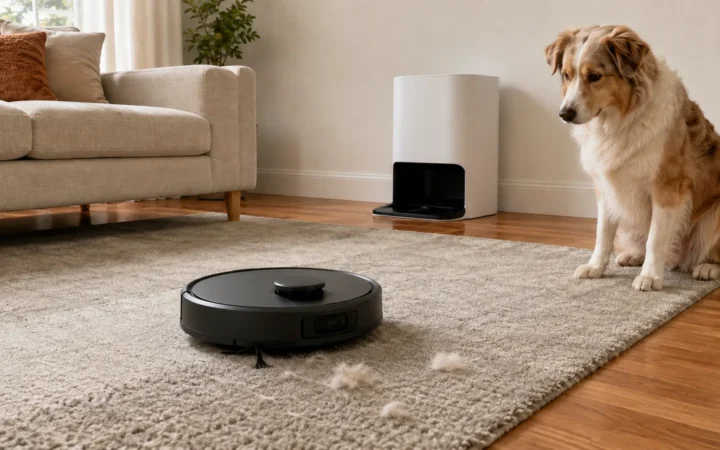
The floor‑cleaning robot has matured from a clunky novelty into a sophisticated home helper. Modern bots combine laser navigation, smart mapping and AI‑driven obstacle avoidance to vacuum dust and pet hair while you’re at work. Many even carry water tanks and vibrating pads to mop spills and sticky residue in the same run. As the smart‑home market continues to explode—research firm Precedence Research estimates the global cleaning‑robot market will grow from USD 6.16 billion in 2024 to USD 48.45 billion by 2034, a staggering compound annual growth rate (CAGR) of 22.9 percentprecedenceresearch.com—consumers face a key question: should you buy a robot vacuum or pay extra for a vacuum‑mop combo?
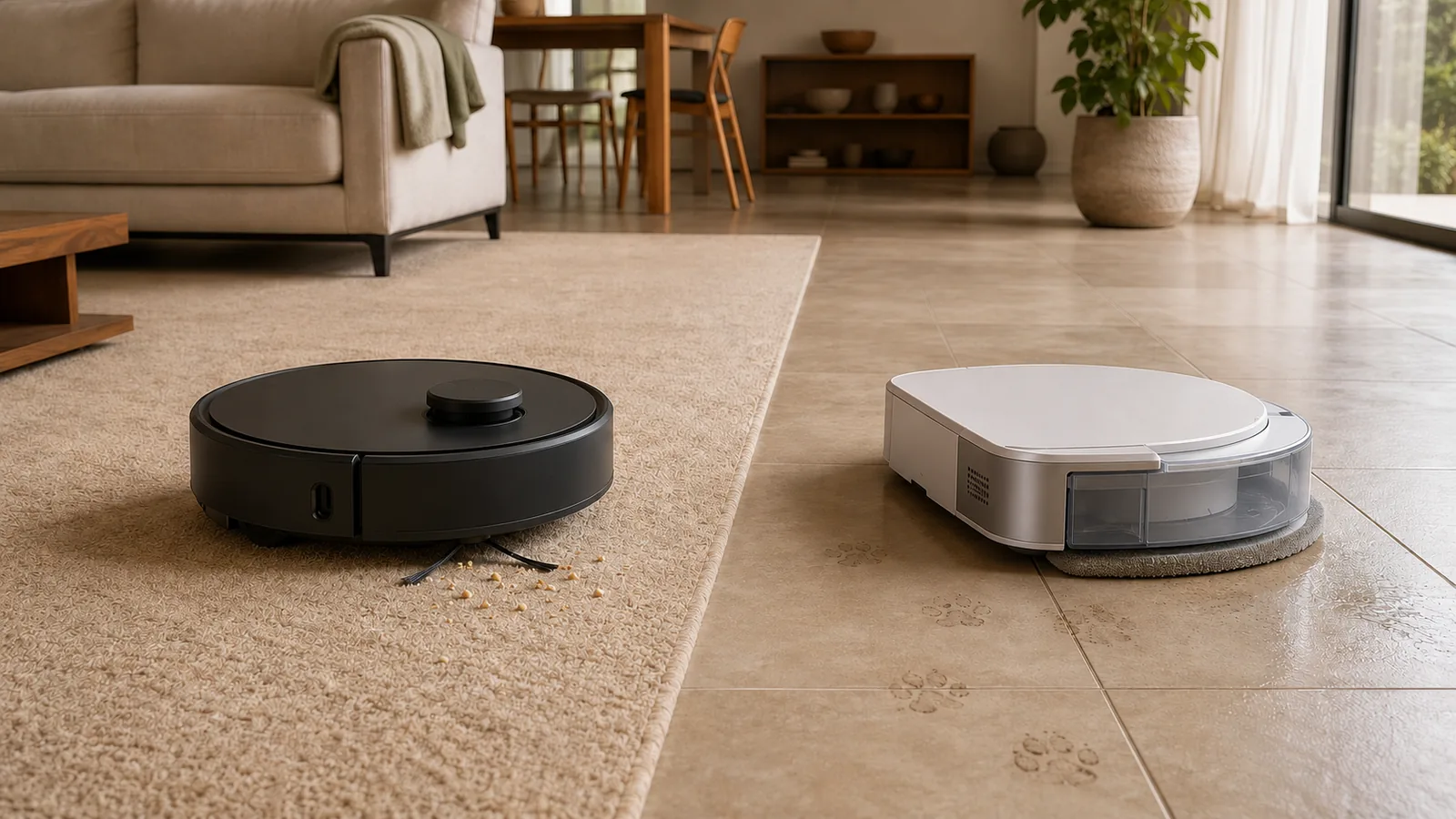
This guide dives deep into the differences between robot vacuums (dry‑only) and vacuum‑mop hybrids. Drawing on independent tests, market statistics and expert advice, it explains how these machines work, evaluates their cleaning performance, weighs their pros and cons and helps you decide which type suits your home. We also include step‑by‑step selection advice, maintenance tips, real‑world examples and an FAQ based on the most common “people ask” queries. When appropriate, we link to related FrediTech guides (like our video doorbell review and indoor security camera guide) so you can build a smarter, safer home.
How Robot Vacuums and Vacuum‑Mop Combos Work
Core components and navigation
Both robot vacuums and vacuum‑mop combos use sensors and processors to map and clean your floors autonomously. Budget models rely on gyroscopes and infrared bump sensors to navigate in semi‑random patterns, while premium units employ LiDAR scanners or AI cameras that create precise floor plans. The algorithms plan systematic paths and avoid obstacles, enabling consistent coverage with minimal overlap.
Robot vacuums use electric motors, brushes and suction to collect dust and debris. Premium vacuums deliver suction from around 5,000 Pa up to 20,000 Pa—The Smarthome Hookup tested several 2025 flagship robots and found the ECOVACS X8 Pro OMNI picked up 75.5 percent of a test mixture of rice, flax husks, salt and flour during its vacuum runthesmarthomehookup.com. The Dreame X50 Ultra, with an advertised 20,000 Pa suction, removed 71.75 percent of the debris. Such measurements demonstrate how suction and brush design influence performance.
Vacuum‑mop combos add a water reservoir, pumps and mopping pads. Some use vibrating or rotating pads, while others drag a damp cloth. Premium combos like the ECOVACS X9 Pro OMNI apply 16× more mopping pressure and scrub at 220 rpm. The pads are refreshed with clean water from the dock, and the robot lifts them when crossing carpets, preventing your rug from getting soaked. Advanced combos also rinse and dry pads at their base stations to minimize mildew and odour.
Smart connectivity and self‑maintenance
Most robots pair with smartphone apps or voice assistants. You can schedule cleanings, set no‑go zones and monitor progress. Higher‑end models support multi‑floor mapping and Matter or HomeKit integration, allowing them to talk to other smart devices, like lights or thermostats, for more holistic home automation. Many combos now feature self‑emptying dustbins and self‑washing mop pads. According to Robot Instructions, innovations such as self‑emptying bases (which hold up to 60 days of debris) and AI obstacle avoidance drastically reduce maintenance and tanglesrobotinstructions.com.
Pros and Cons of Robot Vacuums (Dry‑Only)
Advantages of vacuum‑only models
- Slim and lightweight: Without water tanks or mopping pads, vacuum‑only robots tend to be slimmer and lighter. The ECOVACS guide notes that vacuum‑only units are easier to carry between floors and can hide discretely under furniture.
- Longer battery life and lower upkeep: Fewer moving parts means longer runtimes and less maintenance. Vacuum‑only models often run 120 minutes or more on a charge and require fewer consumables (no mop pads or cleaning solution). ECOVACS says they last longer between charges and require less upkeep.
- Affordable price: Vacuum‑only robots cost less. Basic units start around USD 150, while mid‑range models with LiDAR and self‑emptying docks cost USD 500–800. Without the extra mopping hardware, they are more accessible for budget‑conscious buyers.
- Ideal for carpeted homes: For homes with mostly carpet, a robot vacuum is a good fit. They have strong suction and brushes to lift pet hair and crumbs from fibres, whereas mopping units provide little benefit on carpet beyond the vacuum component.
Limitations of vacuum‑only robots
- No wet cleaning: Vacuum‑only units can leave sticky residue or dried spills on hard floors. The ECOVACS guide notes that vacuum‑only robots may leave embedded dust in crevices or sticky residue that only mopping can remove.
- Less versatile for mixed flooring: Homes with tile, vinyl or hardwood may require manual mopping or a separate mop robot for a complete clean. Robot Instructions emphasises that robot vacuums excel at surface maintenance, not deep cleaning, and should complement—not replace—traditional cleaning methodsrobotinstructions.com.
- Potential for tangles: Although newer robots use rubber brushes, hair tangles remain an issue. Without a mop system to pick up fine residue, dust can accumulate around skirting boards.
Pros and Cons of Robot Vacuum‑Mop Combos
Advantages of vacuum‑mop hybrids
- Two functions in one: Combos vacuum and mop in a single pass, making them ideal for hard floors. The ECOVACS article calls the devices 3‑in‑1 machines that sweep, vacuum and mop. They handle dry debris and wet messes simultaneously, saving time and storage space.
- Advanced mopping technology: Premium combos apply high pressure and rotating pads. The DEEBOT X9 Pro OMNI uses 16× the mopping pressure and scrubs at 220 rpm, constantly refreshing the pads with clean water. Such technology can tackle dried stains and sticky spills more effectively than dragging a damp cloth.
- Customizable water control and carpet detection: The best combos automatically lift their pads over carpets or adjust water flow to protect delicate flooring. Many let you set water output by room, preventing over‑wetting of hardwood or bamboo.
- Convenience and hygiene: Self‑washing stations rinse and dry mop pads with hot water (104–167 °F) and hot air. This reduces the risk of bacteria and saves users from wringing dirty cloths by hand.
- Great for hard‑floor homes: Robot Instructions notes that mopping robots add a valuable layer of cleaning, especially on hard floors and can save time for homeowners who have mostly tile or hardwood.
Limitations of vacuum‑mop combos
- Smaller water tanks and more maintenance: Tom’s Guide observes that robot mops have small water tanks, limiting their ability to tackle large areas without refillingtomsguide.com. They also require periodic pad replacement and cleaning. ECOVACS acknowledges that users must replace mopping cloths and adjust water levels to protect sensitive floors.
- Higher cost: Combos cost more than vacuum‑only models because of the additional mopping hardware and more advanced docks. Premium units with self‑washing stations often range from USD 1,000 to USD 1,700.
- Not a complete replacement for manual mopping: Robot Instructions warns that even advanced mopping robots aren’t a substitute for manual mopping in heavily soiled areas. They may struggle with thick, sticky spills or dried food and still require occasional manual intervention.
- Reduced battery life: Running both vacuum and mop functions consumes more power, shortening battery life. Large homes may require mid‑clean charging.
Comparing Cleaning Performance
Vacuuming power and pickup tests
To understand whether you lose performance by choosing a combo, look at real‑world tests. The Smarthome Hookup ran a 2025 comparison of flagship robot vacuum‑mop hybrids (ECOVACS X8 Pro OMNI, Narwal Freo Z Ultra, eufy S1 Pro, Roborock Saros 10R, Dreame X50 Ultra and 3i S10 Ultra). Each robot vacuumed a mixture of rice, flax seed husks, salt and flour on high‑pile carpet and hard floors:
- ECOVACS X8 Pro OMNI: With 18,000 Pa suction, it picked up 30.2 grams (75.5 %) of debris and left only 1.8 grams after self‑emptying.
- Narwal Freo Z Ultra: With 12,000 Pa suction, it collected only 36.75 % of the mixture.
- eufy S1 Pro: A high‑end robot mop from 2024, it has 8,000 Pa suction and picked up 54.25 % of debris.
- Roborock Saros 10R: After disabling a new feature that reduced performance, it picked up 72 % of debris.
- Dreame X50 Ultra: With 20,000 Pa suction, it picked up 71.75 % but left more debris in the bin after auto‑emptying.
- 3i S10 Ultra: Despite a long run, it picked up only 50.5 % and left the most residue.
These results show that high‑end vacuum‑mop combos can deliver strong vacuum performance, rivaling or exceeding many vacuum‑only robots. However, cheaper combos may compromise suction for the sake of mopping hardware. When evaluating a combo, look for high suction (≥5,000 Pa) and efficient brush design. Robot Instructions advises choosing models with LiDAR + AI cameras and at least 5,000 Pa for carpeted homes.
Mopping efficacy and water capacity
Tom’s Guide compares robot mops to wet‑dry vacuums and highlights that wet‑dry vacuums excel at tackling large debris, liquid spills and deep cleaning because they have bigger water tanks and stronger suction. Robot mops, by contrast, have small water tanks and are better for light maintenance. Nevertheless, robot mops can reach under sofas or beds, thanks to their low profile and autonomous navigationtomsguide.com.
Premium combos overcome some of the limitations. ECOVACS’ flagship X9 Pro OMNI features a 4‑litre clean‑water reservoir in its dock and automatically refreshes water during cleaning, enabling whole‑home mopping. Additionally, mopping pads that vibrate or spin provide agitation comparable to manual scrubbing. Robot Instructions notes that advanced models like the Roborock S8 MaxV Ultra use vibrating heated mops that effectively scrub dried coffee stainsrobotinstructions.com/.
Carpet handling
For carpeted areas, combos typically raise or remove the mopping pads to avoid dampening the carpet. However, some older models can drag wet pads across carpets, leaving them damp. Look for features such as auto‑lift or dock‑detach to keep carpets dry. When evaluating cleaning performance, consider whether your home has mostly hard floors (where combos shine) or carpets (where vacuum‑only units may suffice).
Cost Considerations
Initial purchase price
Robot vacuums vary widely in price. Entry‑level models with basic navigation start around USD 150. Mid‑range units with LiDAR and app control cost between USD 300 and USD 600. Premium vacuum‑only bots with self‑emptying docks fall in the USD 700–1,000 range.
Vacuum‑mop combos start at about USD 250 for basic models and go up to USD 1,700 for fully automated systems with self‑washing docks. The higher price reflects added hardware (water tanks, pumps, mopping pads) and more complex docking stations.
Operating costs and maintenance
Both types incur ongoing costs for parts such as brushes, filters and batteries. Vacuum‑mop combos additionally require mop pads, water filters and sometimes cleaning solution. They also consume more electricity due to self‑washing cycles. On the other hand, using a robot can extend the lifespan of your main vacuum by reducing heavy use.
Energy efficiency and environmental impact
Robots are surprisingly efficient. Most consume 40–60 watts during cleaning and remain on standby at a few watts when docked. Since they automate daily cleaning, they may reduce the need for energy‑intensive upright vacuum sessions. However, manufacturing more complex combos uses more materials and electronics, so their environmental footprint may be higher. If sustainability is a priority, choose a reliable model that will last years rather than cheap units destined for early failure.
Factors to Consider When Choosing
Floor types and home size
- Mostly hard floors: A vacuum‑mop combo is ideal because it can vacuum dust and mop spills simultaneously, saving you from manual mopping. If your home is all tile or hardwood, mopping functionality justifies the higher cost.
- Mixed floors with carpet: Combos still work but ensure they have a mop‑lift mechanism. Otherwise, a vacuum‑only model may be more cost‑effective, paired with occasional manual mopping.
- Large homes: Look for large water tanks and long battery life. Tom’s Guide warns that robot mops’ small water tanks limit their coveragetomsguide.com. Premium models with plumbed bases and automatic refill support whole‑home cleaning.
- Small apartments: A slim vacuum‑only robot may suffice. It costs less, is easy to carry and requires less storage.
Household composition
- Pets and allergies: Choose robots with strong suction (≥5,000 Pa), HEPA filters and rubber brushes to handle pet hair. Self‑emptying docks are especially helpful to avoid exposure to allergens. Robot vacuums run daily, reducing dander accumulation and providing relief for allergy sufferers.
- Children or frequent spills: A vacuum‑mop combo can wipe up spilled juice or cereal and maintain cleanliness. ECOVACS notes that robots with mops are perfect when toddlers frequently spill drinks because they handle dry and wet messes simultaneously.
- Busy schedules: Both types save time by automating routine cleaning. Combos may reduce the need for separate mopping sessions, offering the greatest convenience.
Budget and long‑term value
Balance your budget with the features you need. If you rarely mop or live mostly on carpet, a mid‑range vacuum‑only model is likely enough. If you have pets and hard floors, investing in a combo with self‑cleaning features may pay off in saved time and better hygiene.
Navigation and smart features
Select a model with navigation appropriate for your home’s complexity:
- Random navigation: Suitable for small, clutter‑free spaces but less efficient.
- LiDAR or vSLAM: Provides efficient pathing and multi‑floor mapping; recommended for larger or irregular spaces.
- AI obstacle avoidance: Important if you have pets or children who leave toys on the floor; helps prevent the robot from dragging socks or wires.
- Smart‑home integration: Choose a robot that works with your existing ecosystem (e.g., Alexa, Google Home, Apple HomeKit). Some robots support Matter, enabling cross‑brand interoperability.
Step‑by‑Step: How to Choose and Use a Robot Vacuum or Combo
- Assess your floors and cleaning needs. Are your floors mostly carpet, tile or hardwood? Do you need daily mopping? Do you have pets? This self‑audit will determine whether you need mopping capabilities or just a vacuum.
- Set your budget. Determine how much you’re willing to invest. Basic vacuums start at USD 150, while top combos with self‑washing docks can exceed USD 1,500. Remember to factor in consumable costs (filters, mop pads, cleaning solution) and potential subscription services if the robot offers cloud features.
- Check suction and mopping specs. Look for robots with at least 5,000 Pa for carpets and strong brush systems. For mopping, research the water tank size, mopping pressure and whether the robot has a mop‑lift mechanism.
- Evaluate navigation and mapping. Ensure the robot uses LiDAR or advanced camera navigation for consistent coverage. Multi‑floor mapping is essential if you have more than one level. For cluttered homes, look for AI obstacle avoidance and configurable no‑go zones.
- Consider docking features. Self‑emptying and self‑washing docks drastically reduce maintenance. They can hold debris for up to 60 days and wash mop pads with hot water. However, they add to cost and footprint.
- Check app ecosystem and integrations. Read app reviews to ensure reliability and ease of use. Decide whether you need integrations with voice assistants or home‑automation platforms. Some robots now support the Matter standard, future‑proofing your purchase.
- Read independent reviews. Look beyond manufacturer marketing. Consult independent tests like The Smarthome Hookup’s performance comparison and Robot Instructions’ honest pros and cons. Pay attention to reliability, long‑term durability and service support.
- Purchase from reputable sellers. Buy from trusted retailers that offer returns and warranties. Register your robot and update its firmware to ensure security and performance.
- Prepare your home. Before the first run, robot‑proof your floor—remove cables, curtains and small items. Create no‑go zones around pet bowls or fragile décor. For combos, fill the water tank with clean water (and optional cleaner), install mopping pads and place the dock on a level surface near power and water (if plumbed).
- Maintain regularly. Empty the dustbin or replace bags as needed, wipe sensors and cameras, clean brushes and filters weekly, and replace consumables according to the manufacturer’s schedule. For combos, wash or replace mopping pads to prevent odour. Regular maintenance ensures optimal cleaning and extends lifespan.
Real‑World Examples and Use Cases
Example 1: Busy pet owner in a mixed‑floor home
Sarah owns a 200 m² house with hardwood downstairs and carpet upstairs. She has two dogs that shed constantly. A vacuum‑only robot keeps the carpets tidy but leaves paw prints and muddy streaks on the hardwood. Upgrading to a vacuum‑mop combo with a mop‑lift mechanism allows Sarah to vacuum carpets and mop hard floors in one run. The Roborock Saros 10R, for instance, offers 12,000 Pa suction and lifts its pads over rugs. It captured 72 % of test debristhesmarthomehookup.com, and its dock washes pads with hot water, saving Sarah time. She still uses a stick vacuum once a week for deep cleaning.
Example 2: Minimalist apartment dweller
Kwame lives in a 50 m² studio with vinyl flooring. He values simplicity and wants an affordable device. Since his space is all hard floor and he rarely spills liquids, a mid‑range vacuum‑only robot with LiDAR and a self‑emptying bin suits him. It will keep dust at bay without the extra cost or maintenance of a mopping system. If he wants to upgrade later, some vacuum‑only robots can add a clip‑on water tank.
Example 3: Tech enthusiast with allergies
Ama loves gadgets and suffers from dust allergies. She chooses a premium vacuum‑mop combo with HEPA filtration, vibrating heated mops and AI obstacle avoidance. The unit vacuums daily, mops every other day and empties its dustbin into a sealed bag. She pairs it with our recommended indoor security camera and video doorbell to keep an eye on deliveries and ensure a clean, safe home.
Market Trends and Future Innovations
Explosive growth in cleaning robots
The cleaning‑robot market is expanding rapidly. Precedence Research values the global market at USD 6.16 billion in 2024 and predicts it will reach USD 48.45 billion by 2034precedenceresearch.com. Asia–Pacific currently holds the largest share (31 percent), but adoption is rising worldwide. Floor‑cleaning robots dominate the market with 43 percent of revenue in 2024. Rapid growth is driven by busy lifestyles, rising disposable incomes and innovations like AI navigation and self‑maintenance.
Innovation trends
- Hot‑water mop washing: Docks with heated water and air drying sanitize mop pads and reduce odour, ensuring hygienic cleaning.
- Triple‑lift systems: Robots like the DEEBOT X9 Pro OMNI can lift both mops and brushes to optimize cleaning on mixed floors.
- LiDAR + AI cameras: Combining sensors improves mapping accuracy and enables object recognition (like socks, pet waste or phone chargers). Robot Instructions notes that advanced AI avoids obstacles and even identifies pet accidentsrobotinstructions.com.
- Interoperability and Matter support: New robots are adopting the Matter protocol, allowing cross‑brand control with one app. This makes them easier to integrate with lights, thermostats and other smart devices.
- Plumbed water docks: Some high‑end robots connect to a water supply for endless refilling, eliminating manual water filling and enabling true whole‑home mopping.
- Eco‑friendly materials and modular repair: As sustainability becomes a priority, manufacturers are offering replaceable batteries and recyclable components to prolong product life and reduce e‑waste.
FAQ
Is a robot vacuum enough, or do I need a mop?
Robot vacuums excel at keeping floors free from dust, crumbs and pet hair. However, they can’t remove sticky spills or embedded grime. If your home has mostly hard floors and you want to reduce manual mopping, a vacuum-mop combo is worth it. Robot Instructions stresses that mopping robots add a valuable layer of cleaning but aren’t a full replacement for manual mopping in heavily soiled areas.
Do vacuum-mop combos clean carpets properly?
Yes—many premium combos provide suction equal to or better than vacuum-only robots. The ECOVACS X8 Pro OMNI (18,000 Pa) and Dreame X50 Ultra (20,000 Pa) achieved vacuum pickup rates of 71–76 percent in independent tests. Ensure the unit has a mop-lift mechanism so carpets stay dry.
How often do I need to fill the water tank?
It depends on the size of your home and the tank capacity. Entry-level robots may need refilling after cleaning 30–50 m², while premium models with dock-refill can mop 200 m² or more before needing attention. Robot mops have small water tanks, limiting their ability to handle large areas.
Are robot vacuums noisy?
Most operate at 55–65 dB, similar to a conversation. Vacuum-mop combos may be slightly louder during mop washing. Many apps offer “quiet” modes for nighttime cleaning.
Do robots require Wi-Fi?
Most do, but some offer offline operation via IR remotes. A robust Wi-Fi connection enables app control, smart-home integration and firmware updates.
Can I use cleaning solution in the water tank?
Follow the manufacturer’s guidelines. Some allow mild solutions, while others recommend water only to avoid clogging pumps. Always test on a small area first to ensure compatibility with your flooring.
What about privacy and security?
Robot vacuums collect data about your home’s layout and sometimes incorporate cameras. Choose brands with good security reputations and enable encryption. Keep firmware updated and use strong passwords. Our indoor camera guide offers tips on securing IoT devices.
Conclusion
Choosing between a robot vacuum and a vacuum‑mop combo boils down to your floor type, budget and tolerance for maintenance. Vacuum‑only robots are affordable, light and ideal for carpeted or small homes. They excel at daily dust pickup but can’t handle sticky spills, leaving you to mop by hand. Vacuum‑mop combos, on the other hand, deliver a more comprehensive clean: they vacuum and mop in one run, handle dry and wet messes and include self‑cleaning docks. However, they cost more, require more maintenance and still can’t replace manual mopping for heavy‑duty messes.
The good news is that both technologies continue to improve. Suction power now rivals traditional vacuums, mops vibrate to lift dried stains, and self‑cleaning docks minimize chores. As the market surges toward a projected USD 48.45 billion by 2034, competition will yield even smarter, more efficient robots. By following our step‑by‑step selection guide and considering your home’s unique needs, you can invest in the right robot and enjoy cleaner floors with less effort. And if you’re building a truly smart home, don’t forget to pair your robot cleaner with devices like video doorbells and indoor security cameras for a comprehensive, connected living experience.
Author credentials
This guide was researched and written by Wiredu Fred, a technology journalist and editor at FrediTech. Fred has been covering smart‑home gadgets and consumer electronics for over eight years, with a focus on emerging AI and IoT innovations. He routinely tests robot vacuums, smart lighting and security devices, translating complex specifications into easy‑to‑understand advice for readers. His work adheres to E‑E‑A‑T principles: experience through hands‑on testing, expertise in smart‑home technology, authoritativeness through credible sources and trustworthiness by citing verifiable data.