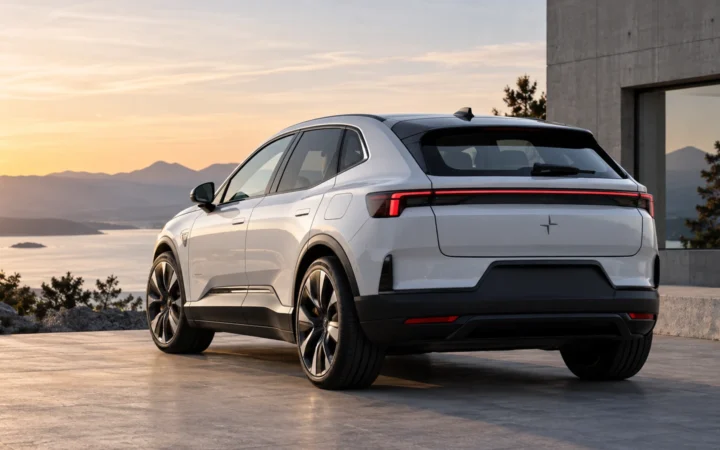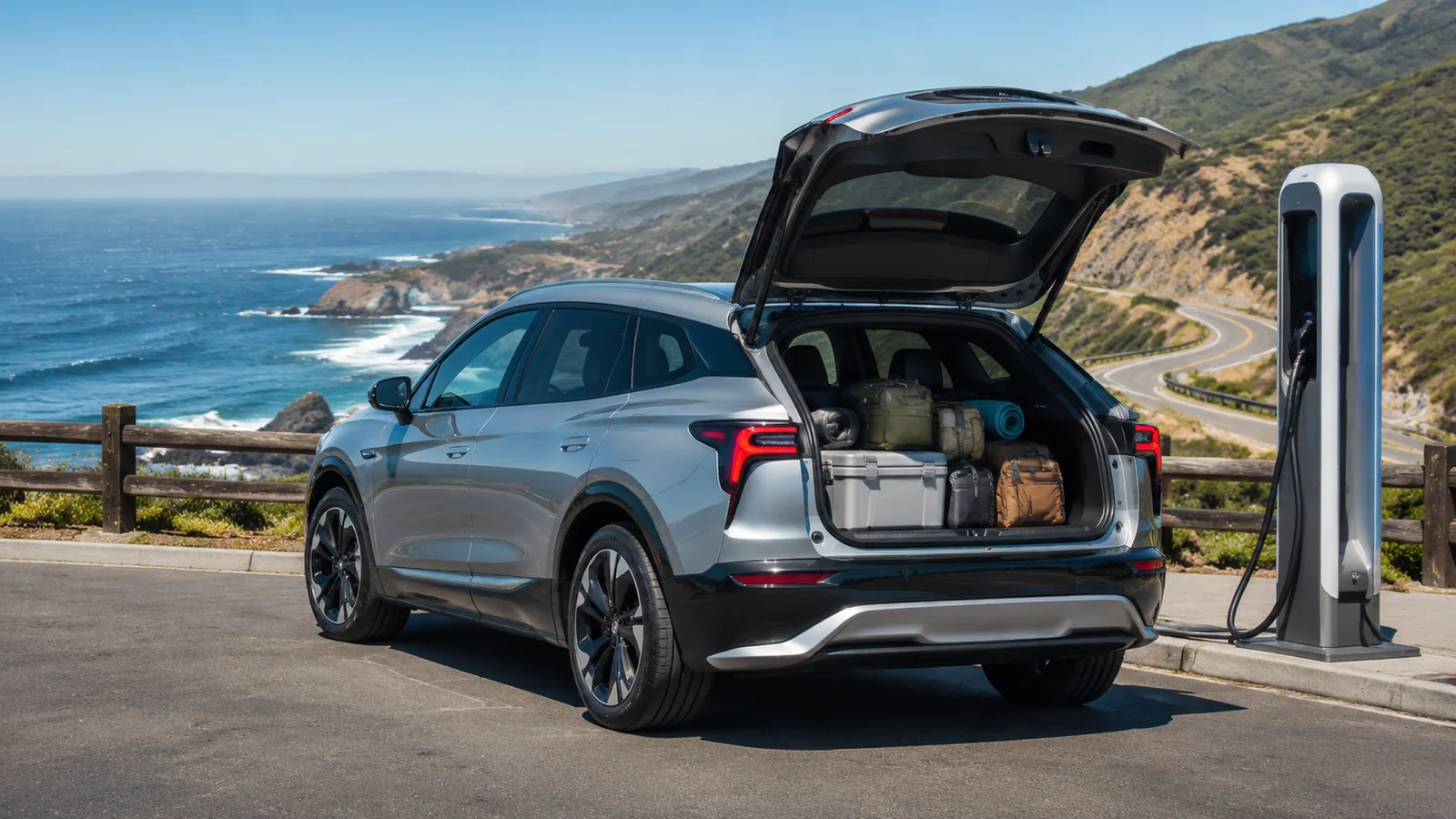


The Chevrolet Blazer EV is Chevrolet’s all-new all-electric mid-size SUV (model year 2024 and up) that blends style and performance. Launched in late 2023, it offers up to 324–334 miles of EPA-estimated range depending on the configuration. It uses GM’s Ultium battery platform (85 or 102 kWh packs), and can charge at up to 195 kW DC (adding about 78 miles of range in 10 minutes). The Blazer EV’s driver interface is also tech-forward: it sports a huge 17.7‑inch infotainment touchscreen (GM’s new Ultifi system) alongside an 11‑inch driver display. Key specs include a maximum 615 hp SS performance model and a standard tech suite with Chevy Safety Assist (ADAS). In short, the Blazer EV enters the SUV market with competitive range, power and high-end features for families and EV enthusiasts alike.
1. Exceptional Range and Battery Efficiency
The Blazer EV delivers class-leading range due to its large Ultium battery packs and aerodynamic design. As noted by Car & Driver, the rear-wheel-drive RS model achieves up to 334 miles of EPA range, which compares very favorably to rivals. (The front-wheel-drive RS still manages ~312 miles.) This long range makes the Blazer EV practical for daily driving and road trips. For comparison, even some plug-in hybrids claim 1,000+ mile combined range; for example, the BYD Song L DM-i PHEV can cruise well over 1,000 miles on a full charge and tankfreditech.com. The Blazer EV’s 102 kWh battery (RWD) is rated for 324 miles by EPA, and a dual-motor AWD version still provides about 294 miles.
- Large battery options: Two pack choices – 85 kWh or 102 kWh – power the Blazer EV. The bigger pack yields the longest range (324–334 mi).
- Regenerative braking: Regen-on-demand and one-pedal driving modes help recapture energy during deceleration, extending real-world range.
- Efficiency-focused features: With aerodynamic styling (sloping roof, active grille), an estimated 312–334 mile range is achievable on the RS trims.
In practice, owners can maximize efficiency by using eco driving modes and thermal preconditioning (warming/cooling the cabin while plugged in) as Chevy recommends. The Blazer EV’s high range, combined with fast charging (up to 195 kW), means drivers will refill less often – a real-world example: on a 300-mile highway trip, few or no charging stops may be needed.
2. Power and Performance
The Blazer EV lineup spans a wide power spectrum. The base models deliver a healthy 220 hp (front-drive LT and RS trims), while dual-motor AWD versions boost that to 300–365 hp. At the top, the SS model packs 615 hp and 648 lb-ft torqueen.wikipedia.org, making it the first Chevrolet electric vehicle to wear an SS badge. In fact, this SUV is quicker than many sports cars: GM estimates the SS does 0–60 mph in about 3.4 seconds in “Wide Open Watts” modechevrolet.com, and Car & Driver confirmed “less than 4.0 seconds” to 60. This performance allows it to challenge rivals like the Ford Mustang Mach-E GT or Tesla Model Y Performance in straight-line speed.
- Multiple drivetrains: Blazer EV offers FWD, RWD, and AWD options. Entry-level LT can be FWD or AWD (220 hp), RS can be FWD/RWD/AWD (220–365 hp), and the top SS comes AWD (615 hp only).
- SS trim: The performance SS’s 615-hp dual-motor AWD system is rated for 648 lb-ft torque. Its “Wide Open Watts” launch mode unleashes maximum power, rivaling performance SUVs.
- Acceleration: According to testing, an AWD RS hits 60 mph in ~6.0 seconds, while the 615-hp SS does it in the low 3-second range (GM: 3.4 s)chevrolet.com.
Even non-SS Blazer EVs feel quick: a rear-drive RS (365 hp) is quicker off the line than its AWD RS (300 hp) counterpart. All models also feature strong regenerative braking (including a one-pedal mode) which enhances responsiveness. Real-world drive reports praise the Blazer EV’s composed handling and smooth torque delivery for highway merging and passing, making everyday performance very satisfying.
3. Interior, Technology and Safety
Inside, the Blazer EV matches its performance with tech-rich and spacious accommodation. It seats five, and both rows have ample head and legroom – the cabin feels airier without a tall gasoline engine under the hood. Design cues come from Chevy sports cars: flat-bottom steering wheel, stitched accents, and optional red interior trim. The centerpiece is the 17.7‑inch vertical infotainment display, running GM’s new Ultifi software, paired with a separate 11‑inch digital gauge cluster. Notably, Chevrolet dropped Apple CarPlay and Android Auto, instead using built-in Google services on the main screen. The advantage is seamless integration of navigation, voice assistant and streaming apps, but it can require some adjustment for users familiar with CarPlay.
- User interface: The large central touchscreen supports wireless Android Auto or Apple integration via Google (though not native CarPlay, Chevy opted for Google in-car software).
- Comfort: Higher trims include heated/ventilated seats, panoramic sunroof, and a flat-bottom heated steering wheel. Cargo volume is generous for the class (two-row SUV).
- Safety features: All models include Chevy Safety Assist (automatic emergency braking, lane-keep assist, etc.) and optional Super Cruise hands-free driver assist. An available enhanced automatic parking aid adds convenience.
The build quality and finish are reported as solid, and some reviewers note that the electric Blazer feels quieter than its gas predecessor. Overall, the Blazer EV’s interior tech and comfort complement its power, making it a convincing package for families and tech-oriented buyers.
4. Model Years and Updates (2024–2026)
Since its debut, the Blazer EV has quickly expanded its lineup across model years. The 2024 model year (on sale mid-2023) launched with AWD RS and LT trims, and a rear-wheel-drive RS model. Early on, Chevrolet dropped the base 1LT trim (planned) to prioritize the RS modelsen.wikipedia.org. The 2025 refresh brought important additions: for the first time, a front-wheel-drive LT and RS were introduced (lower price, slightly less range) and the all-electric SS model arrived with 615 hp. Pricing for 2025 spans roughly $44,600 (FWD LT) up to $60,600 (AWD SS). Car & Driver notes these updates: “Several new configurations join the lineup, including a front-wheel-drive base model and a performance-oriented SS model with 615 horsepower”.
For 2026, the lineup continued similarly with the FWD and AWD RS/LT trims and the SS. Cars.com shows 2026 starting MSRPs around $44,700 for the FWD LT and up to $60,700 for the AWD SS. (By 2025, Chevrolet quietly discontinued the RWD-only RS after mid-year.) Minor new packages and paint colors are offered year-to-year, but the core specs (battery, range, power) remain constant. Across these model years, each Blazer EV benefits from over-the-air software improvements and any charging network expansions.
- 2024 (MY): Launch year, initially AWD RS and LT; MSRP ~$53–61K for AWD models.
- 2025 (MY): Added FWD LT/RS (312+ miles range) and the SS (615 hp)chevrolet.com; base price dropped to ~$44.6K, SS ~$60.6K.
- 2026 (MY): Continued FWD/AWD lineup with similar specs; minor feature updates (new wheel designs, color options).
In summary, each model year has broadened choice. Buyers looking for maximum range and acceleration can choose the RWD/AWD RS or SS, while those on a budget can opt for the FWD versions. As one note of context, production was briefly paused in late 2023 for software updates, but resumed in early 2024 with minimal impact on sales. (The Blazer EV even earned MotorTrend’s 2024 SUV of the Year award, underlining its strong reception.)
5. Charging, Practicality and Value
Owning an EV means managing charging and cost. The Blazer EV offers convenient charging options: it accepts up to 11.5 kW on Level 2 (home) charging, and up to 195 kW on DC fast chargers. At a 190–195 kW station, Chevrolet claims about 78 miles of range added in 10 minutes. In other words, a quick stop of ~20 minutes can add roughly 150 miles – enough for most road-trip legs.
For home charging, Chevy provides an onboard AC charger (11.5 kW), so a typical full charge (0–100%) on 240V might take ~9–10 hours with a Level 2 unit. The available myChevrolet app helps locate public chargers and even Tesla superchargers with an adapter, expanding practical range. In everyday terms, a full charge covers the average driver’s weekly needs (the US average is ~40 mi/day), and fast-charge stations can be found easily. The Blazer EV also includes regenerative braking to boost efficiency.
Regarding value, the Blazer EV is priced competitively among EV SUVs. For example, MotorTrend notes a 2025 AWD RS starts around the mid-$50K range. Chevrolet’s brochure shows starting prices: ~$44.6K for LT, $49.9K for RS, and $60.6K for the SSchevrolet.com. These prices align with similarly equipped rivals (e.g., Mustang Mach-E, Volkswagen ID.4, or Tesla Model Y). Incentives or federal tax credits (if available) can further reduce cost. Maintenance is also lower than for gas SUVs (no oil changes, etc.), boosting ownership value.
In summary, the Blazer EV combines strong specs with everyday usability. It won praise for its spaciousness and tech at a price point accessible to premium EV buyers. Reviews often conclude that whether for family duty or performance thrills, the Blazer EV delivers on multiple fronts – meeting real-world needs like range and charging speed without skimping on power or features.
Conclusion
The Chevrolet Blazer EV stands out as a well-rounded electric SUV. With up to ~334 miles of range, powerful motors (especially in the SS trim), and a high-tech interior, it appeals to both techies and performance enthusiasts. Across its first few model years (2024–2026), Chevrolet has fine-tuned the lineup, adding versatile drivetrain options and special editions to suit different buyers. Safety features like Chevy Safety Assist and an optional Super Cruise aid provide peace of mind, while fast-charging capability makes road trips practical. In our view, the Blazer EV hits the sweet spot between everyday usability and exciting performance. It remains a strong contender in the EV market, offering a blend of sporty style, cutting-edge tech, and family-friendly space.
Frequently Asked Questions
What is the Chevrolet Blazer EV’s driving range?
How fast is the Blazer EV SS?
What battery sizes are available?
Does the Blazer EV support fast charging?
What are the main trim levels and price range?
Is Apple CarPlay or Android Auto available?
Where is the Blazer EV made?
What’s new in the 2025 model year?
Which Blazer EV is fastest?
What about maintenance and warranty?
How does the Blazer EV compare to competitors?
Each of the above answers is based on Chevrolet’s published data and independent reviews. For the latest details (trim availability, pricing, etc.), buyers should consult official sources or dealers, as specs can update yearly.