

Introduction: Changan’s game-changing 1400 km hybrid SUV
Chinese automaker Changan is making waves in the hybrid SUV market with its Qiyuan Q07 – a 2026 plug-in hybrid that boasts an astonishing 1,400 km total range and cutting-edge technology. This mid-size 5-seater SUV, launched under Changan’s new “Nevo” new energy lineup, marries a long-range electric drive with a fuel-efficient gasoline engineddongauto.com. The result is a spacious, feature-packed family SUV that aims to set a new benchmark for value and innovation in the segment. In this in-depth review, we’ll explore the Qiyuan Q07’s design, interior comfort, performance, range, technology, safety, pricing, and how it compares to competitors. By the end, you’ll see why the Q07 is generating buzz as a potential global game-changer in hybrid electric SUVs.
Overview and Key Specifications
The 2026 Changan Qiyuan Q07 (also known as the Changan Nevo Q07) is a mid-size plug-in hybrid SUV designed to offer electric vehicle benefits without range anxiety. Below is a snapshot of its key specs and features:
- Powertrain: 1.5 L four-cylinder gasoline engine (naturally aspirated or turbo) paired with Changan’s Smart Blue Whale 3.0 hybrid systemsicily-evs.com. The base 1.5 L engine produces ~97 hp, while an available 1.5 L turbo makes ~148 hp; both work with a 165 kW (221 hp) electric motor. Combined output reaches up to 318–369 hp depending on engine choicewikipedia.org. Power is managed via an eCVT transmission and delivered in an extended-range EV configuration (engine + electric motor).
- Battery & Range: Choice of 21.5 kWh or 31.7 kWh lithium iron phosphate (LFP) battery packs. Pure electric driving range is 145 km or 215 km (CLTC) on battery alone. In hybrid mode, the Q07 can travel up to ~1,400 km on a full charge and tank – an unprecedented range for its class. Fuel consumption is impressively low at about 3.9 L/100 km (WLTC).
- Charging: Supports DC fast charging at up to ~95 kW; can charge from 30% to 80% in ≈15 minutesdrawell-ridever.com. It also features 3C ultra-fast charging capability and a 6 kW vehicle-to-load (V2L) power output, letting you run appliances or charge devices off the car during camping or outages.
- Dimensions: Length × Width × Height: 4837 × 1920 × 1690 mm; Wheelbase: 2905 mm. This footprint puts it in the mid-size SUV category (comparable to a Toyota RAV4 or slightly larger). The Q07’s design optimizes interior space, achieving over 1 meter of legroom in both front and rear and a cavernous 763 L trunk.
- Weight & Capacity: Curb weight ranges 1,785–1,935 kg depending on trim (due to the battery size). It seats 5 passengers with two rows. The rear cargo area expands significantly with seats folded (even forming a flat “bed” mode).
- Performance: Top speed is 180 km/h and 0–100 km/h acceleration is estimated in the ~6–7 second range (not officially stated, but the high combined horsepower suggests brisk performance for a family SUV). The electric motor provides instant torque, and the hybrid system can deliver up to 318–369 hp combined output for strong passing powerwikipedia.org.
- Advanced Features: High-Speed NOA (Navigate on Autopilot) highway assist, optional LiDAR sensor, L2+ ADAS suite (adaptive cruise, lane-keeping, AEB, etc.), five-screen infotainment layout (more on this later), AR-HUD (augmented reality head-up display), “Magic Carpet” CDC adaptive suspension, and a lavish interior with zero-gravity massaging seats.
- Starting Price: from ¥129,800 in China (approximately $18,000 USD for the base 2025 model) – a remarkably low entry price given its technology and range. Higher trims with the larger battery and turbo engine cost upwards of ~¥170k (around $24k), still undercutting many Western hybrids by a huge margin. (Exact pricing varies by trim and region.)
With these specifications, the Qiyuan Q07 promises a rare combination of long EV range, fuel-sipping efficiency, and luxury amenities at a budget-friendly price. Next, we’ll delve into each aspect in detail.
Exterior Design and Styling

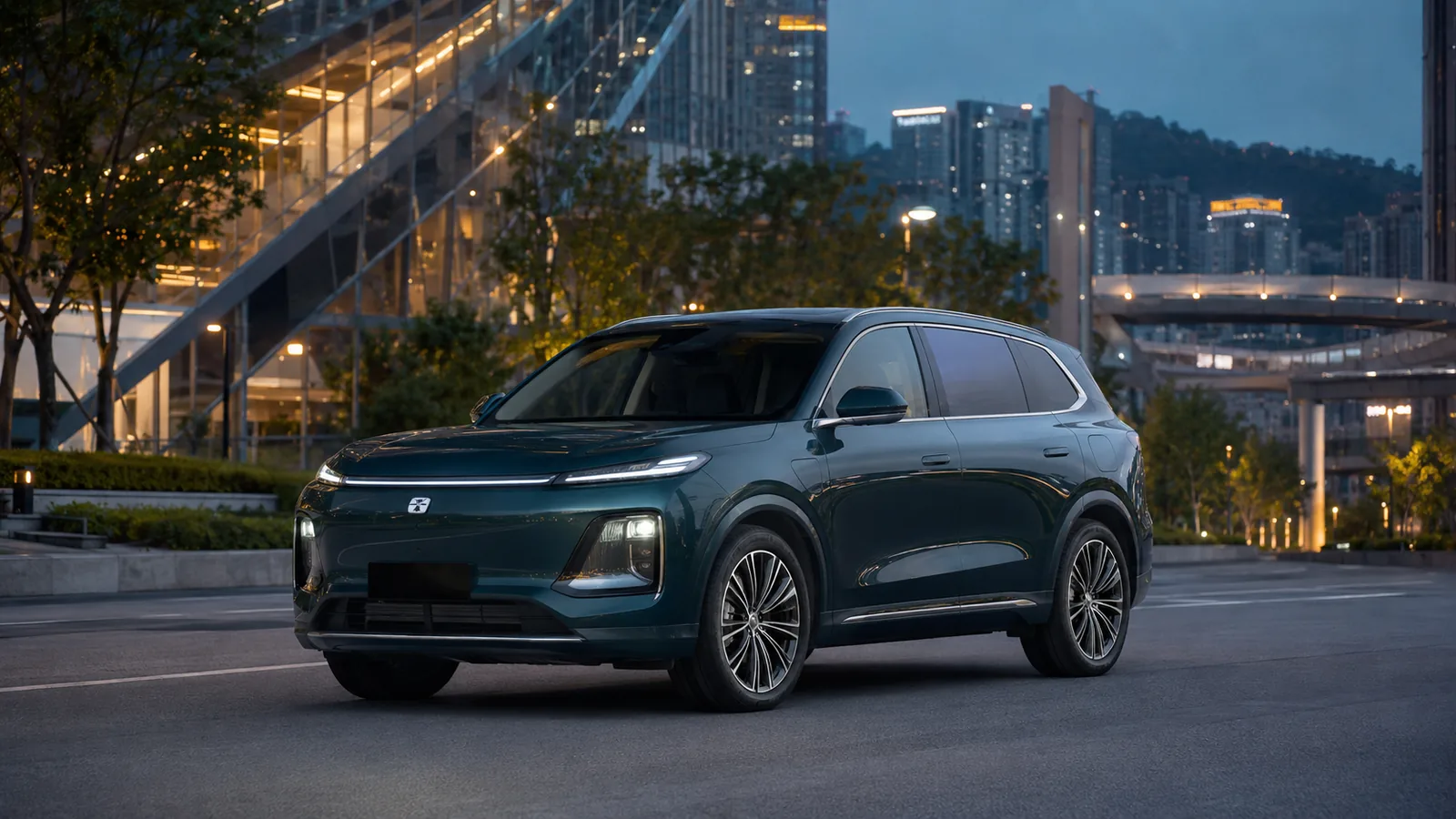
From the outside, the Changan Qiyuan Q07 projects a modern, high-tech persona that wouldn’t look out of place on a European autobahn. In fact, the Q07’s exterior was styled by a German design team, giving it a globally appealing aestheticddongauto.com. The front end features a sleek closed grille (appropriate for a hybrid/EV) that flows seamlessly into a distinctive LED light signature. Changan calls the daytime running lights “Digital Wing 2.0” LEDs – a continuous star-ring light bar stretching across the nose. This full-width LED strip and the split headlamps beneath it create a futuristic yet refined face, instantly recognizable day or night.
One of the Q07’s party tricks is its set of split DLP projection headlights, which can actually project images up to 150 inches in size. This means the headlights can display patterns or even videos on a wall or garage door – a unique, fun feature for nighttime gatherings or presentations. It’s a bit of high-tech flair that underscores the vehicle’s tech-focused ethos. The headlamp projectors also serve as powerful high beams, while the main driving lights are positioned lower on the fascia in the split configuration.
From the side profile, the Q07 emphasizes smooth, aerodynamic lines. Flush door handles pop out when needed (staying hidden to reduce drag). The doors themselves are frameless (no upper window frame), a design often seen on luxury coupes, which lends a premium and sporty feel. Subtle creases along the body and a gently sloping roofline give the Q07 an athletic stance without compromising headroom. The wheel arches are moderately flared, likely housing wheels around 19–20 inches in diameter for a balanced ride (exact wheel options haven’t been explicitly detailed in sources).
At the rear, the Qiyuan Q07 continues the LED light show. “Floating Island” LED taillights span the width with a layered, 3D effect. They are complemented by dual-level high-mounted brake lights for extra visibility. The rear glass is somewhat steeply raked but finishes in a modest roof spoiler, enhancing the SUV’s aerodynamic profile. Overall, the wide-shouldered rear stance gives an impression of stability. Five exterior colors are offered, covering both conservative shades and bolder hues, so buyers can choose a look that suits their taste – whether that’s understated elegance or a head-turning vibrant tone.
Despite being a family SUV, the Q07’s styling has an international flair that feels upscale. The combination of the LED light bars, smooth sheetmetal, and premium touches (like those frameless windows) signals that Changan aimed to make the Q07 look at home among global competitors. It balances futuristic design cues with practical SUV proportions, avoiding extremes so as to appeal to a broad audience. In short, the Qiyuan Q07’s exterior design is both aerodynamic and eye-catching, successfully blending form and function.
Interior and Comfort
Step inside the Qiyuan Q07, and you’re greeted by a minimalist yet luxurious cabin that rivals high-end competitors. Changan has adopted a “smart lounge” approach: clean lines, digital interfaces, and plush materials. The dashboard is dominated by a 15.4-inch central touchscreen infotainment display, positioned at the center and angled 15° toward the driver for easier reach and visibility. Notably, the Q07 does not have a traditional instrument cluster; instead, driver information is shown via the AR-HUD (Augmented Reality Head-Up Display) that projects data onto the windshieldsicily-evs.com. This unclutters the dash and creates a wide, open feeling for the front occupants.

Changan used soft-touch, eco-friendly materials throughout the cabinddongauto.com. The seats and many surfaces are trimmed in high-quality vegan leather (PU) that is not only soft and comfortable but also low in volatile emissions (for a healthier in-cabin environment). Brushed metal accents and ambient lighting (with 256 colors available for mood lighting) add to the premium ambiance. The design aesthetic is sleek and modern, with a floating center console and minimal physical buttons. Most controls are digital or touch-sensitive, in line with the car’s high-tech character.
Seating comfort is clearly a highlight. Both front seats are power-adjustable with heat, ventilation, and memory settingssicily-evs.com. The driver’s seat also includes a massage function, helping reduce fatigue on long trips. The front passenger seat is a special “Zero-Gravity” recliner that can recline up to 150° to a near-flat position. It comes with an 8-point massage system, ventilation/cooling, heating, and even a powered leg rest – essentially turning the passenger side into a business-class lounge chair. This seat is perfect for relaxing on a road trip or while the vehicle is charging. Changan likens this feature to a “Queen’s seat,” underscoring the emphasis on comfort for the front passenger.
The rear seats haven’t been overlooked either. The two outboard rear seats are heated and ventilated on higher trims, a luxury touch rarely seen in this price segment. The rear bench offers generous legroom (thanks to the 2905 mm wheelbase) and a nearly flat floor (battery is beneath the floor). The seat backs can recline (28°–41°) electronically so that rear passengers can find a comfortable angle. Changan also provides a nifty rear “hidden drawer” in the back—essentially a pull-out drawer in the rear console—for storing small items securely. With multiple USB-A and USB-C ports (three up front and at least one in the rear), everyone can keep their devices charged.
Another novel interior feature is the expandable entertainment screen for the front passenger. When needed, a 12.8-inch secondary screen can fold down from the passenger side (integrated into the sun visor area). This lets the passenger watch movies or access infotainment independently, without distracting the driver (the driver can’t directly see the screen). Combined with an available 150-inch ceiling-mounted DLP projector (for outdoor movie nights), the Q07’s cabin is truly designed for entertainment on the go.
Material quality is high for the class – reviewers note soft-touch surfaces on the dash and doors, nicely upholstered seats, and solid fit and finish. The interior also features a 1.2 m² panoramic sunroof with an electric sunshade, letting in plenty of light and giving the cabin an airy feel. Little details like a heated steering wheel, customizable ambient lighting, and dual wireless phone charging pads (each 50 W with cooling fans) add to the upscale experience.
In terms of noise and climate control, the Q07 is expected to be very refined. As a PHEV, it can run silently in EV mode, and even when the engine is on, Changan likely included ample sound insulation. The automatic climate control system likely features multi-zone settings (possibly a 3-zone climate, given the “four-zone voice interaction” mentioned for AI assistant, which may indicate four distinct zones)ddongauto.com Overall, the Qiyuan Q07’s interior wraps occupants in a tech-infused luxury environment, delivering comfort features often reserved for premium brands, now in an affordable package.
Space and Practicality
One of the Q07’s strongest suits is its efficient use of space. Despite only having two rows (5 seats) instead of three, Changan has maximized passenger and cargo room, making the Q07 highly practical for families and adventurers alike. Its external dimensions (4.84 m long) are similar to some mid-size 3-row SUVs, but Changan opted to keep it a 5-seater. This yields exceptional roominess for all occupants. Both front and rear passengers enjoy over 1 meter of legroom, which is noticeable in stretch-out comfortdrawell-ridever.com. The benefit of the long 2905 mm wheelbase is felt in the rear seat where even tall adults can sit comfortably.

Cargo capacity is another highlight. The Q07’s trunk offers about 763 L of space with the rear seats up, which Changan points out is roughly 50% larger than average competitors in this class. To put this in perspective, that’s enough room for up to 13 carry-on suitcases or a large stroller plus luggage. The cargo area is a dual-layer design, with an underfloor storage compartment to stow charging cables or valuables out of sight.
For even more space, the rear seats can fold flat, transforming the cabin for hauling large items. Changan has cleverly designed the folded rear seat and trunk floor to align, creating a continuous flat surface. In fact, they tout that folding the rear seats turns the space into a “stargazing bed” – essentially a double bed that’s perfect for camping or road-trip naps. Combined with that panoramic sunroof, one could literally lie down and gaze at the night sky from inside the car. This feature taps into a growing trend of using SUVs for camping and overlanding. With the Q07’s bed mode and power export function (6 kW) to run camping equipment, it becomes a self-contained adventure vehicle.
Storage is abundant throughout the cabinddongauto.com. There are said to be 33 storage compartments of various sizes scattered around. This includes generous door pockets, a large glovebox, multi-level center console bins, cupholders, seatback pockets, and clever cubbies (like that hidden rear drawer). The center console between the front seats is particularly deep, providing space for handbags or a small cooler. All these nooks ensure that every passenger has a spot for their phone, water bottle, and other personal items – eliminating clutter on long drives.
For families, the Q07’s wide back seat and door openings make it easy to install child seats or load kids in and out. The rear doors open to near 90 degrees for better access. Although it’s only 5 seats, three children or two adults plus a child seat can fit in back with ease. The absence of a third row also allows a more generous cargo area at all times, which many will appreciate over rarely-used extra seats.
It’s worth noting that the Q07, being a PHEV, locates its battery under the floor, which can slightly elevate the floor height. However, Changan’s clever packaging mitigated this, as evidenced by the ample headroom and deep trunk. Additionally, frunk (front trunk) space is not mentioned, so presumably the engine bay is occupied by the hybrid engine and motor, leaving no frunk (unlike some pure EVs).
In summary, the Qiyuan Q07 excels at space management: it’s roomier than a Tesla Model Y inside, offers flexible seating and cargo configurations, and is loaded with thoughtful storage solutionsddongauto.com. Whether it’s daily errands, road trips, or car camping, the Q07 has the versatility and space to accommodate a variety of lifestyles.
Powertrain and Performance
At the heart of the Changan Qiyuan Q07 is the innovative Blue Whale 3.0 plug-in hybrid system – a powertrain that aims to deliver the best of both electric and gasoline worlds. The setup is built around a 1.5 L four-cylinder engine and a potent electric motor, configured in an EREV (Extended Range Electric Vehicle) architectureen.wikipedia.org. This means the Q07 can drive like a pure electric vehicle for substantial distances, but also has an engine on board to extend range or provide extra power when needed.
Engine Options: Changan offers two engine variants:
- A 1.5 L naturally-aspirated engine (~98 PS / 97 hp) for lower trims. This engine is mainly tuned for efficiency and to act as a generator for the hybrid system. On its own, it provides modest power but sips fuel.
- A 1.5 L turbocharged engine (~150 PS / 148 hp) on higher trims. The turbo adds more punch when accelerating and contributes to a higher combined output.
Electric Motor: Both engine choices pair with the same electric drive motor, rated around 165 kW (224 PS). This motor is the primary driver of the wheels, especially in EV mode. It delivers strong low-end torque (typical of electric motors), giving the Q07 brisk responsiveness from a stop.
Combined Power: When engine and motor work together, total system output can reach 318 hp (with the 1.5 NA engine) or up to 369 hp (with the 1.5 turbo). These are substantial figures – nearly on par with some performance SUVs. However, the Q07 is front-wheel drive based (the engine is front-mounted). Interestingly, the Q07’s layout can be either front-engine, rear-motor RWD or front-engine, dual-motor AWD in design. The initial models appear to use a single rear-mounted motor (driving the rear wheels) and the engine can either drive the front wheels or serve as a generator. In EV mode, it’s essentially rear-wheel drive via the electric motor. In hybrid mode, the engine can kick in to add power (possibly driving the front axle or charging the battery to feed the rear motor). There may also be an AWD variant in the future with a second motor up front, but the details remain scarce. Regardless, expect smooth power delivery thanks to the single-speed eCVT which seamlessly manages the power flow.
On the road, the Q07 can cruise purely on electric for 145–215 km (90–134 miles) depending on battery sizeen.wikipedia.org. This covers daily commuting easily – meaning many owners might rarely need to burn fuel during the week. When the battery depletes or when strong acceleration is demanded, the 1.5 L engine quietly springs to life. Changan’s Blue Whale hybrid system is likely similar to Toyota’s or Li Auto’s approach: it can operate in EV mode, series hybrid mode (engine generating power for the motor), or parallel hybrid mode (engine and motor both driving wheels) as conditions demand. The transition is designed to be unobtrusive. With sound insulation and active noise cancellation, the engine turning on/off should be barely noticeable to passengers.
In terms of acceleration, no official 0–100 km/h times have been published, but with ~318–369 hp pushing ~1.8–1.9 tonnes, one can estimate mid-6-second range for the turbo model and around 7–8 seconds for the base model. Low-end torque from the electric motor (which likely produces on the order of 300+ Nm) ensures responsive city driving and confident overtaking. The top speed of 180 km/h is electronically limiteddrawell-ridever.com – typical for hybrids focused on efficiency.
Crucially, the Q07’s strength is long-distance efficiency. In hybrid mode, it achieves 3.9 L/100 km fuel consumption (approximately 60 mpg) in WLTC testing, which is outstanding for a vehicle of this size. The large battery means the engine often isn’t needed at all for shorter trips. On a road trip, the engine can run in its optimal range to act as a generator, thereby sipping fuel sparingly while maintaining charge. This is how it reaches that 1,300–1,400 km total range on a tank+charge – you could drive from Los Angeles to Seattle or Paris to Rome without refueling.
Driving Dynamics: The Qiyuan Q07 is not intended as a sports SUV, but it incorporates advanced features for a refined drive. The CDC “Magic Carpet” suspension (Continuous Damping Control) uses electronic shock absorbers that adjust in real-time, smoothing out bumps. Paired with cameras that preview the road, the system can soften or firm up each wheel’s suspension proactively for a very comfortable ride, akin to luxury cars. Handling should be stable and predictable; the low-mounted battery gives a low center of gravity, reducing body roll. Steering is likely light for easy maneuvering, and thanks to a rear motor drive, the Q07 might even exhibit a rear-wheel-drive feel in EV mode (good traction and balanced weight distribution).
Additionally, the Q07 has multiple drive modes – likely including an EV mode, Hybrid mode, Sport mode, and a Save/Charge mode for the battery. In Sport mode, the throttle and engine mapping would prioritize performance (bringing the engine in more aggressively for maximum power). Conversely, Eco mode might limit engine use and AC intensity to stretch efficiency.
Overall, the Q07’s powertrain is about effortless, efficient driving. It delivers adequate punch when needed, but more importantly, it offers flexibility – the freedom to drive electric daily and gas on demand for long trips. With smooth transitions and a focus on comfort, the driving experience leans towards serene and confidence-inspiring rather than outright sporty. In a sense, Changan’s Qiyuan Q07 exemplifies the next generation of hybrids that can truly replace conventional cars without compromise.
Range, Charging and Efficiency
One of the headline figures of the Changan Qiyuan Q07 is its range: up to 1,400 km (870 miles) on a full charge plus a tank of petrolddongauto.com. This is a total driving range that few vehicles (of any kind) can match, effectively eliminating range anxiety. How is this achieved? It’s a combination of a relatively large battery for a PHEV, a very efficient engine, and smart energy management:
- Electric Range: In pure EV mode, the Q07 can travel 145 km with the standard battery, or an impressive 215 km with the larger battery (as measured by the Chinese CLTC cycle). Even adjusting for real-world conditions, that’s likely around 100–150 km (62–93 miles) of range without using a drop of fuel. Many daily commutes and errands fall well within this range. For context, 215 km EV range is higher than most plug-in hybrids on the market as of 2025 – Changan essentially equipped the Q07 with a battery as big as some small EVs. This means owners can treat it like an electric vehicle for daily use, charging up at home or at work.
- Hybrid Range: When you go on a longer trip, the 1.5 L engine acts as a highly efficient generator/assistant to maintain charge. The Q07’s fuel tank size is not explicitly stated, but given the 3.9 L/100 km consumption and ~1400 km range, we can infer the tank is around 50 L. The engine’s job is optimized for efficiency; it likely operates in Atkinson cycle and is coupled with the motor in such a way to minimize waste. At a steady highway cruise, the Q07 might run mostly on EV with periodic engine bursts to recharge, or the engine might directly assist drive at high speeds – the hybrid control unit intelligently uses whatever mode yields the best efficiency. The result: you could drive nearly two full days on the highway (at ~110 km/h average) before needing to refuel, a testament to its efficient design.
- Charging Speed: Unlike many PHEVs that only charge slowly, the Qiyuan Q07 supports fast charging like a full EV. It can accept up to 3C charging rates (roughly 3 times the battery capacity per hour). According to Changan, the Q07 charges from 30% to 80% in just 15 minutesdrawell-ridever.com. In practical terms, if you stop at a highway rest area, a quick 15-min coffee break can add ~50% battery, equating to ~70–100 km of EV range. A full charge (0–100%) might take around 30 minutes to 1 hour on a high-power DC charger, depending on the battery option. This is game-changing for a plug-in hybrid – it means you can rely on public fast chargers during road trips to minimize fuel use. The car likely also supports Level 2 AC charging (likely ~7 kW or higher onboard charger) for home or workplace charging, which would recharge the battery in a few hours.
- Efficiency: The rated 3.9 L/100 km fuel consumption (WLTC) demonstrates the hybrid system’s optimization. Owners have reported that even when the battery is low, the Q07 manages to run the engine in an efficient range, sometimes yielding >20 km/l (47 mpg) in hybrid mode. The beauty of a large battery is regenerative braking can capture a lot of energy (e.g., long descents can recharge the battery significantly, which the engine can then avoid burning fuel later). In city driving, the engine might hardly run at all if you charge regularly. In highway driving, the engine can run at a constant efficient rpm to maintain battery charge—more like a generator—which is more efficient than the typical acceleration/deceleration cycles of a traditional car.
- External Power (V2L): The Q07 comes with a 6 kW external discharge feature (Vehicle-to-Load). This means the car can act as a big portable generator or power bank. You can plug in appliances, power tools, or camping equipment into the car. For example, 6 kW can easily run an electric grill, a refrigerator, or even sensitive electronics (with proper inverter). This turns the Q07 into a great companion for camping or tailgating, as you could run a small campsite’s worth of gear off your car. In emergencies, the Q07 could potentially power home essentials – 6 kW is enough to run some home circuits, so during a power outage you could keep the lights on or charge devices (though you’d likely need a special adapter for home use).
Changan’s “Golden Shield Battery 2.0” technology is mentioned as well, highlighting safety and longevity. The battery pack is LFP chemistry from CATL, which is known for being stable and long-lasting. It’s been tested from -35°C to 60°C extremes, and Changan offers a lifetime battery warranty, indicating confidence in its durability. Fast charging at 3C is demanding, but the battery is engineered to handle it without significant degradation.
In summary, the Qiyuan Q07 offers the convenience of an EV for daily driving and the freedom of a gasoline car for long trips, with the ability to recharge quickly like an EV. Its efficiency and range are standout features. For environmentally conscious drivers who still need long-haul capability, the Q07 could be a perfect solution – burn almost no fuel day-to-day, and even on a cross-country trip use a fraction of what a normal SUV would. Changan has truly addressed the “range anxiety” concern from all angles in the Q07, making it one of the most versatile electrified SUVs available.
Advanced Technology and Infotainment
The Changan Qiyuan Q07 is as much a high-tech gadget as it is an automobile. Inside and out, it’s loaded with advanced technology aimed at enhancing convenience, entertainment, and driver assistance. Let’s break down some of the standout tech features.
Five-Screen Interactive Cockpit: The Q07’s interior is sometimes called a “five-screen” setup. Where are all these screens?
- The main 15.4-inch central infotainment screen (touchscreen) in the middle of the dashboard, which controls navigation, music, settings, etc.
- A 12.8-inch front passenger entertainment screen, cleverly integrated (likely a fold-down or in-glovebox unit) allowing the passenger to watch videos or interact with the system independently.
- An AR-HUD (Augmented Reality Head-Up Display) for the driver. Instead of a traditional instrument cluster, the AR-HUD projects key information (speed, navigation arrows, safety alerts) onto the windshield in the driver’s line of sight, as if floating over the road. This AR-HUD is large (Changan mentions 49 inches of virtual projection area diagonally), and it can overlay navigation prompts onto the real world (e.g., highlighting your next turn).
- Two additional screens likely come from a rearview mirror display (if the car uses a camera feed for a digital rear mirror) or perhaps screens for rear passengers (not explicitly mentioned, but five implies two more beyond the ones above). It’s possible that the climate control panel or the small driver status display counts as the fifth screen. In any case, the cockpit is highly digital with multiple displays working in tandem.
DeepSeek AI Voice Assistant: Changan integrated a powerful AI voice assistant in the Q07, referred to as DeepSeek AIddongauto.com. This system allows four-zone voice interaction – meaning it can detect whether the driver or any of the three other main seating positions is speaking, and respond to that occupant individually. Remarkably, it responds naturally without a wake word. So passengers can just say things like “I’m cold” and the system will increase the temperature for that zone, or “Play music” and it will respond. This conversational AI makes controlling the car’s functions hands-free and intuitive. It likely uses advanced onboard processing (and possibly cloud AI) to understand commands and even complex requests.
Connectivity: The infotainment is expected to support all modern connectivity: Apple CarPlay, Android Auto, Bluetooth, and probably even China’s Baidu CarLife. It certainly has built-in 4G/5G connectivity for live navigation, OTA updates, and streaming media. Being a modern Chinese vehicle, it might also integrate apps for streaming video, karaoke, etc., especially for the passenger screen. OTA (Over-the-Air) updates are supported, notably for the driving assistance system – Changan mentioned the Q07 can upgrade to city-level autonomous driving via OTA by 2026. This means the vehicle’s software (for both infotainment and driving systems) will continually improve and get new features over time, just like a smartphone.
Premium Audio – “Sky Domain” Sound: Audiophiles will appreciate the Q07’s 16-speaker Sky Domain audio systemdrawell-ridever.com. It likely includes surround sound processing and a subwoofer to create a rich audio experience. There are 7 sound modes available (such as Theater, Concert, etc.) to tailor the acoustics. With such a setup, music and movies in the Q07 should sound immersive. The quiet cabin (especially in EV mode) provides an ideal listening environment. If you’re very particular about audio, however, you might consider aftermarket upgrades or adjustments – FrediTech’s guide to the best car audio systems of 2025 highlights what top-of-the-line systems offer, giving a benchmark for comparisonfreditech.com. But straight from the factory, the Q07’s audio is competitive with luxury cars. (It even has headrest speakers for the front seats in some trims, to create a personal sound bubble.)

Interior of the Changan Qiyuan Q07, featuring a minimalist dashboard with a large central touchscreen and digital controls. Luxurious materials and ambient lighting create a modern lounge-like atmosphere.
Projector & Entertainment: A quirky and fun feature is the Q07’s ability to function as a projector for movies. As mentioned earlier, the headlights themselves can project images (perhaps more for novelty). But Changan also advertised an optional 150-inch DLP projector built into the car (possibly in the roof or a portable unit)drawell-ridever.com. This could be used for outdoor movie nights – imagine parking the Q07 at a campsite and projecting a film onto a screen or wall, using the car’s audio for sound. Paired with the 6 kW power output, you could run additional speakers or a popcorn maker too! While not everyone will use this often, it adds to the Q07’s lifestyle appeal.
Wireless Charging & Device Support: The center console has dual 50 W wireless charging pads – meaning both the driver and passenger can wirelessly fast-charge their smartphones simultaneously, even power-hungry large phones. Each pad has an active cooling fan to keep devices from overheating during charging. There are also multiple fast-charge USB ports (likely USB-C with high amperage) for rear passengers. Essentially, the Q07 ensures all your gadgets stay charged.
User Interface: The infotainment likely runs Changan’s latest UI, which is designed for ease of use and rich functionality. Large tiles, clear graphics (the screen is 2K resolution, meaning about 2560×1600 pixels, very crisp), and the ability for split-screen or showing multiple functions at once. The system likely supports online navigation with real-time traffic, voice search for points of interest, streaming services for music, etc. If it’s similar to other Chinese EV interfaces, it may also have fun features like an in-car karaoke app, customizable themes, and even in-cabin selfie camera or video call support (though this isn’t confirmed for Q07).
Augmented Reality HUD: The AR-HUD is particularly noteworthy. Instead of a small projected speed display, the Q07’s AR-HUD can overlay graphics like navigation arrows directly onto the view of the road, highlighting where to turn or showing a following distance graphic for the car ahead if using adaptive cruise. This reduces the need to look down at the center screen for directions, enhancing safety and that cool factor.
In sum, the technology suite of the Qiyuan Q07 is comprehensive and forward-thinking. It’s engineered to impress tech-savvy drivers who want the latest features and to make driving easier and more enjoyable. From the voice assistant that feels like talking to JARVIS, to the cinematic entertainment options, the Q07 positions itself not just as transportation, but as a smart mobile living space. This level of tech integration is a key selling point and a major differentiator in the mid-size SUV class, especially at this price point.
Safety and Driver-Assistance Features
Changan has equipped the Qiyuan Q07 with a robust suite of safety and ADAS (Advanced Driver Assistance Systems) to ensure peace of mind for drivers and passengers. The aim is to achieve Level 2+ semi-autonomous driving, which handles acceleration, braking, and steering under certain conditions, while still requiring driver supervision.
High-Speed NOA (Navigate on Autopilot): One of the marquee features is the High-Speed NOA navigation assist. On highways, this system can essentially drive the car semi-autonomously: it follows the navigation route, keeps the car centered in its lane, maintains a safe distance from vehicles ahead, and can automatically change lanes to pass slower traffic or take highway interchanges when directed by the navigation. It’s similar to Tesla’s Navigate on Autopilot or GM’s Super Cruise in concept. With high-definition mapping and sensor fusion, the Q07 can likely handle most highway scenarios, greatly reducing driver fatigue on long drives.
Sensor Array with Optional LiDAR: To enable such capabilities, the Q07 is packed with sensors. It features 11 cameras, 3 millimeter-wave radars, 12 ultrasonic sensors, and 1 LiDAR (in top trims). The cameras provide a 360° view for parking and also feed into systems like lane keeping and traffic sign recognition. The radars detect vehicles in your blind spots and measure distance and speed of surrounding cars for adaptive cruise control. The ultrasonic sensors help with close-range obstacles (useful in parking or low-speed autopilot maneuvers). The optional LiDAR (Light Detection and Ranging) is a laser scanner that creates a precise 3D map of the environment around the car. LiDAR can improve the reliability of obstacle detection (like seeing a tire on the road or a small animal) and is especially useful for more advanced autonomous functions in complex environments. The presence of LiDAR in a vehicle at this price point is quite cutting-edge – many automakers have only included it in flagship models.
With this sensor suite, the Q07’s ADAS likely includes:
- Adaptive Cruise Control with Stop & Go: Maintains speed and distance, and can handle stop-and-go traffic.
- Lane Keeping Assist/Lane Centering: Gently steers to keep you in lane; with NOA, it will center confidently and handle curves.
- Automated Lane Change: Under NOA or with driver confirmation, it can change lanes to overtake or follow navigation.
- Traffic Jam Assist: In low-speed congestion, it can follow the car ahead, managing braking and steering.
- Automated Parking: The Q07 supports full-scenario automated parking, meaning it can likely identify a parking spot (parallel or perpendicular) and park itself with minimal input. Possibly it even has a remote park or summon feature.
- Forward Collision Warning & Automatic Emergency Braking (AEB): Uses camera and radar to warn of impending collisions and brake if necessary. This works for vehicles and likely for pedestrians/cyclists.
- Blind Spot Monitoring and Rear Cross-Traffic Alert: Warns if a vehicle is alongside in the next lane or if cross traffic is approaching when backing out of a spot.
- 360° Surround View Cameras: When parking, a top-down view is displayed, making it easier to maneuver in tight spaces. Given the sensor set, the resolution should be quite good.
- Driver Monitoring: There may be an interior camera watching the driver’s face for drowsiness or distraction, alerting if eyes are off the road for too long.
Battery Safety: The Q07’s large battery pack is protected by Changan’s Golden Shield Battery system (version 2.0). It’s designed to be highly crash-resistant and has multiple safety redundancies. For instance, in a collision, the battery will cut off power nearly instantaneously to prevent short-circuits. The battery underwent extreme testing from arctic cold to desert heat to ensure stability. Importantly, LFP chemistry is inherently less prone to overheating or fires compared to some other lithium-ion chemistries. Changan is confident enough to give a lifetime warranty on the battery, which speaks volumes about its safety and longevity engineering.
Structure and Passive Safety: While we don’t have full crash test data yet, the Q07’s body is built on Changan’s new SDA platform (Smart Dynamic Architecture), which is an advanced vehicle platform for new energy vehicles. It likely uses a mix of high-strength steels and aluminum for the body and frame. The design includes optimized crumple zones and a reinforced passenger cell. Expect it to have the full complement of airbags: front, side, curtain, and possibly a driver knee airbag. There might even be a front-center airbag (between driver and passenger) as some new cars include, to prevent head clashes in side impacts.
Changan would aim for a 5-star C-NCAP safety rating (Chinese New Car Assessment Program) and possibly good performance if tested by Euro NCAP should they export it.
Other safety/convenience tech includes:
- Tire Pressure Monitoring System (TPMS), alerting if a tire is underinflated.
- Automatic High Beams that switch off when traffic is detected ahead.
- Rear Collision Warning or door opening warning (to alert of cars/bikes coming from behind when opening doors).
- SOS Emergency Call in the infotainment, in case of an accident.
Changan is also emphasizing “full-scene” NOA, meaning they intend the Q07 to handle not just simple highway driving, but potentially urban scenarios in the future. Through OTA updates, they plan to introduce city-level autonomous driving in 2026, which could allow the car to navigate more complex city streets (with traffic lights, roundabouts, etc.) under supervision. While that will depend on regulatory approvals and further development, the hardware in the Q07 (especially with LiDAR in place) is essentially future-proofed for higher autonomy.
In conclusion, the Qiyuan Q07 doesn’t skimp on safety. It combines active safety (systems working to prevent accidents) with passive safety (protecting occupants if one occurs) to offer a comprehensive shield. Features like NOA put it at the forefront of driver-assist tech in its class, a notable achievement. Drivers can feel confident that the Q07 is watching the road as carefully as they are, ready to warn or intervene to keep everyone safe.
Pricing and Availability
One of the most striking aspects of the Changan Qiyuan Q07 is its value proposition. With a starting price of just ¥129,800 RMB (approximately $18,000 USD) in China for the base model, the Q07 offers luxury PHEV features at a budget priceddongauto.com. Even fully loaded flagship versions (with the 215 km battery and all options) top out around ¥170,000–¥180,000 RMB (roughly $24k), according to export listingshengshuijunchi.en.made-in-china.com. To put that in perspective, many plug-in hybrid SUVs in Western markets (with less electric range) cost 2–3 times as much. Changan is aggressively pricing the Q07 to undercut competitors and rapidly gain market share.
In China, the Qiyuan Q07 was launched in April 2025 and is part of Changan’s Nevo (启源) sub-brand for new energy vehicles. It’s available through Changan dealerships across China, and early reviews there praise the feature set relative to price, with some calling it a potential “EV market disruptor”. The car is offered in multiple trims, often named by their electric range (e.g., Q07 145 Premium, Q07 215 Flagship, etc., referring to 145 km or 215 km EV range versions). Even the base Luxury 145 km edition is well-equipped, while higher trims add the LiDAR, bigger battery, turbo engine, etc.
For customers outside China, the big question is global availability. Changan has signaled intentions to expand to global markets, and the Q07 (branded possibly as Changan Nevo Q07) could be part of that strategy. There are indications the Q07 is being prepared for export in 2026, as promotional materials highlight it as “going global”facebook.com. Some grey importers in Asia, the Middle East, and South America have already listed the Q07 for sale, and its EU certification might be in progress given the interest. It’s important to check local regulations (for example, ensuring it meets emissions and safety standards of a given country).
If it reaches Europe or North America, expect some adjustments – possibly a different name (to avoid confusion, since “Qiyuan” is Chinese for “origin”), and perhaps slightly higher pricing due to import costs. Even so, it would likely undercut established players by a wide margin. For instance, a Mitsubishi Outlander PHEV or Toyota RAV4 Prime (both popular plug-in SUVs) cost around $40k+ in the U.S., yet have much shorter electric range (~40–60 km). The Q07, if sold around $30k, could be extremely compelling if Changan provides a solid warranty and dealer network.
Changan also benefits from China’s robust EV supply chain, which keeps costs low. The use of LFP batteries (cheaper per kWh than nickel-based cells) and in-house developed electronics allows these prices to be sustainable. Additionally, governments in some countries might offer incentives or tax breaks for importing environmentally friendly vehicles, further reducing effective cost.
Potential buyers should consider that after-sales support is crucial. In China, Changan offers long warranties (e.g., 8 years on the hybrid system, lifetime on battery), and extensive service centers. Abroad, initially, support might be through third-party importers until Changan officially enters those markets.
In summary, pricing for the Qiyuan Q07 is a major advantage – you’re getting flagship PHEV tech for compact SUV money. The Q07 is currently available in China (test drives and deliveries ongoing since mid-2025), and likely to expand to select global markets by 2026 (possibly ASEAN countries, Middle East, and maybe pilot programs in Europe). Keep an eye on Changan’s announcements if you’re interested, because the Q07 could redefine what value looks like in a hybrid SUV on the international stage.
Conclusion: A New Benchmark for Hybrid SUVs
The 2026 Changan Qiyuan Q07 emerges as a remarkable entrant in the automotive world – one that blends extended EV range, intelligent features, and premium comfort at a price point that seems almost too good to be true. By offering up to 215 km of pure electric driving and 1,400 km of total range, the Q07 effectively erases the typical compromises of plug-in hybrids. You get the environmental and performance benefits of an electric vehicle for daily use, and the long-distance convenience of a gasoline engine when needed – all without the hefty price premium usually associated with high-tech green cars.
Changan has also delivered on the luxury and tech front. The Q07’s stylish design (penned with international flair) and its high-tech cabin could make one mistake it for a far more expensive vehicle. From the zero-gravity massage seat and expansive screens to the advanced NOA self-driving assist and AR-HUD, it’s clear the Q07 is targeting a tech-savvy audience that wants cutting-edge innovation in their ride. Features like the projector headlights and 5G-connected AI assistant add a bit of “wow” factor and show Changan’s confidence in pushing boundaries.
On the road, the Q07 promises a smooth, quiet, and efficient drive. It’s not a sports SUV, but its near-370 hp potential combined with adaptive suspension means it won’t disappoint when you need to accelerate or take on a winding road. More importantly, its efficiency will save you money at the pump (for the little fuel it does use) and reduce emissions, aligning with a greener motoring future.
Safety and reliability are also addressed, with a comprehensive ADAS suite and a robust battery safety strategy. Owners can feel at ease knowing that the Q07 is not just smart and efficient, but also engineered to protect.
In the mid-size SUV segment, competitors are watching closely. The Q07 goes up against plug-in hybrids like the BYD Tang DM, Li Auto L7, Mitsubishi Outlander PHEV, Toyota RAV4 Prime, and even some pure EVs for customer attention. And it holds its own strongly – often beating rivals in electric range and matching luxury features at a fraction of the cost. For example, Li Auto’s L7 (a similar Chinese 5-seat EREV SUV) offers comparable range and comfort but at a significantly higher price; the Q07 undercuts it while delivering many of the same benefits. Western hybrids, as noted, don’t come close in EV range or tech features without huge price tags. This makes the Q07 a potential disruptor beyond its home market.
There are of course a few unknowns until more widespread testing: real-world fuel economy under varied conditions, how well the NOA performs on non-Chinese roads, and long-term durability in different climates. However, given the pedigree of Changan (one of China’s top automakers with extensive R&D) and the backing of proven suppliers like CATL for batteries, there’s reason to be optimistic on these fronts. Early impressions from Chinese media indicate the Q07 is living up to its claims on range and comfort.
In conclusion, the Changan Qiyuan Q07 is an impressive hybrid SUV that raises the bar. It exemplifies how far Chinese automakers have come – they are now innovating and leading in areas like electrification and smart mobility. For consumers, the Q07 offers an enticing package: long-range freedom, luxurious features, and unbeatable value. It’s the kind of vehicle that can make skeptics of electrified cars into believers, by showing that you truly can have it all in one SUV. If Changan brings the Q07 to global markets, it could force the rest of the industry to step up their game or risk being left behind. The Q07 isn’t just a great Chinese hybrid SUV; it’s a glimpse at the future of automobiles where efficiency, intelligence, and affordability co-exist.
Overall, the 2026 Changan Qiyuan Q07 Hybrid Electric SUV proves that “range anxiety” and “EV compromises” are now problems of the past. This is one review where calling the car a “game-changer” is not hyperbole – the Q07 genuinely feels like a new benchmark, and it arrives at just the right time as the world shifts toward more sustainable yet practical transportation.
Frequently Asked Questions (FAQs)
Is the Changan Qiyuan Q07 fully electric or a hybrid?
How long does it take to charge the Qiyuan Q07?
What is the real-world electric range of the Qiyuan Q07?
How does the Q07 achieve 1,400 km total range?
What are some comparable vehicles to the Changan Qiyuan Q07?
Does the Qiyuan Q07 support over-the-air (OTA) updates?
What is the “Magic Carpet” suspension on the Q07?
How does the Q07’s Highway NOA compare to other self-driving systems?
How much will the Qiyuan Q07 cost in other countries?
Can I use the Q07’s battery to power my home or appliances?
What maintenance does a plug-in hybrid like the Q07 require?
What accessories or upgrades can enhance the Q07 ownership experience?
Author credentials
Wiredu Fred is an experienced automotive and technology journalist. As the founder of FrediTech, he has spent more than a decade reviewing EVs, advanced gadgets, and emerging tech. His writing combines hands‑on testing with rigorous research, making complex topics accessible to readers worldwide. Fred’s passion for sustainable mobility and his attention to detail help consumers make informed decisions.