
Introduction
Microscopy has shaped modern science for centuries. From Anton van Leeuwenhoek’s handcrafted lenses to today’s electron microscopes, the ability to visualize the unseen has propelled biology, medicine and materials science forward. Now, digital microscopy—which replaces the eyepiece with a high‑resolution camera and software—promises a new revolution. These instruments capture images directly into a computer, allowing instant sharing, advanced image analysis and seamless integration with artificial intelligence. As the world shifts toward telemedicine, remote collaboration and data‑driven diagnostics, digital microscopes are becoming indispensable tools. This comprehensive guide demystifies digital microscopy, explaining how it works, its components, applications, advantages and limitations. We’ll also explore digital pathology—a fast‑growing field that digitizes glass slides for electronic analysis—and the innovations pushing imaging into the future.

{getToc} $title={Table of Contents} $count={Boolean} $expanded={Boolean}
Understanding Digital Microscopy
What is a Digital Microscope?
Traditional optical microscopes use eyepieces and a series of lenses to magnify specimens. Users look directly through the optics to see the image. By contrast, a digital microscope uses a digital camera instead of an eyepiece. The camera captures the magnified image and sends it to a monitor or computer screen for viewing. Digital microscopes can be handheld USB devices, desktop LCD microscopes or sophisticated systems with motorized stages and software. Because the image is displayed on a screen, multiple people can view it at once, and the microscope’s ergonomic design eliminates prolonged peering through an eyepiece. According to microscopy resources, digital microscopes allow users to document findings, analyze them using image‑processing software and share results with othersevidentscientific.com. Many models let you zoom in and out digitally without switching objective lensesevidentscientific.com.
How Digital Microscopes Work
A digital microscope combines optical and electronic components. At its core are objective lenses that gather light and create a magnified image of the specimen. Light from an illuminator passes through (or reflects from) the specimen and travels through the objective lens. Instead of entering an eyepiece, the image strikes a digital sensor (usually a CCD or CMOS chip) inside a camera. The sensor converts the optical information into electronic signals and outputs a digital image. Software running on a connected computer or built‑in screen processes the image, adjusting brightness, contrast and color balance in real timelabmanager.com. Advanced digital microscopes support automated slide scanning, where the stage moves systematically across the sample and stitches images into a large mosaiclabmanager.com. Remote connectivity allows experts to view live images from afar, a capability crucial to telepathology and collaborative research.
Digital Imaging Fundamentals
Unlike analog light microscopes, digital systems rely on sampling and quantization to convert continuous light into discrete digital pixels. When an analog image is captured, it is divided into tiny squares (pixels) during sampling; each pixel records a brightness value during quantization. As the Evident Scientific resource explains, sampling divides a continuous‑tone image into discrete brightness valuesevidentscientific.com. The number of pixels and brightness levels determines the spatial resolution: higher pixel counts and finer brightness gradations yield sharper images. For example, a 2‑megapixel camera produces a 1600×1200‑pixel image; to improve resolution, some digital microscopes use pixel‑shift methods that move the sensor slightly and combine multiple overlapping framesmicroscopewiki.com.
Components of a Digital Microscope
Optical Hardware
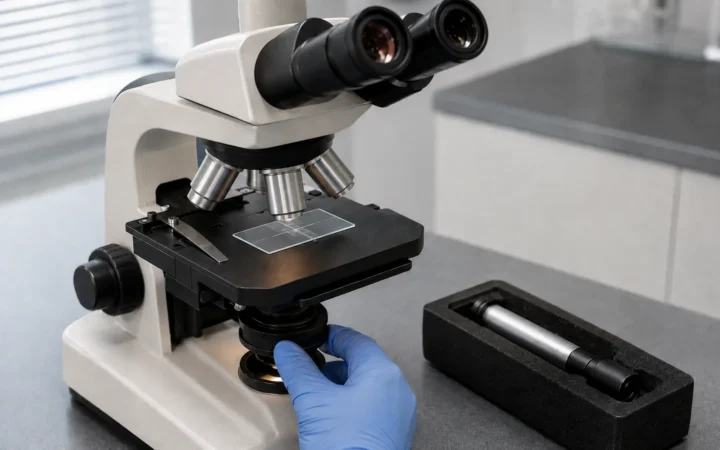
Digital microscopes build on the optical framework of compound microscopes. Key components include:
- Objective lenses: Most digital microscopes use a revolving nosepiece with 4×, 10×, 40× and sometimes 100× (oil immersion) lenses. These lenses gather light from the sample and determine the optical magnification. The field of view and numerical aperture (NA) of the objective influence resolution and brightness.
- Illuminator: A built‑in light source illuminates the specimen. LED illumination is common because of its uniform brightness and long life. Some systems offer coaxial or ring lights for surface inspection, while transmitted‑light bases allow biological imaging.
- Condenser and aperture: When imaging transparent samples, a condenser lens focuses light onto the specimen, and an iris diaphragm controls the intensity and contrast. Adjusting these components optimizes image quality.
- Stage and focus controls: Mechanical or motorized stages hold the specimen slide and move it precisely along X–Y axes. Focus knobs adjust the vertical distance between objective and sample; digital microscopes sometimes automate focusing to maintain sharp images during scanning.
Digital Camera and Sensors
At the heart of a digital microscope is the camera. High‑resolution cameras (ranging from 1 megapixel to over 20 megapixels) produce crisp images. Sensors can be CCD (charge‑coupled device) or CMOS (complementary metal–oxide–semiconductor). CMOS sensors are faster and more energy efficient but may have slightly lower dynamic range than high‑end CCDs. The camera determines the field of view and pixel resolution; wide sensors capture large areas, while small sensors offer higher magnification.
Software Platform
What sets digital microscopes apart is their integration with software. Most systems include programs for live image viewing, image capture and annotation. Users can adjust brightness, contrast, color balance and sharpness in real time. The software can record videos, perform measurements (length, area, angle), create composite images via focus stacking, and generate reports. For example, digital microscope measurement software allows point‑to‑point, radius and area measurements, increasing efficiency and accuracytagarno.com. The ability to annotate images and store metadata improves traceability and documentation. Advanced platforms integrate with laboratory information systems (LIS), enabling images and reports to be stored in electronic patient records—vital for digital pathology.
Connectivity and Ergonomics
Digital microscopes typically connect to computers via USB, HDMI or Wi‑Fi. They may include built‑in LCD screens for stand‑alone operation. Connectivity facilitates remote viewing and data sharing, which is particularly useful in collaborative environmentslabmanager.com. Because images are displayed on monitors, users can work in a comfortable upright position rather than hunching over an eyepiece. Leica Microsystems notes that ergonomics is a major advantage: users view images on a monitor and can analyze them while sitting comfortablyleica-microsystems.com. Digital microscopes often allow multiple user profiles so different operators can save their preferred settings.
Types of Digital Microscopes
Digital microscopy is not a one‑size‑fits‑all solution. Various types serve distinct applications:
- Biological digital microscopes: Used for viewing transparent specimens such as cells and tissues. They often include transmitted‑light bases and support high magnifications up to 100×.
- Fluorescence digital microscopes: Incorporate excitation and emission filters to visualize fluorescently labeled samples, crucial in molecular biology and neurosciencemicroscopewiki.com.
- Inverted digital microscopes: Designed with objectives beneath the stage, allowing imaging of live cells in culture dishes.
- Metallurgical digital microscopes: Use reflected light to inspect metal surfaces, welds and microstructures in materials science.
- Phase‑contrast digital microscopes: Enhance contrast in transparent samples without staining by using phase rings.
- Polarizing digital microscopes: Employ polarizers to analyze anisotropic materials like crystals or minerals.
- Stereo digital microscopes: Provide lower magnification and three‑dimensional perception, ideal for dissection and quality control. However, digital stereo microscopes may not match the depth perception of optical stereo systemsleica-microsystems.com.
- USB/handheld and portable digital microscopes: Compact devices with built‑in cameras; used for forensics, fieldwork and industrial inspectionmicroscopewiki.com. Portable versions often include wireless connections for remote access.
Each type may feature specialized software and hardware (e.g., motorized focus, high dynamic range imaging) to suit specific tasks.
Comparing Digital and Optical Microscopy
Resolution and Image Quality
Optical microscopes have traditionally offered excellent resolution due to high‑quality objective lenses and optimized optical systems. They provide direct visual feedback through eyepieces and can accommodate various contrast techniques (brightfield, phase contrast, polarized light). However, digital microscopes are rapidly closing the gap: improvements in sensor technology and image processing have yielded high‑resolution images suitable for most applicationsevidentscientific.com. Digital microscopes also provide automated focus stacking and image stitching to increase depth of field and create ultra‑high‑resolution compositeslabmanager.com.
Magnification Range and Flexibility
Optical microscopes achieve a broad range of magnifications by combining objective lenses with eyepieces. Digital microscopes, by contrast, often rely on a single objective combined with digital zoom. Users can adjust magnification using software, eliminating manual lens changes and reducing user errorevidentscientific.com.
Image Capture, Documentation and Data Integration
Capturing and storing images is where digital microscopes excel. With integrated cameras, they enable automatic capture of still images and videos, streamlining documentationlabmanager.com. Optical microscopes usually require an external camera, adding steps. Digital systems integrate seamlessly with laboratory information management systems, supporting standardized documentation and remote access. Leica Microsystems adds that encoded digital microscopes store instrument settings with image data, simplifying repetitive workflowsleica-microsystems.com.
Collaboration and Remote Viewing
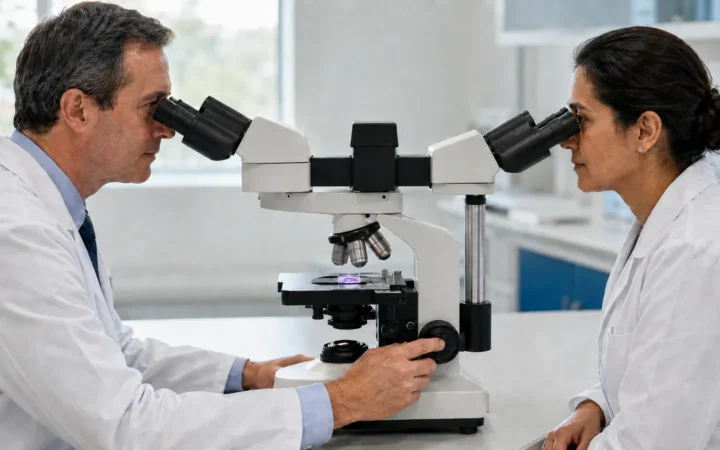
Digital microscopes facilitate real‑time sharing of images with remote colleagues or experts. This capability is invaluable in telepathology, global research collaborations and industrial quality controllabmanager.com. Optical microscopes lack built‑in connectivity and require additional equipment for remote viewing.
Cost Considerations
Traditional optical microscopes are generally less expensive. Lab Manager notes that bench‑top compound microscopes range from about $5,000 to $30,000labmanager.com, whereas advanced digital microscopy systems with high‑resolution cameras and sophisticated software can cost $10,000–$100,000labmanager.com. However, digital microscopes may deliver long‑term value through improved documentation, reduced analysis time and remote collaboration.
Applications of Digital Microscopy
Biomedical Research and Diagnostics
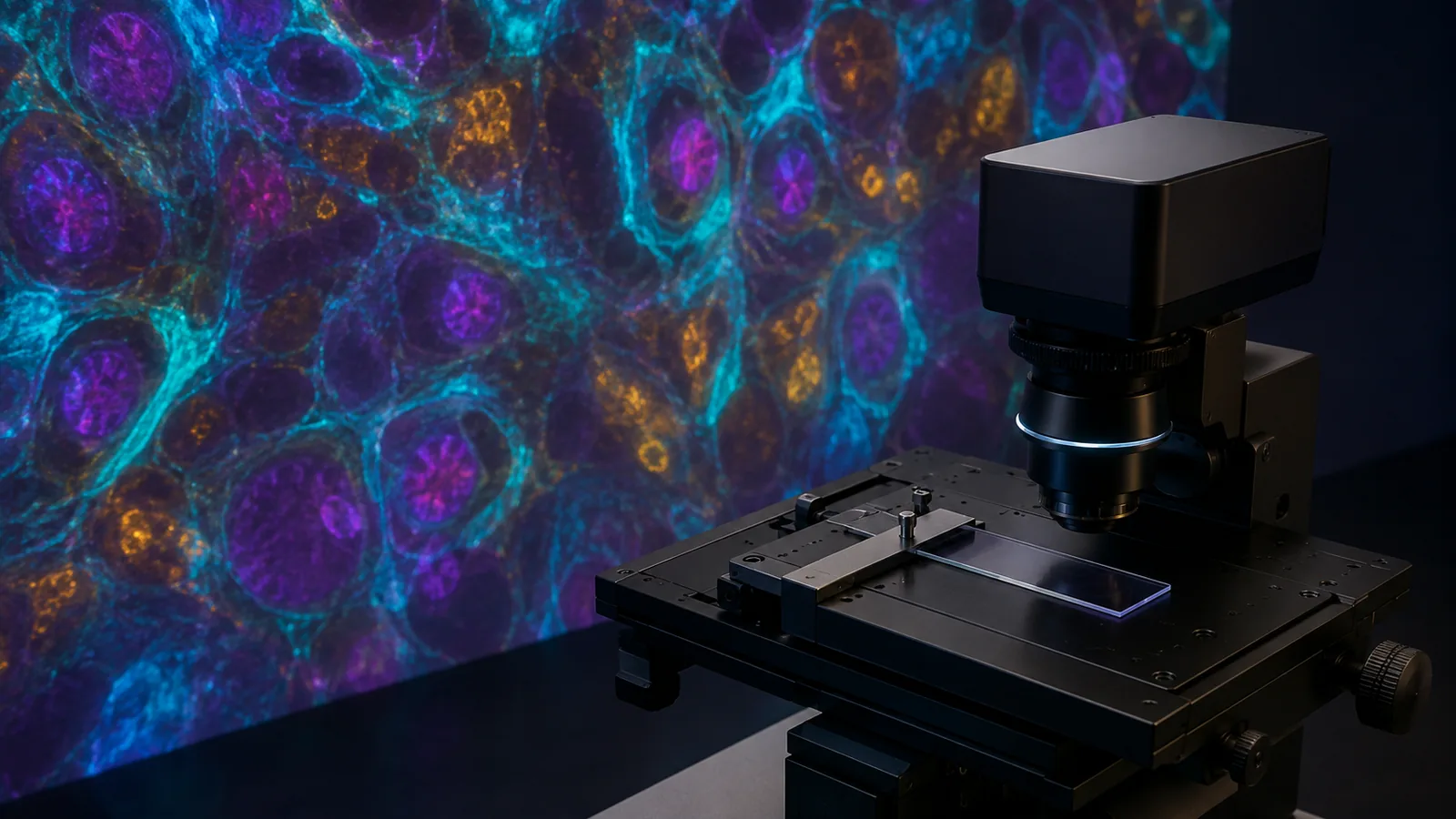
Digital microscopes are widely used in cytology and histology to examine cells and tissues. They aid in disease diagnosis, monitoring cell cultures and documenting experimental results. Whole‑slide imaging has enabled digital pathology—the practice of digitizing glass slides for electronic analysis. In this model, a high‑resolution scanner captures entire slides and stores them as digital files. Pathologists can view, annotate and share images on computer screens, improving workflow efficiencyaiforia.com.
Clinical Pathology and Telepathology
Digital pathology is transforming clinical diagnostics. At a remote hospital in Northern Ontario, Canada, implementing digital pathology allowed pathologists to view slides within hours instead of sending them 300 km away for analysispmc.ncbi.nlm.nih.gov. The hospital digitized all cases, reducing biopsy diagnosis times from around four days to two, and achieved cost savings of CAD $131k–$175k annually. Benefits included enhanced accessibility, centralized data storage, improved collaboration, educational opportunities and the potential for AI integration. However, challenges such as high initial costs, validation protocols, data security and training must be addressedpmc.ncbi.nlm.nih.gov.
Digital pathology adoption is rising globally. The market for digital pathology is projected to grow from USD 1.11 billion in 2024 to USD 2.43 billion by 2034, a compound annual growth rate of 8.1 %biospace.com. The AI in pathology market is also predicted to grow at a CAGR of 15.6 % during 2023–2028aiforia.com, reflecting increasing integration of algorithms for image analysis.
Forensic Science and Law Enforcement
Digital microscopes assist forensic investigators by examining trace evidence, document authenticity and microstructures. Their ability to capture high‑quality images and perform measurements helps identify fake documents and analyze counterfeit itemsmicroscopewiki.com. Portable USB microscopes allow on‑site analysis of crime scenes and physical evidence.
Industrial Inspection and Quality Control
In manufacturing, digital microscopes inspect circuit boards, welds, automotive components and materials. Their measurement tools enable quality control by quantifying dimensions and detecting defects. As PreciPoint notes, digital microscopes allow easier workflow documentation and collaboration; multiple users can examine and annotate the same sampleprecipoint.com. They are used to inspect semiconductor wire bonds, calculate flaws in automotive painting and ensure proper assemblymicroscopewiki.com. In the electronics industry, digital microscopes produce high‑resolution images for printed circuit board analysis and failure analysis.
Education and Outreach
Educational institutions are adopting digital microscopes to enhance learning. Students can view slides on large screens instead of passing around a microscope. Teachers can annotate images in real time and share them with remote classes. Because digital microscopes are easier to use—novices can obtain images faster than with traditional microscopesleica-microsystems.com—they lower the barrier to exploring the microscopic world. Portable models enable field education and citizen science projects.
Advantages and Limitations
Advantages of Digital Microscopy
Digital microscopes offer several compelling benefits:
- Ergonomics and comfort: The ability to view specimens on a monitor promotes a comfortable posture and reduces eye strainleica-microsystems.com.
- Enhanced documentation and collaboration: Automatic image capture and storage allow easy sharing and remote consultationlabmanager.com.
- Measurement and analysis tools: Integrated software enables calibrated measurements (length, area, angle) and annotations, improving efficiency and accuracytagarno.com.
- Image quality and depth of field: Digital microscopes use high‑resolution sensors and image processing to produce crisp, high‑contrast images; pixel‑shift and HDR functions can extend depth of fieldmicroscopewiki.com.
- Workflow efficiency: Automated scanning, focus stacking and slide stitching accelerate data collection and minimize user variabilitylabmanager.com.
- Remote connectivity: Digital microscopes facilitate telepathology and global research, enabling experts to review cases from anywhere.
- Ease of use: Novices can quickly obtain clear images; encoded microscopes save settings for different usersleica-microsystems.com.
Limitations of Digital Microscopy
Despite their advantages, digital microscopes have limitations:
- Cost: High‑end digital systems are expensive, with initial investments ranging from $10,000 to $100,000labmanager.com. Resource‑limited labs may struggle with upfront costs.
- Power and connectivity requirements: Digital microscopes require power and, often, a connection to a PC or monitorleica-microsystems.com. Portable units mitigate this but may sacrifice features.
- Reduced depth perception: Compared with stereo microscopes, digital microscopes offer limited 3D perception; stereo microscopes provide better depth cues.
- Learning curve and data management: Users must learn image acquisition and processing softwarelabmanager.com. Large image files demand robust storage and data management solutions.
- Dependence on sensor quality: Image quality depends on camera resolution and optics. Low‑quality sensors can produce noisy images.
Digital Pathology: Unleashing the Future of Diagnostics
What is Digital Pathology?
Digital pathology involves scanning conventional glass slides into high‑resolution digital images that can be viewed, shared and analyzed electronically. It builds on whole‑slide imaging scanners, which capture entire tissue sections in microscopic detailaiforia.com. Pathologists review images on computer screens using virtual slide viewers, annotate regions of interest and integrate results with patient records. The technology originated in the early 2000s and has evolved with faster scanners, improved file compression and cloud‑based storage.
Benefits of Digital Pathology
- Improved patient care: Digitizing slides enhances information sharing among clinicians and specialists, reducing turnaround times and enabling more informed decision‑makingaiforia.com. In remote hospitals like Timmins, Canada, digital pathology reduced biopsy turnaround times from four days to two and allowed pathologists to review cases without physically shipping slidespmc.ncbi.nlm.nih.gov.
- Workflow efficiency: Digital slides can be accessed instantly. Automation (e.g., barcode tracking) reduces transcription errors and streamlines specimen managementscopiolabs.com. Electronic storage simplifies long‑term archiving and retrieval.
- Collaboration and education: Virtual slides allow concurrent viewing by multiple clinicians, trainees and researchers, fostering collaborative diagnoses and trainingscopiolabs.com. Telepathology bridges geographic gaps, enabling subspecialty consultation.
- Integration with artificial intelligence: AI algorithms can analyze digital slides to detect cancer cells, quantify biomarkers and identify patterns that may be subtle to human eyes. The market for AI in pathology is expected to grow at over 15 % annuallyaiforia.com. Integrating AI with digital pathology may boost diagnostic accuracy and consistency.
- Cost savings: Though initial investment is high, institutions have realized significant savings. Timmins Hospital reported annual savings of CAD $131k–$175k and achieved return on investment within one to two yearspmc.ncbi.nlm.nih.gov. By eliminating slide shipping and accelerating reporting, digital pathology reduces patient length of stay and associated costs.
Challenges and Considerations
Implementing digital pathology entails challenges: high initial hardware and software costs; validating digital diagnoses against glass slides; ensuring data privacy and cybersecurity; and training staffpmc.ncbi.nlm.nih.gov. Institutions must invest in robust IT infrastructure (servers, storage, bandwidth) and integrate digital workflows with laboratory information systems. Pathologists may initially resist changes due to unfamiliarity with digital interfaces. Regulatory approvals vary by region, and consistent quality assurance is essential.
Future Trends in Digital Pathology
Several trends will shape digital pathology:
- Slide‑free microscopy (SFM): Novel imaging modalities aim to bypass slide preparation entirely. A National Institutes of Health review notes that most histology workflows remain unchanged since the 19th century, highlighting inefficiencies and the need for new techniques. Emerging slide‑free approaches include widefield imaging, quantitative phase imaging and multiphoton microscopypmc.ncbi.nlm.nih.gov. These technologies capture tissue architecture in real time and may provide molecular information without sectioning.
- AI‑driven diagnostics: With the rapid growth of the AI in pathology marketaiforia.com, algorithms will increasingly assist pathologists, flagging suspicious areas and providing quantitative metrics. Combining AI with SFM could enable real‑time, high‑throughput diagnostics.
- Cloud and edge computing: Storing and analyzing large digital images demands robust infrastructure. Cloud platforms and edge devices will support faster upload, streaming and secure access to slides. Standardized file formats and interoperability will be critical.
- Regulatory and ethical frameworks: As digital diagnostics become mainstream, regulatory bodies will establish standards for slide scanning, image quality, AI validation and data privacy. Ethical considerations include algorithm transparency and bias mitigation.
Digital Microscopy in Practice: A Step‑by‑Step Guide
Digital microscopes are versatile, but successful imaging requires proper setup and technique. Here’s a simple workflow:
- Prepare your sample: Mount your specimen on a clean slide or place an object on the stage. Ensure coverslips and slides are free of dust and fingerprints.
- Select objective and illumination: Choose an objective lens appropriate for your sample size and desired magnification. Adjust the illuminator for transmitted or reflected light. For biological samples, optimize condenser focus and adjust the aperture diaphragm for contrast.
- Connect the microscope: Plug the digital microscope into a computer or use its built‑in screen. Launch the accompanying software and verify that the live image appears. Check connections (USB/HDMI) and adjust resolution settings.
- Focus and adjust: Use the coarse and fine focus knobs to bring the sample into sharp view. For digital systems, autofocus functions may assist. Adjust brightness, contrast and color balance via software controls.
- Capture images and videos: When the image is clear, capture still images or record video. Use file naming conventions and metadata tagging to organize your data.
- Calibrate and measure: If you need measurements, calibrate the system using a stage micrometer or reference slide. Then use measurement tools to draw lines, circles or polygons. Digital measurement software enables linear distance, angle, area and diameter measurementstagarno.com.
- Annotate and save: Add annotations, arrows or text to highlight key features. Save files in appropriate formats (e.g., TIFF, JPEG) and back them up on secure storage. If integrated with an LIS, link images to patient or sample records.
- Share and collaborate: Use software to share images with colleagues via secure platforms. For telepathology, ensure that remote viewers have access to the same software or a web‑based viewer.
Future Innovations in Digital Microscopy
Digital microscopy is evolving rapidly, fueled by advances in optics, sensors and computation. Upcoming innovations include:
- 3D and volumetric imaging: Combining optical sectioning with digital reconstruction will enable true three‑dimensional views of tissues and materials. Techniques like confocal, light sheet and multiphoton microscopy already capture optical sections; digital algorithms will render 3D models for analysis.
- High‑throughput automated microscopy: Automated slide scanning, cell counting and pattern recognition algorithms are accelerating drug discovery and biomedical research. Integration with robotics may create fully automated imaging pipelines.
- Portable and smartphone‑based microscopes: Advances in miniaturized optics and sensors are enabling portable devices. Smartphone attachments and foldable microscopes could bring digital imaging to remote clinics and classrooms.
- Augmented reality (AR) and virtual reality (VR): Overlaying real‑time digital microscope images with virtual annotations or 3D models could enhance training and surgical planning.
- Integration with 5G and 6G networks: Ultra‑fast connectivity will allow real‑time streaming of high‑resolution images for remote diagnostics and collaboration. For example, 6G networks may integrate non‑terrestrial networks (NTN) to provide global coverage, ensuring reliable telepathology even in remote areasnokia.com.
Conclusion
Digital microscopy is transforming scientific inquiry, diagnostics and education. By replacing the eyepiece with high‑resolution sensors and powerful software, these instruments offer ergonomic viewing, automated measurement, remote collaboration and seamless integration with digital workflows. Comparing digital and traditional optical microscopes reveals unique strengths: digital microscopes excel in documentation and connectivity, while optical microscopes provide tactile simplicity and lower cost. Rapid adoption of digital pathology shows how digitized slides and AI can improve turnaround times, accessibility and patient outcomes, though challenges such as cost, data management and validation remain.
Future innovations—slide‑free microscopy, AI‑driven diagnostics, cloud infrastructure and portable devices—will further unleash the potential of digital imaging. For labs, clinicians and educators, investing in digital microscopy means embracing a future where microscopic data are accessible anytime, anywhere. To learn more about related technologies, check out our posts on emerging medical innovations and essential features of medical laboratory microscopes for deeper dives into cutting‑edge tools.
FAQs
What is the main difference between digital and optical microscopes?
Digital microscopes replace the eyepiece with a digital camera. The image appears on a monitor, allowing for easier viewing, documentation and sharing. Optical microscopes rely on eyepieces and typically require an external camera for image capture. Digital systems offer integrated measurement tools and remote connectivitylabmanager.com, but they are generally more expensivelabmanager.com.
Can digital microscopes achieve the same resolution as optical microscopes?
High‑end optical microscopes may still offer slightly superior optical resolution due to finely crafted lensesevidentscientific.com. However, advances in sensor technology, pixel‑shift methods and image processing have enabled digital microscopes to produce high‑quality images suitable for most applicationslabmanager.com. For routine work and documentation, digital microscopes often meet or exceed the required resolution.
How does digital pathology improve diagnostic workflows?
Digital pathology digitizes glass slides, allowing pathologists to review cases electronically. This improves accessibility, reduces turnaround times and facilitates remote collaborationaiforia.compmc.ncbi.nlm.nih.gov. Integration with AI can aid diagnosis by detecting abnormal patterns and quantifying biomarkersaiforia.com. However, institutions must address infrastructure, validation and training challenges.
What are the advantages of digital microscopy for industrial applications?
Digital microscopes enable precise measurement and documentation of components, making them ideal for quality control and failure analysis. They allow engineers to inspect circuit boards, welds and surfaces, annotate defects and share findings with colleaguesmicroscopewiki.comtagarno.com. High‑resolution sensors and software ensure accurate dimensional analysis.
Are digital microscopes harder to use than traditional microscopes?
Not necessarily. Many digital microscopes are designed for out‑of‑box use, with automated focus and intuitive software. Leica notes that inexperienced users can obtain images more easily with digital microscopes than with traditional systemsleica-microsystems.com. However, users must learn the software and manage digital files, which introduces a learning curvelabmanager.com.
What future trends should we watch in digital microscopy?
Expect developments in slide‑free imaging, AI‑assisted diagnostics, 3D reconstruction, portable devices and integration with high‑speed networks like 5G and 6G. Non‑terrestrial networks will ensure reliable connectivity for remote diagnosticsnokia.com. Combined with AI, these innovations will push digital microscopy beyond the lab and into remote clinics, classrooms and even handheld devices.
Author: Wiredu Fred – Wiredu Fred is a technology writer and educational consultant with over 10 years of experience in science education and digital innovation. He founded FrediTech to bridge the gap between advanced technologies and everyday users, helping readers understand complex topics through clear, research‑based explanations. His work covers emerging medical technologies, artificial intelligence, imaging tools and digital education.