
Introduction
The Samsung Galaxy S24 Ultra is Samsung’s latest ultra-premium flagship smartphone, built for those who demand the very best. In this comprehensive review, we’ll explore how the S24 Ultra pushes the limits in display technology, camera innovation, and raw performance. We’ll break down its features step by step, compare it against top rivals like Apple’s iPhone 15 Pro Max and Google’s Pixel 8 Pro, and examine how it fares for different users – from avid photographers to hardcore gamers to busy professionals.
Samsung’s “more is more” philosophy is on full display here. The Galaxy S24 Ultra packs nearly every high-end spec imaginable: an expansive 6.8-inch AMOLED screen, a new Snapdragon 8 Gen 3 chipset, a 200 MP quad-camera system, and even a built-in S Pen stylus. It’s an evolution of the Galaxy Note spirit, combining productivity features with bleeding-edge hardware. But with a starting price around $1,299 for the 256GB modeldroid-life.com, the S24 Ultra isn’t just a phone – it’s an investment. Is it worth it? Let’s dive in and find out.
In this Samsung Galaxy S24 Ultra review, we’ll provide an honest, fact-based analysis. You’ll find real-world examples, statistics from reputable sources, and clear comparisons to help you make an informed decision. Whether you’re looking for the best phone for photographers in 2025 or a productivity powerhouse, read on to see if the S24 Ultra lives up to the hype.

{getToc} $title={Table of Contents} $count={Boolean} $expanded={Boolean}
Design and Build Quality
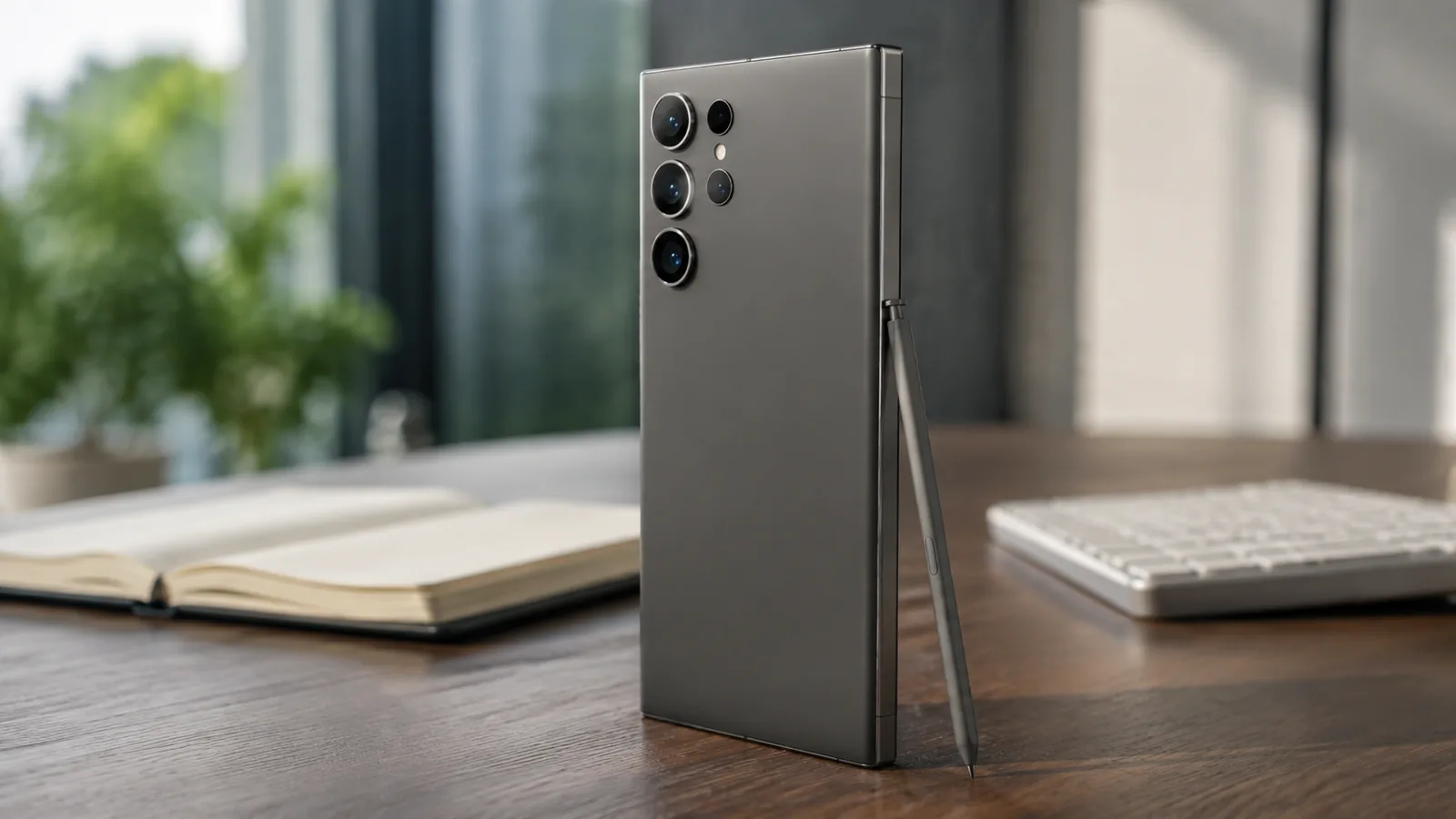
Samsung has refined the Galaxy S24 Ultra’s design with a focus on durability and a nod to its Galaxy Note heritage. The phone is big and solidly built – 6.39 x 3.11 x 0.34 inches in size and 8.18 ounces in weightthurrott.com – with a squared-off silhouette. It features a titanium alloy frame (a first for Samsung’s flagships) and flat display glass, making it feel premium and substantial in hand. The flat screen is a departure from the curved edges of previous Ultras, eliminating accidental touches and glare issues. Some may miss the curvy aesthetic, but many users will prefer the practicality of a flat panel for writing and gaming.
Build materials are top-notch. The front is protected by Corning’s new Gorilla Glass Armor, which Samsung touts as tougher and more scratch-resistant than the Victus 2 used last year. In fact, the combination of the titanium frame and Gorilla Armor Glass makes the Galaxy S24 Ultra one of the toughest phones ever, representing a notable durability upgrade over the S23 Ultratechradar.com. Early stress tests have confirmed excellent resilience – the S24 Ultra shrugged off scratches and even bends in a torture test, with the sturdy frame outperforming typical aluminum frames in hardness. This is reassuring for anyone prone to drops or rough use. The phone is also IP68 rated for water and dust resistance, meaning it can survive submersion (up to 1.5m for 30 minutes) and is untroubled by rain or dust.
Aesthetically, the S24 Ultra exudes a modern, minimalist style. The rear camera array features four individual lenses with metallic rings, and notably, Samsung kept them in the corner. This does cause a slight wobble when the phone lies flat on a table – a common issue for phones with big camera bumps (the iPhone 15 Pro Max has a similar wobble). Many users will put a case on such an expensive device, which evens out the bump. Samsung offers the S24 Ultra in a range of fun color options, including Titanium Black or Gray for a classic look, as well as more vibrant choices like Titanium Green, Blue, Orange, Violet, and Yellowthurrott.com. Unlike Apple’s limited palette, Samsung gives you some bold hues to express your style.
Despite its large size, the phone is well-balanced and comfortable to hold for its class. The sharp, squared corners (a necessity of the Note-inspired design) can dig into smaller hands a bit, so one-handed use is a stretch. Still, the overall ergonomics are improved from last year: Samsung removed the curved screen edges and even improved the haptic feedback motor. The result is a device that feels solid, refined, and premium. It’s clear Samsung has iterated on the design to make the S24 Ultra as sturdy as it is sleek – a device equally at home in a boardroom or out in the field.
For more insights on durable smartphone design, visit Samsung’s Official Design Page.

Display – A New Benchmark
If you’re a display connoisseur, the Galaxy S24 Ultra will delight you. Samsung has long led the industry in screen quality, and the S24 Ultra’s 6.8-inch Dynamic AMOLED 2X panel might be the best smartphone display ever madethurrott.comthurrott.com. It’s a bold claim, but let’s look at the specs and real-world performance:
- Resolution: Quad HD+ (1440 x 3120), yielding a pin-sharp ~505 ppi pixel density. Text and images are incredibly crisp. You can optionally drop to FHD+ (1080p) in settings to save battery, but even that looks very sharp at this size.
- Refresh Rate: Up to 120Hz adaptive refresh for silky smooth scrolling and gaming. It can dynamically scale down to preserve power when static.
- Brightness: A record-setting 2600 nits peak brightness for HDR content or bright sun – far above the ~2000 nits on the iPhone 15 Pro Max and Pixel 8 Pro. In everyday use, this translates to excellent outdoor visibility. Even under direct harsh sunlight, the S24 Ultra remains easily viewable where others might wash outthurrott.com.
- Color & HDR: It’s HDR10+ certified with stunning contrast and support for Super HDR. Colors are vivid (typical of Samsung’s AMOLEDs) but you can choose between Vivid and Natural screen modes. Vivid gives that punchy saturation Samsung displays are known for, whereas Natural mode tones it down for color accuracydroid-life.com. Blacks, as expected from OLED, are truly black. High dynamic range video looks phenomenal, with highlights that pop.
Samsung also made a significant usability improvement by ditching the curved edges. The display is flat and has squared corners to match the frame. This eliminates the glare and touch errors that curved screens sometimes caused. Some might argue the squared corners look a bit utilitarian compared to the subtle curves on the iPhone and Pixel, but functionally it’s a win – you get the full use of the screen with no distortion at the edges.
Another first is the use of Corning Gorilla Glass Armor on the front. This is the first phone with Gorilla Armor, and it promises not only better drop protection but also significantly reduced reflectionsthurrott.com. In practice, reflections and glare are indeed minimal, which was noticeable in sunny environments. After months of use, reviewers noted the glass stayed pristine and resisted scratches admirably. This bodes well for long-term durability of the display.
All these factors combine to make the Galaxy S24 Ultra’s screen a joy to use in any scenario: watching HDR movies, editing photos, or just browsing the web. The tiny bezels and a discreet punch-hole 12MP selfie camera keep distractions at bay. Samsung’s calibration is excellent out of the box – most users will find the default settings (Adaptive brightness, Vivid mode, Eye Comfort Shield) produce gorgeous results. For those who want to tinker, there are extensive display settings, but you likely won’t need to. As one reviewer put it, this display is “perfect for just about any use case, with bright colors, wonderful contrast, and deep blacks”thurrott.com.
In a head-to-head display comparison, the S24 Ultra comes out on top technically. While the iPhone 15 Pro Max and Pixel 8 Pro both have excellent OLED screens, the S24 Ultra edges them out with higher peak brightness and that high resolution. The differences can be subtle in daily use, but if you frequently use your phone outdoors or love watching high-quality video, the Galaxy’s panel truly shines. It’s an aspect where Samsung flexes its R&D muscle – after all, Samsung Display supplies panels to many competitors. On the S24 Ultra, you’re getting Samsung’s very latest and greatest.
For detailed technical specifications, visit Samsung’s Display Tech Page.


Samsung Galaxy S24 Ultra Cell Phone, 512GB AI Smartphone, Unlocked Android, 200MP, 100x Zoom Cameras, Fast Processor, Long Battery Life, Edge-to-Edge Display, S Pen, US Version, 2024, Titanium Black

SAMSUNG Galaxy S24 Ultra SM-S928B/DS 12GB 256GB Dual Sim Factory Unlocked International Model (Titanium Grey)

Samsung Galaxy S24 Ultra Cell Phone, 512GB AI Smartphone, Unlocked Android, 200MP, 100x Zoom Cameras, Fast Processor, Long Battery Life, Edge-to-Edge Display, S Pen, US Version, 2024, Titanium Violet
Performance and Gaming
Under the hood, the Galaxy S24 Ultra is a beast. It’s powered by the latest Qualcomm Snapdragon 8 Gen 3 for Galaxy chip (in all regions globally – no more Exynos variants to worry abouten.wikipedia.org). This 8-core processor, custom-tuned for Samsung, is built on a 4nm process and features an octa-core Kryo CPU and an Adreno 750 GPU. In simpler terms: it’s one of the fastest chips in any Android phone to date. Paired with 12GB of RAM and up to 1TB of UFS 4.0 storage, the S24 Ultra’s specs mean business.
Everyday performance on the S24 Ultra is silky smooth. One can throw any amount of multitasking at it – dozens of apps, split-screen, picture-in-picture video – and the phone doesn’t break a sweat. Apps launch instantly and UI animations are fluid. Samsung’s One UI 6 software (based on Android 14) is heavy on features, but the hardware handles it effortlessly. In fact, benchmark tests show that the S24 Ultra’s Snapdragon 8 Gen 3 performs on par with Apple’s A17 chip in the iPhone 15 Pro Max, and clearly faster than Google’s Tensor G3 in the Pixel 8 Pro. The Pixel 8 Pro is no slouch in daily use, but in side-by-side intensive tasks the S24 Ultra pulls ahead with its brute-force power and better cooling.
For mobile gamers, the Galaxy S24 Ultra is a dream device. It can run graphically demanding games at max settings without stuttering. To put it in perspective, reviewers tested Diablo Immortal on the S24 Ultra versus the iPhone 15 Pro Max and Pixel 8 Pro – the S24 Ultra matched the iPhone with high resolution, high graphics quality and extra effects enabled, while the Pixel 8 Pro was limited to medium settings with some features offthurrott.com. During 30+ minute gaming sessions, the S24 Ultra remained impressively cool; it did not overheat or throttle, even in a case, whereas the iPhone began warming up quickly. Samsung’s vapor chamber cooling and efficient chip seem to keep heat in check. The only trade-off observed was that the S24 Ultra’s battery level dropped a bit faster during prolonged gaming – about 24% drain in a half hour vs only ~10% on the iPhone. This suggests the iPhone’s efficiency still leads in sustained gaming, but the S24 Ultra certainly has performance to spare.
Graphically intensive titles like Genshin Impact or Asphalt 9 run at 60fps (and even 120fps in games that support it) on the Ultra’s 120Hz display. The large screen and loud stereo speakers make gaming immersive. Plus, Samsung’s Game Booster software lets you monitor temperature and tweak performance modes. Thermal management is notably good – the phone’s metal frame can get slightly warm, but we didn’t encounter frame rate drops or lag. Simply put, the Galaxy S24 Ultra can handle anything you throw at it, from productivity to entertainment. It’s a future-proof phone that should remain fast for years, aided by Samsung’s promise of 7 years of OS updates and security patches – an industry-leading support window matching Google’s policythurrott.com.
Connectivity is cutting-edge as well. The S24 Ultra supports tri-band Wi-Fi 7, Bluetooth 5.3, NFC, and of course a full suite of 5G bands (Sub6 and mmWave in supported markets). In real-world Wi-Fi tests, the S24 Ultra performed excellently, though anecdotally the iPhone 15 Pro Max achieved higher throughput at extreme distances from the router. This likely won’t matter for most, as both load web pages and streams instantly under normal conditions. Call quality and 5G reception are strong; Samsung’s radios have no obvious issues. The phone also packs UWB (ultra-wideband) for precise device finding and SmartThings integration.
For biometrics, you get an ultrasonic in-display fingerprint reader and 2D face unlock. The fingerprint sensor is fast and reliable, working even with damp fingers. Face recognition is quick for convenience, though (as with most Androids) it’s not as secure as Apple’s Face ID and thus can’t be used for mobile payments alone. Business users will appreciate Samsung’s Knox security features and encryption built-in.
Overall, the Galaxy S24 Ultra’s performance is best-in-class among 2024 phones. It offers desktop-like power in your palm, and crucially, it maintains that speed under load. This makes it not only great for today’s apps and games, but also well-suited for emerging use cases like on-device AI. Speaking of which, Samsung has integrated new AI features (for image editing, voice assist, etc.), and thanks to hardware acceleration, these run faster here than on something like the Pixel 8 Prothurrott.com. The bottom line: if you want the fastest Android phone and an excellent gaming phone, the S24 Ultra should be at the top of your list.
Camera System – A Photographer’s Playground

Samsung’s Galaxy S24 Ultra camera system is one of its crown jewels, aimed squarely at photography enthusiasts. On paper and in practice, it’s an extremely versatile setup, featuring four rear cameras that cover a wide range of focal lengths. Let’s break down the lenses:
- 200MP Main Wide Camera (24mm, f/1.7): This is a massive high-resolution sensor with optical image stabilization (OIS), laser autofocus, and dual pixel PDAF. By default it uses pixel binning to output 12MP or 50MP images for better low-light performance. You can toggle full 200MP mode for insane detail, although file sizes become huge. Impressively, shooting in 200MP doesn’t slow the camera down much – the processing is quick, though you’ll mostly want to use that mode in bright conditions for maximum benefitthurrott.com. Most users (and Samsung’s camera app itself) stick to binned 12MP for everyday shots, which already produce excellent clarity.
- 12MP Ultra-Wide Camera (13mm, f/2.2, 120° FOV): This offers the same super-wide field of view as the iPhone 15 Pro’s ultrawide lens (120°). It’s great for landscape scenes or tight interiors. Quality is very good in daylight – colors are vibrant and consistent with the main camera. You may notice some edge distortion (lines bending) at the extremes of the frame, which is typical for ultra-wides. In lower light it’s adequate, though with a smaller sensor it can’t capture as much detail as the main camera.
- 50MP Periscope Telephoto (5x Optical Zoom, 111mm, f/3.4 OIS): This is Samsung’s new approach for long zoom. Instead of last year’s 10MP 10x lens, they chose a 50MP sensor at 5x optical zoom. The idea is to use the high resolution to crop in digitally for 10x shots while retaining quality. Many fans were skeptical of losing the dedicated 10x lens, but in practice this is no downgrade – the 50MP 5x telephoto produces 10x images that are actually better than the S23 Ultra’s 10x lens didthurrott.com. In side-by-side tests, the S24 Ultra’s 10x zoom shots came out sharper and more detailed than those from an S22 Ultra’s 10x camera. At 5x native, this lens is tack sharp and great for portraits or distant subjects without much quality loss.
- 10MP Telephoto (3x Optical Zoom, 67mm, f/2.4 OIS): This is similar to the previous generation – a shorter telephoto for medium zoom ranges and portrait shots. It offers 3x optical zoom, filling the gap between the main lens and the periscope. This lens produces lovely shots for things like head-and-shoulders portraits or closer details, with optical stabilization to keep them crisp. Samsung’s camera app will automatically choose between the 3x and 5x lenses (and even digital crops in between) depending on zoom level to maximize quality.
Together, these lenses let the Galaxy S24 Ultra achieve a zoom range from 0.6x (ultrawide) up to 100x digital. That “Space Zoom” 100x is more of a party trick – it can technically pull in objects like the moon, but don’t expect print-worthy clarity at extreme digital zoom. However, up to 30x the results are surprisingly usable for casual purposes, and above 30x the S24 Ultra stands alone – the iPhone 15 Pro Max tops out at 25x zoom and Pixel 8 Pro at 30x, so if you need to zoom further, Samsung is literally the only game in townthurrott.com.
In real-world photography, the Galaxy S24 Ultra impresses. Daylight photos from the main camera are excellent – sharp, with balanced exposure and Samsung’s typically vibrant colors. Notably, Samsung dialed back the over-saturated look this year; photos have a bit more natural tone, closer to Google’s Pixel style, while still popping more than the somewhat subdued default iPhone processing. The color tuning can vary by lens (ultrawide tends to be a tad more saturated, telephotos a bit flatter), but overall the consistency is improved and the look is pleasing.
Dynamic range is very wide – the camera rarely blows out highlights even in high-contrast scenes, thanks to Super HDR and multi-frame processing. Samsung also introduced some AI enhancements like “Object-aware HDR” to intelligently adjust different parts of the image (e.g., keeping a backlit subject bright without overexposing the sky)droid-life.com. It generally works well without being obvious or artificial.
Zoom performance is a highlight. Up to 10x, the S24 Ultra produces class-leading zoom shots. At 5x optical, images are crisp; at 10x (using that high-res sensor crop) they still retain a lot of detail – easily rivaling or beating the 10x optical images from earlier Ultrasthurrott.com. This means for wildlife or sports photography, you can get closer shots with confidence. Even at 30x, thanks to Samsung’s stabilization and AI sharpening, results can be surprisingly decent (though a bit soft). By comparison, the iPhone 15 Pro Max’s new 5x periscope tops out at 25x digital and isn’t as sharp beyond 10x, and the Pixel 8 Pro’s Super Res Zoom to 30x is competitive but slower to capture. The S24 Ultra’s focus on zoom pays off for those scenarios where you just can’t move closer.
Low-light and night photography have seen improvement as well. The large 200MP sensor and wider OIS (optical stabilization) allow more light capture – Samsung says the pixels are 60% larger now (when binned) than the last generation, which helps in dark scenesdroid-life.com. In practice, the S24 Ultra can often take night shots quickly and still get bright results, sometimes even without needing a long Night Mode exposure. One reviewer noted that in very dim conditions, the S24 Ultra often produced a brighter, clearer photo than the Pixel 8 Pro and did so with instant shutter capture, whereas the Pixel sometimes required a multi-second Night Sight exposure. This means less motion blur and less waiting around. However, the Pixel can occasionally pull ahead in extreme dark with its longer exposure, and its processing tends to avoid color casts. The S24 Ultra’s night shots can sometimes lean warm/yellow in certain lighting. Overall, both are excellent low-light cameras – the Pixel’s computational approach vs Samsung’s brute-force sensor size – and it can be a toss-up which is “better” depending on the scenethurrott.com. But it’s clear Samsung has closed the gap significantly; low-light is no longer a weakness for Galaxy.
Portrait mode on the S24 Ultra is another strong point. Using either the main lens or the 3x telephoto, it creates pleasing background blur and subject cutout. The depth estimation is generally accurate, and you can adjust the blur level after the fact. The larger sensor on the main camera naturally gives a shallow depth of field even without portrait mode at closer distances, which photographers will appreciate. Skin tones look natural, and you can apply various portrait lighting effects if desired.
When it comes to video, Samsung continues to deliver. The S24 Ultra can shoot up to 8K video at 30fps, or 4K at 60fps (with HDR10+ if you want). Most will use 4K, which looks terrific – stabilization is rock steady (especially with the “Super Steady” mode for walking shots, albeit limited to 1080p/60), and the footage is crisp with vibrant colors. It even supports a Portrait Video mode to blur backgrounds in real-time. The iPhone 15 Pro Max still has an edge in certain video aspects – Apple’s color science and dynamic range in video are top-notch, and features like ProRes or Cinematic Mode (depth effect video) are appealing to advanced users. But Samsung isn’t far behind; in fact, the S24 Ultra matches the iPhone with spatial audio recording (360º sound) and offers its own take on HDR video. If you’re a casual video shooter, you’ll be happy with either. For serious videographers, the iPhone might still be preferable, but the gap has narrowed.
Lastly, the 12MP front camera on the S24 Ultra is solid, if not groundbreaking. It takes sharp selfies in good light and can do wide-angle group selfies or a cropped-in mode. It struggles a bit in very low light (as most selfie cams do), introducing some noise, but it’s fine for video calls and the occasional night selfie with screen flash. Samsung also enables 4K60 video recording on the front camera, which vloggers will appreciate.
Overall, the Galaxy S24 Ultra earns a spot as one of the best phones for photographers in 2025. It combines high-end camera hardware with Samsung’s increasingly refined image processing. You get versatility (ultra-wide to extreme zoom), high resolution for editing flexibility, and a fast camera experience. It’s a phone that can potentially replace a compact camera or even a DSLR in many situations – you’ll always have the right lens with you. While Google’s Pixel might still win in point-and-shoot simplicity and Apple in video, the S24 Ultra arguably offers the most comprehensive camera package. For a photography enthusiast, that flexibility and feature set make the S24 Ultra a top contender for best camera phone of the yeardroid-life.com.
(For more tips on mobile photography, you can check out our guide on Mastering Smartphone Photography with real-world examples to get the most out of cameras like the S24 Ultra.freditech.com)
Battery Life and Charging
Samsung equipped the Galaxy S24 Ultra with a hefty 5,000 mAh battery, same as last year’s model, but thanks to the efficiency of the new Snapdragon chip and optimizations in Android 14, battery life has improved to truly all-day (and then some) endurance. In real-world use, the S24 Ultra can easily make it through a full day of heavy usage – and by heavy we mean ~7-8 hours of screen-on time involving web browsing, social media, video streaming, and even some gaming. Many users report ending the day with 20% or more left in the tank, and lighter users might stretch into a second day.
One reviewer crowned the S24 Ultra “my new battery king” after seeing it outlast the Pixel 8 Pro by a significant margindroid-life.com. In practical terms, this means you don’t need to constantly worry about finding a charger midday. For example, during extensive camera use and navigation on a day-long outing, the S24 Ultra held up admirably – one test noted that even after a full day of sightseeing and snapping photos in Mexico City, the phone still didn’t require the backup battery pack that was brought “just in case”. This is on par with other big-battery champs like the iPhone 15 Pro Max, which is known for excellent longevity as wellthurrott.com.
When you do need to recharge, the Galaxy S24 Ultra supports 45W wired fast charging (USB Power Delivery PPS). This isn’t the highest in the industry (some Chinese brands do 100W+ charging), but it’s still fairly speedy: Samsung advertises about 65% charge in 30 minutes and roughly ~70 minutes for a full 0-100% charge with a compatible 45W chargerdroid-life.com. In our experience, those numbers hold up – a quick half-hour top-up gives you a significant boost (around 50%+ in half an hour is typical). This is comparable to the iPhone 15 Pro Max (which hits ~50% in 30 minutes with a 20W+ charger) and Pixel 8 Pro (about the same). While it would be nice to see even faster charging, Samsung likely plays it safe to preserve long-term battery health.
Do note: Samsung, like Apple, does not include a charger in the box – you only get a USB-C cable. So if you don’t have a USB-C fast charger already, you’ll need to purchase one to take advantage of the 45W speeds. Samsung sells official 25W and 45W chargers, or you can use third-party options (many affordable ones from Anker, etc.).
The S24 Ultra also supports 15W wireless charging (Qi standard). However, it lacks Qi2/MagSafe compatibility, which is an odd omissionthurrott.com. Qi2 is the newer standard that iPhones and some accessories use for magnetic alignment and potentially faster wireless charging. This means the S24 Ultra won’t magnetically snap to MagSafe chargers or benefit from Qi2’s enhancements. It will still charge on any normal Qi wireless pad at up to 15W, which is fine for overnight or desk charging. Additionally, the phone supports Wireless PowerShare, allowing you to use the S24 Ultra to reverse wireless charge earbuds, a smartwatch, or even another phone off its own battery (handy in a pinch, though not very efficient).
Battery life comparisons: In mixed use, the S24 Ultra is right up there with the longest-lasting flagships. The iPhone 15 Pro Max also typically goes a full day or more – in some tests the iPhone might end the day with slightly more percentage left than the Samsung, likely due to Apple’s aggressive standby power management and efficiency. The Pixel 8 Pro, on the other hand, tends to fall behind; many Pixel users can’t get through a day of heavy use without a late afternoon charge. This was evident to one reviewer who had expected to use the Pixel on a trip but switched to the S24 Ultra and never needed the spare battery they’d planned for the Pixelthurrott.com. So if battery life is a priority, both the S24 Ultra and iPhone Pro Max are excellent choices, with Samsung now matching Apple in all-day stamina.
In summary, the Galaxy S24 Ultra gives you confidence to leave the charger at home during the day. And when you do top up, the fast charging ensures you won’t be tied to an outlet for long. It may not break charging speed records, but it’s a balanced approach that prioritizes battery longevity. Samsung also includes various software features like Adaptive Battery and performance profiles to extend battery life based on your usage patterns. In our testing, simply using the phone normally was enough to see great battery life; no special modes needed. It’s safe to say the S24 Ultra lives up to the Ultra name in battery performance.
For more tips on maximizing smartphone battery life, read our guide on How to Extend Your Phone’s Battery Life.
Software and Unique Features
The Galaxy S24 Ultra runs Android 14 with Samsung’s custom One UI 6.1 interface on top. One UI has become quite polished and feature-rich, offering a ton of customization and useful add-ons that differentiate Samsung phones from other Androids. Out of the box, you’ll find features like an Always-On Display, Edge Panels for shortcuts, a robust Theme Store, and Samsung’s own apps for things like health, payments (Samsung Pay), and device automation.
Samsung’s approach is often described as “everything including the kitchen sink” – almost every feature you can imagine is present somewhere in the settings. This can be a double-edged sword: power users love the flexibility, while some users may feel it’s too much and prefer the simplicity of Google’s Pixel software or Apple’s iOS. The good news is One UI 6 is snappy and smooth on the S24 Ultra, and you can ignore the fluff if you want to. During daily use, we did not experience any lags or crashes; Samsung has optimized their software well for the hardware.
Notably, Samsung made a significant promise for this generation: 7 years of OS updates and security patchesthurrott.com. This means the Galaxy S24 Ultra will get Android version upgrades and security support potentially into 2031 – far beyond what most Android OEMs offer, and matching the industry’s best (Google and Fairphone). This long support cycle makes the S24 Ultra a safer long-term investment for enterprise or users who keep phones for 4-5+ years.
For more insights on Android 14 and One UI, check out Samsung’s Software Overview.
S Pen and Productivity
A standout feature of the Ultra series (carried over from the Galaxy Note line) is the S Pen stylus. The S24 Ultra has a built-in S Pen silo at the bottom left – push to eject the slim stylus and you have a precise digital pen for writing and drawing. For note-takers, artists, and business professionals, this is a game-changer that no iPhone or Pixel can replicate.
The S Pen is pressure-sensitive and supports tilt, giving a natural writing experience. Samsung’s software offers the excellent Samsung Notes app for handwriting and sketching. You can jot down notes even on the lock screen (Screen-off Memo), annotate PDFs, or use the stylus for fine selection and editing tasks. Features like Air Command provide quick access to pen-specific tools (simply ejecting the S Pen or clicking its side button can pull up a shortcut wheel). You have options like Smart Select (to capture part of the screen), Screen Write (take a screenshot and annotate), Live Messages (draw animated messages), and more.
For productivity, the S Pen can also act as a remote control – it has a small button that, when pressed, can trigger actions like taking a photo (great for group shots) or advancing slides in a presentation. Samsung improved the latency and feel of the pen to mimic a real pen on paper. While it’s a bit small for very long writing sessions (trade-off for fitting inside the phone), the convenience of always having a stylus is unparalleled. The phone will even warn you if you leave the S Pen behind and walk away (to prevent losing it)thurrott.com.
For business professionals, the S24 Ultra also supports Samsung DeX – a desktop-like interface that activates when you connect the phone to a monitor or even wirelessly to a compatible TV. DeX lets you use your phone with a mouse and keyboard in a Windows-like environment, great for email, document editing, or presentations on the go. For instance, plug the S24 Ultra into a USB-C hub connected to a monitor, and you get a full desktop experience powered by your phone. You can open multiple resizable windows, use right-click context menus, etc. It’s like carrying a pocket PC. This can be useful for business travelers – in a pinch, your phone could drive a presentation or you could do quick spreadsheet edits without a laptop. DeX isn’t unique to the S24 Ultra, but the powerful hardware here ensures it runs very smoothly.
Connectivity for productivity is also excellent. The USB-C port is USB 3.2 and supports DisplayPort video output (4K@60Hz) when plugged into a monitorthurrott.com. That means you can get a high-resolution external display output for DeX or screen mirroring. The phone’s wireless capabilities (Wi-Fi 7, etc.) mean fast cloud syncing and file transfers. Samsung’s Knox security features and secure folder allow you to keep work data encrypted and separate if needed – a plus for BYOD scenarios.

AI and Software Features
Samsung heavily marketed new AI features in the S24 Ultra, though these have been met with mixed reactions. Some notable ones include: Live Voice Translation (real-time translation of calls), AI Summaries in the browser (summarizing web pages), Photo Remaster/AI Photo Upscaling, and Text Generation features on the keyboard. These sound futuristic, but in practice they can be hit-or-miss. For example, live call translation might work for basic phrases but can struggle with fast or complex speech. The photo editing AI can do things like expand backgrounds or remove objects (similar to Google’s Magic Eraser), which is fun when it works, but isn’t flawless.
One concerning aspect is Samsung indicated some AI features may only be free for a couple of years, potentially moving to a subscription model after 2025droid-life.com. Right now, all the Galaxy AI features are included, but the idea that you might have to pay extra in the future for full functionality is something to be aware of. It’s clear Samsung is trying to build its own AI ecosystem on top of Android, even if Google already offers many similar features via Assistant or Photos. The good news is you can use or ignore these as you please – they are not intrusive. If you find Samsung’s keyboard AI suggestions useful, great; if not, you can just use Gboard or another app.
One UI provides extensive customization. You can change icon shapes, fonts, and use Themes to give your phone a whole new look. There’s even a dedicated Modes and Routines app to automate tasks (like switching to a “Sleep” mode at night, or a “Driving” mode that mutes notifications, etc.) – though enabling some of these requires additional permissions and agreements, which not everyone will bother withthurrott.com. Samsung’s own voice assistant, Bixby, is still around, but frankly Google Assistant (also present) is far more useful for most people. Bixby does have a few tricks like Bixby Routines and Bixby Text Call (which can screen calls and transcribe the caller’s speech), but those are niche.
Out of the box, the S24 Ultra does come with some bloatware – a mix of Samsung’s apps and preloaded third-party apps (like LinkedIn, Facebook, etc.). It’s easy enough to disable or uninstall what you don’t need. The phone supports both Google Pay and Samsung Pay for mobile payments (Samsung’s can be set to launch via a swipe up gesture). One UI has a slightly different navigation button order by default (Back on the right instead of left), which can be changed in settings if it throws you off.
Overall, the software experience on the Galaxy S24 Ultra is feature-packed and highly polished. It may take a bit of time to explore all the capabilities – but you don’t have to if you’re not interested. The phone runs great out of the box with default settings. And importantly, Samsung’s commitment to long-term updates means the S24 Ultra will not only get new Android versions, but also improvements to One UI features each year. As an example, One UI 6 brought a refreshed Quick Panel design and more intuitive volume controls; future updates may add even more AI features or UI refinements.
In summary, if you appreciate versatility and customization, the S24 Ultra’s software will delight you. If you prefer simplicity, you might find it a bit overwhelming at first, but it can be tamed. At its core, it’s Android – so you have the freedom to tailor the experience. And unlike iOS’s “one-size-fits-all” approach, Samsung gives you choices for almost everything. From a business and productivity standpoint, features like the S Pen and DeX truly set the Galaxy S24 Ultra apart from competitors. This phone isn’t just for media consumption; it’s designed for creativity and getting things done on the go.
(Interested in a broader look at how the latest phones stack up? See our Smartphone Comparison Guide 2025 for a feature-by-feature rundown of top flagship phones.freditech.comfreditech.com)
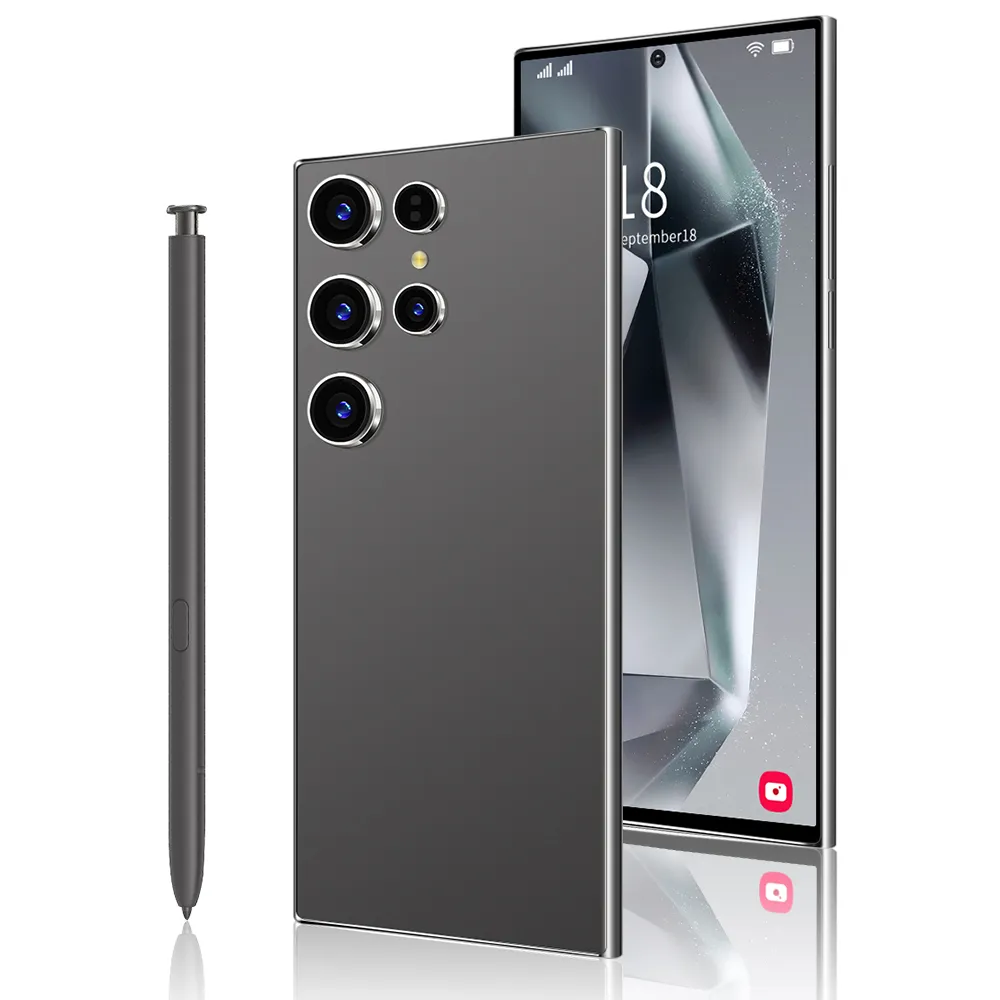
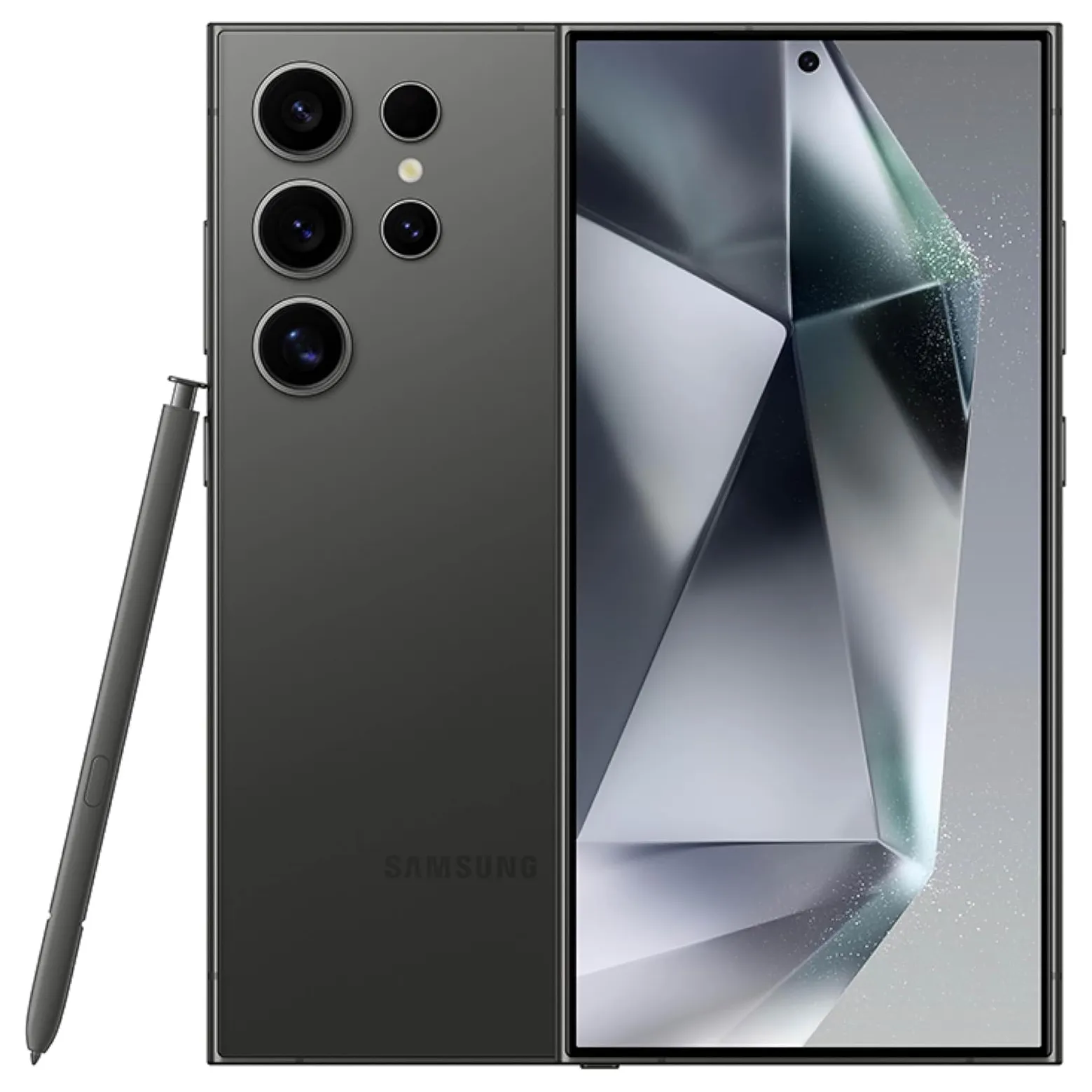

Sam sung Galaxy S24 Ultra Cell Phone, 256GB AI Smartphone, 200MP, 100x Zoom Cameras, Long Battery Life, S Pen
Discover this amazing product on Aliexpress! Shop Now!
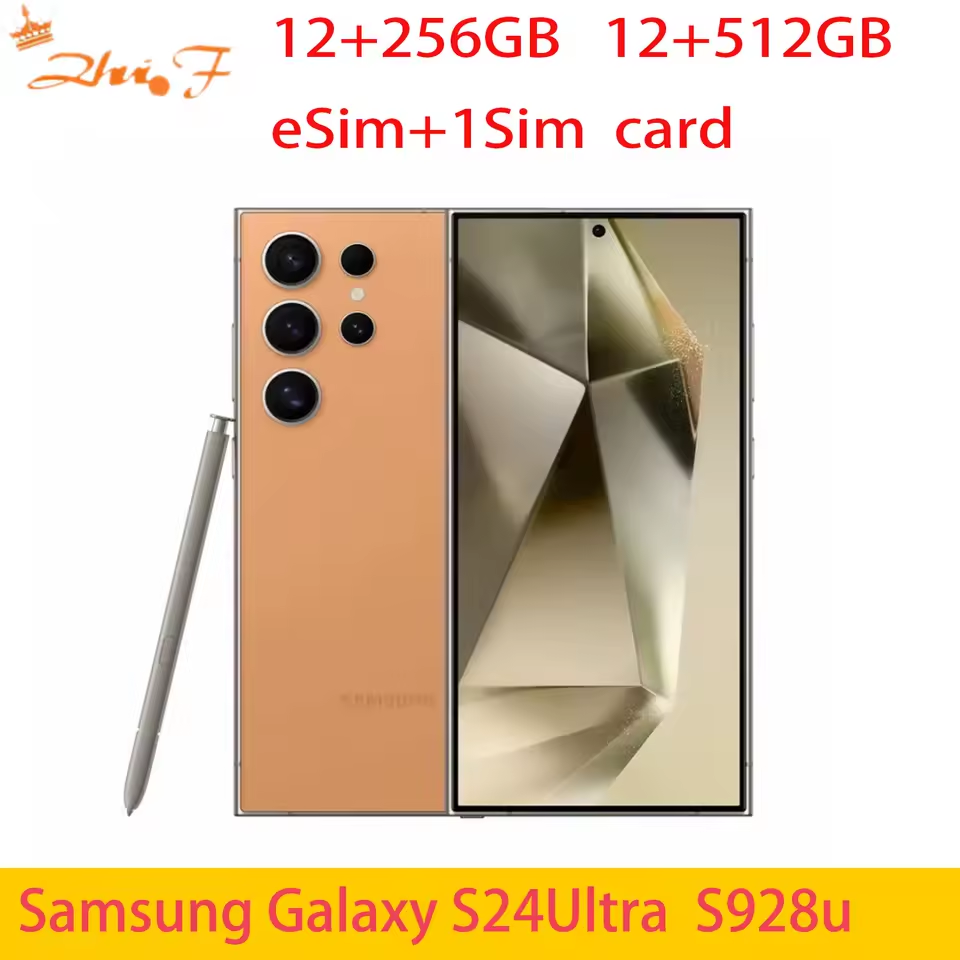

Samsung Galaxy S24 Ultra s24u 5G s928u s928u1 108MP 12GB RAM 256GB/512GB R0M 200MP 5000mAh 6.8inches Snapdragon 8 cell phone
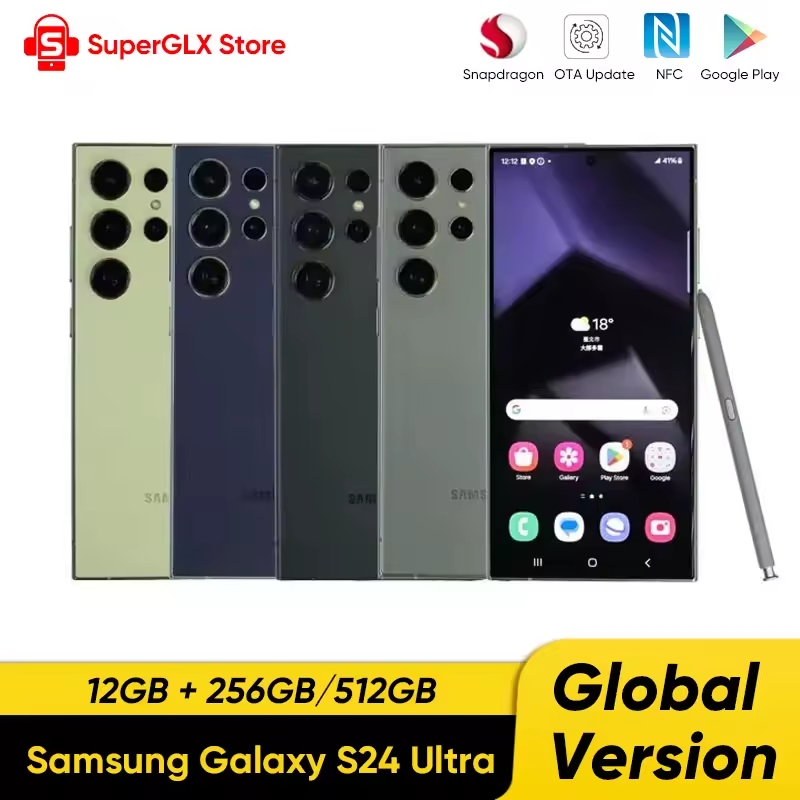
Samsung Galaxy S24 Ultra s24u 5G s928u s928u1 108MP 12GB RAM 256GB/512GB R0M 200MP 5000mAh 6.8inches Snapdragon 8 cell phone
Galaxy S24 Ultra vs. iPhone 15 Pro Max vs. Pixel 8 Pro
No flagship exists in a vacuum, so how does the Galaxy S24 Ultra fare against its biggest rivals? We’ll compare it to Apple’s iPhone 15 Pro Max and Google’s Pixel 8 Pro in key areas to help you understand the differences. All three are among the best phones of 2024-2025, but each has its own strengths:
Display and Design
- Galaxy S24 Ultra: 6.8″ AMOLED, 1440p resolution, 1–120Hz LTPO, peak 2600 nits. Flat Gorilla Armor Glass, titanium frame. It’s the largest of the three and also the heaviest (~232g). Design is boxy (Note-like) with multiple color options. Has an S Pen slot.
- iPhone 15 Pro Max: 6.7″ OLED (Super Retina XDR), ~1290p resolution (2796×1290), 1–120Hz (ProMotion), peak 2000 nits outdoor. Ceramic Shield front, titanium frame (new in 2023 for iPhones). Weighs ~221g, slightly more compact footprint than Samsung due to thinner bezels. Design has rounded corners and the Dynamic Island notch.
- Pixel 8 Pro: 6.7″ OLED, 1344p resolution (2992×1344), 1–120Hz, peak ~2400 nits (in High Brightness Mode). Gorilla Victus 2 glass, aluminum frame. Weight ~213g, with a taller but narrower design. Has a distinctive camera bar across the back.
Verdict: The S24 Ultra’s display is the sharpest and brightest – great for outdoor use and high-res contentthurrott.com. The iPhone’s display is superb too, with excellent color calibration and just slightly lower peak brightness (2000 nits). The Pixel 8 Pro’s screen is very close in quality and actually brighter than the iPhone in max mode, though not quite at Samsung’s level. Design-wise, it comes down to taste: The iPhone’s slightly smaller size and rounded edges make it a bit more comfortable to hold; the Galaxy feels more substantial and offers the S Pen which adds functionality (but also some bulk). Both Samsung and Apple use premium titanium, giving them an edge in durability – Pixel has a solid build but aluminum isn’t as strong as titanium (Samsung’s titanium frame showed much higher scratch resistance in teststechradar.com). All are IP68 water-resistant. If you value having a built-in stylus or prefer Android customization, Samsung wins. If you want a lighter phone or iOS ecosystem, the iPhone is great. Pixel sits in between, with a clean design and the lightest weight, plus that unique camera bar (which avoids the wobble issue the other two have on a table).
Performance
- Galaxy S24 Ultra: Snapdragon 8 Gen 3 (octa-core up to ~3.3GHz); 12GB RAM standard. Blazing fast – on par with A17 Pro in most real tasksthurrott.com. No slowdowns observed, great thermals.
- iPhone 15 Pro Max: Apple A17 Pro (6-core CPU, 6-core GPU, first 3nm chip); 8GB RAM. Industry-leading single-core speeds, and Apple’s GPU enables console-quality gaming (it even can run Resident Evil Village, etc.). Extremely smooth iOS, but some early reports of heat in intensive use (especially graphics).
- Pixel 8 Pro: Google Tensor G3 (9-core CPU, custom design); 12GB RAM. Emphasizes AI/ML tasks more than raw speed. Day-to-day it’s smooth, but benchmarks lag behind Snapdragon 8 Gen 3 – heavy games run at lower settings, and certain tasks (like image processing) are a bit slower than on Samsungthurrott.com.
Verdict: In terms of raw horsepower, the iPhone’s A17 and Samsung’s Snapdragon 8 Gen 3 are both top-tier – they trade blows depending on workload. The iPhone often wins in single-core and GPU-bound tasks (iOS is highly optimized, and metal-accelerated games like Genshin Impact might run slightly better on iPhone), but the S24 Ultra matches or exceeds in multi-tasking and sustained performance. The Pixel 8 Pro is a step down in pure performance; it’s “fast enough” for most needs, but if you throw a lot at it (like 3D games or lots of background tasks), it can show limits and heat up more. For gamers, both iPhone and Galaxy can handle anything at high settings – the S24 Ultra even one-ups the iPhone by staying cooler during long sessions, though the iPhone’s A17 is very power-efficient (hence less battery drop under load). The Pixel, with its Tensor G3, will run games but often at reduced fidelity. Additionally, the S24 Ultra and Pixel have 12GB RAM which helps with keeping many apps open; the iPhone’s 8GB is managed well by iOS but power users might still appreciate more RAM for future-proofing.
Camera
This is a big one:
- Galaxy S24 Ultra: Quad rear cameras – 200MP main, 12MP ultrawide, 10MP 3x tele, 50MP 5x periscope tele (up to 100x digital). Generally vibrant Samsung processing, improved natural tone this year. Best zoom capability of the trio by far (usable 10x and beyond)thurrott.com. Excellent main camera detail and low-light (almost on par with Pixel in night shots, and faster shutter). Ultrawide is solid, maybe slightly more distortion than iPhone’s. Great 8K/4K video with lots of modes.
- iPhone 15 Pro Max: Triple rear cameras – 48MP main, 12MP ultrawide, 12MP 5x tele (120mm periscope). Apple’s image processing yields very natural colors (sometimes too subdued) and balanced HDR. Main camera takes fantastic shots, though 48MP sensor is lower resolution than Samsung’s (uses pixel-binning to 24MP output by default). New 5x telephoto is excellent quality at 5x, but beyond 10x it can’t match Samsung (max 25x digital). Ultrawide doubles as macro. Apple’s strength is consistency and video – 4K Dolby Vision footage and ease of use. Also, iPhone’s portrait mode is superb with the ability to adjust focus after shooting, and it automatically can capture depth on any photo so you decide later if you want blur.
- Pixel 8 Pro: Triple rear cameras – 50MP main, 48MP ultrawide (with macro), 48MP 5x tele. Google’s computation photography is its ace. The Pixel reliably produces excellent photos straight-out-of-camera with minimal effort. Its Night Sight is legendary for extreme low light. The main camera isn’t as high-res as Samsung’s, but Google’s Super Res Zoom lets it pinch zoom up to 10x decently despite having only a 5x lens. That said, beyond 5x optical, the Pixel’s detail falls behind Samsung’s due to less resolution for digital zoom. Color-wise, Pixel images often have the most true-to-life white balance and skin tones. It doesn’t saturate like Samsung nor skew warm like older Galaxy phones. The Pixel’s weakness is arguably video – while improved, it’s not quite at iPhone/Samsung level in stabilization or HDR handling in challenging scenes.
Verdict: For casual shooters, all three are fantastic – you’ll get beautiful shots in most situations. The Pixel 8 Pro might be the easiest to just point-and-shoot and get a great photo thanks to Google’s AI tuning. The iPhone 15 Pro Max is extremely reliable too, especially if you like more natural-looking photos or you shoot a lot of video. The Galaxy S24 Ultra is the most versatile and rewarding for enthusiasts. It’s the only one that can capture extremely high detail (with 50MP/200MP modes) if you want to edit or crop later. It absolutely wins on telephoto reach – at 10x and beyond, it produces better images than either iPhone or Pixel are even capable of takingthurrott.com. For a traveler or wildlife photographer, that’s huge. In low-light, the Pixel and Samsung are closely matched now; the Pixel sometimes edges out with cleaner images in very dark scenes, but the S24 Ultra often is faster and brighter. Selfie-wise, the iPhone’s 12MP TrueDepth camera might deliver the best skin tones and also offers FaceID depth for portrait selfies. Samsung’s 12MP selfie cam is fine but not remarkable; Pixel’s 10.5MP front cam is decent with a wide field of view.
One should also consider camera apps and features: Samsung and Apple both offer Pro modes (Samsung’s is more full-featured with RAW capture and lots of controls, ideal for photographers). Google’s app is simpler with fewer manual options, but has cool tricks like Magic Eraser, Best Take (to swap faces in group shots), etc. Samsung has similar features (Object Eraser, etc.) in its Gallery app. Apple has Photographic Styles and now allows 48MP RAW or HEIF images too for more serious usage.
In summary, if forced to rank: S24 Ultra is best for zoom and a fun all-around camera experience (great for photographers who want options), Pixel 8 Pro is best for those who want the “smart” camera that gets the shot in tough conditions (and to enjoy Google’s AI edits), iPhone 15 Pro Max is best for consistent results and superb video/portrait performance, especially if you’re in Apple’s ecosystem. There’s no absolute “winner” – each excels in different areas – but the S24 Ultra certainly stakes a claim as the most capable camera phone overall in 2024/25thurrott.com.
Battery Life
- Galaxy S24 Ultra: Excellent battery life – typically 6-8 hours screen-on time, easily all-day use. 45W wired charging (about 70% in 30min), 15W wireless.
- iPhone 15 Pro Max: Excellent as well – many users get 1.5 days. ~20-27W charging (about 50% in 30min), 15W MagSafe wireless. Apple’s efficiency is top-notch; in some tests iPhone retained more charge than Samsung after intensive use (e.g. long gaming).
- Pixel 8 Pro: Good but not great – generally a solid full day for moderate use, but heavy users might need an evening top-up. 30W charging (about 50% in 30min), 23W wireless on Pixel Stand.
Verdict: S24 Ultra and iPhone 15 Pro Max are roughly tied for battery endurance, both among the best. The iPhone might stretch a bit further for some due to iOS optimizations, but Samsung’s larger battery and new efficiency gains make it very competitivethurrott.com. Both significantly outlast the Pixel 8 Pro, which is okay but not a two-day phone for most. Charging is faster on the Samsung (45W > 27W), though Apple’s approach still gives a decent quick charge. The Pixel’s wired charging is in between but it doesn’t translate to better battery life. So if battery life is a deciding factor, you can’t go wrong with either the S24 Ultra or Pro Max – they’re the battery champs, whereas Pixel is a step behind.
Software and Ecosystem
This often comes down to preference:
- Galaxy S24 Ultra (One UI on Android): Highly customizable, feature-rich (S Pen, DeX, etc.). Some duplicate apps and bloat but tons of functionality. Works with Google ecosystem and has its own ecosystem perks (Samsung watches, buds, SmartThings for smart home). 7 years updates is a huge plus for longevitythurrott.com.
- iPhone 15 Pro Max (iOS): Polished and optimized, but less customizable. Super smooth, with exclusive Apple apps/features (iMessage, FaceTime, Apple Watch integration, AirDrop, etc.). If you have other Apple devices, the ecosystem integration is unbeatable (clipboard sharing, iCloud, etc.). Typically 5+ years of iOS updates.
- Pixel 8 Pro (Stock Android with Pixel UI): Clean Android experience with exclusive Pixel features (Call Screen, AI voice typing, etc.). Arguably the smartest software with Google’s AI. Lacks the depth of features of Samsung but appeals to minimalists. Promised 7 years updates as well (starting with Pixel 8 series).
Verdict: There’s no one-size-fits-all. If you love personalization and features, Samsung’s One UI gives you more out-of-the-box (always-on display styles, themes, multitasking tricks, the works). It’s great for power users and Android veterans. If you prefer simplicity or are tied to Apple’s ecosystem, the iPhone is the obvious choice – everything just works together if you’re all-in on Apple, and the UI is consistent and user-friendly (albeit not very flexible). The Pixel strikes a middle ground: cleaner than Samsung, more flexible than iOS, plus the benefit of Google’s latest AI and first-in-line updates from Google. It’s great if you want a pure Android experience with some helpful AI bells and whistles.
One specific note: S Pen is a unique advantage for Samsung – if you see yourself using a stylus for notes or art, that alone might sway you to the S24 Ultra. Apple has no equivalent (Apple Pencil doesn’t work on iPhone), and Pixel doesn’t either.
Also, consider after-sales and ecosystem: With iPhone you get access to a vast accessory ecosystem (MagSafe add-ons, etc.) and services like iCloud, Apple One bundle. Samsung offers Galaxy-specific perks like seamless Windows integration (Link to Windows), Dex, and a robust SmartThings smart home platform. Pixel gives you Google’s own perks like VPN by Google One and some exclusive photo editing tools.
Price and Value
- Galaxy S24 Ultra: Starts around $1,199-$1,299 (256GB base)droid-life.com. Often Samsung has deals or trade-ins that can significantly reduce cost. It’s pricey, but you do get 256GB base storage and the S Pen included.
- iPhone 15 Pro Max: Starts at $1,199 (256GB base, since Apple removed 128GB option on Pro Max). Apple rarely discounts but retains value well for resale.
- Pixel 8 Pro: Starts at $999 (128GB base). Often goes on sale (Pixels frequently get $100-200 off after a few months). It’s the cheapest of the three at MSRP and includes some extras (Google One VPN, etc.)
In pure value, the Pixel 8 Pro gives a flagship experience for a lower price, but it also has the lowest storage at base and lacks some of the hardware extras (no face ID, no stylus, etc.). The Galaxy and iPhone are similarly priced – Samsung sometimes gives more bang for buck (more RAM/storage, charger deals, etc.), while Apple charges a premium for the brand and ecosystem.
Verdict: If budget is tight, Pixel 8 Pro is the more value-oriented high-end phone. Between S24 Ultra and iPhone 15 Pro Max, it largely depends on whether you prefer Android or iOS, since both cost about the same for equivalent storage. Samsung’s frequent promotions can make the S24 Ultra much more affordable (especially with trade-ins, you could snag it for hundreds less), whereas Apple’s pricing is more fixed. Both are expensive, but also deliver on the premium experience.
Bottom line: The Galaxy S24 Ultra vs iPhone 15 Pro Max vs Pixel 8 Pro debate doesn’t yield an absolute winner – each is best in certain categories. Samsung’s S24 Ultra is the choice for those who want everything in one device: the biggest display, top-tier cameras with crazy zoom, stylus input, and Android’s flexibilitythurrott.com. Apple’s iPhone 15 Pro Max is ideal for users deeply invested in Apple’s world or who prioritize longevity, app quality, and consistently excellent (if not flashy) performance across photography and video. Google’s Pixel 8 Pro is perfect for fans of Google’s pure Android vision and AI features – and it saves some money while still delivering a great all-round experience, though not as feature-loaded as the other two.
For many, the decision will also come down to ecosystem and personal preference. But as a testament to how good phones are these days, you truly can’t go wrong with any of these – they’re all in the upper echelon of smartphones. It’s more about picking which one aligns with your usage and tastes.
Real-World Use Cases: Who Should Buy the Galaxy S24 Ultra?
The Galaxy S24 Ultra is a versatile powerhouse, but how does that translate into everyday life for different types of users? Let’s examine a few personas – photographers, gamers, and business professionals – to see how the S24 Ultra fits their needs.
For Photographers and Content Creators
If you’re a photography enthusiast or professional, the S24 Ultra is one of the best phones for photographers in 2025. Its camera hardware provides ultimate flexibility. You can shoot sweeping ultra-wide landscape shots, high-resolution 200MP images for editing, or crisp telephoto images of distant subjects – all with one device in your pocket. The inclusion of a RAW capture mode (through Samsung’s Expert RAW app) means you can get uncompressed images from the 200MP sensor and really push the files in Lightroom or your editor of choice. This is something mobile photographers love, as it closes the gap further between phone and DSLR.
Manual controls are available in the Camera app’s Pro mode (ISO, shutter speed, focus, white balance), so you have creative control when you want it. The huge storage options (up to 1TB internal) give plenty of room for large photo files and 8K video. And with 7 years of updates, the S24 Ultra will be a reliable pocket camera for a long time, receiving camera feature improvements over time via software.
Additionally, the S Pen can serve as a remote shutter release – perfect for tripod shots or long exposures (no need to buy a remote trigger). Samsung’s partnership with Adobe means there’s a optimized Lightroom app for Galaxy where the S Pen can be used for fine editing on the fly. The vibrant, color-accurate display also doubles as an excellent viewfinder and editing screen for content creation.
For social media creators or vloggers, the S24 Ultra’s front camera and various video modes (Super Steady, slow-mo, 4K selfie video) offer lots of creative potential. You can record a vlog with the rear camera and use the Director’s View to simultaneously record yourself with the front camera, all within the built-in camera app. The phone’s microphones also do a solid job with stereo audio, and there’s Bluetooth mic support if you have a dedicated mic.
Lastly, consider the ecosystem for photographers: The Galaxy S24 Ultra plays nicely with accessories like gimbals (it has pro video modes including 10-bit LOG for those who really know what that means), and with its wireless connectivity, you can quickly transfer photos to a laptop or back them up to cloud on the go. Samsung’s Gallery app can sync with Microsoft OneDrive for backup, or you can use Google Photos just as easily.
In short, for photographers, the S24 Ultra offers pro-level camera capabilities in a smartphone. It won’t fully replace a high-end DSLR or mirrorless for every scenario (sensor size still matters for things like bokeh and extreme low light), but it comes closer than ever. For many, it could replace a point-and-shoot or serve as a B-camera when traveling light. If your phone is your primary camera, the S24 Ultra will not disappoint – it gives you the tools to capture almost any shot you envision.
(You might also check out our Mastering Smartphone Photography guide for tips on getting the most out of phones like the S24 Ultra’s camera systemfreditech.com.)
For Gamers and Power Users
Mobile gamers and power users demand performance, great visuals, and long battery life – areas where the Galaxy S24 Ultra excels. With the Snapdragon 8 Gen 3 chip and 120Hz display, this phone can handle the most demanding mobile games (think Call of Duty Mobile, PUBG, Genshin Impact) at high settings and frame rates. The 240Hz touch sampling rate ensures super-responsive controls, which is crucial for competitive play.
Gamers will love the huge, bright screen and loud stereo speakers (with Dolby Atmos support). The experience of gaming on the S24 Ultra is closer to a small tablet – you see more detail and can react faster thanks to the smooth refresh and low touch latency. The phone’s thermals are well-managed too. Samsung has included an advanced vapor chamber cooling system, and as noted earlier, the S24 Ultra stayed cool even during long sessions, unlike some phones that throttle or become uncomfortably warmthurrott.com. No one likes a phone that turns into a hand-warmer mid-game, and Samsung’s hardware avoids that.
Battery life also plays into gaming – the 5,000 mAh battery means you can game for hours. Even though intensive games do drain it faster, you’re still looking at maybe 4-5 hours of continuous heavy gaming, which is plenty for a commute or flight. Plus, the fast charging can juice you back up quickly between sessions.
For power users who might be less about gaming and more about running demanding apps or multitasking, the S24 Ultra’s 12GB RAM and One UI software enhancements like Multi-Window make it a multitasking champ. You can run two or three apps on screen at once (e.g., watching a YouTube tutorial while chatting in WhatsApp and browsing the web). The large screen makes split-screen use actually practical. There’s also the pop-up view feature (floating app windows) if you want to have, say, a calculator or video playing in a small window while doing something else.
The expansive storage options (up to 1TB) mean power users can store tons of media, large game files, or even download Netflix shows for offline watching without worrying about space. And with UFS 4.0, storage speed is blazing, so copying files or loading huge games is fast.
Another aspect is emulation and advanced apps: If you enjoy emulating older consoles, the Snapdragon 8 Gen 3 can emulate many consoles (even some Switch or PS2 titles) at full speed, which is something enthusiasts do. For those into coding or running Linux on Dex, the power is there to do some light development work via Termux or in Dex mode connecting to a server.
In terms of accessories, the phone supports USB-C OTG, so you can plug in controllers, mice, or even external storage and it’ll work (the USB 3.2 port means connecting to an external SSD yields fast transfer rates). Many Bluetooth controllers (like the Xbox or PlayStation controllers) can pair to the S24 Ultra for gaming with ease.
Bottom line for gamers/power users: The S24 Ultra is overkill in the best way. It’s arguably the best phone for mobile gaming in 2024 thanks to its combination of screen, performance, and sustained outputthurrott.com. And for general power use, it’s like having a mini computer in your pocket – you’re unlikely to run into tasks it can’t handle. Samsung also has a Game Launcher and Game Booster that let you tweak performance or block distractions while gaming. So whether you’re pushing the phone’s GPU to the max or just juggling a dozen productivity apps, the Galaxy S24 Ultra is built to keep up.
For Business Professionals and Productivity
For business and productivity-oriented users, the Galaxy S24 Ultra offers a suite of features that can significantly enhance your workflow. Here’s how it stands out for professionals:
- S Pen for Notetaking: In meetings, you can quickly pop out the S Pen and jot down notes in Samsung Notes as if you were writing in a notebook. It’s great for marking up documents (signing PDFs on the go, annotating drafts, etc.). Handwriting-to-text conversion is available if you prefer storing notes in text form. Unlike carrying a separate notepad or tablet, the S Pen built into your phone means you’re always ready to capture ideas or important info. Many business users find that writing by hand helps with retention and brainstorming, and the S24 Ultra fully enables that digital handwriting workflow.
- Samsung DeX and PC Integration: If you travel frequently or work in multiple locations, DeX can be a boon. Imagine arriving at a satellite office and just plugging your phone into a monitor and keyboard – suddenly you have a desktop-like environment with your files and apps. Need to edit a PowerPoint or Excel file? You can do that in DeX easily, using the full screen. It’s like carrying a PC in your pocket. Even without DeX, One UI has Link to Windows integration (like Microsoft’s Phone Link) that allows you to view notifications, respond to messages, and even mirror apps on a Windows PC. This is great if you spend a lot of time at a computer – you can control your phone from your PC, drag-and-drop files, etc., without picking up the phone.
- Email, Calendar, and Office Apps: The large screen makes reading and composing emails comfortable. Whether you use Outlook, Gmail, or Samsung’s email app, you can see a lot of content. The same goes for calendars – scheduling is easier when you can view your full month clearly. Microsoft Office apps (Word, Excel, PowerPoint) and Google’s Workspace apps run smoothly, so editing documents on the go is very feasible. The extra RAM means you can keep multiple documents or a document + video call open simultaneously without slowdowns.
- Security: Samsung’s Knox security adds protection for sensitive data. If your work involves confidential information, you can use Secure Folder to keep certain apps and files encrypted and separate (secured by an additional password or biometric). This is perfect for storing work documents or using a second instance of an app for work (like having a separate secure WhatsApp or email account in Secure Folder). The phone’s fingerprint scanner is fast and convenient for unlocking securely. Plus, with face unlock as a secondary quick method (albeit not as secure for payments), you have multi-factor options for convenience and security. Knox also continuously monitors for malware and unauthorized access, giving enterprise-level security on a consumer device. The extended update support (7 years) is a big plus for businesses too, as it means the device will remain secure with patches for a long timethurrott.com.
- Connectivity: The tri-band Wi-Fi 7 and robust 5G support mean wherever you are, you’ll likely get the fastest network speeds available. Whether you’re uploading a large presentation, video conferencing, or accessing cloud drives, the S24 Ultra keeps up. Speaking of video conferencing – apps like Zoom, Microsoft Teams, Google Meet all run flawlessly. The front camera is decent for video calls, and the microphones with AI noise reduction ensure your voice comes through clearly.
- Battery Life on Business Trips: The long battery life shines when you’re away from the office. If you’re on back-to-back calls, using maps for navigation, and tethering your laptop on 5G, the S24 Ultra can handle it for extended stretches. And when you do need a charge, say during a layover, that 45W fast charge can get you topped up enough in a short time to last the next flight. Additionally, reverse wireless charging (PowerShare) could come in handy – for instance, if your wireless earbuds or smartwatch need a quick boost, you can charge them off your phone.
- Dual SIM and eSIM: If you juggle work and personal numbers, or travel internationally, the S24 Ultra supports dual SIM (varies by region) or eSIM. This means you can have, for example, a personal line and a work line on the same device, or use a local data eSIM when abroad without swapping out your main SIM. That’s flexibility business travelers will appreciate.
- Presentation and Media: The phone’s ability to connect to displays (wired or Miracast wireless) means you can even use it for presentations. With an HDMI adapter or via DeX, you can run a slideshow directly from the phone. The high performance ensures even complex slides or embedded videos run smoothly. You could carry just your phone to a meeting and still present on a big screen – a nice backup if a laptop fails or for impromptu sessions.
In essence, the Galaxy S24 Ultra is tailor-made for productivity. It merges the legacy of the Galaxy Note series – which was always about doing more – with modern enhancements. A business user can leverage it as a notebook, a PC alternative, a secure storage device, and a communications hub all in one.
While an iPhone might integrate well if your company is in the Apple ecosystem, it lacks things like a stylus or desktop mode. The Pixel, while clean and smart, doesn’t have those either and also doesn’t have the accessory ecosystem for enterprise that Samsung has built (Knox, DeX docking stations, etc.). So, if you’re a professional who wants a phone that can practically be an office in your pocket, the S24 Ultra is extremely appealing.
(For more on how smartphones differ for productivity, you might read our Ultimate Smartphone Comparison Guide 2025 which covers features like DeX and more across leading devicesfreditech.comfreditech.com.)
FAQ – Samsung Galaxy S24 Ultra
Is the Samsung Galaxy S24 Ultra worth it despite the high price?
For power users, yes. It delivers a class-leading display, versatile cameras (especially for zoom and high-res shots), top-tier performance, long support, and the built-in S Pen. If you don’t need the zoom or stylus, the S24+ or rivals may offer better value.
How does the Galaxy S24 Ultra compare to the iPhone 15 Pro Max?
S24 Ultra wins on display size/brightness, zoom flexibility, and productivity (S Pen, DeX). iPhone leads for video, tight ecosystem integration, and polished point-and-shoot results. Battery life is excellent on both; pick based on Android flexibility vs iOS ecosystem.
Galaxy S24 Ultra vs Google Pixel 8 Pro — which should I buy?
S24 Ultra offers stronger hardware (brighter panel, more RAM options, longer zoom reach) and faster performance. Pixel 8 Pro shines with clean Android, smart AI features, and a lower price. Both now promise 7 years of updates—choose hardware muscle (Samsung) or Google’s software smarts (Pixel).
Is the Galaxy S24 Ultra good for photography? Is it the best phone camera?
It’s one of the best for stills: 200 MP detail, excellent low-light, and unmatched zoom versatility (up to very usable 10× and beyond). “Best” depends on needs—iPhone excels in video, Pixel in AI-assisted capture—but for travel and wildlife, S24 Ultra is hard to beat.
How is the battery life? Will it last a full day?
Excellent. The 5,000 mAh battery and efficient Snapdragon 8 Gen 3 typically deliver a full day (often 6–8 hours screen-on time). 45 W wired charging adds ~50–60% in about 30 minutes, plus 15 W wireless and reverse wireless charging.
Does the Galaxy S24 Ultra support the S Pen, and is it included?
Yes and yes. The S Pen is built in (docked in the phone). It supports handwriting, sketching, precise edits, and Bluetooth remote functions (e.g., camera shutter).
Does the S24 Ultra have expandable storage or a headphone jack?
No microSD slot and no 3.5 mm jack. Storage options up to 1 TB are available. Use USB-C or Bluetooth audio; the stereo speakers are loud with Dolby Atmos.
Is the S24 Ultra durable?
It’s rugged for a flagship: titanium frame, Gorilla Glass Armor (front) and Victus 2 (back), plus IP68 water/dust resistance. A case is still recommended to protect glass and camera rings.
How long will the Galaxy S24 Ultra receive software updates?
Samsung commits to 7 years of Android OS upgrades and security patches, giving the S24 Ultra top-tier longevity among Android phones.
Author: Wiredu Fred – Tech journalist & smartphone reviewer with over a decade of experience. Wiredu Fred specializes in mobile technology and has tested devices from all major brands. He provides in-depth, honest reviews to help readers make informed choices. As the founder of FrediTech, Fred combines technical expertise with a user-centric approach, ensuring his analyses cover both specs and real-world experience.