Table of contents
Introduction
Apple’s original AirPods Pro set a high bar for truly wireless earbuds. Three years later, Apple unveiled the AirPods Pro (2nd Generation) at the company’s September 2022 “Far Out” event. According to Apple’s press release, the new model went up for pre‑order on September 9 2022 and hit stores on September 23 2022apple.com, priced at US $249macworld.com. These dates matter because they marked a significant step‑change; the new earbuds feature a H2 chip, improved active noise cancellation (ANC), Personalized Spatial Audio, enhanced battery life and a redesigned charging case with a speaker and U1 chip for precision finding. Apple even updated the model in September 2023 with a USB‑C charging case and improved IP54 dust resistance.
2026 product context: Apple introduced AirPods Pro 3 in September 2025, so AirPods Pro 2 is now the previous Pro generation. It can still be a sensible buy at a meaningful discount, especially in good battery condition, but compare current feature support and price against Pro 3 before purchasing.
This review dives deep into how the AirPods Pro 2 perform in real‑world use. We’ll examine the design, fit and build quality, explore battery life and charging, evaluate sound quality and ANC, highlight the ecosystem features that differentiate them, and answer frequently asked questions.

Release date, pricing and packaging
Launch timeline and availability
Apple announced the AirPods Pro (2nd Generation) on September 7 2022 and opened pre‑orders two days later. The earbuds shipped on September 23 2022, roughly three years after the first‑generation AirPods Pro. A 2023 update introduced a new MagSafe Charging Case with USB‑C that became available on September 22 2023apple.com. Keeping the release dates in mind helps consumers understand why some features (such as hearing‑aid capabilities or new audio modes) arrived via software updates rather than hardware refreshes.
Pricing and value proposition
At launch the AirPods Pro 2 cost US $249, matching the price of the original model. They come in one color (white) and include a charging case and four silicone ear tips (XS, S, M and L). Apple’s ecosystem integration—automatic pairing with iOS devices, spatial audio personalization, Siri voice control and Find My support—adds value beyond raw specifications. The 2023 USB‑C version retained the $249 price tag, but added dust resistance, Lossless Audio support with Apple Vision Pro and the convenience of charging with the same cable used for iPhone 15.
What’s in the box
The AirPods Pro 2 kit includes:
- AirPods Pro 2 earbuds and a MagSafe charging case with a built‑in speaker and lanyard loopsupport.apple.com. The case works with MagSafe, Qi‑certified pads, an Apple Watch puck and USB‑C or Lightning cables.
- Four sizes of silicone tips: XS, S, M and L. The extra‑small size ensures a snug fit for smaller ear canals, and Apple warns not to mix first‑generation tips with the new onesen.wikipedia.org.
- A USB‑C to Lightning cable (Lightning for the 2022 model, USB‑C for the 2023 update).
- Quick start guide and warranty documentation.
Having multiple ear‑tip sizes and a lanyard loop built into the case reduces the need for third‑party accessories. The integrated speaker plays tones to help locate the case via Find My or to indicate battery status.
Design and build quality
Familiar form factor with subtle improvements
Externally, the AirPods Pro 2 look almost identical to their predecessors. Macworld notes that Apple “kept the stem and overall silhouette” and offered no new color options. Nevertheless, there are meaningful enhancements:
- Touch control sensor: A capacitive sensor on the stem allows users to swipe up or down to adjust volume. Previous models required pulling out the phone or asking Siri. In day‑to‑day use this makes quick volume adjustments (on a commute or during a workout) seamless.
- Extra‑small ear tips: In addition to the usual S, M and L tips, Apple includes an XS size. This improves passive noise isolation for people with small ear canals and underscores Apple’s focus on inclusivity.
- Better passive isolation: The ear tips use a less dense mesh and improved materials that Apple warns are not acoustically identical to first‑generation tips. A proper seal helps ANC performance, so spending time to select the right tip is critical.
- Sweat and water resistance: Both the earbuds and the charging case are IPX4 rated, meaning they can handle splashes, sweat and light rain during exercise or outdoor use. The 2023 USB‑C case improves this further with IP54 dust resistance.
- Lanyard loop and speaker: The case has a built‑in U1 chip and speaker for Precision Finding and audible alerts. The lanyard loop lets you attach a wrist strap, which is handy when traveling.
These improvements make the AirPods Pro 2 more user‑friendly while maintaining the minimalist aesthetic that many Apple fans appreciate.
Comfort and fit
A comfortable fit is essential for earbuds. The inclusion of the extra‑small tip ensures more ears can achieve a secure seal. The earbuds weigh around 5.3 g each—light enough that they “disappear” during long listening sessions. Users can perform Apple’s ear‑tip fit test (Settings → Bluetooth → AirPods Pro → Ear Tip Fit Test) to ensure a proper seal. In our experience, the ergonomic shape and soft silicone tips make them comfortable for extended wear, though some people may still prefer foam tips from third‑party brands.
Build quality
The white glossy plastic body feels premium and robust. The stem houses sensors for ear detection and the touch control, while the inward‑facing microphones help adjust audio based on fit. The charging case’s hinge and magnets provide a satisfying “snap” when opening or closing. Overall, the build quality feels consistent with Apple’s reputation for craftsmanship, although the glossy finish attracts fingerprints and can show scratches over time—consider a protective case if you’re rough on gear.

Battery life and charging
Listening time
Battery life was a significant improvement over the original AirPods Pro. Apple’s tech specs state that the AirPods Pro 2 offer up to 6 hours of listening time on a single charge, or 5.5 hours with Spatial Audio and head‑tracking enabled. When used with the case, total listening time jumps to 30 hours—a full six hours more than the previous generation. A quick 5‑minute charge provides around one hour of listening, which is handy when you’re about to head out the door.
In real‑world use, battery life varies based on volume, ANC, and other features. At moderate volume with ANC on, we regularly achieved about 5.5 hours per charge. Turning off ANC and Spatial Audio extends battery life slightly beyond six hours. The case itself can recharge the earbuds about four times before needing to be plugged in, meaning you can typically go several days without connecting to a power source.
Charging options
One of Apple’s goals with the second‑generation AirPods Pro was to make charging more versatile. The MagSafe Charging Case supports MagSafe, Qi, Apple Watch chargers and USB‑C or Lightning cables, depending on the version you own. This flexibility is great for travelers who may already carry an Apple Watch charger or Qi pad. The 2023 update replaced the Lightning port with USB‑C, aligning with the iPhone 15 lineup and allowing you to charge the AirPods from your phone.
A thoughtful design element is the built‑in speaker that plays tones when the case is charging or when you initiate Precision Finding via the Find My app. This audio feedback is subtle but useful—especially when the case is hidden under couch cushions.
Battery life compared to competitors
Compared to competitors like Sony’s WF‑1000XM5, which offer eight hours of playback per charge (or 24 hours total with their case)soundguys.com, the AirPods Pro 2 fall slightly short on absolute endurance. However, the AirPods make up for this with features like seamless pairing across Apple devices and ecosystem integration. For most users, six hours per charge is adequate for daily commutes, workouts and calls.
Audio quality and the H2 chip
New H2 chip and improved drivers
At the heart of the AirPods Pro 2 is Apple’s H2 chip. Apple’s press release explains that the chip powers an improved low‑distortion driver and custom amplifier, delivering richer bass and crystal‑clear sound across a wider range of frequencies. The H2 chip also processes ANC and Adaptive Transparency more efficiently, contributing to better battery life.
When listening to music, the difference is noticeable compared to the first‑generation model. Bass lines have more definition without overwhelming the midrange. Highs are smoother and less fatiguing. Vocals stand out clearly even in busy mixes. While they still don’t match the spaciousness of over‑ear headphones like Apple’s AirPods Max or Sony’s WH‑1000XM5, the sound is impressive for earbuds.
Personalized Spatial Audio
Personalized Spatial Audio remains one of the AirPods Pro 2’s most distinctive features. Using the TrueDepth camera on a compatible iPhone, users can map their ear geometry. The AirPods then tailor the spatial audio experience by adjusting timing and amplitude of sounds. Apple notes that Personalized Spatial Audio creates a listening experience “precisely tuned just for them” across music, movies and TV shows.
To set it up:
- Update your iPhone/iPad to the latest version of iOS/iPadOS and your AirPods to the latest firmware.
- Put both earbuds in and go to Settings → AirPods → Personalized Spatial Audio.
- Follow the prompts to scan your ears and face using the front camera.
- Enable Spatial Audio in Control Center and choose between Fixed or Head‑Tracked modes.
In real‑world listening, Spatial Audio with head tracking provides a sense of immersion when watching movies or playing supported games. The soundstage seems to “stay in place” relative to the screen even when you turn your head. While some users consider it gimmicky, others find it transformative.
Adaptive EQ and Adaptive Audio
The inward‑facing microphone monitors what you’re hearing and adjusts the frequencies to account for how the AirPods fit in your ears. This Adaptive EQ runs continuously and helps maintain consistent sound quality across different ear shapes and sizes. With the release of iOS 17 in 2023, Apple introduced Adaptive Audio—a dynamic mode that blends Transparency and Noise Cancellation based on environmental noise. When you walk from a quiet office into a noisy street, Adaptive Audio automatically ramps up ANC; when someone starts talking to you, it lowers media volume and enhances voices.
Active noise cancellation, transparency and hearing protection
Active noise cancellation performance
Apple claims the second‑generation AirPods Pro provide twice the noise‑cancelling power of their predecessors. Independent laboratory testing backs up these marketing claims. A research study published in Hearing Review measured ANC performance and found that the AirPods Pro 2 reduced ambient noise by an average of 27 dB across frequencies, delivering a 12 dB improvement in low‑frequency noise reduction compared with the original AirPods Prohearingreview.com. Such low‑frequency attenuation is particularly beneficial when flying or riding trains, as engine rumble usually occupies lower frequencies.
During testing on public transport and in a busy café, the AirPods Pro 2’s ANC handled constant low‑frequency noise exceptionally well. Engine noise, air‑conditioning hum and urban traffic were significantly reduced, allowing music to play at lower volumes. High‑frequency noises like keyboard clicks or sudden clinks were still audible but less intrusive. Overall, the earbuds offer excellent ANC performance for their size. However, they may be outperformed by premium over‑ear headphones in absolute noise reduction.
Transparency mode and Adaptive Transparency
Transparency mode allows ambient sound to pass through, enabling you to remain aware of your surroundings. It’s useful when running outdoors, cycling or having quick conversations without removing the earbuds. The second‑generation AirPods Pro introduced Adaptive Transparency, which uses the H2 chip to reduce loud environmental noises such as sirens or construction tools while maintaining awareness. In practice, Adaptive Transparency helps protect your ears from sudden spikes in volume without making the world sound unnatural. For example, when crossing a busy street, the earbuds attenuated a loud truck horn while still allowing traffic noise and pedestrians’ voices to come through.
Conversation Awareness and Personalized Volume
With iOS 17, Apple rolled out Conversation Awareness and Personalized Volume. Conversation Awareness detects when you start speaking and automatically reduces media volume, enhances voices in front of you and suppresses background noise. This feature is particularly useful when ordering in a café or answering a colleague’s question. Personalized Volume uses machine learning to understand your volume preferences over time and automatically adjusts the level based on environment and your typical settings. Both features run on device, preserving privacy and reducing reliance on cloud processing.
Hearing‑aid capabilities
In September 2024, the U.S. FDA authorized a Hearing Aid Feature (HAF) that turns compatible AirPods Pro into an over‑the‑counter (OTC) hearing aid for adults with mild to moderate hearing impairmentfda.gov. The FDA news release notes that the software allows users to customize amplification using a self‑fitting strategy and that clinical studies showed similar perceived benefits compared with professional fitting. This makes the AirPods Pro 2 unique among mainstream earbuds: they function as premium audio devices and regulated medical devices when configured properly.
Important: The HAF is intended for adults (18+) and should not replace professional evaluation for severe hearing loss. If you experience persistent hearing issues, consult an audiologist.
Hearing protection
The Hearing Review study emphasises that ANC headphones like the AirPods Pro 2 can protect against noise‑induced hearing loss by reducing exposure to loud environments. By cutting ambient noise, listeners can maintain comfortable volume levels, preventing the need to blast music to drown out outside sounds. The integrated health features in iOS—such as Headphone Levels and Hearing Protection—also warn when volumes exceed safe thresholds.
Connectivity and ecosystem integration
Bluetooth 5.3 and pairing
The AirPods Pro 2 support Bluetooth 5.3, offering improved energy efficiency and reduced latency compared to Bluetooth 5.0 used in the first generation. Pairing with Apple devices is effortless: opening the case near an iPhone prompts an on‑screen pairing card. Once paired, the earbuds connect automatically across iCloud‑linked devices. You can also pair them with Android or Windows devices, but some features like automatic switching and single‑AirPod listening may be unavailable.
U1 chip and Precision Finding
The charging case’s U1 chip enables Precision Finding with the Find My app. When you misplace the case, the iPhone uses ultra‑wideband (UWB) technology to show its distance and direction. The built‑in speaker emits audible tones to help locate it behind couch cushions or in a backpack. This feature is particularly helpful for people who frequently misplace small accessories.
Multi‑device switching and Audio Sharing
AirPods Pro 2 can seamlessly switch between your iPhone, iPad, Mac and Apple Watch. Automatic switching works well for most scenarios, though occasional glitches occur if multiple devices are playing audio. Audio Sharing lets two pairs of AirPods listen to the same audio stream from one device—great for watching movies or listening to music with a friend on a flight.
Siri and voice control
Press the stem or say “Hey Siri” (on supported devices) to play music, adjust volume, make calls or ask general questions. The H2 chip and improved microphones reduce wind noise, making Siri more responsive in outdoor environments. Additionally, iOS 18 introduced the ability to nod or shake your head to respond when talking to Siri, which is helpful when your hands are occupied.
Real‑world usage scenarios
Commuting and travel
On trains and airplanes, the AirPods Pro 2’s ANC reduces low‑frequency engine noise, making podcasts and music more enjoyable. The quick 5‑minute charge came in handy when boarding a flight after forgetting to charge the case. Meanwhile, the case’s small size and lanyard loop made it easy to clip onto a bag. Precision Finding eased anxiety when the case slipped under a car seat.
Working out and outdoor activities
The IPX4 water‑resistance rating means sweat or light rain won’t damage the earbuds. The secure fit and lightweight design kept them in place during runs and gym workouts. When cycling, Transparency mode preserved environmental awareness, and Adaptive Transparency dampened loud traffic or construction noises..
Virtual meetings and calls
Improved microphones and voice‑detecting accelerometers provide clear call quality. The H2 chip’s processing reduces background noise, ensuring your voice remains intelligible even in a noisy café. Conversation Awareness automatically lowers volume when you begin talking, so you don’t shout into video calls.
Learning languages and accessibility
In iOS 26 (2025), Apple added Live Translation, which provides real‑time translation for supported languages. SoundGuys notes that AirPods Pro 2 owners can use Live Translation after upgrading to iOS 26 and that the feature initially supported five languages with more added latersoundguys.com. While not essential for everyone, it demonstrates Apple’s commitment to adding value over time.
Step‑by‑step guide: setting up and using the AirPods Pro 2
1. Pairing and first‑time setup
- Ensure your iPhone/iPad is updated to the latest version of iOS/iPadOS. For Android or Windows, ensure your device supports Bluetooth 5.
- Open the charging case near your iPhone. A pairing animation appears; tap Connect. If using another device, go to Bluetooth settings and select “AirPods Pro.”
- Follow the on‑screen instructions to enable Personalized Spatial Audio, Automatic Switching and Siri.
- Perform the ear‑tip fit test from Bluetooth settings to ensure a proper seal.
2. Using ANC, Transparency and Adaptive Audio
- Toggle modes by squeezing the stem; each squeeze cycles through ANC, Adaptive Audio and Transparency (you can customize the cycle in Settings → AirPods).
- Enable Adaptive Audio in iOS 17 or later to let the AirPods decide when to blend Transparency and ANC based on your environment.
- To activate Conversation Awareness, go to Settings → AirPods → Conversation Awareness.
- Personalize Volume by allowing iOS to adjust levels automatically; enable it in the same menu.
3. Charging and battery management
- Place the case on a MagSafe or Qi charger, plug in a USB‑C/Lightning cable or use an Apple Watch charger.
- Check battery status by opening the case near an iPhone or by adding the Battery widget. The case’s speaker also plays a tone when charging starts.
- Use Optimized Battery Charging (Settings → Bluetooth → AirPods) to slow battery aging by learning your charging routine.
4. Personalizing controls and spatial audio
- Customize press/squeeze actions in Settings → AirPods. Options include noise‑control modes, voice activation and volume.
- Set up Personalized Spatial Audio using the step‑by‑step process described earlier.
- Use Control Center to switch between Off, Fixed and Head‑Tracked spatial audio modes during playback.
5. Using the Hearing Aid Feature (HAF)
- Verify compatibility: only AirPods Pro models running the latest firmware and iOS version after September 2024 support HAF.
- Open the Health app, complete a hearing assessment to generate an audiogram.
- Install and configure HAF via Settings → Accessibility → Hearing → Hearing Aid Feature.
- Adjust amplification and balance using the on‑screen sliders to match your hearing needs. Remember, HAF is intended for adults with mild to moderate hearing impairment.
Comparison with competitors
Earbuds | ANC performance | Battery life (buds/case) | Unique features |
AirPods Pro 2 | Average 27 dB noise reduction with 12 dB improvement over original | Up to 6 hours (buds) and 30 hours (case) | Personalized Spatial Audio, Adaptive Audio, Conversation Awareness, Precision Finding, Hearing Aid Feature |
Sony WF‑1000XM5 | Industry‑leading ANC; Sony claims 30 dB low‑frequency reduction | 8 hours (buds) and 24 hours (case) | LDAC high‑res audio, Speak‑to‑Chat, multi‑point Bluetooth, 8 mm drivers |
Bose QuietComfort Ultra | Effective ANC with Bose’s proprietary algorithms; comparable to Sony but slightly less in high frequencies | 6 hours (buds) and 24 hours (case) | Immersive Audio (Bose’s spatial tech), adjustable EQ, stable fit |
Environmental impact and sustainability
Apple’s 2022 and 2023 press releases highlight the use of 100 % recycled rare earth elements in all magnets and recycled gold in printed circuit boards. Packaging eliminates outer plastic wrap and uses fiber‑based materials. Apple has committed to becoming carbon neutral across its product life‑cycle by 2030.
While such commitments are commendable, earbuds are not repairable; battery degradation will eventually require replacement. Apple’s Trade In program and recycling options partially mitigate this issue. When comparing with competitors, note that Sony and Bose also implement recycling initiatives and use recycled plastics, though Apple’s transparency on materials use is more detailed.
Frequently asked questions (FAQ)
When were the AirPods Pro 2 released?
Apple announced the AirPods Pro (2nd Generation) on September 7, 2022 and released them on September 23, 2022. A USB‑C version with dust resistance and lossless audio support arrived on September 22, 2023.
How much do the AirPods Pro 2 cost?
They launched at US $249—the same price as the first‑generation model. The 2023 USB‑C version retained this price tag.
How long does the battery last?
Apple rates the earbuds for up to 6 hours of listening with ANC enabled and 5.5 hours with Spatial Audio. The MagSafe case provides up to 30 hours of total listening time. A 5‑minute quick charge delivers about an hour of playback.
Are the AirPods Pro 2 waterproof?
The earbuds and case are IPX4 sweat and water‑resistant, meaning they can withstand sweat and light rain but shouldn’t be submerged. The 2023 USB‑C case improves dust resistance to IP54.
What devices do they work with?
AirPods Pro 2 pair automatically with iPhone, iPad, Mac, Apple Watch and Apple TV devices via iCloud. They also work with Android and Windows devices over Bluetooth, though features like automatic switching and Spatial Audio may not function.
Do they support hi-resolution audio?
The AirPods Pro 2 support standard AAC codec and Lossless Audio when paired with Apple Vision Pro (20‑bit, 48 kHz). They do not support third‑party hi‑res codecs like LDAC or aptX. If high‑resolution streaming is a priority, consider Sony’s WF‑1000XM5 or wired IEMs.
Can the AirPods Pro 2 be used as hearing aids?
Yes. In September 2024 the FDA authorized the Hearing Aid Feature for compatible AirPods Pro models, enabling them to act as OTC hearing aids for adults with mild to moderate hearing impairment. Users must complete a hearing assessment in the Health app and configure the feature through Accessibility settings. For severe hearing loss, consult a medical professional.
How do they compare to Sony WF-1000XM5 and Bose QuietComfort Ultra?
The AirPods Pro 2 excel in software features and ecosystem integration. Sony’s WF‑1000XM5 offer longer battery life (8 hours vs. 6) and support hi‑res LDAC, while Bose’s QuietComfort Ultra emphasises comfort and stable fit. Choose based on your priorities: Apple ecosystem synergy versus audiophile features or battery endurance.
Can I use one earbud at a time?
Yes. Remove one AirPod and the remaining bud automatically switches to mono mode, allowing you to listen or make calls while keeping one ear free. This feature also extends battery life because you can swap buds when the other needs charging.
Do they work for gaming or video editing?
Bluetooth 5.3 reduces latency compared to earlier versions, but there is still some delay. For competitive gaming or professional audio work, wired headphones or dedicated low‑latency wireless systems are preferable. For casual gaming or video streaming, the latency is acceptable.
Conclusion
The AirPods Pro (2nd Generation) represent a significant evolution of Apple’s premium earbuds. With improved sound quality, twice‑as‑effective ANC, Personalized Spatial Audio, and the H2 chip that powers Adaptive Audio and Conversation Awareness, they deliver a versatile listening experience. Battery life has been extended to six hours per charge, and the charging case now supports multiple charging methods. The 2023 USB‑C update adds dust resistance and paves the way for Lossless Audio with Apple Vision Pro. Finally, the FDA‑authorized Hearing Aid Feature transforms them from mere earbuds into accessible assistive devices.
For users immersed in the Apple ecosystem, the AirPods Pro 2 offer unmatched convenience and feature depth. Those seeking longer battery life or hi‑res codec support may prefer competitors like Sony’s WF‑1000XM5, but they will miss out on Apple’s seamless device integration and evolving software features. In summary, the AirPods Pro 2 are a thoughtful upgrade that balances design, audio quality, battery life and accessibility—an excellent choice for most listeners.
For related FrediTech articles, check out Bose QuietComfort Ultra: The Ultimate Guide to Premium Noise‑Canceling Headphones and our iPhone 15 Pro Max Review for context on how Apple’s broader ecosystem ties into its audio products.
Where to Buy the Apple AirPods Pro (2nd Generation)
- Amazon: Affiliate disclosure: FrediTech may earn a commission from qualifying purchases at no extra cost to you. Buy AirPods Pro (2nd Generation) on Amazon
- Apple Store: Official Apple AirPods Pro 2 page
- Best Buy: Check AirPods Pro 2 availability

Wireless Earbuds, 2024 Wireless Headphones HiFi Stereo Earphones with 4 ENC Noise Canceling Mic, 42Hs Playtime in Ear Earbud
Discover this top-rated product now available on Amazon at the best price.
Buy Now on Amazon
Apple AirPods Pro 2nd Generation with Wireless MagSafe Charging Case (USB-C)
Discover this top-rated product now available on Amazon at the best price.
Buy Now on Amazon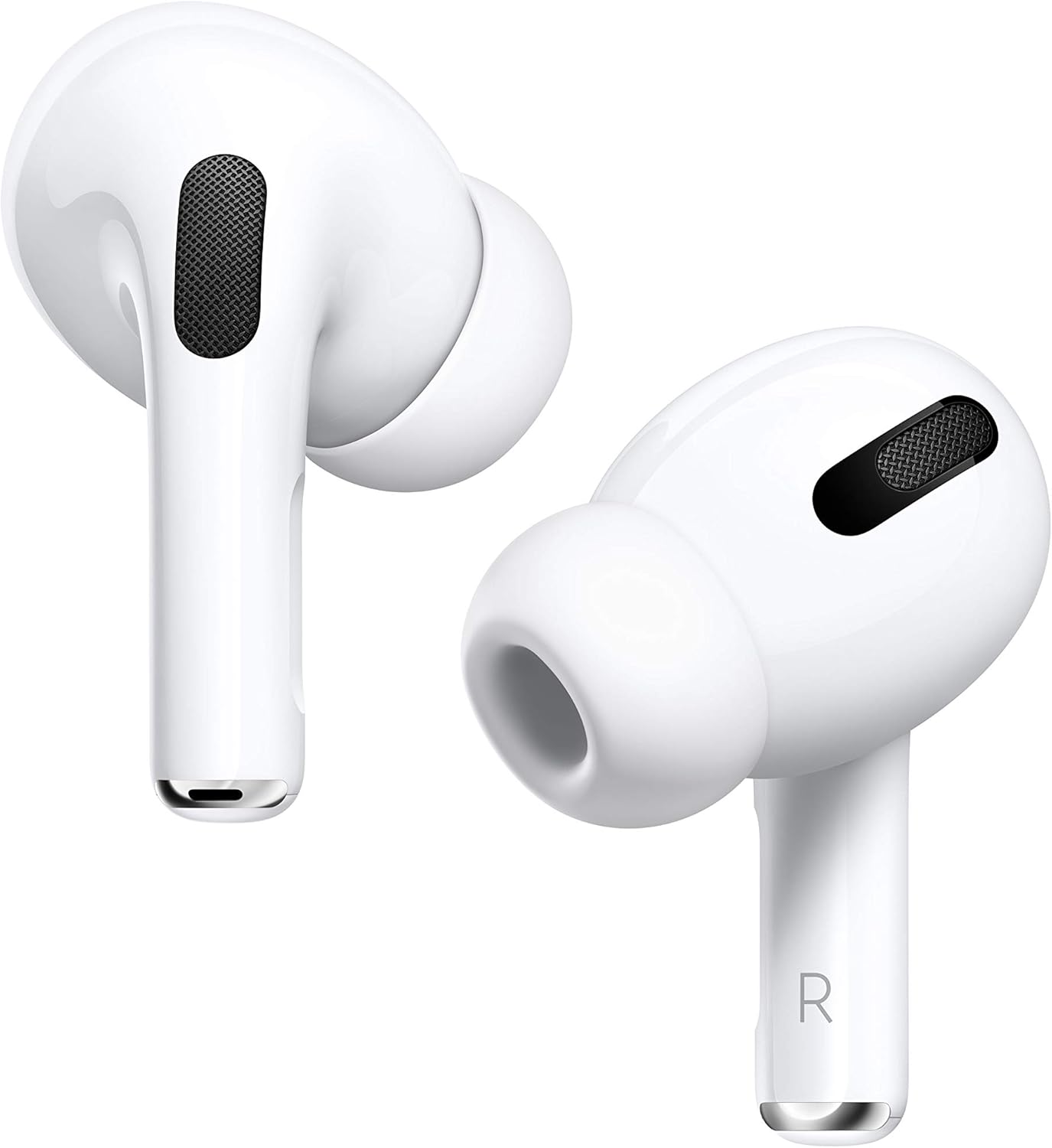
Apple AirPods Pro (1st Generation) with MagSafe Charging Case
Discover this top-rated product now available on Amazon at the best price.
Buy Now on AmazonReference
Sources
Reference links retained from the original article and simplified for faster, cleaner display.
- Apple AirPods Pro (2nd generation) Truly Wireless Review
- Apple AirPods Pro 2 wireless earbuds review – What Hi-Fi?
- AirPods Pro (2nd generation) Review – Why Didn’t I Buy Them …
- Apple AirPods Pro 2 review – SoundGuys
- AirPods Pro 2 Long Term Review – Buy Now or Wait? – YouTube
- Apple AirPods Pro 2 review: Excellent earbuds with game-changing …
- Apple AirPods Pro 2 review | Live Science
- AirPods Pro 2 Review – Apple’s Best Earbuds Are Still Worth It…Just!