
Best Countertop Dishwashers 2026 – Top Portable Dishwashers for Small Apartments & RVs
Introduction
Small kitchens, urban apartments, dormitories and RVs often lack space for a standard 24-inch dishwasher. Yet the convenience of an automatic dishwasher is hard to give up, especially when modern units offer serious water and energy savings. According to the U.S. Department of Energy, hand-washing a full load can use up to 27 gallons of water, while modern ENERGY STAR certified compact dishwashers complete the same task with just 2–3 gallons earth911.com. Countertop dishwashers bring these efficiency gains to small spaces. This comprehensive guide reviews the best countertop dishwashers for 2026, explains how to choose the right unit, and offers expert tips for installation, use and maintenance. Real-world examples, evidence from reputable sources and internal guides from FrediTech will help you make an informed decision.
What Is a Countertop Dishwasher?
A countertop dishwasher is a compact, portable appliance that sits on a kitchen counter instead of being built into cabinetry. These machines typically handle two to six place settings and connect directly to a faucet or draw from a built-in water tank. Because they don’t require permanent plumbing, they’re ideal for renters, students and RV owners. Loch Electronics notes that countertop dishwashers are designed to use less water and electricity than traditional units and often include multiple wash programs, adjustable racks and delay-start options lochelectronics.com. Some models incorporate built-in water heaters and even water softeners to ensure effective cleaning.
Why Choose a Countertop Dishwasher?
1. Save Water and Energy
The environmental benefits are significant. A new ENERGY STAR certified dishwasher uses less than half the energy of hand-washing and can save more than 8,000 gallons of water per year energystar.gov. Earth911 notes that hand-washing a full load can consume up to 27 gallons of water, whereas compact dishwashers use just 2–3 gallons earth911.com. Even the tiny COMFEE CDC22P countertop model uses around 2.77 gallons per cycle and 155 kWh per year. By reducing water consumption, countertop units help conserve precious freshwater resources.
2. Fit Small Spaces
Countertop dishwashers measure roughly 17–22 inches wide, 15–18 inches high and 17–20 inches deep. They sit on a counter or in an RV galley, leaving floor cabinets free. Their portability allows you to move them between apartments or store them when not in use. Models with integrated water tanks need no faucet hookup, making them ideal for RVs and boats.
3. Easy Installation
Installation is straightforward. Most units ship with a quick-connect adapter that screws onto a standard faucet. A drain hose empties water into the sink. For models with built-in tanks, simply fill the tank and place the drain hose into the sink or a bucket. There’s no need for permanent plumbing or professional installation. This simplicity is particularly attractive for renters and students.
4. Suitable for Small Households
Countertop dishwashers are designed for one to three people. FrediTech’s Kitchen Appliance Reviews guide recommends compact or countertop units for singles or couples and emphasises measuring available space and prioritising energy efficiency freditech.com. For families, a full-size or 18-inch compact built-in model may be a better fit.
How to Choose the Best Countertop Dishwasher
Selecting the right dishwasher involves more than comparing price tags. Use these criteria to evaluate options:
Step 1 – Measure Your Space
Measure the height, width and depth of the area where you intend to place the unit. Remember to leave space for the door to open fully and for hoses to reach the sink. Standard countertop models require 17–22 inches of width and 15–18 inches of height. FrediTech’s guide suggests measuring first and choosing a model that suits your space freditech.com.
Step 2 – Consider Capacity
Capacity is measured in place settings. Singles or couples can choose a unit with 4–6 place settings, while families may need an 8-place-setting portable freestanding dishwasher. Earth911 advises selecting a capacity that matches household size; a countertop or single DishDrawer is adequate for most two-person households.
Step 3 – Check Energy and Water Usage
Look for ENERGY STAR certification. Compact dishwashers must use ≤203 kWh/year and ≤3.1 gallons per cycle to earn the label. Standard portable units, 8+ place settings, must use ≤270 kWh and ≤3.5 gallons per cycle. Models like COMFEE CDC22P exceed these requirements, consuming 155 kWh/year and 2.77 gallons per cycle. FrediTech emphasises energy-saving features such as soil sensors and eco cycles freditech.com.
Step 4 – Evaluate Wash Programs
Modern units include multiple wash modes, such as normal, heavy, rapid, glass and baby care. Loch Electronics highlights the importance of adjustable water pressure and eco-friendly wash modes. For sanitising baby bottles, look for high-temperature cycles that reach 150–160°F.
Step 5 – Examine Noise Level
Noise is measured in decibels, dB. Anything under 50 dB is considered quiet. The COMFEE CDC22P operates at 49 dBA. FrediTech advises selecting models under 45 dB for near-silent operation.
Step 6 – Check Drying Method
Heat-drying consumes more electricity. Look for air-dry or fan-assisted drying options, which improve energy efficiency. Palmetto notes that Miele’s high-end dishwashers use automatic door release and fan-assisted drying to reduce energy consumption palmetto.com.
Step 7 – Assess Reliability and Service
Choose reputable brands with good warranty support. FrediTech lists Miele, Bosch and GE among reliable brands freditech.com. Review service availability in your area.

Top Countertop Dishwashers of 2026
Below are the leading countertop and portable dishwashers for 2026. Each section explains key features, pros and cons and typical pricing. Where possible, data are drawn from independent sources like ENERGY STAR and Earth911.
COMFEE CDC22P: Best Overall Countertop Dishwasher
The COMFEE CDC22P tops our list for overall value and efficiency. Earth911 reports that it is “the most energy-efficient countertop model you can easily find,” using 155 kWh per year and just 2.77 gallons of water per cycle earth911.com. It holds six place settings and offers eight wash cycles, including a baby-care sanitising mode and a dedicated glass cycle.
Pros:
- Energy & water efficiency: Exceeds ENERGY STAR thresholds, ≤203 kWh/year and ≤3.1 gallons/cycle.
- Multiple programs: Normal, rapid, steam, fruit wash and glass modes provide versatility.
- Quiet: Operates at 49 dBA.
- Affordable: Typically priced $200–$280.
- Easy installation: Connects to a faucet or draws from a built-in tank, depending on model variant.
Cons:
- Limited capacity: Six place settings are sufficient for couples but may be too small for families.
- No heated dry: The air-dry function saves energy but may leave moisture on plastics.
- Plastic interior: Unlike stainless-steel tubs found on premium models.
Generic Portable Countertop Dishwasher: Best Budget Pick
Pro Kitchen Appliance compares several countertop models and lists a generic countertop dishwasher as the most budget-friendly choice for small spaces. The model features a 4–6 place setting capacity, uses about 7.8 liters, or 2 gallons, of water per cycle, and offers three wash modes, fast, standard and strong prokitchenappliance.com. Its 360° rotating spray arm ensures full-coverage cleaning.
Pros:
- Low price: Among the cheapest countertop dishwashers on the market.
- Simple operation: Three straightforward wash modes.
- Minimal installation: Includes hose and manual fill option.
Cons:
- Basic features: Lacks specialised programs such as baby care or glass cycles.
- Unknown brand reliability: Generic models may lack strong warranty support.
COMFEE Mini Dishwasher + BLACK+DECKER Washer Bundle: Best Multi-Appliance Bundle
For those needing both dishwashing and laundry solutions in tight spaces, Pro Kitchen Appliance recommends the COMFEE Mini Dishwasher + BLACK+DECKER Portable Washer bundle. The countertop dishwasher holds over 30 items and includes programs like normal, rapid, steam, fruit and glass prokitchenappliance.com. A built-in 5 L water tank eliminates the need for a faucet connection, and Air Refresh mode helps dishes dry.
Pros:
- Two appliances in one bundle: Ideal for RVs and tiny homes.
- High-temperature hygiene cycle: Reaches up to 192°F.
- Built-in water tank: No installation needed.
Cons:
- Higher cost: Bundle pricing is higher than a single dishwasher.
- Smaller washing machine: May not suit larger laundry loads.
SPT SD-9263SSB: Best Mid-Size Portable Dishwasher
For those needing more capacity than a countertop unit but still lacking permanent cabinetry, the SPT SD-9263SSB offers a balance of size and portability. It’s ENERGY STAR certified and holds eight place settings. The unit provides six wash programs, including eco and glass cycles, and uses approximately 2.6–5 gallons of water per load.
Pros:
- Higher capacity: Eight place settings accommodate small families.
- Stainless-steel interior: Improves durability and resists odours.
- Quick-connect faucet adapter: Easy installation.
Cons:
- Larger footprint: Requires floor space similar to a small under-counter unit.
- Higher water use: Up to 5 gallons per cycle at maximum setting.
SPT SD-6513SSB: Best Large-Capacity Portable Dishwasher
Families seeking a portable unit closer to full-size performance should consider the SPT SD-6513SSB. This freestanding dishwasher holds 10 place settings and features multiple programs, including heavy, normal and eco modes. It is also ENERGY STAR certified and operates at 52 dB.
Pros:
- Largest capacity in our comparison: Fits full dinner sets and pots.
- Durable stainless-steel tub.
- Quick-connect faucet adapter for installation.
Cons:
- Highest cost among these options.
- Requires substantial floor space.
Fisher & Paykel DishDrawer DD24SAX9N: Premium Alternative
While not a countertop unit, Fisher & Paykel’s DishDrawer concept merits mention for small kitchens where a built-in is possible. Earth911 reports that the single DishDrawer holds 7 place settings and uses about 2 gallons of water per drawer. The drawer design eliminates bending and allows half-loads, making it a flexible, water-efficient alternative.
Pros:
- Very low water consumption: ~2 gallons per drawer.
- Ergonomic drawer design: run half loads independently.
- ENERGY STAR Most Efficient rating.
Cons:
- High price: $1,100–$1,300 for single drawer.
- Requires cabinet installation and is not portable.
Countertop vs. Built-In vs. Portable Dishwashers
Size and Capacity
Countertop dishwashers are the smallest, handling 2–6 place settings. Portable freestanding units, like the SPT SD-9263SSB, offer 8–10 place settings and roll on wheels. Built-in compact dishwashers, 18-inch, fit 8 or more place settings, while full-size dishwashers hold 12–14. Loch Electronics notes that countertop models can be stored away, whereas built-ins become permanent fixtures lochelectronics.com.
Installation and Maintenance
Countertop units need only faucet and drain connections and are easy to move. Portable freestanding dishwashers require floor space and connection to a faucet but can still be relocated. Built-in models require professional installation, cabinet space and permanent plumbing.
Water and Energy Use
Generally, countertop units use less water per cycle, 2–3 gallons, than standard dishwashers, 3–4 gallons. However, they often wash fewer dishes, so water use per dish may be similar. Earth911 explains that compact dishwashers must use ≤3.1 gallons per cycle to qualify for ENERGY STAR. Large portable units like the SPT SD-6513SSB use up to 5 gallons on heavy cycles.
Price
Countertop models range from $200–$300, mid-size portable units cost $400–$600, and premium dishwashers can exceed $1,000. Factor long-term utility savings into your calculations; energy-efficient models may reduce water and electricity bills over time.
Benefits of ENERGY STAR Certification
ENERGY STAR is a program run by the U.S. Environmental Protection Agency. Certified dishwashers must meet strict criteria for energy and water use. An ENERGY STAR dishwasher costs about $50 per year to run and can save roughly 5,800 gallons of water over its lifetime energystar.gov. Other benefits:
- Better cleaning: Many models include soil sensors and improved jets for efficient cleaning.
- Reduced environmental impact: Saving water reduces strain on freshwater resources.
- Utility rebates: Many utilities offer rebates for purchasing ENERGY STAR appliances.
Environmental Impact and Water-Saving Tips
- Skip the pre-rinse: Pre-rinsing can waste 20 gallons of water per load. Modern soil sensors handle food residue.
- Run full loads: Dishwashers use nearly the same water whether half-full or full.
- Use eco cycles: Eco settings reduce water temperature and shorten cycles, saving 30–40% more energy.
- Air-dry dishes: Opening the door after the final rinse saves energy compared to heated drying.
- Choose the right size: Selecting a capacity that matches your household prevents unnecessary water and energy use.
Step-by-Step Installation and Use
- 1. Unbox and inspect: Remove packaging and check for hoses, adapters and manuals.
- 2. Position the dishwasher: Place the unit near the sink. Ensure there is space for the door and ventilation.
- 3. Attach the faucet adapter: Screw the quick-connect adapter onto your faucet. Tighten with pliers if necessary.
- 4. Connect the hoses: Attach the inlet hose to the adapter and the drain hose to the sink. Secure the drain hose to prevent backflow. For models with water tanks, fill the tank instead of connecting to a faucet.
- 5. Load dishes: Scrape but don’t rinse; load plates, bowls, cups and utensils according to manufacturer instructions. Leave space around items for water jets.
- 6. Add detergent: Use detergent designed for dishwashers. Avoid hand-soap or dish liquid.
- 7. Select program: Choose the appropriate cycle, normal, heavy, rapid, etc. Eco cycles save energy; baby-care cycles sanitize.
- 8. Start the machine: Turn on the unit. When finished, open the door slightly to allow air-drying.
- 9. Regular maintenance: Clean the filter monthly, remove food debris and descale every few months using white vinegar or a dishwasher cleaner freditech.com.
Maintenance Tips for Longevity
Proper care extends the life of your appliance:
- Clean filters regularly to prevent clogs and maintain spray pressure.
- Descale periodically to remove mineral buildup, especially if you have hard water.
- Inspect hoses for leaks or cracks and replace them if damaged.
- Use dishwasher-safe detergents and avoid powders containing high amounts of chlorine, which can degrade components.
- Leave the door ajar after cycles to prevent mould growth.
Conclusion
Countertop dishwashers offer a practical solution for small living spaces. They use significantly less water and energy than hand-washing and require no permanent installation. The COMFEE CDC22P stands out for its combination of efficiency, functionality and affordability. Budget shoppers may prefer generic models, while larger households might opt for portable freestanding units like the SPT SD-9263SSB or a built-in compact model. When shopping, focus on ENERGY STAR certification, water consumption per cycle and features like eco modes and soil sensors. With the right dishwasher and proper maintenance, you can enjoy sparkling dishes while conserving water, reducing energy bills and supporting a more sustainable lifestyle.
Frequently Asked Questions About Countertop Dishwashers
Are countertop dishwashers energy efficient?
Yes. ENERGY STAR certified compact dishwashers are designed to use no more than 203 kWh of electricity annually and approximately 3.1 gallons of water per cycle. Efficient models such as the COMFEE CDC22P consume around 155 kWh per year and only about 2.77 gallons of water per cycle, helping reduce utility bills and environmental impact.
How much water does a countertop dishwasher use compared to hand-washing?
Hand-washing a full load of dishes can use up to 27 gallons of water, depending on washing habits and faucet flow rates. In comparison, most countertop dishwashers use only 2–3 gallons per cycle, potentially saving thousands of gallons of water each year.
Do I need to rinse dishes before loading?
No. Modern countertop dishwashers are equipped with strong spray jets and soil-detection technology that can handle food residue effectively. Pre-rinsing dishes can waste significant amounts of water, sometimes up to 20 gallons per load. Simply scrape large food scraps into the trash before loading dishes.
Can I use a countertop dishwasher without a faucet connection?
Yes, certain countertop dishwasher models include built-in water tanks that can be filled manually, eliminating the need for direct faucet connections. Examples include some COMFEE Mini models. However, many standard countertop dishwashers still require a temporary faucet hookup and sink drainage hose.
What is the quietest countertop dishwasher?
Noise levels vary between brands and models. The COMFEE CDC22P operates at approximately 49 dBA, which is considered quiet for most kitchens. Premium options like the Fisher & Paykel DishDrawer can operate as quietly as 45 dBA. For quieter performance, look for models rated below 50 dB.
Do countertop dishwashers sanitize dishes?
Yes. Many countertop dishwashers include sanitizing or baby-care wash cycles that use high-temperature water to eliminate bacteria and germs. For example, some COMFEE Mini models can heat water up to 192°F. If sanitation is important, choose a dishwasher capable of reaching at least 150°F during the wash cycle.
Are countertop dishwashers worth it?
For renters, students, RV owners and small households, countertop dishwashers are often worth the investment. They save time, reduce water and energy usage and eliminate the inconvenience of hand-washing dishes. Most models are affordable, portable and ideal for compact living spaces. Larger families with heavier dishwashing needs may prefer larger portable or built-in dishwasher models.
Author: Wiredu Fred is a technology and smart-home writer and founder of FrediTech, a platform providing detailed reviews and guides on consumer tech and appliances. With years of experience testing home appliances and analysing ENERGY STAR standards, Fred delivers evidence-based recommendations that balance performance, efficiency and value. His work has appeared on FrediTech and in collaborations with sustainability publications.
Portable Dishwasher Deals
As an Amazon Associate, I earn from qualifying purchases.

COMFEE Mini Dishwasher Tank
Price: Check Latest Price
Shop on Amazon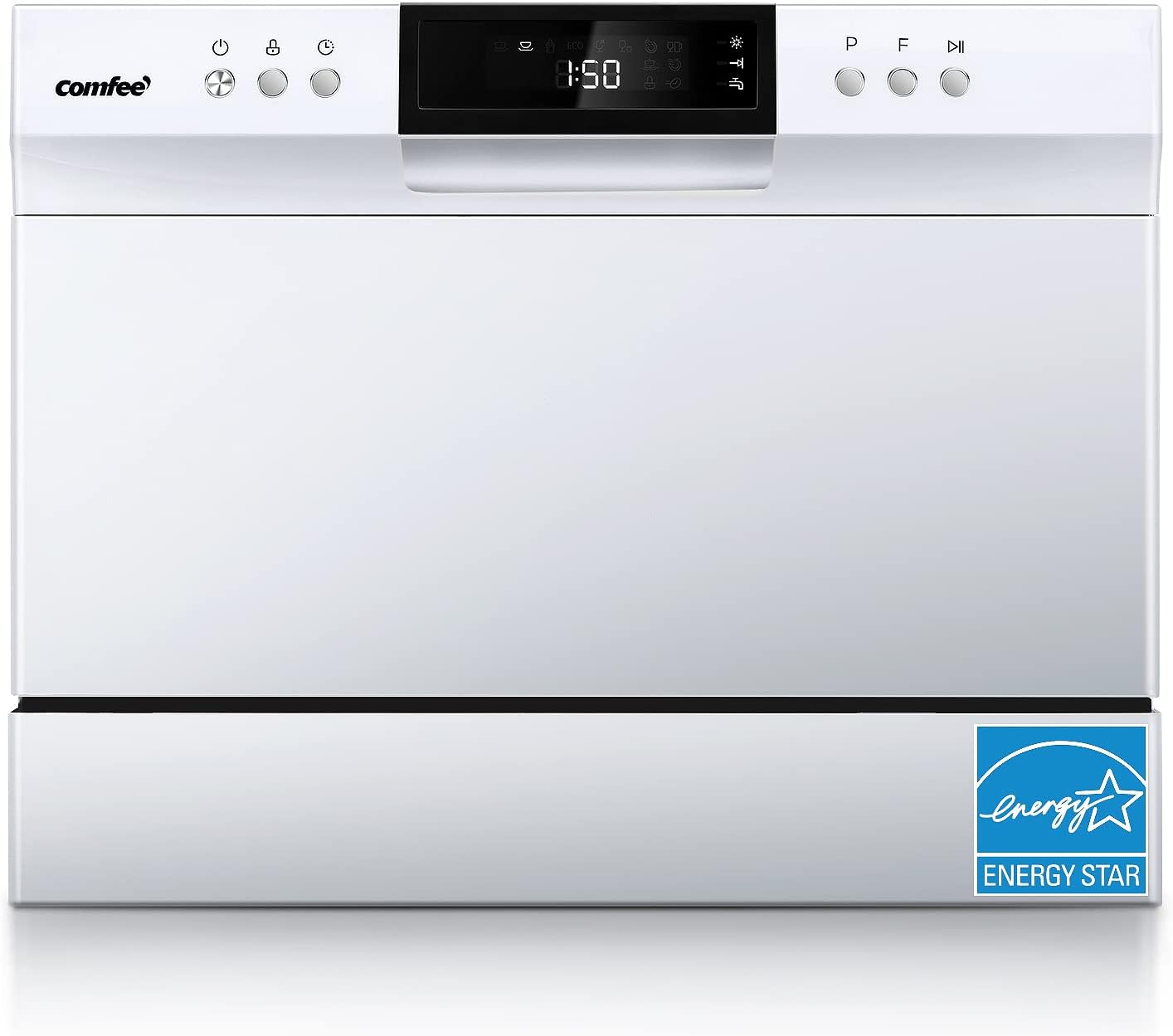
COMFEE 6 Place White
Price: Check Latest Price
Shop on Amazon
COMFEE Black Dishwasher
Price: Check Latest Price
Shop on Amazon
Hermitlux Glass Door
Price: Check Latest Price
Shop on Amazon
AIRMSEN Double Glass
Price: Check Latest Price
Shop on Amazon
SPT ENERGY STAR
Price: Check Latest Price
Shop on Amazon