
Sous-Vide vs Slow Cooking: Which Method Fits You? compares the method by control, speed, safety, energy use and the kind of food it handles best, giving home cooks a clearer way to choose the right tool.
Quick Verdict
- Best for: cooks comparing methods by control, convenience and the food they actually prepare.
- Focus on: temperature control, capacity, cleanup, energy use and food-safety technique.
- Watch for: no cooking technology is automatically healthier or better for every recipe.
Table of contents
Introduction
From tender steaks that are evenly pink from edge to edge to stews that simmer all day and greet you with comforting aromas, low‑temperature cooking has revolutionized home kitchens. Two methods dominate this gentle‑heat landscape: sous‑vide and slow cooking. Both techniques use lower temperatures and longer cooking times than sautéing or roasting, yet they differ significantly in precision, equipment and end results. With the growing popularity of immersion circulators and multicookers, it’s important to understand how each method works, what benefits it offers, and which dishes are best suited to it.
This guide draws on scientific research, expert advice and real‑world examples to compare sous‑vide and slow cooking. You’ll learn how each technique works, how they differ in taste and texture, which appliances and accessories you need, and how to decide which method fits your cooking style. We’ll also discuss energy efficiency, nutrient retention and food safety, and provide step‑by‑step instructions for classic dishes.
Along the way we’ll link to relevant resources on Freditech, such as our breakdown of precision immersion circulators and other must‑have kitchen gadgets, to help you outfit your kitchen with confidence. By the end of this article you’ll have a nuanced understanding of both sous‑vide and slow cooking and will be ready to harness their strengths.

Understanding the techniques
What is sous‑vide?
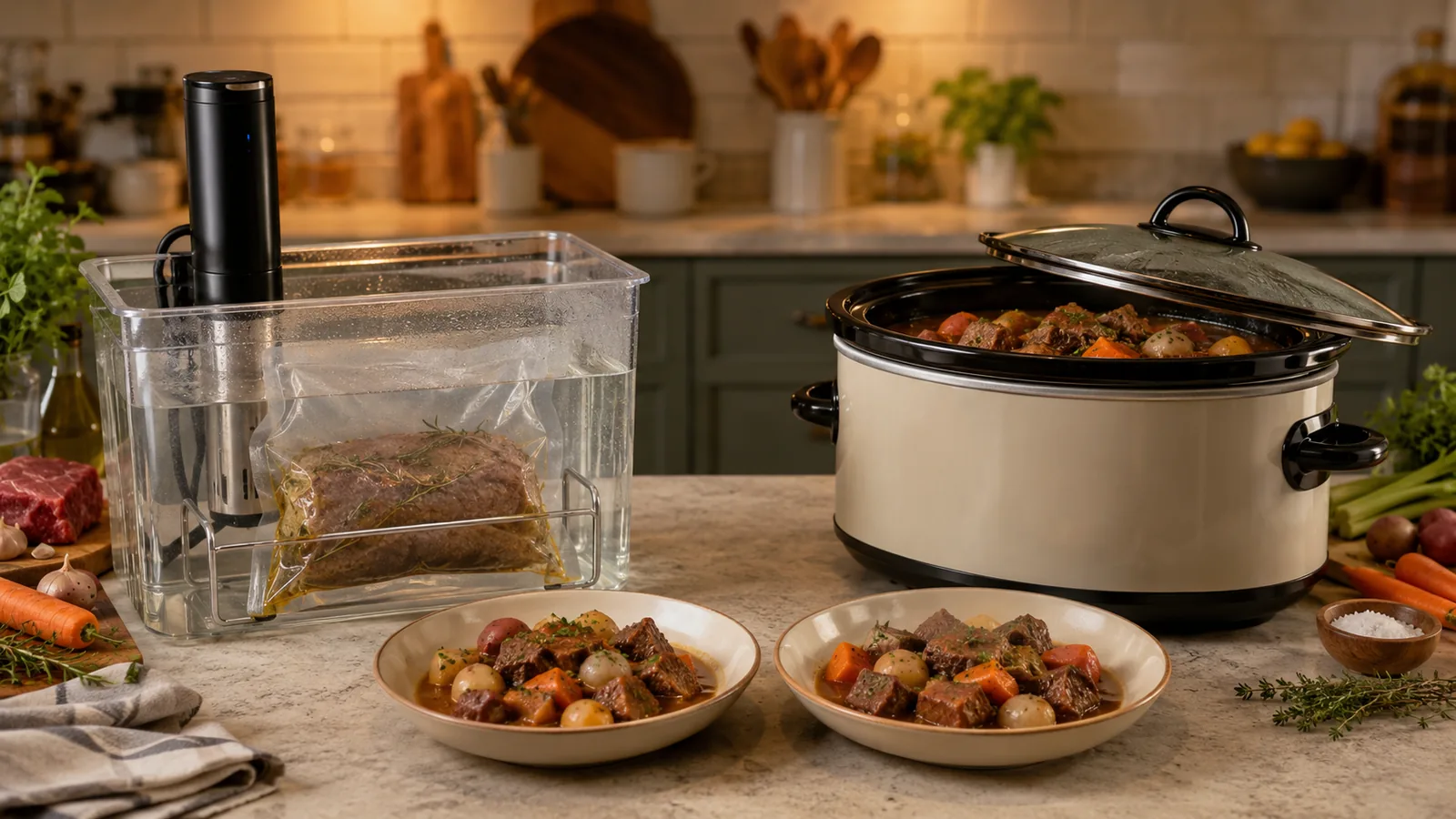
The term sous‑vide is French for “under vacuum.” In this method, food is sealed in an airtight bag and submerged in a water bath held at a precise, relatively low temperature. A small device known as an immersion circulator heats and circulates the water, maintaining a steady temperature (usually between 110 °F and 190 °F) for hoursaducksoven.com. Unlike boiling, which subjects food to fluctuating temperatures, sous‑vide keeps the heat constant; this precision is the key to its consistency and gentle cooking. Once the food reaches the target temperature, it cannot overcook because it never exceeds that temperature.
To cook sous‑vide you generally need:
- An immersion circulator – This device clips onto a pot or tank and heats/circulates the water. Serious Eats reviewers note that devices like the Breville Joule Turbo heat a gallon of cold water to temperature in about 22 minutes and maintain consistency for hoursfreditech.com.
- Food‑grade vacuum or zipper bags – Vacuum sealing removes air, preventing the bag from floating and ensuring even heat transfer. (Our Freditech kitchen gadgets guide explains how to choose and use a vacuum sealer.)
- A heat‑resistant container – This can be a stockpot, a cooler or a purpose‑built sous‑vide tub.
- Finishing tools – Most foods benefit from a quick sear after sous‑vide to develop a crust or caramelization. A cast‑iron skillet is ideal for this final step.

What is slow cooking?
A slow cooker (often called a Crock‑Pot, a popular brand) is a countertop appliance with a ceramic or metal insert and an electric heating element. It operates at two or three temperature settings: low (around 200 °F), high (around 300 °F) and sometimes “warm.” In a slow cooker you place food and liquid into the pot, choose a setting and cook for several hours. A Duck’s Oven notes that on low, dishes cook for six to eight hours; on high, three to four hours. The lid traps steam, braising the ingredients and blending flavors.
Slow cookers are popular because of their convenience: you can add ingredients in the morning, leave the house and return later to a ready meal. They are ideal for soups, stews, curries, roasts and shredded meatsbreville.com. Because they use gentle, moist heat, they excel at breaking down collagen and connective tissue in tougher cuts of meat.
Taste, texture and nutrient differences
Tenderness and juiciness
Sous‑vide is celebrated for producing exceptionally tender and moist dishes. With precise temperature control, overcooking is almost impossible, and meats like steak or chicken cook evenly edge‑to‑edge while retaining natural juices. Vegetables cooked sous‑vide remain vibrant and crisp‑tender because they aren’t exposed to boiling water or fluctuating heat. Foods cooked this way also benefit from vacuum sealing, which prevents evaporation and concentrates flavors.
Slow cooking also yields tender results, but in a different way. The moist, enclosed environment allows ingredients to simmer for hours, breaking down collagen and connective tissue in tough cuts. This results in meat that is fork‑tender and vegetables that are soft and integrated into rich sauces. The long cooking time lets flavors meld, producing deep, hearty dishes like beef stew and chili.
Flavor development
Because sous‑vide cooking doesn’t allow liquid to evaporate, the flavors inside the bag are concentrated. However, without browning the exterior, dishes can lack the Maillard reaction (the caramelized notes that develop during searing or roasting). To achieve a full spectrum of flavor, it’s common to sear sous‑vide proteins briefly after cooking. Many home cooks also add aromatics—herbs, spices, garlic or citrus—to the bag so those flavors permeate the food during the water bath.
Slow cookers, by contrast, encourage flavor development through reduction. As the dish simmers, juices concentrate and ingredients infuse each other. This leads to deeply flavored sauces and broths. However, because all components cook together and there is no opportunity for browning, some dishes may taste homogeneous, and vegetables can become mushy if overcookedfoodess.com. Finishing slow‑cooked dishes with fresh herbs or acidic ingredients can brighten flavors.
Nutrient retention and health considerations
One of the major selling points of sous‑vide is its potential to retain nutrients. Providence Health explains that vitamins and nutrients are better retained with sous‑vide than with traditional high‑heat methodsblog.providence.org. Cooking in a sealed bag uses lower temperatures (typically 130–140 °F for meats), limiting vitamin losses and eliminating the need for added fats or salt. The vacuum‑sealed environment also reduces the formation of harmful compounds like heterocyclic amines (HCAs) and polycyclic aromatic hydrocarbons (PAHs) that can occur with grilling or frying.
Slow cooking can also preserve nutrients because it uses lower temperatures than boiling or baking and doesn’t require added fat. The Foodess article notes that slow cooking retains vitamins and nutrients in ingredients, making it a healthy method for nutrient‑rich meals. However, some nutrients, such as vitamin C and certain B vitamins, are sensitive to heat and water and can leach into cooking liquid. When the liquid is consumed as part of the dish—as in soups and stews—those nutrients are retained.
Energy efficiency
Electric slow cookers are remarkably energy‑efficient. The University of Nebraska’s extension program notes that slow cookers use less electricity than an ovenfood.unl.edu. Sense, an energy‑monitoring company, reports that a typical slow cooker uses only about 300 watts and that tests by CNET found that cooking a meal in a slow cooker can cost as little as one‑tenth the cost of using a full‑size ovensense.com. This makes slow cookers an economical choice, especially for long braises.
Sous‑vide also uses relatively little electricity because it maintains, rather than generates, heat once the water bath reaches temperature. Most immersion circulators draw between 800 and 1,200 watts during the initial heating stage, then cycle on and off to maintain temperature. Because the water bath is insulated and the temperature is low, energy consumption is typically lower than simmering on a stovetop. However, you’ll need to consider the energy used by additional equipment like a vacuum sealer.
Convenience and equipment
Preparation and clean‑up
One of the main differences between these methods is the balance between preparation and clean‑up. Sous‑vide requires slightly more prep work: you need to season the food, place it in a bag, remove the air with a vacuum sealer or displacement method and set up the water bath. On the other hand, clean‑up is minimal—you simply discard the bag and quickly wash your searing pan. A Duck’s Oven points out that sous‑vide requires more prep while slow cooking requires more clean‑up because you must wash the crockpot insert.
Slow cooking is the epitome of set‑and‑forget convenience. To start a dish you place ingredients into the pot, select a setting and walk away. Because most slow cookers operate with a single insert, cleaning can be more involved—especially if food sticks or burns—but using disposable liners or soaking the insert can help. Slow cookers do not need the additional equipment required by sous‑vide; the appliance itself is all you need.
Hands‑on time and supervision
Sous‑vide cooking offers a hands‑off experience once the water bath is set up. The immersion circulator holds the temperature so precisely that you can leave the food for hours and it will not overcook. Breville notes that once food is sealed and submerged, you can walk away and attend to other tasks, confident that it will be cooked perfectly when you return. However, there is an additional finishing step: searing or caramelizing the surface to develop texture and flavor.
Slow cookers also require minimal supervision. You can load ingredients, select a setting and return hours later to a ready meal. Many models have timers and automatic warming modes that switch on when cooking is complete. This makes them ideal for busy schedules and meal prep. However, because slow cookers operate at one or two temperature settings, you have less control over doneness and may need to adjust cooking times based on the recipe.
Equipment costs
Slow cookers are generally inexpensive; basic models range from US $30 to $60. Higher‑end models with programmable features or multi‑cook functions may cost more but still fall within affordable ranges. Accessories like disposable liners are optional.
Sous‑vide setup costs more. In addition to an immersion circulator, you might purchase a dedicated water bath container, vacuum sealer and reusable or disposable bags. These costs have fallen in recent years, and entry‑level circulators now sell for around US $100. Many home cooks repurpose stockpots or coolers as water baths to save money. If you already own a vacuum sealer for food storage, the incremental cost is lower. Our Freditech kitchen gadget guide reviews immersion circulators and vacuum sealers and provides step‑by‑step instructions for using them.
Food safety and health
Time and temperature guidelines
Food safety is central to both methods. Because both operate at temperatures lower than boiling, it’s important to ensure that foods reach safe internal temperatures. The Michigan State University food‑safety bulletin points out that sous‑vide cooking retains moisture and texture while making it “hard to overcook” foodmichiganfoodsafety.com. To ensure safety, Dr. Brian Nummer recommends cooking most meats at 130 °F or higher, and he notes that perishable foods should reach 130 °F within two hours; cooking at temperatures below 130 °F for more than one hour is not advised. The U.S. Food Code defines “fully cooked” as achieving 145 °F for intact meat and 165 °F for poultry.
Slow cookers usually heat to safe temperatures as long as you follow manufacturer instructions. The University of Nebraska advises keeping perishable foods refrigerated until prep time, placing vegetables in the bottom of the slow cooker (because they cook more slowly) and thawing meat before adding it to the pot. They also caution against reheating leftovers in the slow cooker; instead, reheat on the stove or in a microwave until 165 °F, then transfer to the slow cooker to keep warm.
BPA and bag safety
When cooking sous‑vide, it’s crucial to use food‑grade bags that are free of bisphenol A (BPA) and other harmful chemicals. Providence Health advises choosing sous‑vide bags that have been independently tested and proven not to leach chemicals and emphasizes understanding time and temperature to eliminate bacteria. Look for bags labeled “BPA‑free” and follow manufacturer guidelines.
Best dishes for each method
Ideal sous‑vide dishes
Sous‑vide shines when precision matters. Breville recommends using it for:
- Steak and red meat – A sous‑vide steak cooks evenly from edge to edge; a 1‑inch steak cooked at 130 °F for 1–2 hours produces a perfect medium‑rare. Because the temperature is consistent, you can hold the steak in the water bath for hours without overcooking.
- Chicken breasts and pork chops – Lean proteins like chicken often dry out with traditional cooking. Sous‑vide cooking locks in moisture, producing juicy meat.
- Fish and seafood – Delicate foods such as salmon, scallops and shrimp require precise temperatures to avoid overcooking. A Duck’s Oven notes that slow cooking would obliterate these finicky foods, whereas sous‑vide cooks them gently.
- Eggs – Eggs are extremely sensitive to temperature changes. Sous‑vide allows for precise control, letting you achieve soft‑boiled, jammy or custard‑like textures by adjusting the temperature by a few degrees.
- Vegetables – Carrots, asparagus, beets and other vegetables retain their color and texture when cooked in their own juices. Vacuum sealing prevents dilution from cooking water.
- Desserts – Because of its precision, sous‑vide is used for crème brûlée, cheesecakes and other custard‑based desserts where temperature control is critical.
Ideal slow‑cooker dishes
Slow cookers excel at dishes that benefit from long, moist heat and flavor melding. According to Breville and Foodess:
- Braised meats – Cuts like pork shoulder, brisket, chuck roast and lamb shoulder have a lot of collagen that turns into gelatin when cooked slowly. They become fork‑tender and juicy. Foodess emphasizes that slow cookers tenderize tough cuts by breaking down collagen.
- Casseroles – Cheesy potato bakes, green‑bean casseroles and lasagnas develop deep flavors and creamy textures when cooked slowly.
- Stews and soups – Beef stew, chili, chicken noodle soup and curries are classic slow‑cooker dishes because they allow flavors to develop over time and the broth thickens naturally.
- Shredded meats – For pulled pork, shredded chicken or pot roast, slow cookers produce a fall‑apart texture that’s difficult to achieve with faster methods.
- Beans and grains – Dried beans and whole grains cook evenly and soften without constant monitoring.
Foods best avoided
Some foods are better suited to one method than the other. As A Duck’s Oven notes, slow cooking is not ideal for expensive cuts of steak, seafood or delicate vegetables. These items can become mushy or overdone. Sous‑vide, on the other hand, is less suited for high‑volume liquid dishes like soups and stews because it requires vacuum sealing; large quantities of liquid are difficult to bag and heat evenly.
Step‑by‑step examples
Sous‑vide steak (medium‑rare)
- Prep the bath: Fill a stockpot or sous‑vide container with water and attach your immersion circulator. Set the temperature to 130 °F (54 °C) for medium‑rare steak.
- Season and seal: Season a 1‑inch steak with salt, pepper and herbs. Place it in a food‑grade bag. Remove air using a vacuum sealer or water displacement method.
- Cook: Submerge the bag in the water bath. Cook for 1–2 hours. The circulator maintains the temperature, ensuring the steak comes up to and holds at 130 °F.
- Sear: Remove the steak from the bag, pat dry and sear in a hot cast‑iron skillet for about one minute per side to create a flavorful crust.
- Serve: Slice and serve immediately. Because the entire steak is already at serving temperature, there is no need for resting.
Slow‑cooker beef stew
- Prepare ingredients: Cut beef chuck into cubes. Chop onions, carrots, celery and potatoes. Season the meat with salt and pepper.
- Layer the slow cooker: Place vegetables in the bottom of the slow cooker (they cook more slowly and need more heat). Place the meat on top, then add broth, canned tomatoes, bay leaves and herbs. Liquid should cover the ingredients but not fill the pot to the brim; remember that steam will not escape.
- Cook: Set the slow cooker to low and cook for 7–8 hours, or set to high and cook for 4 hours. Avoid opening the lid unnecessarily, as each peek releases heat and increases cooking time.
- Adjust seasoning: Taste and adjust salt and pepper. If the stew needs thickening, make a slurry with flour or cornstarch and stir it in during the last 30 minutes. Serve with fresh herbs and crusty bread.
Slow‑cooker pulled pork
- Season and sear (optional): Rub a pork shoulder with spices (smoked paprika, brown sugar, cumin, salt and pepper). Searing the roast in a skillet adds flavor but is optional.
- Load the slow cooker: Add sliced onions to the bottom, place the pork on top and pour in a small amount of apple cider vinegar or broth.
- Cook: Set to low and cook for 8–10 hours until the pork is tender and shreds easily.
- Shred and serve: Remove the roast, shred with forks and return it to the slow cooker to soak up juices. Serve on buns with barbecue sauce and slaw.
Sous‑vide salmon
- Set temperature: Fill the water bath and set your circulator to 122 °F (50 °C) for medium‑rare salmon.
- Season and bag: Season salmon fillets with salt, pepper and dill. Place them in a bag with a thin slice of lemon and remove air.
- Cook: Submerge the bag and cook for 45 minutes.
- Crisp the skin: Heat a non‑stick or cast‑iron pan until very hot. Quickly sear the skin side for 30 seconds to crisp.
- Serve: Serve with a squeeze of fresh lemon. The fish will be tender and flaky, with no overcooked edges.
Pros and cons at a glance
Method | Key advantages | Potential drawbacks |
Sous‑vide | Precise temperature control yields consistent doneness; retains moisture and nutrients; ideal for expensive cuts and delicate foods; allows for extended hold times without overcooking | Requires specialized equipment (immersion circulator, vacuum sealer); more prep time; dishes may lack browning and need searing; less suited to soups or large volumes of liquid |
Slow cooking | Hands‑off convenience; inexpensive equipment; energy‑efficient (uses ~300 watts and can cost one‑tenth of using an oven); tenderizes tough cuts; allows flavors to meld; versatile for stews, soups and casseroles | Limited temperature control; long cooking times; vegetables can become mushy; risk of overcooking if left too long; limited browning and caramelization |
Choosing the right method for you
The choice between sous‑vide and slow cooking depends on your priorities, the types of dishes you enjoy and how much time you’re willing to invest in preparation. Consider the following factors:
- Precision vs. simplicity: If you’re fascinated by culinary science, want restaurant‑quality results and enjoy experimenting with time and temperature, sous‑vide is the tool for you. It shines when cooking pricey cuts, delicate seafood and custardy desserts. If you value simplicity and the ability to walk away, a slow cooker is better suited to your lifestyle.
- Meal planning: Sous‑vide offers flexibility because you can cook proteins ahead and hold them at temperature without overcooking. Slow cookers require early preparation because dishes take hours but reward you with minimal last‑minute work.
- Kitchen space and cost: Slow cookers are inexpensive and compact; sous‑vide equipment can be an investment, though it’s becoming more affordable. If you already own an immersion blender or vacuum sealer—for example, after reading our Best kitchen gadgets guide—the barrier to entry is lower.
- Health and nutrition: Both methods use lower temperatures and can preserve nutrients. Sous‑vide offers particularly strong nutrient retention, while slow cookers make nutrient‑rich soups and stews convenient. If you prefer to avoid added fat and salt, sous‑vide cooking in sealed bags may be appealing.
Ultimately, many home cooks find that owning both appliances covers all bases. Use sous‑vide for date‑night steaks or precise fish, and rely on a slow cooker for weeknight chili and pulled pork. They aren’t mutually exclusive; in fact, using them together can streamline meal prep. For example, you could sous‑vide a pork shoulder to ensure perfect doneness, then finish it in a slow cooker with barbecue sauce to absorb flavors.
Frequently asked questions (FAQ)
Can I use a slow cooker as a sous-vide machine?
Which method is safer?
Does sous-vide cooking consume a lot of electricity?
Are nutrients lost during slow cooking?
Why do I need to sear food after sous-vide cooking?
Is slow cooking cheaper than sous-vide?
Can I cook frozen food sous-vide or in a slow cooker?
Conclusion
Sous‑vide and slow cooking both harness the power of low‑temperature cooking but deliver different experiences. Sous‑vide offers unparalleled precision, moisture retention and nutrient preservation; it excels with premium steaks, seafood, eggs and delicate vegetables. Slow cooking delivers comfort and convenience, producing rich soups, stews and tender braises with minimal supervision. Understanding the strengths and limitations of each method allows you to choose the right tool for every meal.
For a deeper dive into kitchen technology and step‑by‑step guides to using sous‑vide equipment, check out our Best kitchen gadgets: 2025’s must‑have tools for every home chef on Freditech. Whether you’re embracing the precision of an immersion circulator or the simplicity of a Crock‑Pot, low‑temperature cooking can elevate your home meals, save you energy and expand your culinary repertoire.
Author credentials
Wiredu Fred is a technology and consumer‑product reviewer with a passion for kitchen innovation. He is the founder of Freditech, a site that explores modern gadgets and how they improve everyday life. His culinary interests range from cutting‑edge sous‑vide circulators to classic slow cookers, and he aims to demystify new appliances for home cooks.
Bottom Line
The best cooking method is the one that gives you the control, capacity and convenience your meals require while fitting safe food-handling practices. Use technology to improve consistency, not to replace technique.