
Smart Kitchen Gadgets in 2026: What Is Actually Useful? focuses on practical automation, compatibility, privacy, reliability and energy use so connected-home features solve real problems instead of adding unnecessary complexity.
Quick Verdict
- Best for: households that want useful automation without sacrificing reliability or privacy.
- Focus on: ecosystem compatibility, local control, networking, security and meaningful energy savings.
- Watch for: adding more connected devices can increase complexity faster than it adds value.
Smart devices have left the living room and are now transforming kitchens. Connected refrigerators that track inventory, ovens you pre‑heat from your phone and dishwashers that adapt wash cycles based on soil levels are no longer science fiction; they’re tools millions of people use every day. As families look for ways to cut utility bills, reduce waste and spend more time enjoying meals instead of preparing them, the next generation of smart kitchen gadgets offers compelling solutions. This guide explores the most useful gadgets, explains how they work, and shows how they can make your kitchen safer, more efficient and more enjoyable. Each section draws on credible sources and includes real‑world examples and step‑by‑step advice.

Table of contents
What Makes a Kitchen Gadget “Smart”
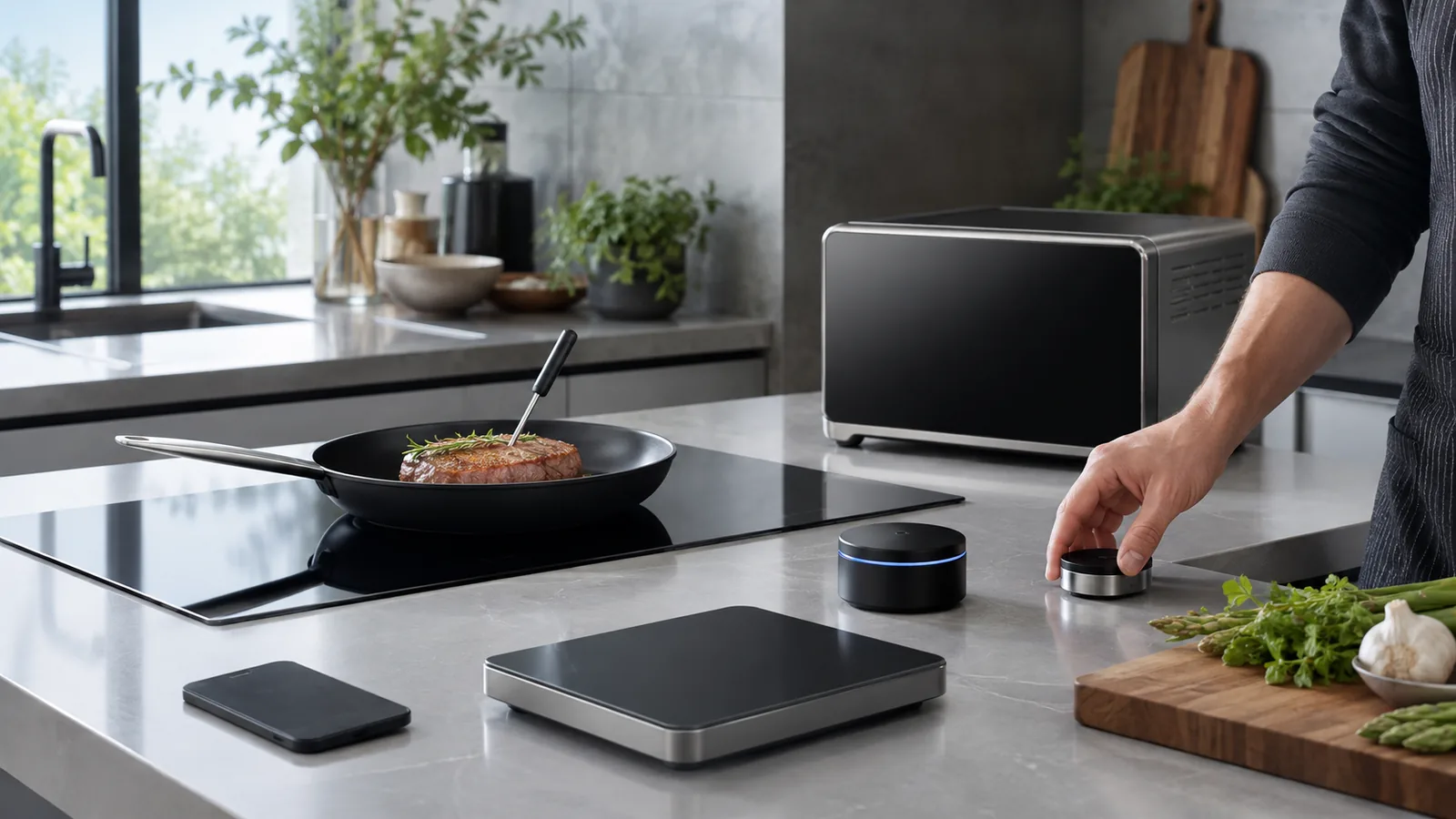
Smart kitchen gadgets go beyond convenience; they incorporate internet connectivity, sensors and software algorithms to manage cooking and optimize energy use. The smart‑kitchen trends guide from Gourmet Kitchenworks notes that modern devices use sensors and real‑time data to cook meals more accurately and consistentlygourmetkitchenworks.com. They connect to home networks, learn your habits and adapt to your preferences; this integration allows you to preheat ovens while commuting, receive alerts when groceries run low and track energy consumption. Many gadgets also provide eco‑modes and power‑saving settings that cut utility bills and support sustainability. In short, a smart gadget uses connectivity and intelligence to make cooking easier, safer and more efficient.
Benefits of Smart Kitchen Gadgets
Energy efficiency and sustainability
Energy savings are at the core of smart kitchen technology. Global appliance efficiency policies have halved the energy consumption of major appliances such as refrigerators and ovens while purchase prices have dropped 2–3 % per yeariea.org. Smart refrigerators extend these gains; Just Energy notes that they can save roughly 20–30 % more energy than standard ENERGY STAR models because sensors and optimized cooling cycles reduce wasted powerjustenergy.com. Smart dishwashers equipped with soil sensors and efficient jets cut water use and energy consumption, saving an estimated 8 400 gallons of water and about $220 per year compared with hand washingenergystar.gov. Smart ovens employ rapid preheating, optimized insulation and sensors to ensure ovens operate only when necessary, reducing energy use and shortening cooking timesunitedfastfood.com. Even small gadgets like digital thermometers and scales reduce energy waste by preventing over‑cooking and eliminating the need to re‑make failed recipes.
Precision and consistency
Recipes often fail because of guesswork. Smart gadgets remove that uncertainty. Digital instant‑read thermometers provide fast, accurate temperature readings; Serious Eats testers consider them indispensable for everything from searing steak to checking frying oil and bread doughfreditech.com. Smart kitchen scales offer precision down to a single gram and connect to smartphone apps that supply nutritional information for thousands of ingredients, making portion control and calorie tracking effortlesstheexaminernews.com. These tools ensure consistent results, improve food safety and support healthy eating.
Convenience and integration
Smart appliances simplify cooking and integrate seamlessly with other devices. You can adjust a dishwasher’s cycle from your phone, receive a notification when your coffee is ready, or ask a voice assistant to preheat the oven. Gourmet Kitchenworks highlights that modern appliances provide hands‑free, connected cooking; they learn your habits, suggest settings and promote energy efficiency. Smart dishwashers offer remote diagnostics and maintenance alerts, while smart ovens share usage data that help optimize operations. Integration among gadgets creates a cohesive kitchen ecosystem that reduces stress and saves time.
Smart Refrigerators: Inventory Tracking and Energy Savings
Smart refrigerators combine cooling technology with connectivity and artificial intelligence. A smart fridge monitors food supplies, analyzes consumption patterns and can even suggest recipes based on ingredients you already have. Built‑in cameras let you check contents from your phone so you avoid buying duplicates, reducing food waste. Some models include autofill water pitchers or built‑in voice assistants for added convenience.
From an energy perspective, smart fridges outperform standard models. According to Just Energy’s guide, smart refrigerators save roughly 20–30 % more energy than standard ENERGY STAR units. Sensors and optimized cooling cycles reduce wasted power, and advanced models can schedule defrost cycles during off‑peak hours. The article also notes that smart‑home connectivity adds only a few watts of standby power; however, energy monitoring tools can help you save much more than the standby consumption. Maintenance features—such as alerts for open doors or dirty coils—keep efficiency high and prolong the appliance’s lifespan.
Step‑by‑step: Using a smart refrigerator
- Connect to Wi‑Fi. Download the manufacturer’s app and connect your fridge to your home network. This enables remote monitoring, energy tracking and software updates.
- Set temperature zones. Use the app or on‑board screen to customize the fridge and freezer temperatures; recommended ranges are 37 °F (3 °C) for the fridge and 0 °F (–18 °C) for the freezer.
- Activate inventory tracking. Cameras and sensors can identify items. Manually input or scan groceries via the app to enable expiry reminders and recipe suggestions.
- Monitor energy usage. Review energy reports in the app. If standby consumption increases, check for open doors or blocked vents. Adjust eco‑modes to reduce electricity use.
- Perform regular maintenance. Keep coils clean and verify door seals. Use app alerts to detect high usage or open doors.
Real‑world example
Imagine you’re at the supermarket and aren’t sure if you have eggs at home. Open the smart fridge app on your phone, view the interior camera and confirm you still have a dozen. Later, the app notifies you that your milk expires tomorrow and suggests a recipe for a frittata using leftover vegetables. The fridge’s energy monitor shows you saved 25 % in electricity over the month by activating the eco‑mode and responding quickly to door‑open alerts.
Smart Ovens: Precise Cooking and Reduced Energy Use
Smart ovens use programmable cooking cycles, advanced insulation and IoT connectivity to deliver restaurant‑quality results while conserving energy. United Fast Food’s guide explains that these ovens allow users to save and recall precise settings, ensuring consistent results across dishes. IoT integration enables remote monitoring and control via smartphones, while data analytics help operators optimize usage and schedule maintenance.
Energy efficiency is a defining feature. Smart ovens employ rapid preheating and optimized insulation, which shorten cooking times and reduce electricity consumption. Advanced sensors ensure the oven operates only when necessary and at optimal efficiency levels. These technologies translate into lower utility bills and faster meal preparation.
Step‑by‑step: Cooking with a smart oven
- Pre‑program recipes. Use the oven’s touchscreen or mobile app to select pre‑installed recipes or create your own. Save cooking settings—such as temperature, rack position and cook time—for future use.
- Remote preheat. On your commute home, open the app and set the oven to preheat. Rapid‑heat technology means it will reach temperature quickly.
- Monitor via app. During cooking, sensors provide real‑time temperature data and progress updates. Adjust time or temperature remotely as needed.
- Use energy‑saving modes. Activate eco settings that reduce energy consumption by lowering preheat temperatures or switching to convection mode for faster cooking.
- Schedule maintenance. The oven can send alerts when it needs cleaning or if sensors detect inefficiencies. Follow these prompts to maintain optimal performance.
Real‑world example
While driving back from work, you tap your phone to preheat the oven to 375 °F (190 °C) for a roast chicken. When you arrive, the oven is ready. You place the chicken inside, select the preset “Roast Chicken” program and receive a notification halfway through when the oven automatically switches from high heat to a lower temperature to ensure a moist result. The oven’s insulation and sensor‑driven heating mean dinner is ready 20 minutes faster and uses less electricity than a conventional model.
Smart Dishwashers: Sensors for Water and Energy Savings
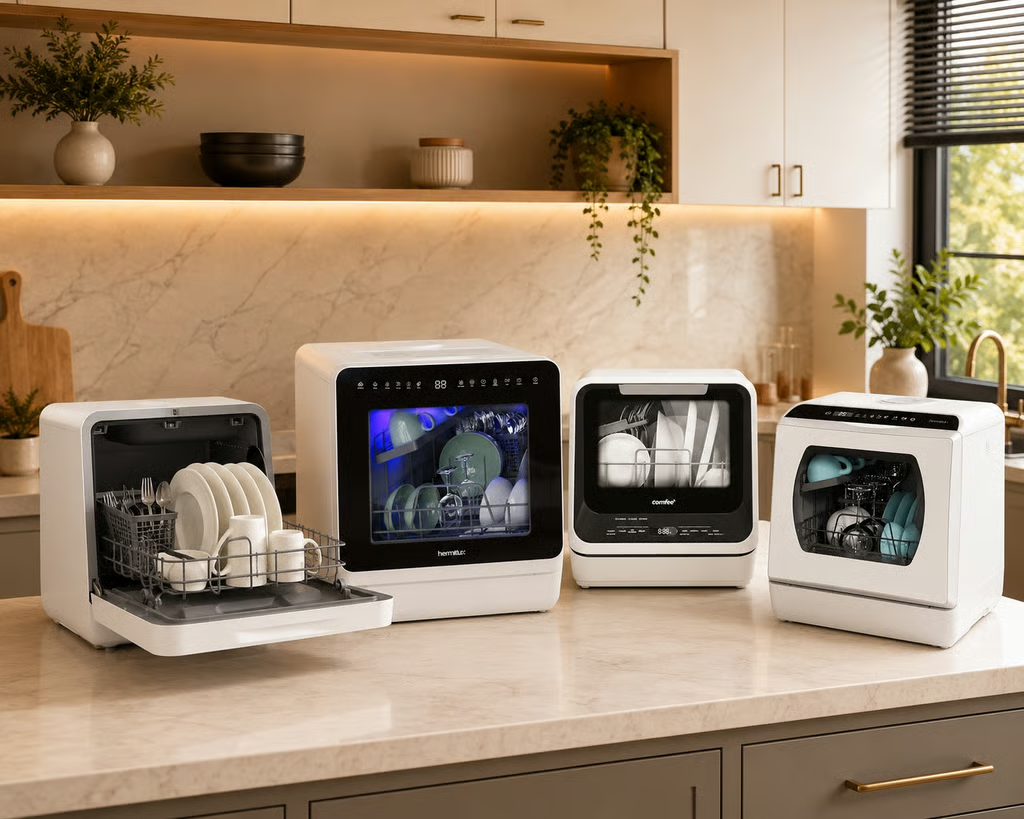
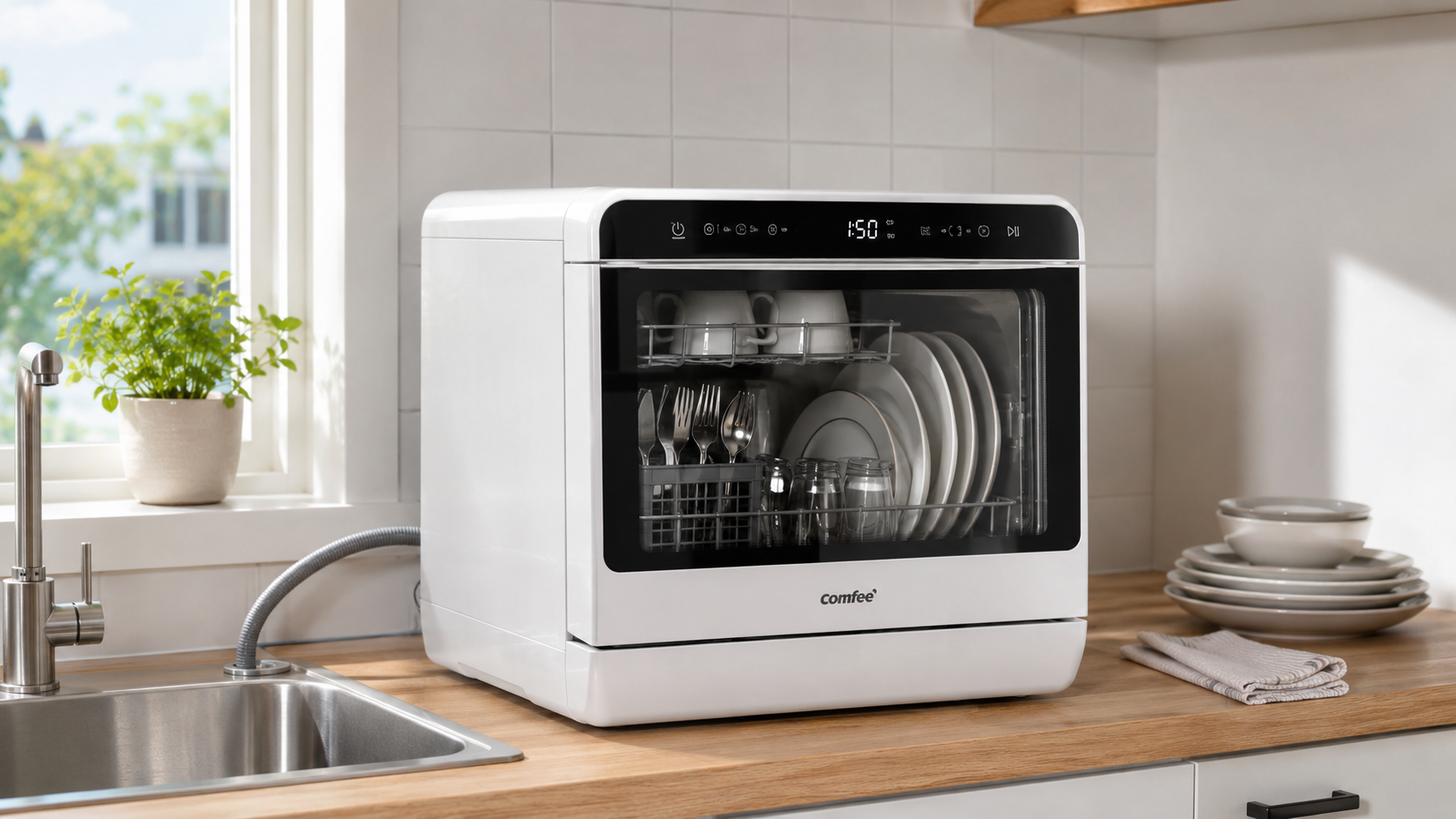
Dishwashers have become smarter thanks to IoT connectivity and sensor technology. The Intuz guide notes that smart dishwashers offer Wi‑Fi connectivity for remote control and voice assistant supportintuz.com. They incorporate soil sensors that gauge how dirty dishes are and adjust the wash cycle accordingly, using the least amount of water and energy for effective cleaning. Energy monitoring features let users track electricity usage and modify habits. Additional sensors detect load size and optimize water and detergent accordingly.
ENERGY STAR certified dishwashers demonstrate dramatic resource savings. The U.S. Environmental Protection Agency reports that an ENERGY STAR dishwasher costs about $50 per year to run and can save 5 800 gallons of water over its lifetime. Washing dishes in such a dishwasher rather than by hand can cut utility bills by about $220 annually and save over 8 400 gallons of water each year. Smart dishwashers incorporate these efficiency improvements while offering added convenience.
Step‑by‑step: Running a smart dishwasher
- Load properly. Scrape but don’t rinse dishes; modern detergents and dishwashers are designed to handle food debris. Place large items around the edges and ensure nothing blocks the spray arms.
- Select the right cycle. Use automatic or soil‑sensor cycles that adjust time and water based on dirt levels. For lightly soiled dishes, choose a quick or eco cycle to save energy.
- Monitor usage. Open the app to check energy and water consumption. Many models provide insights and suggestions to reduce use.
- Schedule during off‑peak hours. If your utility offers time‑of‑use rates, program the dishwasher to run when electricity is cheaper.
- Maintain the machine. Regularly clean filters and spray arms; smart dishwashers can send alerts when maintenance is needed.
Real‑world example
After dinner, you load the dishwasher and select the auto‑sense cycle. The soil sensor determines that plates are moderately dirty and reduces the cycle time. Through the app, you see that the wash used 2.4 gallons of water and 0.5 kWh of electricity—significantly less than a manual wash. The app also suggests running full loads whenever possible to maximize efficiency.
Smart Coffee Makers and Beverage Gadgets
Caffeine lovers rejoice—smart brewing devices bring café‑quality drinks home with minimal effort. FrediTech’s kitchen gadgets guide explains that the Breville Bambino Plus compact espresso machine uses a ThermoJet heating system to deliver hot water and steam in just a few secondsfreditech.com. Serious Eats reviewers recommend it for beginners and experts because it balances performance and price. The step‑by‑step process includes warming up the machine, grinding and dosing coffee, pulling a 25–30 second shot, steaming milk and assembling the drink. This quick heat‑up time saves energy because the machine is only on when needed.
One‑button drip coffee makers also benefit from smart design. The Ratio Six coffee maker uses a well‑designed showerhead and thermal carafe to brew multiple cups evenly with a single button. The machine pre‑infuses coffee grounds and maintains the correct temperature without burning. Step‑by‑step instructions—insert a filter, add ground coffee, fill the reservoir, press start and serve—make brewing fool‑proof. Because it keeps coffee hot in a thermal carafe, there’s no need for an energy‑hungry hot plate.
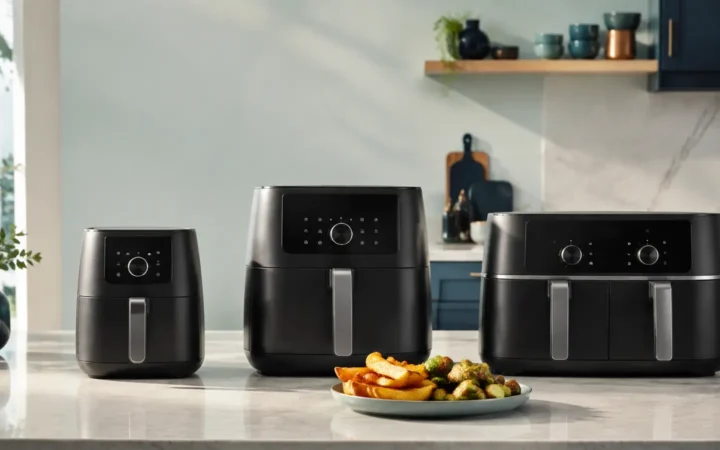
Air fryers, while not beverages, deserve mention for their rapid cooking and health benefits. University of Tennessee extension educators note that air‑fried French fries have significantly less oil than deep‑fried versions. Air fryers circulate hot air, cook food quickly and often double as toaster ovens, reducing the need for multiple appliances. FrediTech provides a detailed step‑by‑step for cooking fries: preheat, toss potatoes with 1–2 teaspoons of oil, arrange in a single layer, cook for 15–20 minutes and shake halfway. The small amount of oil and shorter cook time translate to lower energy usage and healthier meals.
Digital Scales and Thermometers: Precision Meets Connectivity
Digital kitchen scales
Smart kitchen scales transform precise measurement into a connected experience. The Examiner News explains that smart scales measure ingredients accurately and connect to phone apps via Bluetooth. Advanced models provide nutritional information for thousands of foods, making it easy to track calories, proteins and other nutrients. Key features include tare functions that reset weight between ingredients, measurement accuracy down to a gram and the ability to convert between units.
Smart scales also link to recipe apps and fitness platforms. Users can follow step‑by‑step instructions on their phone; the scale alerts them when the correct weight is reached and automatically adjusts the recipe for multiple servings. This integration supports portion control, reduces food waste and promotes healthier eating.
Step‑by‑step: Using a smart kitchen scale
- Download the companion app. Connect the scale to your smartphone via Bluetooth and calibrate if necessary.
- Select a recipe or nutrition mode. Choose a recipe from the app or set the scale to nutrition tracking mode. Many apps access USDA‑verified food databases.
- Weigh ingredients. Place a bowl on the scale, press tare to zero it, and add the first ingredient until the app indicates the correct weight. Repeat for each ingredient.
- Track nutrition. The app displays calories, carbs, proteins and fats for each ingredient and the entire recipe, helping you meet dietary goals.
- Save and sync. Store recipes and nutrition data in the app or sync with fitness platforms like MyFitnessPal for long‑term tracking.
Digital instant‑read thermometers
A reliable thermometer is one of the simplest ways to improve cooking. Serious Eats testers rank a fast, accurate instant‑read thermometer among the most useful kitchen gadgets; it ensures proper doneness for meats, bread and frying oil. FrediTech’s guide outlines how to use one: choose a model with a backlit, auto‑rotating display, calibrate if needed, insert the probe into the thickest part of the food without touching bone, and monitor temperature throughout cooking. Wiping the probe with hot, soapy water after each use prevents cross‑contamination.
recommends minimum internal temperatures for safety: 145 °F (63 °C) for beef, pork and fish; 160 °F (71 °C) for ground meats; and 165 °F (74 °C) for poultry. Using a digital thermometer ensures foods reach these temperatures without overcooking, saving energy and preserving texture.
Building a Smart Kitchen: Choosing and Integrating Gadgets
Assess your cooking routine
Before investing in smart gadgets, examine how you cook. Gourmet Kitchenworks suggests considering your daily routine and choosing devices that genuinely make life easier, such as a smart oven if you bake often or a smart coffee maker for busy mornings. If you rarely bake bread, a high‑end precision scale may be unnecessary.
Ensure compatibility and connectivity
Choose gadgets that integrate with your smart home ecosystem—whether Amazon Alexa, Google Assistant or Apple HomeKit—to ensure seamless control. Reliable Wi‑Fi or Bluetooth connectivity is essential so you can monitor appliances remotely. Consider products that support energy monitoring; this data can help you adjust behavior and reduce consumption.
Prioritize energy‑saving features
Look for appliances with eco‑modes, soil sensors, load detection and other efficiency innovations. Gourmet Kitchenworks notes that energy‑saving features and personalized settings create long‑term value. An ENERGY STAR dishwasher with soil sensors or a smart oven with rapid preheating may cost more initially but will pay dividends in reduced utility bills.
Create a cohesive ecosystem
Finally, select gadgets that complement one another. Building a coherent smart kitchen means choosing devices that can communicate and share data, creating a fully automated cooking environment. For example, a smart scale can send recipe data to your smart oven; your refrigerator can suggest meals based on inventory and send cooking instructions to the oven.
Future Trends and Innovations
Smart kitchen technology continues to evolve. Researchers expect more appliances to include AI algorithms that learn from user behavior and adjust operations in real time, further enhancing energy efficiency and personalization. Appliances may integrate with renewable energy systems and schedule energy‑intensive tasks during times of low grid demand. The International Energy Agency emphasises that connected devices present opportunities for flexibility, lower costs and reduced emissions. Governments worldwide are working to double the efficiency of key appliances and expand the reach of efficiency standards. As these policies and technologies mature, smart kitchens will become more accessible and even more sustainable.
Conclusion
Smart kitchen gadgets are more than trendy toys; they represent a shift toward precision, efficiency and convenience in home cooking. From refrigerators that cut energy consumption and reduce food waste to ovens that cook faster while using less power and dishwashers that conserve thousands of gallons of water, these devices offer tangible benefits backed by credible data. Tools like digital scales and instant‑read thermometers bring professional‑level accuracy to home cooks, while connected coffee makers, air fryers and sous‑vide machines elevate everyday meals. By choosing gadgets that fit your routine, prioritize energy‑saving features and integrate seamlessly with your smart home ecosystem, you can build a kitchen that saves time, cuts utility bills and delights your taste buds. For more gadget insights, see FrediTech’s guide to the best kitchen gadgets and their article on one‑pot meal cookers, which illustrate how innovative appliances simplify cooking and save energyfreditech.com. The future of cooking is smart—embrace it today.
Frequently Asked Questions (FAQ)
Do smart kitchen gadgets really save energy?
Yes. Smart refrigerators save about 20–30 % more energy than standard ENERGY STAR models, smart ovens reduce consumption through rapid preheating and insulation, and smart dishwashers save more than 8 000 gallons of water and cut utility bills by around $220 per year.
Are smart appliances worth the cost?
What features should I look for in a smart gadget?
Can smart gadgets improve food safety?
Do I need a smart home hub to use smart kitchen gadgets?
Author Credentials – Wiredu Fred
Wiredu Fred is a technology writer and founder of FrediTech & Modern Collective, a platform that reviews gadgets, provides energy‑saving tips and helps families make informed buying decisions. Fred has spent over a decade researching consumer electronics, smart home devices and kitchen technology. His work combines engineering insights with practical advice, making complex topics accessible to readers.
Bottom Line
Smart-home technology is valuable when it reduces friction, saves energy or improves security without creating a fragile web of apps and cloud dependencies. Build around compatibility and reliability first.