

Introduction
The 2026 Mercedes-Benz EQS SUV represents the pinnacle of Mercedes’ electric vehicle lineup – a full-size luxury SUV that blends S-Class level opulence with cutting-edge EV technology. As the SUV counterpart to the EQS sedan, the EQS SUV offers seating for up to seven and a spacious, ultra-quiet cabin laden with high-end materials and futuristic tech. With its all-electric powertrain and dual-motor all-wheel drive, this flagship EV delivers whisper-quiet acceleration and a generous driving range, all while cocooning occupants in first-class comfortcaranddriver.com. In this comprehensive review, we’ll dive into the 2026 EQS SUV’s design, performance, range, features, pricing, and how it stacks up against competitors. By the end, you’ll see why Mercedes’ top-of-the-line electric SUV is making waves in the luxury EV market – and whether it lives up to its lofty expectations under real-world conditions.
In a world rapidly embracing electrification – from mainstream crossovers like the 2026 Chevrolet Blazer EVfreditech.com to innovative hybrid SUVs from China such as BYD’s Song L DM-i freditech.com– the Mercedes EQS SUV aims to stand out by delivering unmatched luxury and technology in the electric SUV space.
Overview of the 2026 Mercedes EQS SUV
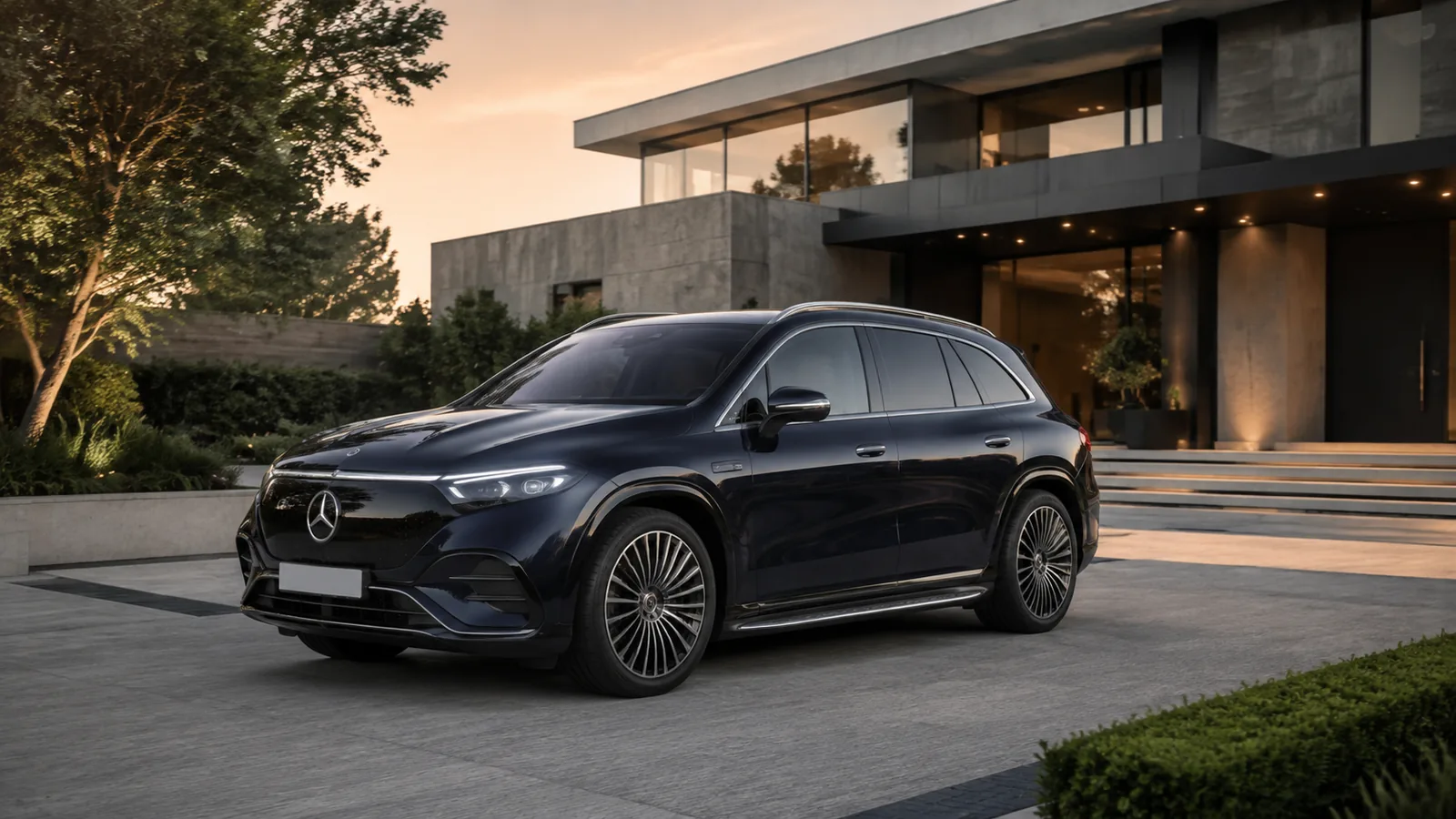
The EQS SUV is essentially an electric alternative to Mercedes’ GLS-Class SUVtopgear.com, built on the company’s dedicated EV platform (EVA2) shared with the EQS sedan. It measures about 201.8 inches in length with a long 126.4-inch wheelbase, giving it a commanding presence on the road. Despite weighing in at over 6,300 pounds (around 2.8 tons), the EQS SUV manages a sleek aerodynamic profile with a drag coefficient of just ~0.26 – impressively low for a large SUV. The design is smooth and rounded, with minimal panel gaps and flush door handles to optimize airflow. A black-panel front grille (embellished with tiny three-pointed stars) houses LED lighting elements, creating a distinctive front light signature. The roof is often painted black to visually lower the silhouette, and an optional hood-mounted standing Mercedes star emblem is available for a classic touchraycatenaedison.com.
Inside, the EQS SUV offers plush seating for five adults, with an optional third row to expand capacity to sevenmbusa.com. Every passenger is surrounded by premium materials – supple leather, open-pore wood, aluminum trims, and extensive ambient lighting that wraps around the cabinmotortrend.com. Mercedes’ massive 56-inch “MBUX Hyperscreen” spans the dashboard in top trims, integrating three digital displays under a single curved glass panel for the driver gauge cluster, central infotainment, and a passenger screenraycatenaedison.com. This all-touch interface looks futuristic and wows at first glance, though it can be overwhelming until you get used to it – some reviewers note that the Hyperscreen “requires too much poking and prodding for everyday functions” and attracts fingerprint smudges easilycaranddriver.com. Still, it’s a showcase of the cutting-edge tech within the EQS SUV.
Under the skin, every EQS SUV features dual electric motors (one on each axle) for fully variable 4MATIC all-wheel drive. For 2026, Mercedes simplified the lineup to two main variants: the EQS 400 4MATIC and the EQS 550 4MATIC (replacing last year’s EQS 450 and 580, respectively). Both use the same 108 kWh (usable ~118 kWh) battery pack and share many features, but differ in power output:
- EQS 400 4MATIC: Dual-motor AWD, 355 hp and 590 lb-ft of torque. 0–60 mph in ~5.2 seconds (Mercedes claims 5.9s), with an EPA range of ~312 miles on a full charge.
- EQS 550 4MATIC: Dual-motor AWD, 536 hp and 633 lb-ft (est.) of torque. 0–60 mph in ~4.0 seconds, noticeably quicker off the line. Despite the power boost, it can achieve up to 317 miles of range in ideal conditions (likely due to efficient tuning and possibly smaller wheels).
Both models are electronically limited to about 130 mph top speed, which is plenty for an SUVkbb.com. All-wheel drive is standard, and thanks to the instant torque of its electric motors, even the “slower” EQS 400 feels lively – 5.2 seconds 0–60 mph is fairly quick for a 3-ton vehicle. That said, the EQS SUV is not trying to be a sporty Tesla Model X or a track monster; its focus is on smooth, effortless acceleration and supreme comfort rather than neck-snapping performancemotortrend.com.
Notably, 2026 brought a significant price reduction for the EQS SUV. The new EQS 400 starts around $91,200 MSRP, which is over $15,000 cheaper than last year’s base model (the 2025 EQS 450)caranddriver.com. Mercedes essentially kept the same performance and features but lowered the entry price – a welcome “anti-inflation” move in the EV luxury market. The higher-output EQS 550 4MATIC starts around $113k MSRP. Depending on options, an EQS SUV can still easily crest six figures, but buyers now get more for their money than before. (All North American EQS SUVs are built in the U.S. at Mercedes’ Tuscaloosa, Alabama plant, which may help with pricing and potentially federal EV incentivesraycatenaedison.com.)
Design and Exterior Features

Visually, the EQS SUV embodies Mercedes’ new-age “sensual purity” design language, tailored to EV aerodynamics. Smooth, flowing lines and a cab-forward profile give it a jellybean-like shape, albeit one with a traditional SUV stance. The hood is short and flows into a raked windshield since there’s no bulky engine up front. In lieu of a grille, the nose features a “Black Panel” surface with a subtle star pattern and an LED light bar connecting the LED headlampstopgear.com. The effect is modern and unmistakably Mercedes-EQ. Along the sides, flush-mounted door handles deploy when unlocked, and a high window line with a contrasting black roof helps disguise the vehicle’s considerable height (about 5.6 feet tall). Mercedes offers flashy wheel options up to 22 inches – and you’ll want large wheels, as Top Gear quipped, “anything less than 22-inch rims might look lost” on the EQS SUV’s broad body.
From the rear, a full-width LED light band mirrors the front and emphasizes the SUV’s width. Panel gaps and seams have been minimized for a cleaner look and better aerodynamics. The EQS SUV achieves a drag coefficient around 0.26 in its slipperiest configurationtopgear.com, impressive for a big SUV (for reference, that’s similar to some sports sedans). This helps reduce wind noise and slightly boosts highway efficiency.
One unique exterior option for 2026 is the return of the hood-mounted Mercedes star ornament – buyers can opt to have the classic three-pointed star standing on the hood, a nod to traditional luxury (it was uncommon on prior EQ models). There’s also an AMG Line Exterior package available, which adds sportier AMG-style bumpers, gloss black trim, and special wheels for a more aggressive look. Additionally, illuminated running boards and even an illuminated front Star emblem are offered, catering to those who love a little extra flair at nightmbusa.com/en.
Overall, the EQS SUV’s design prioritizes refinement and efficiency over sheer ruggedness. It doesn’t have the blunt, upright look of a traditional SUV like a G-Wagen or even a Range Rover. Some critics have noted that this “aero jellybean” styling, while sleek, lacks the commanding character of a Range Rover – it’s almost too smooth and futuristic, which can come off as bland to some eyes. As Top Gear summarized, “The EQS SUV does it all but lacks the character and supreme authority that makes the Range Rover such a lodestar”. Still, beauty is in the eye of the beholder; the EQS SUV looks every bit a modern Mercedes, and its road presence is undeniable, especially when it looms into view and blocks the sunlight like an alien mothership (yes, it’s that big!)topgear.com.
Interior Luxury and Comfort
Step inside the EQS SUV and you’re greeted by a truly sumptuous interior that rivals the best luxury flagships on the market. Mercedes has outfitted the cabin with top-quality materials and an obsessive attention to detail. Soft Nappa leather envelops the seats (which can be had in striking two-tone color schemes, e.g. Black/Biscaya Blue), and even the dash and door panels are wrapped in leather or high-grade synthetics with contrast stitching. Real wood trim options – such as natural grain walnut with a “Yacht design” motif – bring warmth and classic elegance, or you can opt for futuristic finishes like carbon fiber or aluminum if you prefer a sportier vibembusa.com. Beautiful Burmester 3D metal speaker grilles are artfully integrated into the doors, and at night the active ambient lighting system comes alive with a full RGB color spectrum, tracing across the dash and doors in configurable patterns.
The front seats are not only heated and ventilated but also offer massage functions, including Mercedes’ “multicontour” massage programs to soothe you on long drivescaranddriver.com. Even the rear seats are heated as standard for 2026, and rear passengers now get their own luxuries like wireless phone charging in the rear armrest and plush comfort headrests, which were made standard this year. In fact, one of the improvements for 2026 was enhancing rear-seat accommodations – great for chauffeured owners or families. While the standard configuration is two rows (5 seats) with ample legroom, you can option a third-row seat to make it a 7-seater. Be aware, however, that the third row is best suited for children or shorter adults; as reviewers have noted, it’s a bit tight back there and reduces cargo space when in usemotortrend.com. If you don’t need 7 seats regularly, you might skip that option to maximize comfort for five and storage capacity (which ranges from about 23 cubic feet behind the second row up to ~74 cubic ft with seats folded – plenty for luggage and gear).
Tech is omnipresent in the cabin. The centerpiece is the MBUX Hyperscreen (standard on 2026 models per Mercedes), which is actually three screens: a 12.3-inch digital instrument cluster, a huge 17.7-inch OLED central touchscreen, and a 12.3-inch touchscreen for the front passenger – all under one continuous glass surface spanning the dashboardraycatenaedison.com. This wow-factor display offers vibrant graphics and haptic feedback, and it’s powered by a powerful onboard computer with artificial intelligence. Mercedes claims the system can use an “aero-layer” AI to proactively bring up relevant functions so you don’t have to dig through menus. There’s also MBUX Augmented Reality navigation, which overlays directions onto a live front camera feed – very handy in real-world driving. While the Hyperscreen is dazzling, it does have a learning curve. Testers found that some common tasks (like adjusting climate or audio) require using the touch interface, since physical buttons are sparse – a design choice that trades simplicity for wow-factor. For those who prefer tactile controls, this all-digital approach might be a downside (the EQS SUV “lacks physical buttons,” as Car and Driver notedcaranddriver.com). On the plus side, you do get features like voice control (“Hey Mercedes” assistant) and head-up display to ease some interactions.
Other tech and convenience highlights include: wireless Apple CarPlay and Android Auto (so you can project your phone to the screen cord-free), multiple USB-C fast charging ports, a wireless charging pad up front (and now one in the rear armrest too), and an available panoramic glass sunroof to make the airy cabin feel even more open. The Burmester 3D Surround Sound system with Dolby Atmos is standard for 2026, delivering concert-hall audio qualityraycatenaedison.com. Mercedes even includes some fun soundscape options – the EQS can play synthesized sound profiles (like “Silver Waves” or new ones for 2026 called “Fractal Fusion” and “Granular Fuzz”) to give the electric driving experience a unique soundtrack. Car and Driver testers found some of these sounds a bit gimmicky or annoying, but thankfully you can turn them off or stick to the more pleasing profilescaranddriver.com.
Crucially, the interior is extremely quiet and refined. With no engine noise and extensive insulation, the EQS SUV is whisper-quiet at speed – one of the quietest SUVs on the road. In fact, reviewers noted it gives even the ultra-silent BMW iX a run for its money in terms of low noise levelsconsumerreports.org (Consumer Reports observed almost no road or wind noise). The air suspension and adaptive dampers soak up bumps, and the seats with their pillows and massage make long drives fatigue-free. We will discuss ride quality more later, but overall, the cabin experience truly lives up to the S-Class standard. Every bit of technology and luxury in the EQS SUV is aimed at coddling occupants and making drives effortless, whether it’s a quick run to the store or an interstate road trip. Few vehicles on the market can match the combination of space, comfort, and tech that the EQS SUV offers in its interiorcaranddriver.com.
Performance and Driving Experience
Despite its hefty weight and comfort-oriented mission, the EQS SUV delivers solid performance thanks to its dual electric motors and advanced chassis systems. Here’s how it behaves on the road:
Acceleration and Power
In EQS 400 guise, the SUV produces 355 horsepower and 590 lb-ft of torque combined, which launches it from 0 to 60 mph in ~5.2 secondscaranddriver.com. That’s quick, if not ludicrous – plenty for brisk passing and merging. The EQS 550 ups the ante to 536 hp and drops 0–60 to around 4.0 seconds, which is genuinely fast for a family SUVmotortrend.com. Both models feel smooth and seamless in acceleration; power is delivered in one continuous surge (no gear shifts) and the torque is instant, typical of EVs. Reviewers described the EQS’s acceleration as “exceptionally smooth” and effortless. There’s no dramatic shove, just a quiet, relentless surge forward, which suits the character of this luxury cruiser. Keep in mind, competitors like the Lucid Gravity or Cadillac’s upcoming electric SUV have much higher horsepower (560+ hp) and can sprint 0–60 in the mid-3 second range. So if you measure purely by straight-line speed, the EQS SUV isn’t the quickest in the segment. But Mercedes seems content with “adequate” acceleration – it’s still faster than most gas SUVs, and more importantly it’s predictable and refined in how it delivers power.
Ride and Handling
The EQS SUV rides on a sophisticated AIRMATIC air suspension with adaptive damping as standardmbusa.com. You can toggle drive modes via DYNAMIC SELECT, including Comfort, Sport, Offroad, and Individual. In Comfort mode, the ride is pillowy over small bumps and road imperfections; the SUV “glides” over rough pavement, living up to its EQS (electric S-class) namemotortrend.com. However, Car and Driver found that it can feel too floaty at times – the body may waft and oscillate slightly over dips, which is not what you’d expect from a $100k Mercedes. They noted that in Comfort, it sometimes “tends to float too much” and then surprisingly thuds over big potholes, like the damping wasn’t perfectly calibrated. Switching to Sport mode firms up the suspension, but then the ride can become a bit busy or harsh on cracked roads. Of the two, testers preferred leaving it in Comfort where the occasional floatiness was more tolerable than the stiffness of Sportcaranddriver.com. The consensus: the ride quality is good but not class-leading – a bit of a letdown given Mercedes’ reputation. It’s very quiet and isolated, but Mercedes hasn’t quite achieved the “magic carpet” ride in this EV SUV that one might expect. That said, most owners will find it plush enough for daily driving, and Mercedes may continue refining the suspension software.
On curvy roads, the EQS SUV’s mass is evident. It’s not a vehicle you toss into tight corners eagerly – it prefers gentler, sweeping bends taken at a smooth pace. The steering is light but accurate, and crucially, the EQS SUV comes with standard rear-axle steering to aid maneuverability. In 2026, the rear steering is default limited to 4.5° of angle (which gives about a 39-foot turning radius) but you can option the 10° rear-steer upgrade for tighter ~36-foot turns. With even the 4.5° system, this large SUV feels surprisingly nimble in parking lots, making U-turns or navigating city streets easier. At speed, the rear-steer also adds stability in lane changes. Don’t expect sports-car feedback though – as MotorTrend noted, “you never feel like you’re wafting or loosely driving” (thanks to the tech keeping it stable), but nor does Sport mode “amp things up all that much” dynamically. The EQS SUV remains a comfort-biased cruiser; enthusiasts seeking more agile handling might actually prefer rivals like the BMW iX or Rivian R1S which have a bit more driver engagement. Mercedes even acknowledges this in their own review: “enthusiasts will likely be happier in the BMW iX or Rivian R1S” for driving fun.
Braking and One-Pedal Driving
Early EQS SUVs (2023 models) were criticized for a weird brake pedal feel – the brake pedal would physically move/retract during regenerative braking, so when you went to press it, it wasn’t where you expected, which was disconcertingcaranddriver.com. For 2026, Mercedes fixed this issue. The brake pedal now stays put and the transition from regen to friction braking is much smoother. Car and Driver praised the “vastly improved brake feel”, calling it firm and consistent now. In their testing, the EQS 400 braked from 70–0 mph in 161 feet, and MotorTrend recorded 60–0 mph in just 114 feet – shorter than some lighter competitorsmotortrend.com. Those are good stopping distances for such a heavy vehicle, indicating the brakes (17” front discs) are up to the task. Pedal travel is a bit longer than a conventional car and initially soft (as MotorTrend noted, it “feels somewhat long and soft in travel” until you get used to it), but overall braking performance is securemotortrend.com.
The EQS SUV offers multiple regen modes, adjustable via steering wheel paddles. You can have strong regenerative braking that slows the car when you lift off the accelerator (simulating a “one-pedal driving” feel), or lighter regen that coasts more. However, even at its strongest setting, the EQS will not quite come to a full stop by itself – it will slow down but you’ll still need to use the brake to hold completely, unless you engage Auto Hold. Mercedes seems to prefer a more traditional coasting feel. As a result, if you love true one-pedal driving (as in a Tesla or some BMW/Rivian modes), you might find Mercedes’ approach lacking. The car will help slow itself and even has an ECO Assist feature that intelligently adjusts regen based on traffic (e.g., increasing regen if there’s a slower car ahead or a upcoming turn)mbusa.com, but it’s not as aggressive as some EVs. On the upside, when you do use the brake pedal, the blending of regen and mechanical brakes is now very natural.
Off-Road Capability
While most EQS SUVs will live on paved roads, Mercedes did equip it for light off-roading. There’s a dedicated Offroad mode that lifts the suspension a bit and adjusts the power delivery for low-speed traction. It even has Downhill Speed Regulation (DSR), essentially a hill descent control to ease you down steep slopes off-road. With 4MATIC AWD and the instant torque of electric motors, the EQS SUV can confidently handle gravel, snow, and mild trails. Ground clearance can increase thanks to air suspension, though with its road-focused tires and expensive trim, it’s not intended for hardcore rock-crawling. Interestingly, Top Gear found the EQS SUV has “unexpected prowess off-road” and can tackle more than you’d thinktopgear.com. Still, likely only a small fraction of owners will venture off the tarmac – but if you do, rest assured this luxury EV can get you down a muddy driveway or snowy mountain road to the ski lodge.
Battery Range and Charging
One of the strongest aspects of the 2026 EQS SUV is its excellent range and charging capability for a vehicle of its size. Mercedes equipped all versions with a big lithium-ion battery ~118 kWh in usable capacity. This battery, coupled with Mercedes’ efficient motors and aerodynamic design, yields competitive range numbers:
- EPA-Estimated Range: ~312 miles for the EQS 400 4MATIC, and up to 317 miles for the EQS 550 4MATIC. These figures assume the standard 21-inch wheels; choosing larger 22-inch wheels or the optional 7-seat configuration may lower range slightly. Notably, the dual-motor EQS SUVs nearly match the range of the single-motor sedan variants from a couple years prior, thanks to steady efficiency improvements.
- Real-World Range: In independent tests, the EQS SUV has impressed. MotorTrend ran a 70-mph highway range test and got 333 miles on a charge from an EQS 400 – exceeding its EPA rating and beating rivals like the Lucid Gravity (264 miles in the same test) and Cadillac Vistiq (234 miles) by a huge marginmotortrend.com. This suggests the EQS is very efficient in steady cruising and that Mercedes’ range estimates are a bit conservative. Of course, range will vary with conditions and driving style, but owners can likely expect around 300+ miles in mixed driving without much worry, making it a confident road-tripper.
Efficiency is around 78–82 MPGe (combined) depending on model – decent for a big SUV. Around town, regenerative braking helps recoup energy, and the EQS SUV even has a heat pump for the climate system to reduce battery drain in cold weathermbusa.com.
When it’s time to recharge, the EQS SUV supports fast charging up to 200 kW on DC. Mercedes advertises a 10% to 80% charge in ~31 minutes under ideal DC fast charger conditions, which matches what we expect from a 200 kW peak on a ~118 kWh pack. In real testing, Car and Driver managed to go from 10% to 90% in 43 minutes on a high-power station, with a peak rate of ~207 kW and an average charge rate around 140 kW – that’s pretty solid charging performance. MotorTrend similarly logged 137 miles added in 15 minutes, 252 miles in 30 minutes during a fast-charge sessionmotortrend.com. In practical terms, a 20-minute stop could roughly add ~50% charge (150+ miles). These charging speeds are on par with rivals like the Lucid Gravity and not far behind a Tesla Model X on a Supercharger.
For home or Level 2 charging, the EQS SUV has a 9.6 kW onboard AC charger, which can fully recharge the battery from 0% in about ~12–14 hours on a 240V/40A chargerkbb.com. Given the large battery, overnight charging is expected – you’ll want a Level 2 charger at home to top it off each night if you’ve driven a lot during the day. Mercedes also provides intelligent charging modes to preserve battery health (like charging to a certain limit or scheduling when to charge to take advantage of off-peak rates).
Importantly, Mercedes has adopted the NACS (North American Charging Standard) for 2026 models, which means the EQS SUV can directly use Tesla Supercharger stations with an included adapter. This is a big deal for charging convenience, as it opens up Tesla’s extensive Supercharger network to EQS owners in the U.S. and Canada. Car and Driver tested the EQS’s new NACS adapter on Tesla Superchargers and found “it works a treat”, easily hitting the 200 kW charging rate without issues. The EQS still has its standard CCS port as well, so it’s compatible with both CCS fast chargers and Tesla stations. Essentially, you’ll have no shortage of charging options on road trips – a major improvement in the EV landscape by 2026. Mercedes also offers the MB.Charge integration with apps and a year of free fast charging on certain networks (this can vary by region/promotion).
Overall, the range and charging capabilities of the EQS SUV are excellent for its class. You get genuinely usable 300+ mile range and the ability to reclaim a lot of that range in a short charging stop. This long-legged ability complements the SUV’s road-trip friendly comfort. Compared to key competitors: Tesla’s Model X offers slightly less range (~348 miles for Long Range) but a more expansive charging network (though Mercedes now can use it too); BMW’s iX maxes around 300 miles EPA; Rivian’s R1S is ~321 miles in Max pack form but slower to charge; Lucid’s upcoming Gravity could exceed 350 miles but that remains to be seen. The EQS SUV holds its own, if not leading, in this department – Mercedes has done “yeoman’s work” where it matters to EV owners, as one reviewer put it, and the numbers bear it outmotortrend.com.
Advanced Technology and Safety Features
As expected from Mercedes, the EQS SUV is loaded with the latest driver-assistance and safety tech. Many of these features come standard, befitting its flagship status, with some optional upgrades available:
- ADAS (Advanced Driver Assistance Systems): The EQS SUV includes Adaptive Cruise Control with Stop&Go, Lane Keeping Assist, and Active Steering Assist, which together enable a semi-autonomous driving experience on highways (Level 2). It can automatically keep itself centered in the lane and maintain distance from the car ahead, even in stop-and-go traffic. There’s also Active Lane Change Assist (signal and the car will change lanes if safe) and Traffic Sign Recognition to adjust speed accordingly. Some markets may offer Drive Pilot Level 3 automation (where the car can fully drive itself under certain conditions up to ~40 mph), but as of 2026 in the U.S., that’s not widely available yet – mainly it’s Level 2.
- Active Brake Assist with Cross-Traffic: Mercedes’ collision mitigation system. It can automatically emergency brake if it detects an imminent collision with a vehicle, pedestrian, or cyclistraycatenaedison.com. For 2026, Mercedes says they’ve improved pedestrian and cyclist detection in this system, meaning it’s smarter and more effective at recognizing people in the EQS SUV’s path.
- Evasive Steering Assist: If a pedestrian or obstacle suddenly appears, this feature can add subtle steering torque to help the driver maneuver around it safely at speedraycatenaedison.com. This works in tandem with brake assist as an extra layer of collision avoidance.
- Blind Spot and Parking Safety: Active Blind Spot Assist will alert you to vehicles in your blind spot and can intervene to prevent a lane-change if it senses a potential crash. Parking is aided by Surround View 360° cameras and Parking Assist, which can automatically steer into parking spots. The EQS SUV also has rear cross-traffic alerts to warn of cars or people when backing out of a space. Given its large size, these aids are very valuable.
- Attention Assist: This system monitors driver fatigue and attention, and for 2026 it now gives more personalized alerts when it detects drowsiness or inattention (for example, suggesting a rest stop).
- Digital Light Headlamps: Optional in some markets, these sophisticated LED headlights can project guiding symbols on the road and have ultra-precise adaptive high beams that shape the beam to avoid glaring other drivers. At minimum, Adaptive Highbeam Assist is included, automatically dipping high beams for oncoming trafficraycatenaedison.com.
In use, these systems generally work seamlessly to enhance safety, though they can occasionally be overzealous. MotorTrend noted that the safety suite, while “extensive and cutting-edge,” sometimes gave false warnings or overly cautious interventions – for instance, a sudden pothole warning when the pothole didn’t materialize, or even an unexpected moment of the car braking hard when it misinterpreted a scenariomotortrend.com. This can startle the driver, but such instances are infrequent. It’s an industry-wide challenge as cars get smarter; Mercedes is certainly among the leaders in developing these technologies. Importantly, these features can often be adjusted or disabled if the owner finds them too intrusive.
- Infotainment and Connectivity: Beyond the Hyperscreen, the MBUX system in the EQS SUV offers over-the-air updates, so the car’s software (and even some features) can improve over time. The navigation system is EV-aware, meaning it will plan routes including charging stops and can precondition the battery for faster charging when a DC fast charger is set as the destination. There’s also a cool augmented reality heads-up display available that can project turn arrows onto the windshield as if on the road ahead. Biometric authentication (fingerprint scanner or voice recognition) allows different drivers to load their profiles, bringing up their saved seat position, climate settings, etc., as soon as they enter. All the expected luxury features are present: soft-close doors (newly highlighted for 2026raycatenaedison.com), a HEPA air filtration system for ultra-clean cabin air, and even an “Air Balance” fragrance system to scent the interior air if desired.
Mercedes also didn’t forget practical features: there are plenty of storage cubbies, a large center console, and even under-hood storage is replaced by a cabin air filter (the hood doesn’t open for owners; instead there’s a service panel and a separate filler for washer fluid). The rear cargo area is power-operated and has adjustable floor configurations. Towing capacity is rated around 3,500 lbs (suitable for a small trailer or boatmbusa.com) – not as high as some gas SUVs, but not bad for an EV of this class.
Overall, the EQS SUV’s technology profile is comprehensive and state-of-the-art. It delivers an executive class experience where the vehicle assists and pampers you at every turn. While a few tech quirks remain (e.g., getting used to the all-digital controls or occasional overly sensitive sensors), Mercedes has crafted a true smart vehicle that feels a generation ahead of many competitors in luxury and safety integration.
Pricing and Value Proposition
The 2026 Mercedes EQS SUV comes with a strong value story compared to previous years. The pricing is still firmly in luxury territory, but Mercedes has made it more attainable and better equipped:
- EQS 400 4MATIC SUV – Starting around $91,000 MSRP (approx. ¥91,200 including destination)caranddriver.com. This is the base model, but it’s hardly “stripped” – it already includes the dual-motor AWD powertrain, air suspension, rear-axle steering (4.5°), leather interior, Hyperscreen, Burmester audio, a full suite of driver aids, panoramic roof, etc. Most buyers will find the Exclusive Trim package desirable (adds heads-up display, front massaging seats, Air Balance fragrance, etc. for around $3,000), and perhaps the AMG Line package ($3,000) for styling. With a few packages, the EQS 400 might end up around $100k.
- EQS 550 4MATIC SUV – Starting around $113,000 MSRPkbb.com. This gives you the higher-output powertrain (536 hp) and typically includes some extra features standard. The EQS 550 also comes in an even more exclusive Mercedes-Maybach EQS SUV variant (often referred to as the EQS 680 in some markets) which is ultra-luxurious and priced much higher – beyond the scope of this review, but know that if you want a chauffeur-grade electric SUV with reclining rear seats, a Maybach version exists above the EQS 550.
Considering these prices, the EQS SUV is priced similar to or slightly above key rivals. It’s more expensive than a base Tesla Model X (~$80k after recent price cuts) but the EQS offers a more lavish interior and the build quality of a Mercedes. It’s in the ballpark of the BMW iX (which can hit $100k in top trim) and the Rivian R1S (around $90k for high-end models). Cadillac’s Escalade IQ (upcoming EV) and Lucid Gravity are expected to be in six-figures as well. Where Mercedes really delivered value is by lowering the 2026 model’s price – the entry EQS 400 is over $18,000 less than the 2025 EQS 450 it replacescaranddriver.com, while essentially offering the same performance and features. That makes the 2026 EQS SUV a much better deal than before. Car and Driver called it “a much better value… the same performance, idiosyncrasies and all, sound a lot better when $18,200 has been lopped off the price”. The verdict of their test: “The EQS400 isn’t less than the 450; it’s actually more, but it costs less.”.
Beyond purchase price, consider ownership costs. As an EV, the EQS SUV will save on fuel (electricity is generally cheaper per mile than gasoline; KBB estimates an owner might save around $600-$700 per year driving 12k miles vs a comparable gas SUV). Maintenance costs should also be lower than a complex gasoline car – no oil changes, less brake wear due to regen, etc. Mercedes provides a 4-year/50,000-mile warranty on the vehicle and a 10-year/155,000-mile warranty on the battery (in many regions), giving peace of mind on longevitycaranddriver.com.
When it comes to reliability, early indicators are positive. Owner reviews for the EQS SUV rate its quality and reliability above average, with KBB noting consumers gave it 4 out of 5 for reliability – meaning they consider it better than typical in the luxury EV class. Mercedes also has a strong track record with their EV batteries so far. Resale value is always a bit uncertain with expensive luxury cars, but Mercedes models tend to hold value reasonably well. A dealer source mentions E-Class vehicles retain ~55% after 5 yearsraycatenaedison.com, and while EVs can depreciate faster, the limited supply and high demand for luxury EVs could keep residuals decent for the EQS SUV.
In terms of value proposition, if you prioritize a luxurious cabin, cutting-edge tech, and a serene driving experience, the EQS SUV is worth the premium. It truly delivers a first-class experience for all passengers, something many EVs lack. You’re also buying into the Mercedes brand – with decades of expertise and an established dealer network – which some will value over newer startups. For those who want sporty handling or the absolute latest in self-driving capability, other choices might appeal more. But as an overall package, the EQS SUV justifies its cost by being one of the most well-rounded and advanced electric SUVs on the market in 2026motortrend.com.
Competitors and Comparisons
The luxury electric SUV segment is heating up, and the 2026 EQS SUV faces competition from both traditional rivals and new upstarts. Here’s how it compares with a few key competitors:
- Tesla Model X: Often the default choice for a luxury EV SUV, the Model X offers similar range (up to ~348 miles) and a quicker 0–60 (as low as 2.5s in Plaid trim). Tesla’s Supercharger network is a huge advantage, though now the EQS can use it too via adapter. The Model X’s strengths are its extreme performance and tech (Autopilot/FSD, over-the-air updates), but it lags the EQS in interior finish and ride comfort. The Mercedes feels far more opulent and solidly built, whereas the Model X has a minimalist interior and sometimes build quality quirks. The EQS also has a usable third row; the Model X’s third row is tight. If you want outright speed and a proven EV ecosystem, Tesla is strong, but for a traditional luxury experience with EV power, the EQS leads.
- BMW iX: BMW’s electric midsize SUV (5-seater) is a bit smaller and starts cheaper (~$85k for xDrive50). The iX has agile handling and is a favorite among enthusiast reviewers for driving dynamics – it’s more fun on a twisty road than the EQScaranddriver.com. The iX’s interior is stylish and high-tech (with its own big curved display) but not as spacious as the EQS, and no third-row option. Range is up to ~324 miles (for the iX xDrive50 with big battery) so similar to EQS 400. The BMW’s driver assist features are solid but a step behind Mercedes’ in polish. Also, the EQS rides quieter and feels more stately. Verdict: The iX is a great all-rounder and ~$10-20k less expensive, but the EQS SUV is larger, more luxurious, and has that grand flagship aura that the iX can’t match.
- Audi Q8 e-tron: Audi’s electric SUV (rebranded e-tron) is smaller and older tech – ~285 miles range, slower charging ~150 kW, but it’s also cheaper ($75k-$95k). The Audi has excellent ride comfort and a nice interior, but the EQS surpasses it in tech and range. They’re not directly segment peers since the EQS is bigger and pricier, but worth noting as an alternative if you want a more classic SUV shape and don’t need maximum range.
- Rivian R1S: The R1S from EV startup Rivian is a compelling 3-row electric SUV starting around $78k (for Explore trim). It’s more off-road oriented than the EQS – think of it as an electric Land Rover, with standard air suspension, great ground clearance, and even optional quad-motor AWD for tank turns. It seats 7, and interior quality is good, though not at Mercedes levels of luxury. Range ~ 321 miles (with Max pack up to 400 miles promised) and 0–60 ~3 seconds in quad-motor form, so performance and capability are stellar. Rivian’s weakness is it’s a newer company (service network not as wide as Mercedes) and its tech interface is less mature (no CarPlay, etc.). The EQS is the better choice for on-road comfort and luxury, while the R1S is better for outdoor adventure types.
- Lucid Gravity (Upcoming): Lucid’s SUV is expected to launch in 2025/2026. Early figures suggest it will be very fast (Lucid is known for performance), with possibly 7 seats and range possibly 350+ miles. The interior likely will be techy and minimalist. It could be a strong competitor if you prioritize range and performance, but as a new model it won’t have Mercedes’ proven track record and dealer support.
- ”Cadillac “Escalade IQ” / Celestiq SUV (Cadillac Vistiq): Cadillac is entering the chat with their ultra-lux EVs. The Cadillac Vistiq (mentioned in MotorTrend) appears to refer to an upcoming Cadillac electric SUV with 615 hp that was tested, doing 0–60 in 3.8smotortrend.com. Cadillac’s EVs will likely be priced similarly and focus on American luxury. The one tested had ~300-mile range and notably slower charging than Mercedes (a weak point for GM EVs currently). The EQS beat it in range and charging in tests. The Escalade IQ (full-size Escalade EV) is due in 2025 and will be a direct size competitor, but early info suggests it may not beat the EQS in efficiency or tech. We’ll see how that plays out.
- Range Rover Electric (Future): Land Rover’s Range Rover EV isn’t out yet (expected ~2025/26), but many EQS SUV buyers might also consider a plug-in hybrid or the current Range Rover. A Range Rover offers a more traditional luxury (and arguably more prestigious image in some circles) with incredible off-road ability. However, until a full EV model arrives, the EQS is far ahead in electric tech. Top Gear’s take was that the EQS, for all its capability, somehow doesn’t exude the same “supreme authority” as a Range Rovertopgear.com – a subjective measure of presence.
In summary, the 2026 EQS SUV stands out for its interior luxury, refinement, and balanced EV performance. It might not win every metric (some rivals are quicker or have flashier gimmicks), but as a complete package, it’s hard to beat. If you prioritize comfort, build quality, and a serene driving experience with plenty of range, the EQS SUV is arguably at the top of the class. Mercedes leveraged its decades of luxury know-how and fused it with advanced electric tech, and it shows. The competition is fierce and getting fiercer, which is great for consumers, but the EQS SUV has firmly secured its place among the best electric luxury SUVs on the marketcaranddriver.com.
Conclusion
Mercedes-Benz set out to create the electric equivalent of its renowned S-Class and GLS, and with the 2026 EQS SUV they’ve largely succeeded. This SUV delivers a true luxury experience with all the benefits of electric drive. From its silent operation and cutting-edge cockpit, to the indulgent comfort of its seats and suspension, the EQS SUV makes every journey feel special. It’s not a sports SUV and doesn’t try to be – instead, it focuses on wafting its occupants along with minimal fuss and maximum comfort. Real-world use has only improved with the 2026 model: range is more than sufficient, charging is faster and now more convenient with Tesla network access, and even previous niggles like brake feel have been corrected.
Of course, no car is perfect. Some drivers will wish for more engaging handling or simpler controls, and the styling may be too avant-garde for those who prefer a classic SUV look. The price, while improved, is still high – and adding options can push it well into the six-figure realm. But if you consider what you’re getting – one of the most advanced electric vehicles money can buy, backed by Mercedes’ heritage of engineering – many would argue it’s worth it. Early adopters of the EQS SUV are reporting high satisfaction, especially with the quiet ride and interior ambiance.
In an era where luxury automakers are all racing to define the future of the SUV, Mercedes has planted a flag with the EQS SUV that says: the future is here, and it’s electric, sumptuous, and thoroughly Mercedes. This 2026 update only reinforces that with better value and incremental refinements. For families or individuals who want a spacious, high-tech EV that doesn’t compromise on luxury, the EQS SUV deserves a top spot on the shortlist. It truly “earns its spot at the top of Mercedes-Benz’s electric lineup,” delivering on the promise of a zero-emission SUV with first-class comfort and cutting-edge innovation.
Author: Wiredu Fred – Tech and automotive writer with years of experience reviewing electric vehicles and luxury cars. Wiredu Fred leverages deep industry insight and hands-on testing to provide thorough, unbiased analyses of the latest automotive trends. This review adheres to the highest editorial standards, emphasizing factual accuracy (with sources cited) and practical insights for readers.