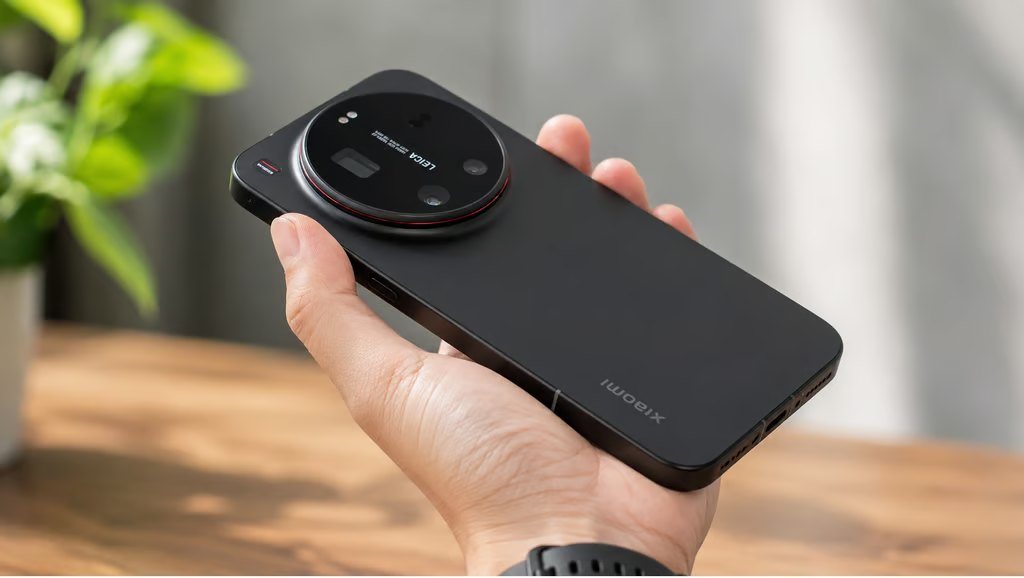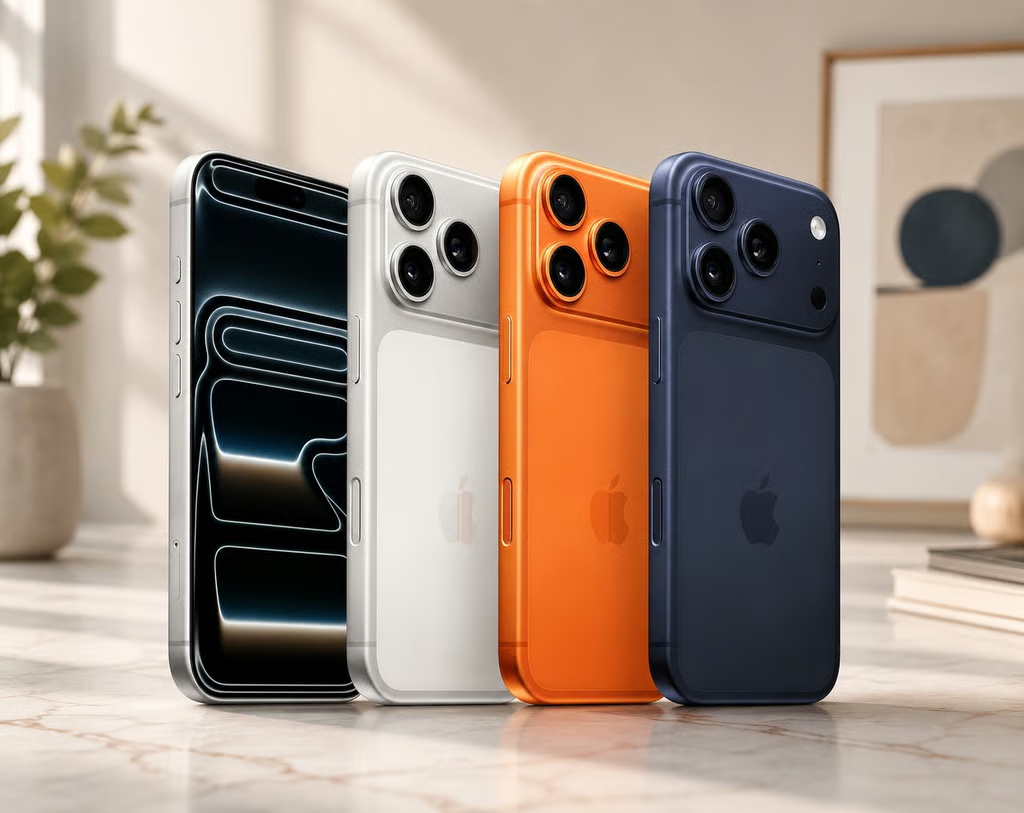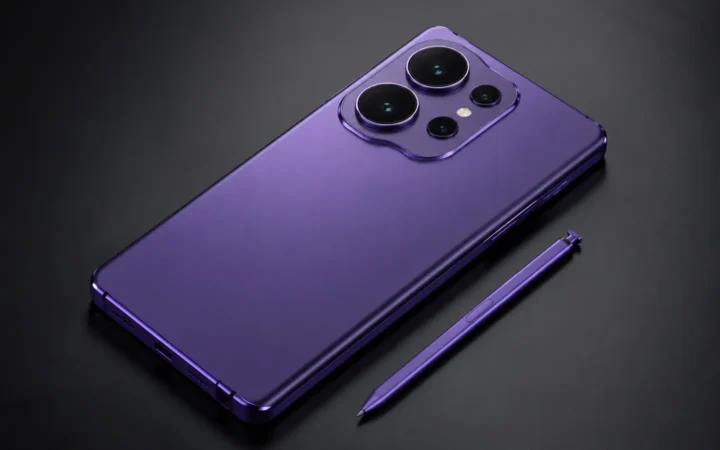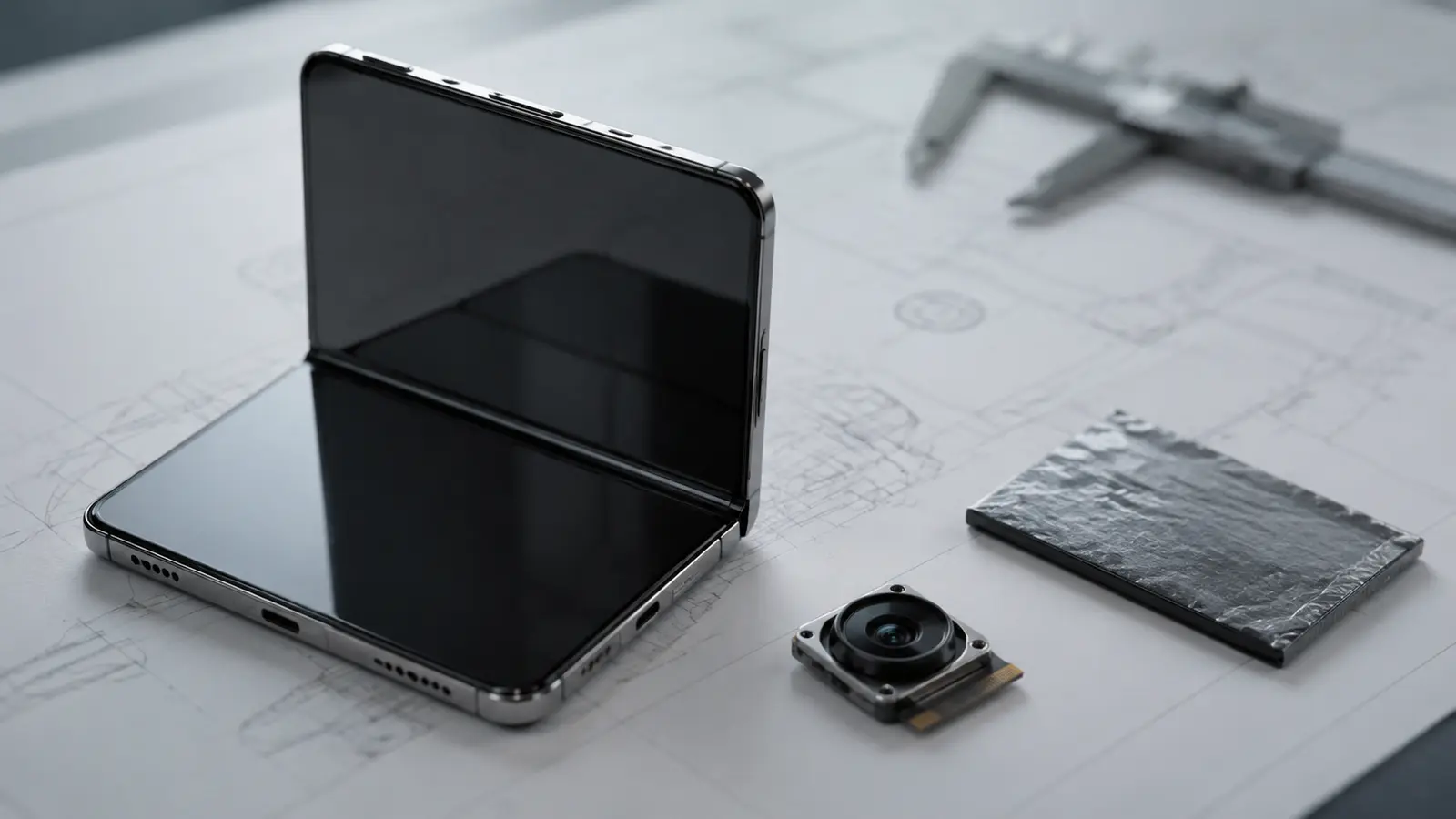

Smartphones are evolving faster than ever, blurring the lines between computers, cameras, game consoles and even medical devices. From the first iPhone in 2007 to today’s foldable handsets, mobile devices have become essential tools for communication, work, entertainment and health. Emerging technologies such as flexible displays, on‑device artificial intelligence (AI), satellite‑enabled connectivity and ultra‑dense batteries are poised to transform how we interact with the world. This in‑depth guide unpacks next‑generation mobile innovations—what they are, how they work and why they matter.

{getToc} $title={Table of Contents} $count={Boolean} $expanded={Boolean}
Market Forces Driving Mobile Innovation
The smartphone industry remains a juggernaut. Precedence Research estimates that the global smartphone market, worth about USD 566 billion in 2024, will more than double to USD 1.1 trillion by 2034, driven by technology breakthroughs like 5G, augmented reality (AR) and foldable displaysprecedenceresearch.com. Key growth drivers include:
- Connectivity upgrades: The rollout of 5G and work on 6G promise faster, more reliable and more responsive networks. These networks enable cloud‑gaming, real‑time collaboration and pervasive IoT connectivity.
- Immersive experiences: Integration of AR/VR into smartphones is expanding. Analysts note that combining mobile phones with AR/VR technologies will be a major factor in market growth.
- Form‑factor innovation: Foldable and flexible displays are moving from niche curiosities to mainstream premium devices. Foldables currently account for a small share of total sales but are growing rapidly, with predictions that they will take 10 % of Europe’s premium market by 2028euronews.com.
- Emerging markets: Asia‑Pacific already dominates smartphone sales, accounting for about 44 % of revenue in 2024precedenceresearch.com. Increased adoption in developing regions will fuel additional growth.
Together these factors push manufacturers to deliver devices that are faster, smarter, more durable and more versatile than ever before.
Foldable and Flexible Displays
How foldable phones work
Foldable smartphones use flexible OLED or micro‑thin glass panels with mechanical hinges. The display substrate is made from plastic or ultra‑thin glass that can bend without breaking. Engineers design complex hinge mechanisms that spread the stress evenly across the folding area to prevent creases. When opened, these devices offer a large tablet‑like screen; when closed, they function as a more pocketable phone. Internal support layers and protective coatings keep the screen from cracking.
Market adoption and statistics
Foldables are still a premium niche, but growth is rapid. Research firm Counterpoint and reporting from Euronews reveal that:
- Foldables had an 11 % share of the high‑end Android market in 2024, despite making up only 2 % of Europe’s overall smartphone saleseuronews.com.
- Sales of book‑type foldables (like the Samsung Galaxy Fold) grew 60 % year‑on‑year in 2024 but still represented just 1 % of total handset sales.
- With Apple expected to enter the segment, foldables are projected to capture 10 % of the premium market by 2028.
- Counterpoint forecasts book‑type foldable sales in Europe to reach 4 million units per year by 2028.
Benefits and real‑world examples
Foldables deliver multitasking power and immersive entertainment. A foldable device can display two apps side by side—one screen may show an email while the other plays a video. They’re ideal for reading e‑books or editing documents on the go. Examples include:
- Samsung Galaxy Z Fold and Flip series: These devices demonstrate sophisticated hinge designs and robust software support for split‑screen multitasking.
- Google Pixel Fold: Combines Android’s stock interface with a foldable form factor and powerful cameras.
- Motorola Razr and Huawei Mate X: Early pioneers of clamshell and book‑style foldables.
Despite high prices, the ability to fold a tablet‑sized screen into a pocketable device is compelling. As manufacturing yields improve and more companies join the space, prices should decrease and adoption rates should climb.
On‑Device AI and Generative Photography
The rise of AI smartphones
Artificial intelligence has become a buzzword in smartphone marketing, but there are substantial hardware and software advances behind it. The Qualcomm Snapdragon 8 Elite and similar chips integrate neural processing units (NPUs) that accelerate machine‑learning tasks directly on the device. This allows features like real‑time language translation, voice control and photo enhancement without sending data to the cloud.
In January 2025, Samsung unveiled its Galaxy S25 lineup—smartphones powered by Qualcomm chips and Google’s Gemini AI engine. According to Reuters, Samsung’s “Now Brief” service leverages on‑device AI to show personalised recommendations such as calendar events, news and even the air quality in a bedroom, all while keeping data local for privacyreuters.com. The Galaxy S25 uses Bixby along with Google’s generative model to perform multi‑step commands like finding sports events and adding them to your calendarreuters.com.
AI features are not limited to Samsung. Google’s Pixel phones use Tensor chips to power features like Magic Eraser and real‑time translation. Apple’s A‑series processors drive features like Live Text and Personal Voice. On‑device AI reduces latency, protects privacy and works offline, making future smartphones more capable and secure.
Generative photo editing
Modern smartphones integrate generative AI into their cameras, unlocking new creative possibilities. Samsung’s Galaxy S24 series, released in January 2024, introduced a suite of tools called Galaxy AI editing. According to TechCrunch, these features allow users to erase, recompose and remaster photos using AI. The Edit Suggestion tool analyzes images and recommends optimal tweaks, while Generative Edit fills missing backgrounds or straightens crooked photos by using generative AI modelstechcrunch.com. The software even adds a digital watermark to images generated with AI to maintain transparencytechcrunch.com.
These tools are early examples of what will soon be ubiquitous: on‑device generative models that enable complex photo and video editing. In the future, smartphones could automatically remove unwanted objects from videos, relight scenes or generate entire backgrounds on demand.
Step‑by‑step: How on‑device AI works
- Data acquisition: The phone’s camera or sensors collect data (images, voice, location).
- Model deployment: Manufacturers embed pre‑trained AI models (e.g., for object recognition or translation) into the device’s firmware.
- Inference on the NPU: When the user activates a feature, the neural processing unit accelerates the AI computations locally. This yields results almost instantly and reduces reliance on cloud servers.
- Feedback loop: Some devices allow user feedback to improve models (e.g., “Does this translation look correct?”), enhancing accuracy over time.
- Privacy safeguards: Because inference occurs locally, sensitive data (e.g., faces, voices) stays on the device, aligning with privacy regulations and user trust.
Battery and Power Innovations
Battery life has long been a pain point for smartphone users. Recent advancements are addressing this through increased capacity, silicon‑anode materials and fast‑charging technologies.
Bigger batteries ahead
Industry watchers note a leap in battery capacities. According to a NotebookCheck report from July 2025, smartphone makers like Honor, OnePlus and Xiaomi have introduced mid‑range devices with 8,300 mAh batteries that can deliver up to 18 hours of screen‑on timenotebookcheck.net. The article predicts that 2026 could be the year of the 8,500 mAh smartphone and even suggests that some manufacturers might experiment with 10,000 mAh batteriesnotebookcheck.net. These predictions indicate that mainstream devices will soon support two‑day battery life without external battery packs.
Fast charging and new chemistries
Larger batteries would be impractical without equally impressive charging tech. Many 2025 flagships support 65W to 100W wired charging and 30W wireless charging, delivering a full charge in under an hour. Companies are experimenting with silicon‑graphene anodes to increase energy density and reduce charging times. On the horizon, solid‑state batteries promise even higher capacities and improved safety by replacing flammable liquid electrolytes with solid materials. Some early prototypes from companies like TDK and QuantumScape are aimed at electric vehicles, but miniaturized versions could eventually find their way into smartphones.
Smart power management
Chipmakers are also improving power efficiency. For example, Google’s Tensor chips use adaptive battery techniques to prioritize frequently used apps, while Apple employs dynamic refresh rates (from 1 Hz to 120 Hz) to conserve power. With improved battery chemistry and smarter software, next‑generation phones will require fewer top‑ups while offering more demanding features such as AR, high‑resolution video recording and advanced AI processing.
The Road to 6G and Always‑On Connectivity
5G‑Advanced and the path to 6G
5G is still rolling out globally, but research is already underway for 6G networks. The UK Parliament’s Parliamentary Office of Science and Technology (POST) explains that 6G aims to be more responsive, reliable and faster than 5G, providing higher data rates and lower latencypost.parliament.uk. It is expected to be accessible anywhere, secure, energy‑efficient and compatible with various networks—including 5G, Wi‑Fi and satellite. Beyond incremental improvements, 6G could help address issues like the digital divide, support emergency services and enable immersive AR/VR applicationspost.parliament.uk.
Technologies driving 6G include sensing, artificial intelligence, Internet of Things (IoT) and cloud computing. The UK government has committed £100 million for 6G research, illustrating national investment in future networks. Countries that lead in 6G standards will shape global communication infrastructure and economic competitivenesspost.parliament.uk.
Non‑Terrestrial Networks (NTN): Connecting everywhere
One of the most exciting developments is the integration of Non‑Terrestrial Networks (NTNs)—satellite‑based systems—into consumer phones. Nokia’s thought‑leadership article explains that early 3GPP Release 17 devices like Google Pixel 9 and Samsung S25 already support NTN for emergency text messagesnokia.com. Release 18 and 19 broadened support to more device types and improved mobility. Looking ahead to 6G, Nokia predicts NTNs will become ubiquitous, with every phone natively equipped to connect to satellites. Key advancements include:
- NTN in every device: 6G phones will integrate satellite communication as a fundamental component, eliminating the need to check if a device is “NTN‑capable”.
- No GNSS required: 6G NTNs won’t rely on separate GPS or GNSS modules; devices will connect directly to satellites for positioning and communication.
- TN–NTN interworking: Seamless handover between terrestrial networks (TN) and NTNs will ensure uninterrupted connectivity in urban areas, remote regions or during disastersnokia.com.
These capabilities will bridge the digital divide, providing connectivity to remote communities and improving emergency responsenokia.com. They will also support remote healthcare, distance learning and e‑commerce, enabling people in underserved regions to participate in the digital economy.
Step‑by‑step: How NTN works with 6G
- Signal acquisition: A smartphone locates the nearest satellite or aerial platform using built‑in NTN antennas.
- Data uplink: The phone sends a request to the satellite, which may use regenerative payloads to process and relay signals more efficiently (introduced in Release 19nokia.com).
- Backhaul: The satellite transmits the data to a ground station or directly to another device.
- Seamless handover: If the user moves into an area with terrestrial coverage, the device automatically switches to 5G/6G networks without interrupting the connectionnokia.com.
- Applications: NTNs support voice calls, messaging, broadband data and positioning services—even when natural disasters or remote locations knock out terrestrial infrastructure.
Advanced Displays and Visual Experiences
High‑refresh‑rate and adaptive screens
Modern flagships feature LTPO (Low‑Temperature Polycrystalline Oxide) displays that adjust refresh rates dynamically between 1 Hz and 120 Hz or higher. Slower rates conserve battery when viewing static content like texts, while faster rates provide smooth animations during gaming. The Samsung Galaxy S24 and Apple iPhone 15 Pro implement this technology.
Micro‑LED and OLED evolution
While OLED remains the mainstream choice, micro‑LED technology offers higher brightness, longer lifespan and better efficiency. Micro‑LED pixels are inorganic, so they resist burn‑in and can achieve thousands of nits of peak brightness. However, manufacturing challenges keep micro‑LED displays expensive. Industry analysts expect micro‑LED to appear first in smartwatches and eventually scale to phones in the late 2020s.
Flexible and rollable displays
Beyond folding phones, companies like TCL and LG have demonstrated rollable displays that expand like a scroll. Others are experimenting with slidable phones that extend screen real estate horizontally. These innovations rely on flexible OLED materials combined with durable housings and advanced adhesives. While still prototypes, they hint at a future where screen size is no longer limited by a device’s physical dimensions.
Camera and Imaging Innovations
Bigger sensors and multi‑camera arrays
Cameras remain a battleground for smartphone differentiation. Manufacturers are equipping devices with 200 MP sensors, periscope lenses offering 10× optical zoom and dedicated ultrawide lenses for landscape photography. High megapixel counts allow for more detail and digital cropping, while periscope optics enable clear long‑distance shots without physically extending the lens.
Computational photography and AI enhancements
Hardware improvements are only part of the story; computational photography uses machine learning to merge multiple frames, reduce noise and enhance dynamic range. Techniques like HDR+, Night Sight, and Deep Fusion combine exposures to produce well‑lit images even in challenging conditions. On‑device AI can also identify objects, adjust color balance and apply depth‑of‑field effects.
The Samsung Galaxy S24 showcases the next step: generative AI editing. As TechCrunch reports, the phone can erase unwanted elements, recompose scenes and fill in background details using a generative modeltechcrunch.com. Users can straighten crooked photos, and the AI will extend edges seamlessly. This type of tool foreshadows future capabilities such as video inpainting, where AI can remove or replace objects in moving footage.
Step‑by‑step: How computational photography works
- Capture multiple frames: When you press the shutter, the camera actually takes a burst of images at different exposure levels.
- Align and merge: AI algorithms align these frames to account for hand shake, then merge them to create an HDR image with balanced highlights and shadows.
- AI enhancement: Models trained on millions of photos adjust noise, sharpness, color and white balance. Depth‑mapping helps separate foreground and background, enabling portrait effects.
- Generative filling: For features like Generative Edit, the AI uses a diffusion model to synthesize new pixels that blend with the existing scene, filling in gaps or extended edgestechcrunch.com.
- Output and watermark: The phone saves the final image and adds metadata noting AI involvement (a digital watermark) to maintain transparencytechcrunch.com.
Augmented and Mixed Reality
AR features are becoming mainstream thanks to powerful processors and improved sensors. Apps like Pokémon GO, Snapchat filters and Google Maps Live View overlay digital elements on the real world. ARCore (Google) and ARKit (Apple) provide toolkits for developers to build AR experiences on millions of devices.
Looking ahead, 6G networks will significantly expand AR and virtual reality (VR) applications. The POST report notes that 6G may increase adoption of autonomous vehicles, smart city technology, manufacturing, virtual and augmented reality and remote surgerypost.parliament.uk. Ultra‑low latency and ubiquitous coverage will allow complex AR experiences like remote assistance, immersive telepresence and cloud‑rendered gaming. Smartphones will act as controllers or processing hubs for AR glasses and mixed‑reality headsets. Apple’s Vision Pro and Meta’s Quest 3 point to this convergence, with smartphones powering content streaming and user interfaces.
Biometric Security and Health Sensors
Mobile devices are adding more sensors to enhance security and health tracking. In‑display fingerprint scanners are now common; some phones integrate ultrasonic scanners for improved reliability. Facial recognition uses structured light or time‑of‑flight sensors to map a user’s face in 3D. Meanwhile, health‑oriented sensors can monitor heart rate, blood oxygen and even blood glucose (experimental), turning smartphones into medical devices. Integration with wearables like smartwatches creates a comprehensive health and fitness ecosystem. See FrediTech’s article on Wearable Tech and Health for more on this convergence.
Sustainable Design and Circular Economy
The environmental impact of smartphones is becoming a pressing concern. Consumers are keeping their devices longer, with upgrade cycles extending to three or four years according to industry executiveseuronews.com. Manufacturers are responding by:
- Using recycled materials: Many brands incorporate recycled aluminum, plastic and rare earth elements into new devices.
- Designing for repairability: Companies like Fairphone and Framework champion modular designs where batteries, screens and cameras can be replaced easily.
- Offering trade‑in and refurbishing programs: To counter high prices and reduce waste, trade‑in schemes let consumers upgrade while recycling old devices, a trend noted by executives interviewed by Euronewseuronews.com.
- Extending software support: Longer update policies (5–7 years) reduce the need to replace perfectly functional hardware.
Government regulations, such as the Right to Repair laws in Europe and parts of the United States, will likely accelerate these trends.
Future Outlook: Convergence of Innovations
As the smartphone matures, innovations are converging to create pocket computers that are always connected, exceptionally powerful and environmentally conscious. In the next few years, expect:
- NTN‑enabled devices that can send messages and make calls without terrestrial towers, bridging gaps in disaster scenarios and remote regionsnokia.com.
- Foldables and rollables that deliver tablet‑sized screens in pocketable devices, reaching mainstream adoption as costs fall and durability improveseuronews.com.
- Generative AI built into camera and productivity apps, allowing seamless editing, summarization and content generationtechcrunch.com.
- Ultra‑dense batteries that support two‑day use and charge fully in minutesnotebookcheck.net.
- 6G networks that combine terrestrial and satellite connections to deliver responsive, secure and ubiquitous coveragepost.parliament.uknokia.com.
- AR/VR integration for immersive experiences, remote collaboration and trainingpost.parliament.uk.
- Ethical AI and privacy: Regulators will demand transparency and fairness from on‑device AI. Expect watermarking, on‑device processing and user control over data to become standardtechcrunch.com.
By embracing these innovations, consumers, developers and policymakers will shape a mobile future that is more inclusive, sustainable and empowering.
Frequently Asked Questions (FAQ)
What are the biggest trends shaping next-generation smartphones?
The most significant trends include foldable and flexible displays, on‑device AI with generative editing, larger battery capacities (up to 8,500 mAh and beyond)notebookcheck.net, 6G and NTN connectivitypost.parliament.uknokia.com, advanced computational photography, and sustainability through repairable designs.
Will foldable phones become mainstream?
Yes. Research indicates foldables will capture 10 % of the premium smartphone market by 2028euronews.com. Sales of book‑type foldables are rising rapidly, especially with more brands (including Apple) joining the segment.
How will 6G differ from 5G?
6G aims to provide higher speeds, lower latency and greater reliability than 5Gpost.parliament.uk. It will be accessible anywhere and integrate satellite connectivity via NTNsnokia.com, enabling always‑on communication in remote areas. 6G will also leverage AI, sensing and cloud technologies to support immersive applications like AR/VR and remote surgerypost.parliament.uk.
What is on-device AI and why is it important?
On‑device AI refers to running machine‑learning models locally on your phone rather than in the cloud. This reduces latency, improves privacy and enables features like personalised recommendations and generative photo editing. Phones like Samsung’s Galaxy S25 use Qualcomm chips and Google’s Gemini AI model to deliver such capabilitiesreuters.com.
How are battery technologies improving?
Batteries are becoming larger (8,300 mAh is already available) and could reach 8,500 mAh or even 10,000 mAh by 2026notebookcheck.net. Advances in silicon‑anode and solid‑state technology increase energy density, while fast charging (65–100 W wired) reduces recharge time. Enhanced power‑management algorithms further extend battery life.
Will smartphones replace other devices like laptops or cameras?
Smartphones are encroaching on tasks traditionally done by laptops and dedicated cameras, thanks to powerful processors, abundant storage and sophisticated cameras. However, specialised devices will remain important for professional-grade work. The trend toward convergence means your phone will increasingly act as a hub, seamlessly connecting to peripherals, displays and cloud services.
How can consumers support sustainable mobile innovation?
Choose devices with long software support, repairability and recycled materials. Participate in trade-in programs, avoid unnecessary upgrades and recycle old electronics responsibly. Support brands that prioritize sustainability and advocate for policies like the Right to Repair.
Author Credentials
This article was written by Wiredu Fred, a seasoned technology journalist and founder of FrediTech. Wiredu has over a decade of experience reviewing gadgets, analysing tech trends and explaining complex innovations in clear terms. He holds a master’s degree in educational leadership and has authored numerous guides on mobile technology, wearables and digital health.
Explore related FrediTech posts for deeper dives into mobile technology and health:
- Best Android Phones of 2025: Ultimate Buying Guide & Top Reviews – comprehensive comparisons of 2025’s flagship Android devices.
- Wearable Tech and Health: Transforming Personal Wellness in the Digital Age – our exploration of how wearables complement smartphones for holistic health tracking.
By understanding the technologies driving mobile innovation today, you’ll be better prepared for the transformational devices of tomorrow. Smartphones are becoming not just communication tools but extensions of ourselves—always connected, AI‑enhanced and ready for the next leap forward.