
Introduction
Images are a universal language. From ancient cave paintings to high‑resolution digital scans, the ability to capture and analyze images has always been central to human understanding. Today a confluence of breakthroughs—rapid scanning sensors, artificial intelligence (AI), and powerful computing—are giving rise to advanced imaging techniques that move beyond two‑dimensional pictures. They reveal hidden structures within the body, map remote landscapes, and generate interactive holograms. These innovations are revolutionizing medicine, environmental monitoring, engineering and entertainment.
The goal of this article is to demystify the technologies driving this visual transformation. It covers the foundations of modern medical imaging, explains how 3D scanning, LiDAR and remote sensing systems collect millions of data points, explores the role of AI and machine learning, and highlights emerging frontiers such as terahertz imaging and volumetric displays. Throughout, you’ll find real‑world examples, step‑by‑step explanations and links to deeper resources, including related guides on FrediTech. By the end you’ll appreciate how sophisticated imaging methods are reshaping diagnostics, construction, agriculture, security and the arts.

{getToc} $title={Table of Contents} $count={Boolean} $expanded={Boolean}
The evolution of imaging: From X‑rays to multispectral satellites
Early breakthroughs and hybrid medical scanners
The modern era of imaging began in 1895 when Wilhelm Conrad Röntgen discovered X‑rays—waves capable of penetrating soft tissue and revealing bones. This seminal event triggered decades of innovation. Today’s medical imaging arsenal includes computed tomography (CT), positron emission tomography (PET), magnetic resonance imaging (MRI), single‑photon emission computed tomography (SPECT), digital mammography and diagnostic ultrasoundpmc.ncbi.nlm.nih.gov. Each modality visualizes tissues in different ways: CT uses X‑rays to produce cross‑sectional slices; MRI uses strong magnetic fields to map hydrogen atoms; PET uses radioisotopes to track metabolic activity; and ultrasound uses high‑frequency sound waves for real‑time imaging.
Hybrid systems combine complementary strengths to improve resolution and diagnostic accuracy. For example, PET/CT scanners integrate metabolic imaging from PET with anatomical detail from CT; PET/MRI and SPECT/CT fuse functional and structural datapmc.ncbi.nlm.nih.gov. These hybrid modalities have become essential for cancer staging, cardiac diagnosis and neurological research.
Remote sensing: Multispectral vs. hyperspectral imagery
Outside the hospital, imaging satellites observe Earth’s surface. Multispectral sensors capture data in a handful of broad wavelength bands, while hyperspectral sensors record hundreds of narrow bands. The difference lies in spectral resolution. Hyperspectral imaging provides fine-grained information about material composition—enabling scientists to distinguish plant species or detect minerals—but requires complex processing. Multispectral imagery offers lower spectral but higher spatial resolution and is more economicaleos.com.
In precision agriculture, multispectral satellites such as Landsat and Sentinel‑2 monitor crop health and yield, while hyperspectral sensors are used in environmental monitoring, assessing water quality or mapping invasive specieseos.com. Understanding the appropriate level of detail is key: farmers need broad coverage, whereas geologists analyzing soil composition may require hyperspectral data.
Step‑by‑step: How 3D scanning revolutionized measurement
Traditional surveying relied on laborious manual measurements. 3D scanning uses light pulses or structured patterns to automatically capture millions of points on an object’s surface in seconds. Modern lidar (light detection and ranging) systems emit laser pulses and measure the time-of-flight to calculate distance. Photogrammetry reconstructs 3D models from overlapping photographs. Structured light scanners project patterns onto an object and measure how they deform.
According to a 2025 industry survey, reality capture improves project efficiency by about 30 %, and modern 3D laser scanners collect two million data points per second, providing unparalleled detailtejjy.com. These capabilities have transformed construction, manufacturing, cultural heritage preservation and forensic investigationstejjy.com.
Innovations in portable 3D scanners
Advances in sensors, processors and machine‑learning algorithms have made 3D scanners more compact and user friendly. Portable devices such as the Leica RTC360 or Topcon GLS‑2200 combine high‑resolution lidar with wireless connectivity and cloud integration, enabling real‑time collaborationtejjy.com. Some models capture 4–6 mm accuracy at ranges of tens of meterstejjy.com. AI helps automate feature recognition—for example, identifying planes, pipes or structural elements—accelerating workflows from site capture to building information modeling (BIM).
LiDAR and imaging radar for autonomy
Next‑generation vehicles rely on sensors to perceive the environment. LiDAR generates detailed point clouds, while imaging radar measures velocity and operates in poor visibility conditions. Recent devices such as Valeo’s SCALA 2 and SCALA 3 provide ranges of 80 m to 200 m and can capture up to 12.5 million points per second. These improvements enable Level 3 autonomous driving (hands off in defined conditions) at speeds up to 130 km/h, and carmakers like Mercedes and BMW are integrating them into production vehicles.
From 2D to 3D and 4D ultrasound
Ultrasound has long been valued for its safety and affordability. Conventional scans produce two‑dimensional cross‑sections; however, 3D ultrasound reconstructs volumetric images, and 4D ultrasound adds the dimension of time, providing real‑time videos of moving structures such as fetal heartbeatsuscimaging.com. These advances improve prenatal care, cardiac assessment and musculoskeletal imaging. The technology is evolving rapidly—miniaturization and AI integration will soon enable point‑of‑care devices that connect to smartphonesuscimaging.com.
Terahertz imaging: Seeing the unseen
The region between microwaves and infrared light (0.1–10 THz) was historically difficult to access, dubbed the terahertz gap. Recent advances in terahertz sources and detectors have created terahertz imaging systems for non‑destructive testing. They can inspect non‑metallic materials, revealing layer thickness and internal defects without contact. According to Menlo Systems, new THz sources and fast scanning techniques achieve deeper penetration, higher resolution and reduced measurement timesmenlosystems.com. Industries from aerospace to pharmaceuticals use THz imaging to ensure quality and safety.
Volumetric displays: Beyond screens
Unlike traditional flat displays, volumetric displays create three‑dimensional images visible from multiple angles without glasses. They work by projecting light onto moving or static voxels (volume elements) in space. The market for volumetric displays was USD 249.4 million in 2023 and is projected to grow to USD 1.285 billion by 2031, according to market researchkingsresearch.com. These displays find applications in medical planning—allowing surgeons to visualize anatomical structures—and in entertainment, where they offer immersive holographic experiences.kingsresearch.com
Medical imaging: Precision and personalization
X‑ray and CT: Workhorses of diagnosis
X‑rays remain essential for diagnosing fractures, lung infections and dental issues. Computed tomography (CT) extends this by rotating an X‑ray source and detectors around the patient, reconstructing a 3D map of tissue density. Modern CT scanners offer sub‑millimeter resolution and rapid acquisition times. Multi‑slice devices can image a beating heart in seconds, reducing motion artifacts. To minimize radiation exposure, adaptive algorithms adjust dose based on patient size and region.
MRI: Magnetic resonance for soft tissues
MRI excels at imaging soft tissues and the nervous system. The technique exploits the fact that hydrogen nuclei in water and fat resonate at a frequency when placed in a magnetic field. By measuring the emitted radio signals, MRI reconstructs detailed images. Functional MRI (fMRI) maps brain activity by detecting changes in blood oxygenation, while diffusion tensor imaging (DTI) visualizes neural pathways. Recent developments include ultra‑high‑field MRI (7 Tesla and above) that provides finer detail, and faster sequences like compressed sensing to reduce scan times.
Nuclear medicine: PET and SPECT
PET and SPECT use radioactively labeled tracers to detect metabolic processes. PET is widely used in oncology to identify tumors and evaluate response to therapy. PET/CT and PET/MRI combine anatomical and metabolic imaging for comprehensive assessmentpmc.ncbi.nlm.nih.gov. SPECT, often used in cardiology, provides 3D images of blood flow. New tracers are expanding applications to neurology and infection imaging.
Ultrasound and elastography
Ultrasound is evolving beyond grayscale images. Elastography measures tissue stiffness by detecting how tissues deform under pressure; it aids in diagnosing liver fibrosis and breast tumors. Contrast‑enhanced ultrasound uses microbubble agents to improve vascular imaging. The rise of portable and handheld devices allows point‑of‑care ultrasound for emergency medicine, obstetrics and remote healthcare.
Step‑by‑step: AI’s role in medical imaging
- Image acquisition – Modern scanners produce large datasets; high‑resolution CT or MRI can generate hundreds of slices.
- Preprocessing – AI algorithms remove noise, normalize intensity and correct artifacts.
- Segmentation – Deep learning models delineate organs, lesions or vessels. For example, convolutional neural networks (CNNs) can automatically outline tumors on a CT scan.
- Classification and detection – AI identifies abnormalities and quantifies disease severity. Systems trained on labeled datasets can flag suspicious nodules for radiologist review.
- Prediction and planning – Machine learning models predict disease progression and support personalized treatment plans. In radiation therapy, algorithms optimize beam angles and doses.
AI improves precision, speeds up interpretation and reduces observer variability. An editorial in Diagnostics highlights that AI’s contributions include image classification, segmentation, feature extraction, prediction and multi‑modal fusionpmc.ncbi.nlm.nih.gov. However, integrating AI responsibly requires addressing data privacy, algorithmic bias and regulatory oversight.pmc.ncbi.nlm.nih.gov
Real‑world example: Early detection of breast cancer
Digital mammography, coupled with AI algorithms, can detect microcalcifications indicative of early breast cancer. Combining mammography with digital breast tomosynthesis (a 3D technique) improves sensitivity. In a typical workflow, radiologists review AI‑generated heat maps, focusing on flagged regions. This collaboration reduces false negatives and speeds up diagnosis, ultimately improving patient outcomes.
Related post: Microscopy and digital pathology
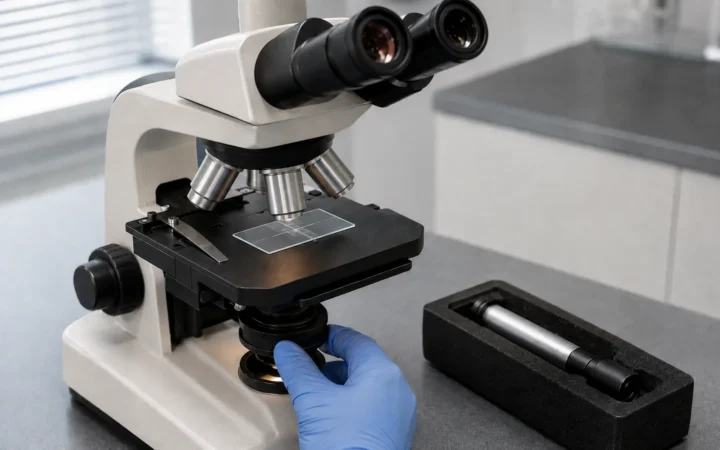
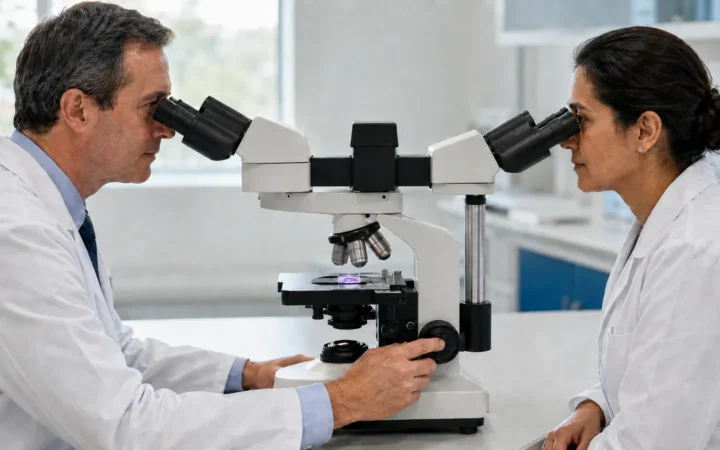
For readers interested in optical microscopy—which complements medical imaging at smaller scales—see our deep dive on Microscope Technology Explained at FrediTech. It covers light and electron microscopes, confocal imaging and the integration of digital sensors.
Industrial and environmental imaging: 3D scanning, lidar and remote sensing
Construction and architecture
3D scanning has become indispensable for architecture, engineering and construction (AEC). On a construction site, engineers may perform a 360° scan with a lidar scanner that captures millions of points per secondtejjy.com. Software registers multiple scans and builds a precise digital twin. This digital twin aligns with design models, identifying deviations and preventing costly errors. Reality capture reduces field visits and facilitates remote collaboration.
Example: A renovation of a historic building starts with a complete 3D survey. Engineers use portable scanners to record interior details—arches, columns, decorative elements. The data is integrated into a BIM model, allowing structural analysis and prefabrication of restoration components. 3D scanning helps preserve cultural heritage by digitally archiving artifacts and architectural featurestejjy.com.
Manufacturing and quality control
In industrial metrology, 3D scanners verify dimensions of parts with high precision. Automated inspection systems compare scanned point clouds to CAD models, highlighting deviations. AI‑driven analytics detect trends and inform predictive maintenance. The increasing availability of low‑cost structured light scanners allows small manufacturers to adopt digital quality control.
Cultural heritage and forensics
Museums use 3D scanning to create digital replicas of artifacts, enabling virtual exhibits and preserving details that might be lost due to aging or damagetejjy.com. In forensics, investigators scan crime scenes to capture accurate measurements and evidence, generating 3D reconstructions for analysis and courtroom presentations.
Remote sensing for agriculture and ecology
Satellite imagery informs agriculture, forestry and environmental monitoring. Normalized Difference Vegetation Index (NDVI) from multispectral data indicates plant health and stress. Drone‑mounted hyperspectral cameras detect nutrient deficiencies or disease. Case study: Farmers in Ghana use multispectral satellite data to optimize irrigation and fertilization schedules. By analyzing NDVI maps, they identify underperforming areas and adjust management practices.
Disaster response and climate research
After natural disasters, remote sensing provides rapid situational awareness. Synthetic aperture radar (SAR) penetrates clouds and is useful during hurricanes or floods. Multi‑temporal imagery helps assess damage, plan relief efforts and monitor recovery. Scientists use multispectral and hyperspectral satellites to study deforestation, track wildfires and model climate changeeos.com.
Emerging frontiers and advanced methods
Terahertz imaging applications
- Non‑destructive testing (NDT): THz imaging examines aerospace composites for delamination, detects moisture in ceramics and measures coatings on pharmaceutical tabletsmenlosystems.com. Because THz waves are non‑ionizing and penetrate many materials, they offer a safe alternative to X‑rays.
- Security screening: Terahertz scanners can detect weapons or explosives concealed under clothing without harmful radiation. Research focuses on improving imaging speed and resolution.
- Biomedical uses: Terahertz spectroscopy can distinguish cancerous tissue based on water content and molecular signatures. Scientists are exploring THz imaging for skin and dental diagnostics, though commercialization requires compact, affordable sources.
Computational imaging and light field cameras
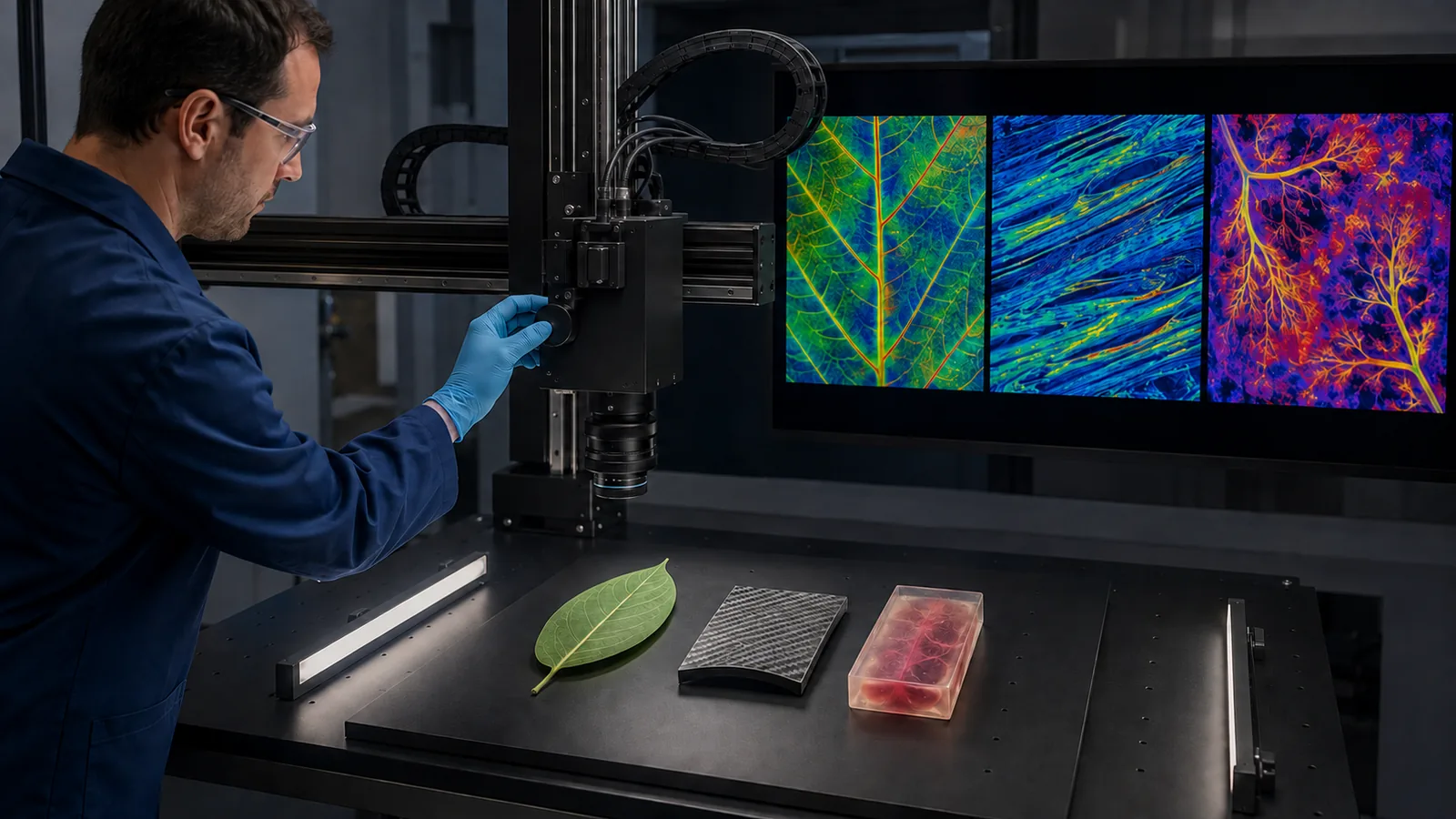
Traditional imaging relies on optical hardware to capture an image that is then digitally processed. Computational imaging integrates data acquisition and processing—capturing coded or multiplexed information and reconstructing it with algorithms. Light field cameras record the direction and intensity of rays, allowing the focus to be adjusted after capture. Compressed sensing reconstructs high‑resolution images from fewer measurements by exploiting sparsity.
These techniques enable imaging under low light, through scattering media or with small lenses. They are used in smartphone cameras, astronomy and biomedical microscopy.
AI‑generated imagery and ethical considerations
AI systems can generate synthetic medical images for training, simulate disease progression or fill missing data (super‑resolution). While these tools improve data augmentation and reduce the need for large datasets, they raise ethical concerns. Artificial images must be clearly labeled to avoid misuse; patient privacy and consent remain paramount.
Volumetric displays and immersive visualization
Volumetric displays create “voxels” of light in space. Systems like Looking Glass and Voxon Photonics use rotating LED panels or swept laser sheets to project 3D content.
- Medical planning: Surgeons can view a volumetric model of a patient’s organ, rotate it and simulate procedures. This enhances depth perception and understandingkingsresearch.com.
- Education and entertainment: Holographic displays captivate audiences with three‑dimensional graphics. The entertainment industry uses volumetric capture studios to record performers from multiple angles and create holograms for concerts or virtual reality.
Real‑world example: 3D/4D ultrasound and telemedicine
In rural clinics, handheld ultrasound devices connect to smartphones and transmit images to specialists over the internet. Real‑time 4D imaging allows remote obstetricians to assess fetal health and provide guidance. This democratization of imaging improves care in underserved areas and aligns with global health initiatives.
Future outlook
- Miniaturization and wearables: Advancements in microelectronics are yielding wearable ultrasound patches and implantable sensors. These devices continuously monitor organs and transmit data for AI analysis.
- Quantum imaging: Entangled photons promise imaging beyond classical limits, enabling ultra‑sensitive biosensors and covert surveillance.
- Combined modalities: Hybrid systems will continue to merge modalities—e.g., photoacoustic imaging combining optical and ultrasound methods. Multi‑modal fusion will leverage AI to integrate data from MRI, CT, PET, ultrasound and genomics, creating comprehensive patient “digital twins.”
- Regulatory and ethical frameworks: As imaging becomes pervasive, regulators must balance innovation with patient safety and privacy. Data governance frameworks will ensure AI models are trained on diverse populations, reducing bias and improving trust.
Internal Resources for further reading
Medical laboratory equipment – For an overview of how modern laboratory instruments integrate imaging and automation, see Medical Laboratory Equipment Guide. It discusses innovations in robotic sample handling, digital microscopy and IoT connectivity, complementing the advanced imaging techniques covered here.
Microscope techniques – Learn more about optics and digital imaging in Microscope Technology Explained. The article describes light, electron and confocal microscopes and their applications in research and diagnostics.
Frequently asked questions (FAQ)
What makes hyperspectral imaging different from multispectral imaging?
Hyperspectral imaging captures hundreds of narrow wavelength bands, providing detailed spectral information for precise material identification. Multispectral imaging captures fewer broader bands, offering lower spectral resolution but higher spatial coverage and simpler processingeos.com. Hyperspectral data is ideal for mineral detection or vegetation analysis, while multispectral data is well suited for large‑scale monitoring.eos.com
How does 3D scanning improve construction workflows?
3D scanning captures millions of points per second, creating accurate digital twins of buildings or sitestejjy.com. This improves efficiency by about 30 %, reduces rework, and supports Building Information Modeling (BIM). Portable scanners allow quick site surveys, heritage preservation and quality controltejjy.com.
Are terahertz imaging systems safe?
Yes. Terahertz radiation is non‑ionizing and carries much less energy than X‑rays. THz imaging is used for non‑destructive testing and security screening. Advanced THz systems provide high-resolution, contact‑free inspection of non‑metallic materialsmenlosystems.com.
How is AI used in medical imaging?
AI assists in acquiring, preprocessing, segmenting, and interpreting images. Deep learning models classify diseases, detect anomalies, segment organs, predict prognosis and combine data from multiple modalitiespmc.ncbi.nlm.nih.gov. AI increases accuracy, reduces interpretation time and supports personalized treatment planning.
What is the future of volumetric displays?
The volumetric display market is growing rapidly—projected to reach $1.285 billion by 2031kingsresearch.com. These displays will be used in surgical planning, education, gaming and entertainment. Advances in materials, microLEDs and light modulation will make them more compact and affordable.
How does 4D ultrasound differ from 3D ultrasound?
3D ultrasound reconstructs a static volumetric image, while 4D ultrasound adds the dimension of time—capturing real‑time motion of organs or fetusesuscimaging.com. This dynamic visualization aids in assessing heart function, fetal movements and musculoskeletal disorders.
Can 3D scanning be used for small objects?
Yes. Structured light or laser triangulation scanners can capture fine details of small objects, making them useful for dentistry, jewelry design, mechanical part inspection and museum artifacts. High-resolution scans enable accurate digital replicas for analysis or reproduction.
How do volumetric displays compare to virtual reality (VR) headsets?
VR headsets immerse the user in a simulated 3D environment but require wearing goggles. Volumetric displays create tangible 3D images in physical space without headgear. They allow multiple viewers to observe an object from different angles simultaneously, making them ideal for collaborative work and presentations. However, they currently have limited resolution and volume compared to VR.
Conclusion
We are living through a renaissance in imaging. Techniques that once belonged to science fiction—spinning lasers that map entire cities, cameras that see through skin, and holograms you can walk around—are becoming mainstream. Advanced imaging techniques are revolutionizing how we diagnose diseases, design buildings, study ecosystems and entertain audiences. They provide deeper insights, greater accuracy and unprecedented interactivity.
As with any powerful technology, responsible use is essential. Regulatory frameworks must safeguard privacy and fairness while encouraging innovation. Collaboration between engineers, physicians, ethicists and policymakers will ensure that the benefits of imaging reach everyone. For individuals and businesses, understanding these technologies will unlock opportunities—from improving healthcare to optimizing agriculture and creating immersive experiences. The future of visualization is three‑dimensional, intelligent and inclusive.