-->

iPhone 16 vs. iPhone 16 Pro: Which Model Is Right for You?

The iPhone 16 lineup has arrived with four models vying for your attention: the standard iPhone 16, the larger iPhone 16 Plus, the premium iPhone 16 Pro, and the big-screen iPhone 16 Pro Max. Choosing between them can be challenging, especially now that Apple’s cheaper models have inherited many features previously reserved for Pro devicestomsguide.com. In this comprehensive comparison, we’ll break down the differences in design, display, performance, cameras, battery life, and price – and help you decide which iPhone 16 model is right for you.

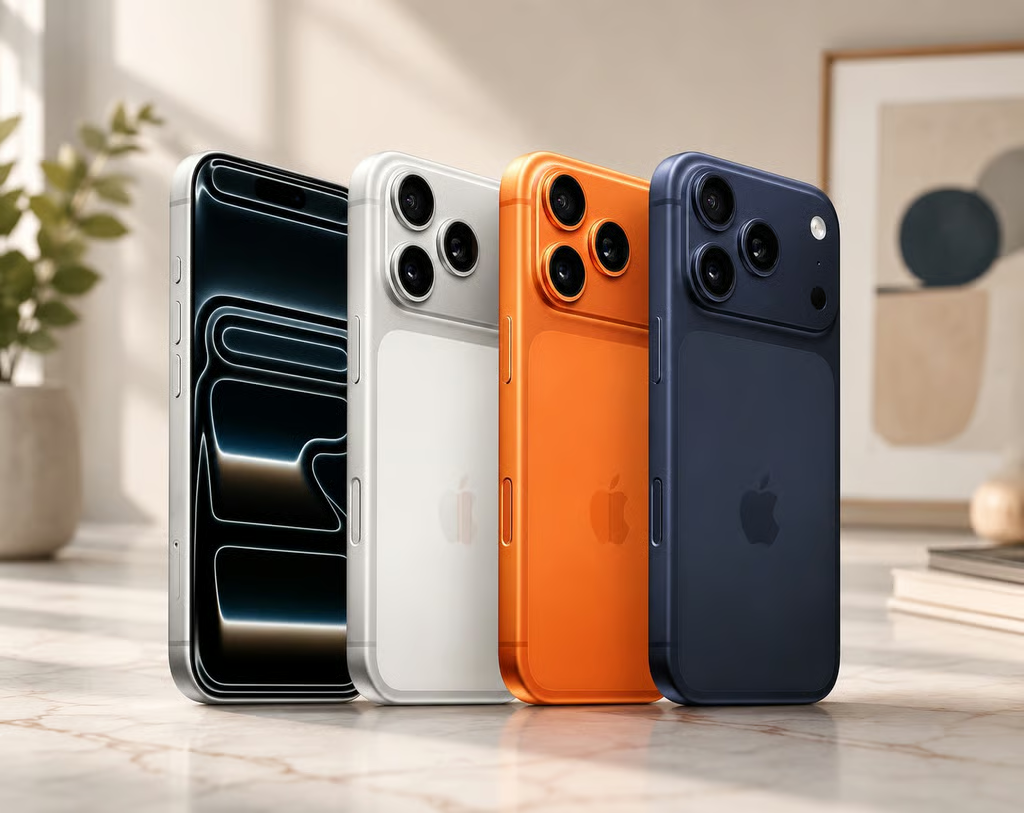
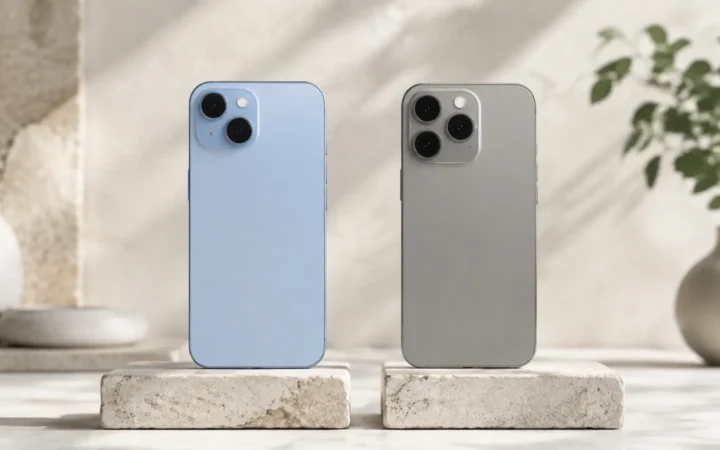
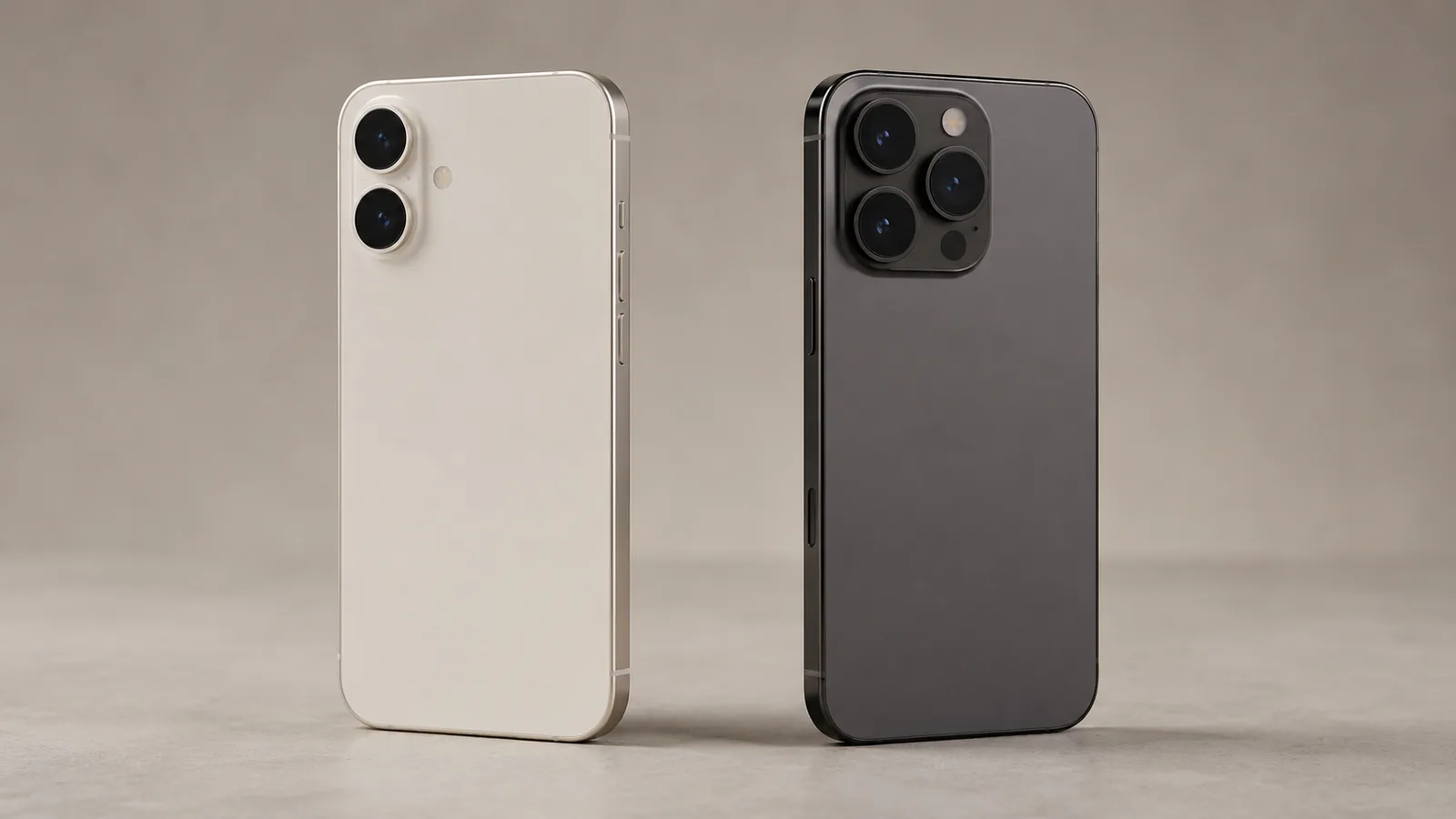
Apple’s 2024 iPhone 16 lineup: 6.1-inch iPhone 16 on the left and 6.3-inch iPhone 16 Pro on the right, with the larger 16 Plus and 16 Pro Max in the background, all on an attractive gradient studio backdrop with soft lighting.

{getToc} $title={Table of Contents} $count={Boolean} $expanded={Boolean}


    iPhone 16 Lineup Overview

    Apple’s 2024 iPhone family follows a familiar pattern, with two standard models and two Pro models. Here’s a quick overview of how they stack up:

    • iPhone 16 (6.1″) – Base model with dual cameras, A18 chip, aluminum frame.

    • iPhone 16 Plus (6.7″) – Same specs as iPhone 16, but with a larger display and battery.

    • iPhone 16 Pro (6.3″) – Pro-tier features like triple cameras, 120 Hz display, A18 Pro chip, titanium design.

    • iPhone 16 Pro Max (6.9″) – Same features as 16 Pro, but with the largest display and longest battery life.

    All four models share some core features. Dynamic Island cutouts replace the old notch on every iPhone 16, and Apple’s new “Personal Intelligence” features (branded as Apple Intelligence) are supported across the lineuptomsguide.com. Notably, even the non-Pro iPhone 16 models now include the configurable Action Button (replacing the mute switch) and a dedicated Camera Control button – capabilities that were exclusive to Pro iPhones last yeartomsguide.com. Each device runs iOS 18 out of the box and comes with 5G connectivity and Apple’s robust security features like Face ID and emergency SOS.

    Where the models diverge is in the hardware specs and premium features. The Pro phones command a higher price, but pack upgrades in display technology, processing power, camera versatility, build materials, and battery endurance. Let’s dive into each category in detail.


    (For a detailed look at last generation’s flagship, read our iPhone 14 Pro Max Review – Everything You Need to Know in 2025.)

    {getCard} $type={post} $title={iPhone}


    Design & Display Differences

    Apple differentiated the iPhone 16 family through size and materials, especially when comparing the standard models to the Pro models. All four devices have a modern, edge-to-edge OLED display with the Dynamic Island cutout and Ceramic Shield glass. However, the sizes and refresh rates vary:

    • Screen Sizes: iPhone 16 has a 6.1-inch display, while the 16 Plus stretches to 6.7 inches. The Pro models are slightly larger this year – the iPhone 16 Pro features a 6.3-inch screen and the Pro Max a massive 6.9-inch display, the largest ever on an iPhoneapple.com. Despite the bigger screens, Apple shaved down the bezel borders on the Pros to keep them ergonomic. Both Pro models truly feel expansive, especially the Pro Max which pushes into small tablet territory.

    • Display Technology: One key upgrade of the Pro series is the ProMotion adaptive refresh rate. The iPhone 16 and 16 Plus displays are limited to 60 Hz, whereas the 16 Pro and Pro Max use LTPO OLED panels with 1–120 Hz ProMotion and an Always-On Display featurephonearena.com. This means the Pro screens can ramp up for silky smooth scrolling and animations or drop down to 1 Hz to save power when idle. If you value extra fluidity in daily use, the Pro’s 120 Hz screen is a major selling point (the standard models’ 60 Hz screens, while high quality, feel less snappy by comparison). Both tiers support HDR, wide color (P3), True Tone, and get very bright outdoors. The peak brightness is similar across models, topping out around 2000 nits in sunlight on all iPhone 16 variants, so you won’t miss out on visibility with the cheaper model.

    • Build Materials: The chassis and back materials differ. The iPhone 16 and 16 Plus use an aerospace-grade aluminum frame with a color-infused glass back (available in fun colors like black, white, pink, teal, ultramarine)apple.com. In contrast, the 16 Pro and Pro Max feature a premium titanium frame (in Black, Natural, White, or Desert titanium finishes) which makes them lighter yet extremely durableapple.com. The Pros also have a matte textured glass back, versus a glossy finish on the standard models. Visually, the camera layout gives them away too – the standard iPhone 16 has a dual-camera module arranged vertically, whereas the Pro models have a larger triple-camera bump. All models carry an IP68 water-resistance rating, so they’re equally rugged against splashes and dust.

    • Ergonomics: Thanks to the titanium and slightly more compact design, the iPhone 16 Pro is surprisingly comfortable to hold – it weighs about 199 grams, the same weight as the larger iPhone 16 Plus (which uses aluminum)applevis.com. The Pro Max is heavier at 227 g, but still a few grams lighter than the older 14 Pro Max due to the switch from stainless steel to titaniumapplevis.com. If you prefer a one-handed friendly phone, the 6.1″ iPhone 16 is the easiest to manage. The 6.3″ 16 Pro is only slightly taller but offers a nice middle-ground with more screen real estate without being too bulky. The Plus and especially the Pro Max cater to those who want phablet-sized displays – great for video, gaming, and productivity, but reaching across the screen will require two hands for most people. The thinner display bezels on the Pro Max give it a striking look; Apple touts that the 16 Pro series has “the thinnest borders of any Apple product” to date.

    In summary, display and design are areas where the Pro models stand out. You get a more advanced screen (higher refresh rate + always-on) and a more luxurious build with titanium. That said, the standard iPhone 16 models are still beautifully designed and now benefit from the same Dynamic Island interface as the Pros. Unless you’re particularly sensitive to 120 Hz smoothness or love the largest screen possible, the 6.1″ iPhone 16’s display will satisfy most users with its vibrant OLED quality.


    Performance: A18 vs. A18 Pro Chip and Hardware

    One of the biggest changes in 2024 is that all iPhone 16 models use the latest-generation chips – no more hand-me-down processors for the non-Pro phones. The iPhone 16 and 16 Plus are powered by the A18 chip, while the 16 Pro and Pro Max run the A18 Pro chip. Both chips are built on a 3-nanometer process, but the Pro version has more GPU cores and higher performance aimed at “Pro” workloads like advanced graphics and AI.

    In everyday use, the A18 is extremely fast and closes much of the gap with the Pro’s chip. In fact, Apple gave every iPhone 16 8 GB of RAM, an increase from 6 GB in last year’s regular modelsmacrumors.com. This means multitasking and future iOS updates should run equally smoothly on the iPhone 16 and the 16 Pro. As one analysis noted, “for the first time in recent years, Apple has included the same-generation processor and same 8GB of RAM across all four iPhone 16 models”, which is great for consumersapplevis.com. The standard iPhone 16 no longer feels like last year’s tech in a new shell – it’s running the latest silicon, just slightly dialed back.

    So what advantages does the A18 Pro offer? Primarily, the A18 Pro has a more powerful GPU (for intense 3D gaming, AR, and computational photography) and features geared towards pro workflows. For example, the Pro models support hardware-accelerated ray tracing in graphics, and can handle features like 4K@120 fps ProRes video recording which push the chip to its limitsapple.com. The A18 Pro also enables some camera capabilities we’ll discuss later (like zero shutter lag 48 MP photos). In benchmarks, expect the A18 Pro to score higher in GPU tests by a fair margin, but CPU performance of A18 vs A18 Pro is quite close. For the typical user doing messaging, social media, web, and casual games, there’s little practical difference – both chips are overkill and make iOS feel instantaneous. Power users who edit videos on their phone or play the latest Apple Arcade 3D titles might appreciate the extra graphics muscle of the Pro.

    Beyond the chip and RAM, other hardware differences include:

    • Storage Options: Both iPhone 16 and 16 Plus come with 128 GB base storage, with upgrades to 256 GB or 512 GB. The iPhone 16 Pro similarly offers 128/256/512 GB (and 1 TB as well), but the iPhone 16 Pro Max starts at 256 GB and goes up to 1 TBtomsguide.com. This means the most expensive model has no 128 GB tier – understandable given its $1,199+ price. If you need tons of local storage for photos, videos, or apps, only the Pro models have that 1 TB option.

    • Connectivity & Ports: All iPhone 16 models have finally transitioned to USB-C ports (goodbye, Lightning). However, only the Pro models support USB 3.2 speeds (up to 10 Gb/s) for data transfers. The regular iPhone 16/Plus port is limited to USB 2.0 speeds (480 Mb/s), which is the same as the old Lightning in practice. This mainly matters if you frequently transfer large files to a computer – e.g., photographers shooting ProRes video or RAW photos will benefit from the much faster wired transfer on an iPhone 16 Protomsguide.com. For charging, there’s no speed difference – all support up to ~20–23 W fast charging over USB-C (about 50% charge in 30 minutes with a proper power adapter). Wireless MagSafe charging up to 15 W is also supported on all models. (Fun fact: Apple even released a new Qi2/MagSafe charger that can deliver 25 W wirelessly with iPhone 16, but the phones themselves are the same – it’s the charger that’s improved.)

    • Wireless Connectivity: All models have 5G (Sub-6 and mmWave in supported regions), Wi-Fi 7, Bluetooth 5.3, and Ultra-Wideband support. The iPhone 16 Pro/Pro Max include a Thread radio for smart home connectivity (as the iPhone 15 Pro did), which the base models lack – a very niche difference unless you plan to use your iPhone in a Thread-based smart home network. Another minor difference: the Pro models feature dual-frequency GPS (L1+L5) for slightly more precise location tracking in dense urban areas, whereas the standard models likely stick to single-band GPS. These are small perks that most users won’t notice day-to-day, but they’re worth noting for completeness.

    • Biometrics and Other Sensors: There’s parity here – all iPhone 16s use Face ID for biometric security (the TrueDepth camera system is the same across the lineup). They all have NFC for Apple Pay, and all the usual sensors (accelerometer, gyroscope, compass, barometer). A unique hardware sensor on the Pro models is the LiDAR Scanner. The LiDAR sensor (next to the cameras) is present on iPhone 16 Pro and Pro Max, but not on the standard 16/Plus. LiDAR is used for improved augmented reality experiences, faster low-light focusing in the camera, and depth measurements. If you use AR apps or the Measure app frequently, the Pro will have an edge thanks to LiDAR. However, for most people this isn’t a make-or-break feature.

    In summary, the performance gap has narrowed between iPhone 16 and 16 Pro compared to past generations. The regular iPhone 16 models offer the same snappy user experience for typical tasks, since they share the generation leap of A18 and ample RAM. The iPhone 16 Pro shines for heavy-duty uses – think of tasks like serious mobile gaming, AR applications, or professional content creation that can utilize its A18 Pro chip, extra GPU power, and faster data output. But if you’re not pushing those limits, you might not notice much difference in daily performance. This is great news for those eyeing the cheaper iPhone 16 – you’re not getting a sluggish device at all, but rather one of the fastest phones on the market in 2024.


    Camera Comparison: Dual Camera vs Triple Camera

    Perhaps the most significant differences between the iPhone 16 and iPhone 16 Pro lie in the camera systems. Apple has continued to give the Pro iPhones more advanced photography capabilities, although the gap narrowed here as well with iPhone 16 gaining a high-end main camera this year.

    iPhone 16 / 16 Plus Camera System: You get a dual rear camera setup:

    • A 48 MP main Wide camera (f/1.6 aperture) with sensor-shift stabilization.

    • A 12 MP Ultra-Wide camera (f/2.2) that now supports macro photography.

    This is a big upgrade because last year’s base models were 12 MP – now the standard iPhone 16 has the same 48 MP Quad-pixel sensor for its primary lens as the iPhone 15 Pro did. By default it bins down to 12 MP images with excellent detail and enables a 2× lossless zoom option by cropping the center of the 48 MP sensor (giving “optical quality” zoom at 2× without a telephoto lens)apple.com. In effect, the base iPhone 16 gives you two focal lengths (1× and 2×) from the main camera. The Ultra-Wide lets you go 0.5× for wide field-of-view shots, and it can focus closely for macro shots of flowers, textures, etc., which is a new ability on non-Pro iPhones. The image quality from both cameras is excellent for the price – you get features like Night Mode, Deep Fusion, Photographic Styles, and can even capture spatial photos for Apple Vision Pro (a novelty that records depth info in images). The main camera supports full 48 MP ProRAW shooting if you want maximum detail. For video, the iPhone 16 can record up to 4K60 HDR video, and includes Cinematic Mode (1080p HDR at 30 fps) and Action Mode stabilization. Essentially, the iPhone 16’s cameras cover standard wide and ultra-wide needs exceptionally well, but they lack optical zoom beyond 2×.

    iPhone 16 Pro / Pro Max Camera System: Here you step up to a triple camera array:

    • A 48 MP main Wide camera (f/1.78) – an improved sensor that’s faster and allows features like 4K120 video in Dolby Visionapple.com.

    • A 48 MP Ultra Wide camera (f/2.2) – higher resolution ultra-wide, also supports macro and can capture 48 MP ProRAW shotsapple.com.

    • A 12 MP Telephoto camera with 5× optical zoom (120 mm equivalent, f/2.8).

    The addition of that telephoto lens is a major Pro selling point. Only the Pro models have true optical zoom – up to 5× magnification – which dramatically improves detail for far-away subjects (like wildlife, sports, or just distant scenes) compared to the digital crop zoom on the base iPhone 16tomsguide.com. In fact, this year both the 16 Pro and 16 Pro Max get the 5× zoom lens, whereas last year only the largest model had 5×. Apple uses a tetraprism design to achieve this zoom in a relatively thin body. The results: in a camera shootout, “the iPhone 16 Pro wins in zoom performance. Its 5× optical zoom captures clean, sharp images at distance, while the base model relies on digital zoom”freewellgear.com. If you often take portraits or zoomed photos, the Pro will give far superior quality beyond 2× range.

    Moreover, the Pro’s main camera has some enhanced capabilities. It’s still 48 MP, but with a new sensor that reads out faster, enabling things like zero shutter lag for 48 MP shots and the ability to shoot 4K at 120 fps slow-motion video in Dolby Vision HDR – a first on any smartphoneapple.com. The Pro also introduces advanced audio and video features for creators: it can record Spatial Audio with its new array of 4 studio-quality mics, and even output ProRes RAW video to external storage via the USB 3 port for professional workflows. While these might be overkill for average users, they underscore that the iPhone 16 Pro is built for photography and video enthusiasts or professionals who want the cutting-edge mobile camera.

    To sum up camera differences in plain terms:

    • The standard iPhone 16 has two lenses (no telephoto). It takes fantastic everyday photos and 4K video, matching the Pro in the primary camera for most shots. But it maxes out at 2× zoom (beyond that it’s digital) and its Ultra Wide is lower resolution (12 MP vs 48 MP on Pro, though in practice 12 MP is fine for ultrawide).

    • The iPhone 16 Pro has three lenses including a 5× zoom, plus extra camera tricks like ProRAW 48 MP on all lenses, 3D spatial photos, LiDAR-assisted night portraits, etc. It’s more versatile – you can capture a far-away subject or more detail in ultrawide scenarios.

    Both devices share the new Camera Control button on the side, which acts like a dedicated shutter button with half-press and full-press functionality – great for quickly launching the camera and taking steady shotsapple.com. All models also share the same 12 MP Front Camera with Face ID – so your selfies and video calls will be equally good on iPhone 16 or 16 Pro.

    Unless photography is a top priority for you, the iPhone 16’s camera will likely satisfy – it’s that good for a “regular” iPhone now, thanks to the 48 MP sensor. But if you’re the sort who always wants to capture distant subjects, or you want the absolute best camera system Apple offers, the Pro’s triple-camera (especially the telephoto) is a decisive advantage. Reviewers have noted that features like the 5× lens and 48 MP ultrawide make the iPhone 16 Pro “the best iPhone for photographers” this cycletomsguide.com. Keep in mind, the difference really shows in specific scenarios (zoom, macro detail, pro video formats) – for casual snapshots and social media photos, you won’t notice a $200 difference in output between the devices.


    Battery Life & Charging

    Battery endurance is often a deciding factor when choosing a phone. Here, the Plus and Pro Max models clearly excel thanks to their physically larger batteries. But Apple also improved battery life across the board with the efficient A18 chips and bigger batteries than last year.

    According to Apple’s official estimates:

    • iPhone 16: Up to 22 hours of video playback (local), 18 hours streaming video, and 80 hours audio playback. This is roughly 2 hours longer video playback than the iPhone 15 provided.

    • iPhone 16 Plus: Up to 27 hours video playback, 24 hours streaming, and 100 hours audioapplevis.com. The Plus, with its big battery, beats the smaller iPhone 16 by a healthy margin and is similar to last year’s 15 Pro Max endurance.

    • iPhone 16 Pro: Up to 27 hours video playback (matching the Plus for offline video), 22 hours streaming, and 85 hours audioapplevis.com.

    • iPhone 16 Pro Max: Up to 33 hours video playback, 29 hours streaming, and 105 hours audio – the longest battery life ever on an iPhone according to Apple.

    Real-world tests echo these impressive figures. Tom’s Guide battery testing found the iPhone 16 Pro lasted 14 hours 7 minutes in continuous usage, over 3 hours longer than the iPhone 15 Pro managed – a huge year-over-year jump. The regular iPhone 16 clocked 12 hours 43 minutes in the same test, about 90 minutes more than its predecessortomsguide.com. This indicates Apple’s claims hold up: the iPhone 16 family can easily make it through a full day, and the Pro Max can push into two days of moderate use. The 16 Pro Max is the clear battery champion, often topping charts and even beating flagship Android phones in endurancefacebook.com.

    How do you decide based on battery? If you want the absolute best longevity, the iPhone 16 Pro Max is in a league of its own, with users reporting it still has 40%+ left after a heavy day. The iPhone 16 Plus is not far behind – it actually outlasts the 16 Pro slightly for streaming and audio since it doesn’t have the power-hungry ProMotion displayapplevis.com. The iPhone 16 Pro still offers excellent battery life (better than any smaller Pro before it, thanks to efficiency gains), but its smaller size means less capacity than the Plus/Max. The compact iPhone 16 has the shortest battery life of the four, but even that is improved to comfortably all-day for most people (roughly on par with last year’s iPhone 15 Plus in video playback).

    All models support the same charging speeds and methods:

    • Wired fast charging: approx 50% in 30 minutes with a 20W or higher USB-C adapter (not included). Full charge takes around 1¼ to 2 hours depending on model.

    • MagSafe wireless charging: up to 15W with Apple’s MagSafe charger or certified Qi2 chargers.

    • Standard Qi wireless: up to 7.5W on regular wireless chargers.

    None of the iPhone 16 models include a charger in the box (just the USB-C cable), so budget for a good charger if you don’t have one.

    It’s worth noting that bigger battery = longer charge time. The Pro Max’s massive battery will naturally take a bit longer to refill than the iPhone 16’s cell. But any of these phones can top up quickly to get you through the rest of a day when needed.

    Battery life summary: If you’re frequently away from a charger or travel often, the 16 Pro Max or 16 Plus are ideal – they are battery endurance beasts. The standard iPhone 16 will get a lighter user through a day, but heavy users (lots of screen-on time, navigation, video, etc.) might find it nearing empty by bedtime, whereas the larger models will still have a comfortable reserve. The iPhone 16 Pro sits between – very good battery life, likely enough for most, but not quite “two-day phone” territory unless you’re a light user. As Apple highlighted, “iPhone 16 Pro Max offers the best battery life on iPhone everapple.com, which should give peace of mind to those who prioritize longevity.

    (Worried about battery longevity? Check our Ultimate Guide to Smartphone Battery Optimization for tips to extend your device’s battery lifespan.)

    {getCard} $type={post} $title={Smartphones & Mobile Technology}


    Price and Value Considerations

    Lastly, let’s talk dollars. The pricing tiers may ultimately decide which model fits your budget:

    • iPhone 16 starts at $799 (128 GB).

    • iPhone 16 Plus starts at $899 (128 GB).

    • iPhone 16 Pro starts at $999 (128 GB).

    • iPhone 16 Pro Max starts at $1,199 (256 GB) (no 128 GB option).

    In other words, there’s roughly a $200 jump as you move up each step (with some variation for storage differences). For the same storage capacity, the 16 Plus is $100 more than the 16; the 16 Pro is $200 more than the 16; and the 16 Pro Max is $200 more than the 16 Pro (or $300 more than the 16 Plus).

    What do you get for those extra hundreds? Summarizing the upgrades:

    • Going from iPhone 16 to iPhone 16 Plus ($100 difference) buys you a bigger screen and bigger battery, but the same performance and cameras. This is for those who want a large display on a budget.

    • Going from iPhone 16 Plus to iPhone 16 Pro (about $100 more than Plus, or $200 more than base) gets you a more advanced display (120Hz, always-on), the telephoto camera, LiDAR, a faster A18 Pro chip, more premium materials, and some exclusive camera/video features. The screen is smaller than the Plus but with higher refresh rate. Essentially you trade some screen size for all the Pro enhancements.

    • Going from 16 Pro to 16 Pro Max (+$200) gives you the largest display and best battery with the Pro features. No additional features beyond size/battery (the cameras and specs are identical to 16 Pro).

    From a value perspective, the iPhone 16 (standard) offers a lot for the money this year. It’s $799 but includes the same main chip and many of the same capabilities as the $999 Pro, missing mostly the high-end frills. As Tom’s Guide noted, “the iPhone 16 is closer to being a Pro model than ever before”, thanks to features like the Action button, Camera Control, 48MP camera and A18 chip now being on the base modeltomsguide.com. If you don’t specifically need the Pro’s extras, you’re not sacrificing much by saving the $200.

    The iPhone 16 Plus at $899 is a niche but important option – it’s currently the cheapest way to get a big 6.7″ screen iPhone. You give up the ProMotion and telephoto, but you get excellent battery life. For users like media buffs or casual users who just want a larger display for reading and videos (and who don’t care about having the very best camera), the 16 Plus is a great choice that actually outlasts the smaller Pro in battery enduranceapplevis.com.

    At the high end, the iPhone 16 Pro and Pro Max are expensive but pack everything Apple has to offer. If you’re the type of user who will take advantage of the Pro’s features – such as the 5× telephoto lens, the 120Hz ProMotion display, or the A18 Pro chip for intensive tasks – then the price premium can be justified. Also, these models typically hold their value longer and feel “fresh” for more years thanks to the higher specs. For many enthusiasts, having the better camera and screen is worth the extra cost.

    However, if your usage is fairly standard (messaging, web, photos, apps) and you’re not an avid mobile photographer or gamer, the standard iPhone 16 will serve you nearly as well for less money. You could put those savings towards AppleCare+, accessories, or a higher storage upgrade. As one review concluded, “there’s no doubt the extra Pro features are great, but the question is whether they’re worth an extra $200+”tomsguide.com. It really depends on your priorities.

    Pricing tip: Apple and carriers often have trade-in deals and installment plans. For example, trading in a recent older iPhone could significantly cut the cost of upgrading to a 16 Proapple.com. If budget is a concern, check those offers – sometimes you can move to a higher model for less than you think if a carrier subsidy or trade credit is applied.


    Sponsored
    Top Rated iPhone 16 and iPhone 16 Pro!

    Apple iPhone 16, US Version, 128GB, Black - Unlocked (Renewed)
    Amazon

    Apple iPhone 16, US Version, 128GB, Black - Unlocked (Renewed)

        CHECK AMAZON      
    POWERED BY FrediTech 
    iPhone Original Unlocked iphone Xr Covert to iphone 16 Cellphone IOS 3G RAM 128GB ROM Mobilephone
    Amazon

    iPhone Original Unlocked iphone Xr Covert to iphone 16 Cellphone IOS 3G RAM 128GB ROM Mobilephone

        CHECK DHgate     
    POWERED BY FrediTech 
    Apple iPhone 16 Pro, US Version, 128GB, Desert Titanium - Unlocked (Renewed Premium)
    Amazon

    Apple iPhone 16 Pro, US Version, 128GB, Desert Titanium - Unlocked (Renewed Premium)

          CHECK AMAZON    
    POWERED BY FrediTech 

    Happy upgrading, and may your next iPhone be the perfect match for your lifestyle!


    Conclusion: Which iPhone 16 Model Should You Choose?

    Choosing the right iPhone 16 comes down to balancing your needs with your budget. All four models are excellent smartphones, but each targets a slightly different user:

    • iPhone 16 (6.1″) – Best for most people. It offers a high-performance A18 chip, fantastic dual cameras, and all the essential features at a relatively more affordable price. Choose the standard 16 if you want a pocket-friendly phone that doesn’t compromise on speed or quality, and you don’t mind the smaller display. It’s an excellent upgrade for anyone coming from an iPhone 13 or older, as it brings a faster processor, much better camera, and modern designmacrumors.com. You only miss out on the Pro’s luxuries (120Hz, telephoto lens), which many users can live without.

    • iPhone 16 Plus (6.7″) – Best for media and battery on a budget. Get the 16 Plus if you crave a large display and multi-day battery life, but don’t need the Pro camera features. It’s essentially the iPhone 16’s capabilities scaled up in size. This model is great for seniors or anyone who prefers bigger text and images, or for users who stream lots of video and want a long-lasting device. You pay $100 over the base model for the size increase – a worthwhile trade if a big screen is your top priority.

    • iPhone 16 Pro (6.3″) – Best for power users in a manageable size. Opt for the 16 Pro if you want the full suite of Apple’s latest tech in a more compact form. It’s ideal for photography enthusiasts (with its triple-lens camera), techies who love the 120Hz display, and professionals who might use the extra GPU power or USB 3 speeds. The 6.3″ screen strikes a nice balance: bigger than the old 6.1″ Pro phones, yet easier to handle than a Pro Max. Battery life is also very solid. You’ll pay a premium, but you’ll know you have one of the most advanced smartphones on the market with no feature compromises.

    • iPhone 16 Pro Max (6.9″) – Best for those who want it all (and don’t mind a huge phone). The Pro Max is for the user who demands a massive display for productivity or entertainment, and who wants the absolute best battery life and camera without concern for price. It’s practically a small tablet that still fits in your pocket. This is the model to choose if you want to go all-in on top-end features and screen size – whether for mobile photography/videography, gaming on a big screen, or simply not having to charge often. Just be aware of the size; not everyone will find the 6.9″ form comfortable for daily use, but those who do will love the expansive canvas it provides.

      To put it simply, iPhone 16 Pro/Pro Max are for those who value the extras – better camera system, display, build – and are willing to pay for them. The iPhone 16/Plus offer tremendous value and are closer than ever to the Pro experience, making them the smart choice if you don’t explicitly need the Pro features.

      If you’re still on the fence, consider how you use your phone:

      • Do you often zoom in for photos, or wish you had a better telephoto camera? → Go for the Pro.

      • Spend lots of time watching videos or need a two-day battery? → Consider the Plus or Pro Max.

      • Is cost a major factor, and you primarily use basic apps? → The regular iPhone 16 will delight you without breaking the bank.

      • Want the best of everything in a reasonable size? → iPhone 16 Pro is the sweet spot.

        No matter which you choose, you’ll be getting a fast, capable device. Apple has ensured even the “standard” iPhones this year have flagship-level performance and features. The differences come down to those nice-to-have premium perks. We hope this guide has clarified those differences and made your decision easier.

        Happy iPhone hunting, and enjoy your new device!

        (Internal link: If you’re upgrading from an older iPhone, don’t miss our iOS Tips & Tricks: Unlock Top iPhone and iPad Features to get the most out of iOS 18.)

        {getCard} $type={post} $title={Smartphones & Mobile Technology}


        FAQ: Frequently Asked Questions

        What are the main differences between the iPhone 16 and iPhone 16 Pro?

        The iPhone 16 Pro offers several upgrades over the regular iPhone 16. Key differences are the display (Pro has 120Hz ProMotion and always-on, vs 60Hz on the standard 16), camera system (Pro has a triple-lens setup with 5× telephoto zoom, standard 16 has dual-lens with no telephototomsguide.com), and materials/build (Pro uses titanium frame, standard uses aluminum). The Pro also has the A18 Pro chip which is a bit more powerful than the A18, and supports faster USB 3 data transfers. In short, the 16 Pro is more premium – smoother screen, extra camera, more horsepower – while the regular 16 is more affordable and slightly more basic in those areas.

        Does the iPhone 16 Plus have the same features as the iPhone 16?

        Yes. The iPhone 16 Plus is essentially a larger-screen version of the standard iPhone 16. It has the same A18 chip, same dual cameras, same 60Hz OLED display tech (just bigger at 6.7″ vs 6.1″), and same features like Dynamic Island and Action Button. The main differences are its larger battery and larger display. In fact, because of the bigger battery, the 16 Plus lasts longer on a charge than the 16 (27 hours vs 22 hours video playback)applevis.com. But feature-wise, anything the 6.1″ iPhone 16 can do, the 6.7″ Plus can do as well – they’re twins aside from size.

        Is the camera better on the iPhone 16 Pro compared to the iPhone 16?

        Yes – the iPhone 16 Pro has a more advanced camera system. Both phones share the excellent 48MP main camera, but the Pro adds a 12MP 5× telephoto zoom lens and an upgraded 48MP ultrawide lenstomsguide.com. This means the Pro can optically zoom in much further without losing quality (great for distant subjects or portraits)freewellgear.com. The Pro also benefits from LiDAR for faster night focusing and can shoot ProRAW/ProRes across all lenses for photographers/videographers. By contrast, the regular iPhone 16 has no telephoto lens (max 2× zoom via cropping) and its ultrawide is 12MP. In normal lighting, photos from the main camera will look similar on both. But overall, the 16 Pro is more versatile and “offers a large number of upgrades over the standard iPhone 16” in camera capabilitiesphonearena.com. If top-notch photography is a priority, go with the Pro.

        Which has better battery life, the iPhone 16 Plus or the iPhone 16 Pro Max?

        The iPhone 16 Pro Max has the best battery life of the lineup (and of any iPhone to date). Apple rates the 16 Pro Max at up to 29 hours of streamed video playback, whereas the 16 Plus is rated for up to 24 hoursapplevis.com. In practical terms, the Pro Max’s battery is slightly larger and also benefits from the efficiency of ProMotion (which can lower refresh rate to save power). That said, the iPhone 16 Plus still has excellent battery life – better than the smaller phones. It outlasts the 16 Pro in some scenarios because the Pro’s 120Hz screen uses more energytomsguide.com. If you want the absolute longest-lasting iPhone, the Pro Max is the winner. But if you don’t want to pay for a Pro Max, the 16 Plus is the next best and still a battery champ, easily getting through a full day or more.

        Is it worth paying extra for the iPhone 16 Pro instead of the iPhone 16?

        It depends on your needs and budget. The iPhone 16 Pro’s extra $200 cost gives you a number of premium features: the smoother 120Hz display, a telephoto camera for zoom, longer battery than the base 16, a more premium build, and some added performance headroomtomsguide.com. If those features align with what you value in a phone – for example, if you love mobile photography or really notice refresh rate smoothness – then many users find the Pro worth it. However, if you just need a fast, reliable iPhone for everyday tasks, the regular iPhone 16 is so capable now that you might not miss the Pro’s extras, and you save a decent chunk of money. In summary: buy the Pro if you want the “best of the best” experience and will use its advanced features; stick with the standard 16 if you want to save money and still get 90% of the experience (the same core performance and a great camera) for a lower price. Both are excellent phones, so it really comes down to whether those Pro upgrades are worth $200 to you.

        Do all iPhone 16 models have the new Action Button and Camera Control?

        Yes. Unlike in past years, even the non-Pro iPhone 16 models have the Action Button (the programmable button replacing the mute switch) and the Camera Control shutter button. Apple brought these interface changes to the entire iPhone 16 lineuptomsguide.com. The Action Button on all models can be customized to perform tasks like launching the camera, turning on flashlight, starting a voice memo, etc. The Camera Control button – located on the side below the power button – is also present across iPhone 16, 16 Plus, 16 Pro, and Pro Max. It provides a quick way to launch the camera and take photos or videos with a physical half-press/full-press shutter feelapple.com. So no matter which iPhone 16 you buy, you get these new buttons and the functionality they offer.

        How do the iPhone 16 models compare to last year’s iPhone 15 series?

         The iPhone 16 lineup brings notable improvements over the iPhone 15 series. All models have newer chips – the iPhone 16/Plus got a big upgrade from the A16 (used in iPhone 15) to the latest A18, and the Pros moved from A17 Pro to A18 Pro. This means better performance and especially better efficiency (battery life). The base iPhone 16 also jumped from a 12MP main camera (in iPhone 15) to a 48MP main camera, which is a huge camera upgradeapple.com. Additionally, features like the Action Button and Camera Control that were only on iPhone 15 Pro are now on all iPhone 16 models. The Pro models in turn got larger displays (6.3″/6.9″ vs 6.1″/6.7″ on 15 Pro/Max)apple.com, thinner bezels, and camera upgrades (both 16 Pro and Pro Max have 5× zoom now, whereas only 15 Pro Max had 5×). In short, the iPhone 16 series offers better battery life, more uniform features across models, and camera/display enhancements compared to the 15 series. If you have an iPhone 15, the differences are iterative; if you have an older device (iPhone 12/13/14), the 16 lineup will feel like a significant leap forward in many areas.er device (iPhone 12/13/14), the 16 lineup will feel like a significant leap forward in many areas.

        Is the iPhone 16 Pro Max too large for everyday use?

        The iPhone 16 Pro Max is a very large phone – it has a 6.9-inch display and is physically one of the biggest and heaviest iPhones ever (about 227 g). For some users, it can indeed feel unwieldy for one-handed use or to carry in smaller pockets. It’s great for those who prioritize screen size and battery, but if you have smaller hands or prefer a sleeker device, you might find it a bit cumbersome. Many people get used to the size and love the immersive screen, but it’s a personal preference. If possible, try holding one in person. Alternatively, the iPhone 16 Plus has a similar footprint (6.7-inch screen) but a lighter weight, and the iPhone 16 Pro offers all the Pro features in a more compact form (6.3-inch screen). So, while the Pro Max is amazing for content consumption and longevity, it is a two-handed device for most tasks. Consider your comfort – if you’ve handled “Max” or “Plus” iPhones before and been fine with them, you’ll manage with the 16 Pro Max. If not, one of the smaller models might be a better everyday fit.


        Author: Wiredu Fred is a seasoned tech writer and the Editor-in-Chief of FrediTech, specializing in smartphones and consumer technology. He has years of experience reviewing gadgets and providing insightful, SEO-optimized content to help readers make informed tech decisions.